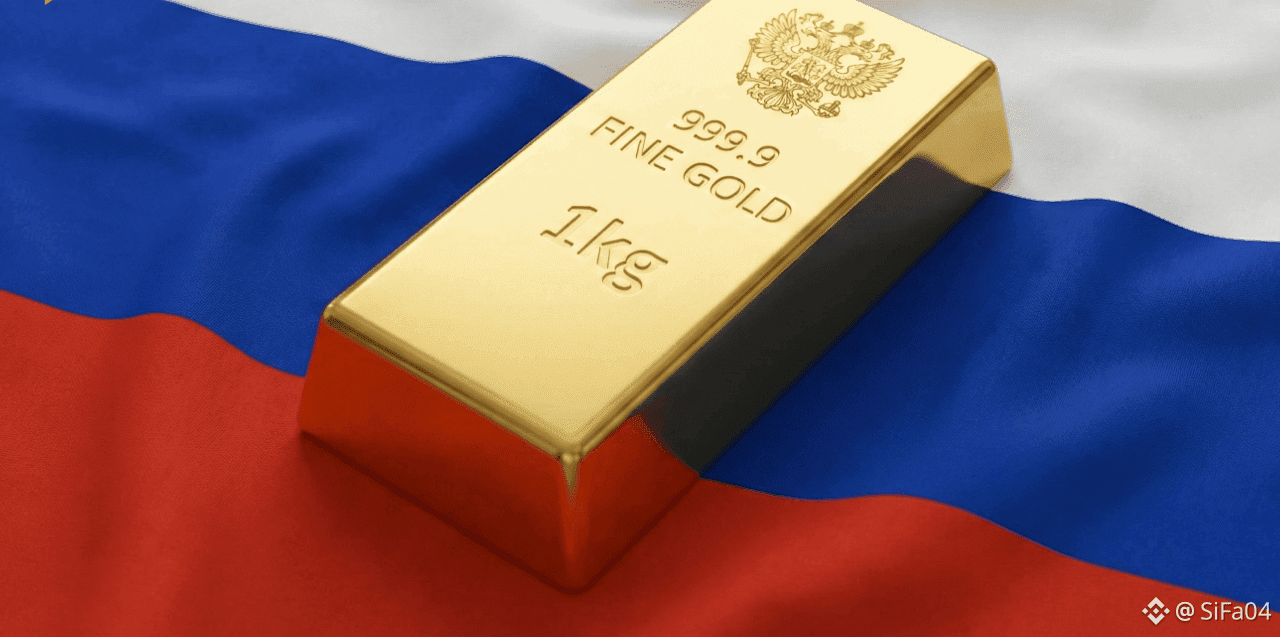
🇷🇺🥇RUSSIA IS SELLING ITS GOLD TO FINANCE THE WAR 🥇🇷🇺
Russia has sold over 71% of the gold reserves of the National Wealth Fund (NWF), its main emergency reserve, to cover military expenses.
This fund was created to support the state budget during times when oil revenues decline or public spending explodes.
Before the war, it contained more than 113 billion dollars in liquid assets; today about 50 remain.
In practice, over half of Russia’s financial cushion has already evaporated.
At the same time, the military budget has now exceeded total oil and gas revenues.
For decades, the energy sector has kept the Russian economy afloat.
Now the war costs more than energy can generate.
Hydrocarbon revenues have collapsed: -22% in 2025 compared to the previous year, with a -34% just in November.
Forced discounts on Russian crude are increasing, while sanctions complicate logistics and payments.
The result is a deficit that has exploded from 1.2 to 5.7 trillion rubles in a year: five times more than expected.
If the spending pace continues, economists estimate that the liquid part of the fund will be exhausted by mid-2026.
At that point, Moscow will have only four options: cut military spending, print money leading to inflation, raise taxes and risk recession, or further indebt itself, raising interest costs.
Russia remains isolated but still controls global strategic resources — from uranium to grain, from fertilizers to palladium.
For the world, the danger is not the Russian financial crisis, but the supply shocks it could trigger.
#GOLD #russia #breakingnews
Russia has sold over 71% of the gold reserves of the National Wealth Fund (NWF), its main emergency reserve, to cover military expenses.
This fund was created to support the state budget during times when oil revenues decline or public spending explodes.
Before the war, it contained more than 113 billion dollars in liquid assets; today about 50 remain.
In practice, over half of Russia’s financial cushion has already evaporated.
At the same time, the military budget has now exceeded total oil and gas revenues.
For decades, the energy sector has kept the Russian economy afloat.
Now the war costs more than energy can generate.
Hydrocarbon revenues have collapsed: -22% in 2025 compared to the previous year, with a -34% just in November.
Forced discounts on Russian crude are increasing, while sanctions complicate logistics and payments.
The result is a deficit that has exploded from 1.2 to 5.7 trillion rubles in a year: five times more than expected.
If the spending pace continues, economists estimate that the liquid part of the fund will be exhausted by mid-2026.
At that point, Moscow will have only four options: cut military spending, print money leading to inflation, raise taxes and risk recession, or further indebt itself, raising interest costs.
Russia remains isolated but still controls global strategic resources — from uranium to grain, from fertilizers to palladium.
For the world, the danger is not the Russian financial crisis, but the supply shocks it could trigger.
#GOLD #russia #breakingnews