
A global first-in-class innovative drug that originates in Beijing—from original mechanism to clinical translation. An innovative pharmaceutical company born in Beijing that has sold anticancer new drugs to the world and leads in its global niche categories. An overseas licensing cooperation with a total value that can reach as much as 10 billion yuan… This year, in the first half, Beijing’s innovation-driven biopharmaceutical industry has seen one good news after another.
As one of three new business cards for China’s manufacturing quality improvement and upgrading, innovative drugs—hailed as the “jewel on the crown” of the pharmaceutical industry—represent the original breakthrough from “0 to 1.” And Beijing, the capital, is using its source-driven innovation strength to accelerate breakthroughs in this area, commercializing self-developed original drugs worldwide. The result is a leap from “following behind” to “keeping pace,” and in some fields to “leading.”
Original-research new drugs target “no-man’s-land”
Not long ago, Peking University International Hospital welcomed a patient who traveled all the way from Mongolia. For 15 years, the patient has suffered from chronic hepatitis B and hepatitis D coinfection, with the condition progressing to cirrhosis and accompanied by multiple complications.
What drew this elderly man to come across borders was a new drug independently developed by Beijing-based pharmaceutical company HuaHui AnJian—Lethvivetazumab injection.
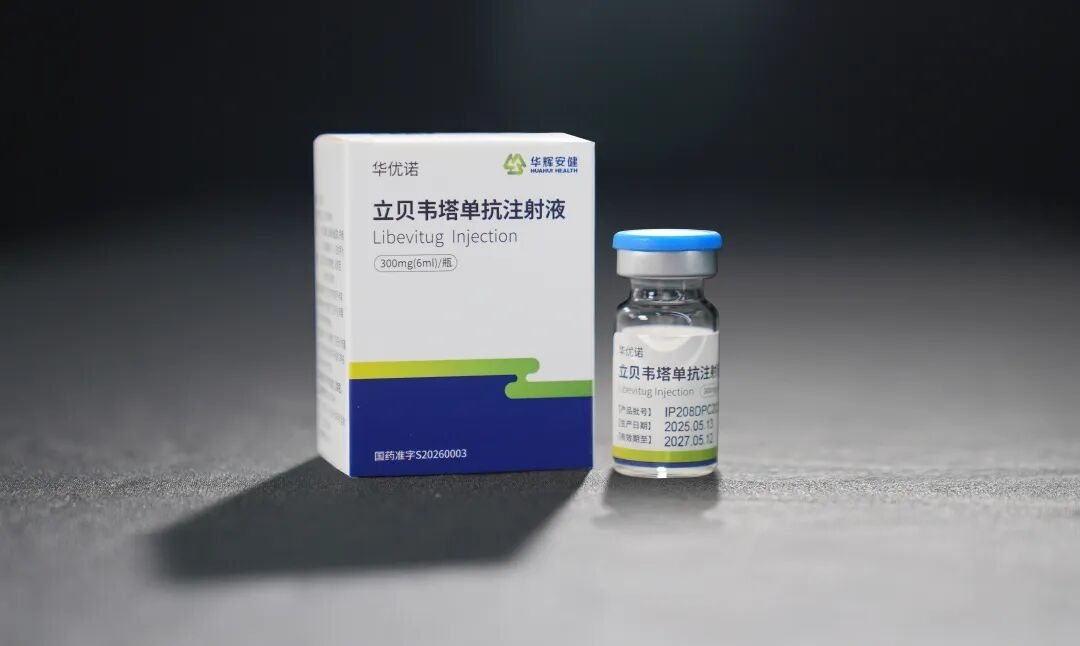
Lethvivetazumab injection
“This is a source-innovation drug that tackles the entire chain independently—from target discovery to drug formulation.” Chen Bin, CEO of HuaHui AnJian, said that countries and regions such as Central Asia and Mongolia, Pakistan, and others belong to high-prevalence areas for hepatitis D, where many patients previously faced limited treatment options and insufficient access to medicines.
Dare to charge into the “no-man’s-land.” In May 2023, the team launched an international multi-center registration study for Lethvivetazumab across eight global clinical centers, advancing drug R&D. As a source-innovation drug, Chen Bin said the clinical design of Lethvivetazumab has no precedent to follow—“from design to execution to submission to the NMPA, answering inquiries, and finally passing the market-approval inspection, the entire process is about continuously overcoming challenges.”
Three years of planning finally paid off. This January, Lethvivetazumab injection was approved for marketing in China first, becoming the world’s first antiviral hepatitis antibody drug?. In July, HuaHui AnJian signed a cooperation agreement with a local Pakistani pharmaceutical company to open a fast track for the new drug’s entry into Pakistan.
In Beijing, original-research drugs have been heading overseas—long before. “
In November 2019, BeiGene’s zebutinib, independently developed, was approved for marketing in the United States, marking the first time a homegrown anti-cancer drug entered the U.S. market and achieving a “breakthrough from zero.” Zebutinib was developed at BeiGene’s R&D center in Changping District, Beijing.
This Beijing-born anti-cancer new drug quickly gained global recognition: in 2023, zebutinib’s global sales exceeded $1.3 billion, becoming the first domestically developed innovative drug to cross the “$1 billion” threshold. In the first half of this year, zebutinib’s global sales reached 16.127 billion yuan, topping? the global BTK (a key protein in a B-cell receptor signaling pathway) inhibitor sales champion? and thereby breaking the long-standing monopoly by multinational pharmaceutical companies in the BTK field. Notably, most of zebutinib’s 16.127 billion yuan sales came from overseas markets; in the U.S., sales in the first half alone reached 11.39 billion yuan.
Learn to be a global market “partner.”
Located in Beijing Economic-Technological Development Area, JiaCos—the innovative drug company there—has taken another route overseas: cooperative development and shared returns.
Walking into JiaCos’s meeting room, an online communication session with multinational pharmaceutical company AstraZeneca is underway. The agenda is the global clinical advancement of the oral pan-KRAS inhibitor JAB-23E73. KRAS is the core oncogenic gene that drives pancreatic cancer, colorectal cancer, and lung cancer. This oral small-molecule agent can broadly cover most major KRAS mutation subtypes.
“After entering into BD (business development) authorization and licensing cooperation with AstraZeneca, such communications happen frequently. Both sides hope to advance this homegrown original pipeline’s overseas clinical trials and commercialization as soon as possible.” said Wang Yinxian, Chairman of the Board and Co-CEO.
If self-scheduled overseas listings are a long-distance race in the export of innovative drugs, then BD authorization and licensing cooperation represents Chinese pharmaceutical companies beginning to integrate into the global innovation network—learning to be global market “partners,” co-“build ships,” and quickly go overseas.
“This is a logical step in the company’s internationalization strategy.” In Wang Yinxian’s view, there are mainly three reasons it can move multinational giants: the company’s efficient R&D speed, a complete patent layout, and end-to-end alignment with international regulatory standards—such as molecular design, clinical protocols, and quality control.
According to the cooperation agreement, AstraZeneca obtained exclusive R&D and commercialization rights for the drug for all markets outside China, while in the domestic market both sides jointly developed the product and sold it together. At one time, Ascentage received a $100 million upfront payment, with potential total development and sales milestone payments of up to $1.915 billion and sales profit sharing.
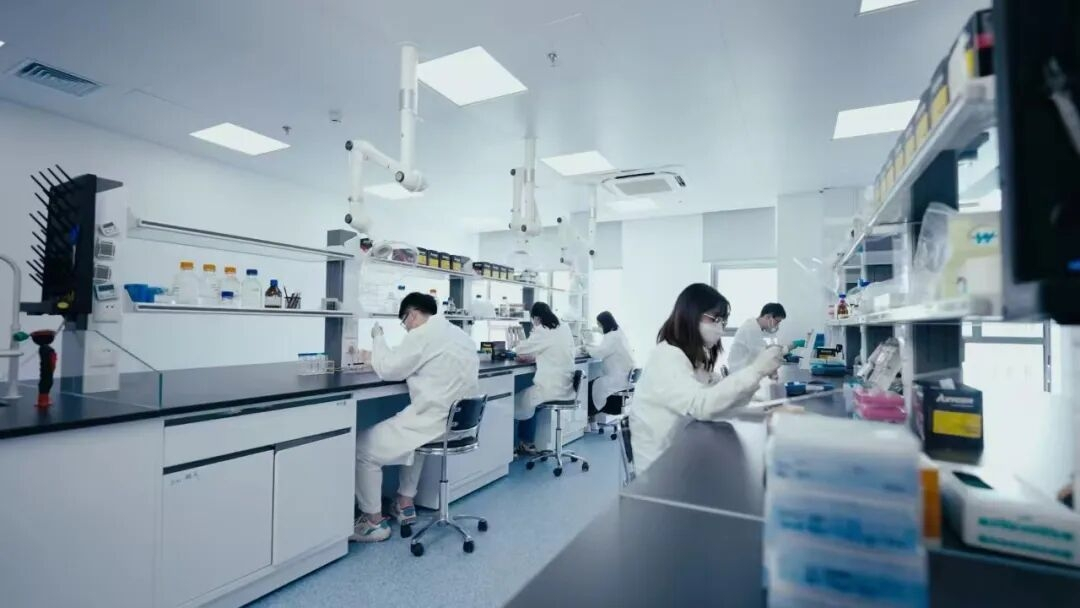
JiaCos laboratory
In recent years, Beijing has become a national hub for BD transactions in innovative drugs. It is reported that innovation-drug companies such as BeiGene, Innovent Biologics, and JiaCos have continued to deliver high-quality original pipelines. Their collaborations cover multinational pharmaceutical companies such as AstraZeneca and Novartis. The cooperation models have also upgraded from simple transfer of rights to deeper collaboration models such as joint clinical development, global commercialization, and coordinated pipeline development.
Seize the momentum to unleash powerful drive.
Some experts say that in the next five years, innovative drugs will see an “explosive” surge. Why does Beijing’s innovative-drug sector repeatedly draw global attention? This unique competitiveness lies in multiple advantages: top-tier original innovation resources, a massive reservoir of innovations awaiting transformation, and full-chain policy services that provide backing.
In May, a team led by Professor Li Wenhui at the Beijing Institute of Life Sciences published a major breakthrough in the international top journal (Cell). For the first time, they discovered that SCARF2 functions as an intracellular receptor after viral endocytosis, playing a role following NTCP—the cell-membrane receptor for HBV (hepatitis B virus)—thereby revealing a previously unknown new mechanism by which a virus is directed from the cell membrane to the cell nucleus. Li Wenhui is the co-founder of HuaHui AnJian, and the Lethvivetazumab injection is also based on his original discovery of the NTCP receptor for hepatitis B/hepatitis D virus.
This major discovery by Li Wenhui’s team is a snapshot of Beijing’s vitality for original innovation at the source.
Beijing has a deep foundation of science-and-technology innovation resources. Not only do top universities, national-level research institutes, and new R&D institutions cluster here, but it is also home to a nationwide-leading cluster of tertiary Grade A hospitals, fully supporting the entire-chain efforts for innovative drugs—from target basic research to clinical trials in humans.
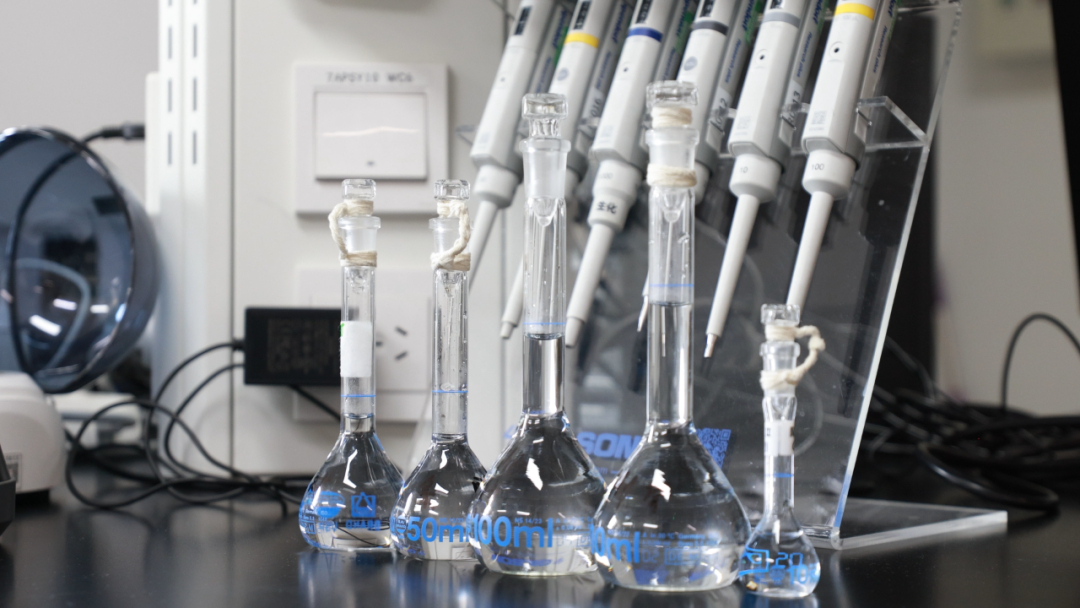
HuaHui AnJian laboratory
The policy support system that runs through the entire lifecycle of pharmaceutical innovation also continues to “escort” drug companies on their journey abroad. In April, ten departments including the Beijing Municipal Medical Security Bureau jointly issued the (2026) Several Measures by Beijing to Support the High-Quality Development of Innovative Drugs and Medical Devices, with 32 initiatives precisely focusing on six key areas: improving the level of clinical research for innovative drugs and medical devices, optimizing the review and approval of innovative drugs and devices, enhancing production and distribution of innovative drugs and medical devices, promoting clinical use of innovative drugs and medical devices, strengthening AI-enabled support for innovative drugs and medical devices, and strengthening support for innovation-related investment and financing.
Chen Bin said, “With policy support and improvements in the industrial environment, companies’ ability and confidence to keep pushing forward with international clinical development and overseas registration have been strengthened, making our sense of ‘gain’ very tangible.”
Huang Hao, a researcher at the Institute of Finance and Strategic Studies of the Chinese Academy of Social Sciences, said that the rise of the “new three” reflects a profound shift in China’s foreign trade competitive advantages. In the past, China’s manufacturing relied more on cost and scale advantages to compete internationally; today, with industrial upgrading, Chinese companies increasingly open overseas markets by leveraging technological innovation, engineering capabilities, and industrial coordination.
Robot industry clusters, artificial intelligence large-model industrial agglomeration areas?, biopharmaceutical industrial bases… one by one, Beijing’s industrial landmarks will unleash even more powerful momentum in the future.
Source: Beijing Released, as reported by Zhichang An Street News
● “I thought the Beijing swift would fly south—turns out it went to South Africa!” ● ?Is the rain near your place not that heavy, so is the warning exaggerated?
● ?Reminder! This article recommends watching with your child’s accompaniment.