#bstockscis
#bStocksCIS
@BinanceCIS
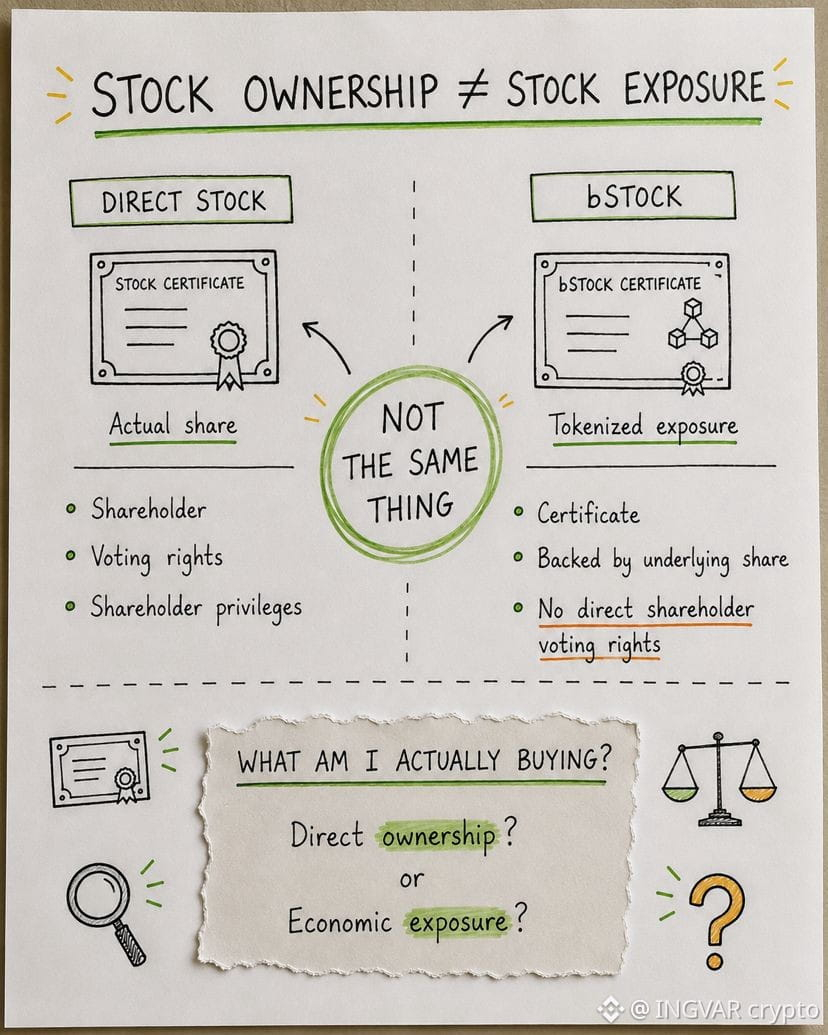
🎯 «I bought a stock» and «I received exposure to a stock» are not always the same thing.
In my opinion, this difference is the most important for understanding bStocks.
If you buy a regular stock through a broker, you become the owner of a security and receive the rights that are granted to a shareholder.
With bStocks, the structure is different.
A bStock is a certificate backed 1:1 by the underlying stock. But the owner of a bStock does not become a direct shareholder of the company.
That means you can gain economic exposure to the movement of the underlying stock, but it does not automatically mean you receive all the rights of a direct shareholder.
For example, it’s important here to distinguish:
📌 the price movement of the underlying asset;
📌 voting rights;
📌 shareholder rights;
📌 the structure of the instrument itself.
What surprised me most is how easily the word “stock” makes us automatically think of an ordinary share.
But the name of the instrument is not the whole of its legal and economic structure.
📚 Practical lesson:
Before buying any tokenized asset, ask:
“Am I getting the asset itself, or exposure to its economic performance?”
Just that one question can completely change your understanding of what you’re actually buying.