
It would seem that just a little more—and the long-awaited legalization of the Russian crypto market will finally happen. The Bank of Russia has published a draft directive to include Bitcoin, Ethereum, and USDT in the list of cryptocurrencies available for public circulation on domestic exchanges. The law on digital currencies has been signed by the president and will take effect on September 1, 2026. A regulatory paradise for investors is no longer far off. The news is being presented as something good and long-awaited, as breakthrough regulation.
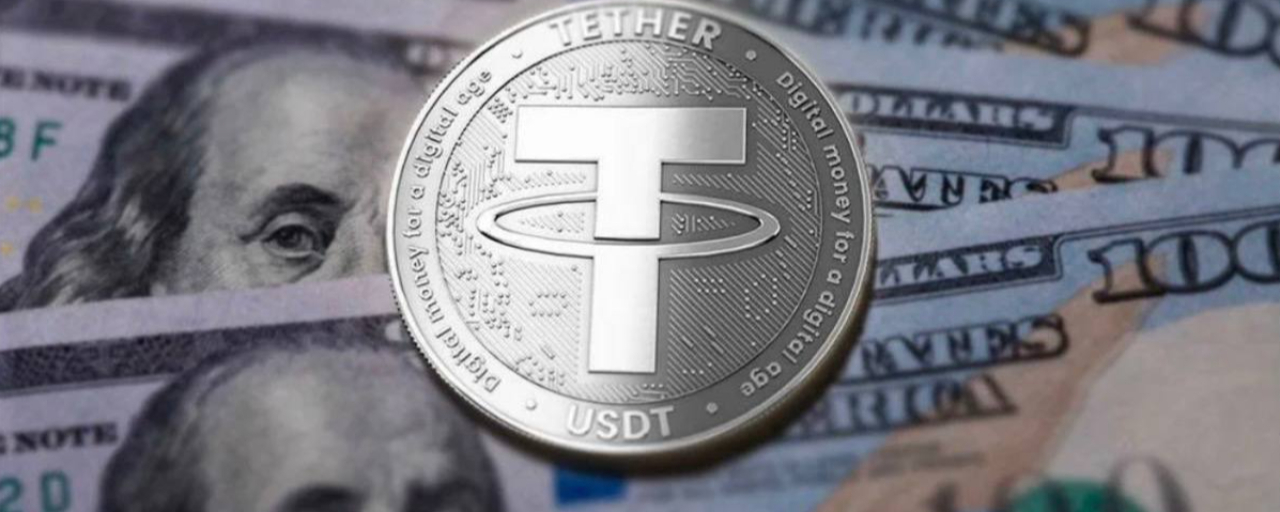
But, judging by what’s happening, officials have started to suspect something. Deputies finally woke up and began asking the right questions. One of them, the First Deputy Chair of the IT Committee of the State Duma, questioned the need to allow USDT into the legal market. And these are exactly the questions that the crypto community has been repeating for more than a year. He reminded everyone that the issuer of the largest stablecoin—Tether—blocks funds at the request of U.S. authorities, including assets of Russians. The deputy rightly noted that there are “no questions” about Bitcoin and Ether, but there are about USDT. And that’s true. Tether is not a private service, but a full-fledged body of the U.S. financial and political system—one of the largest holders of U.S. Treasury bonds. It has taken on obligations to closely cooperate with U.S. authorities, including in terms of sanctions pressure.
Over the past years, Tether has frozen billions of dollars. Remember Garantex—a pro-Russian exchange where, at the request of the U.S. authorities, the company blocked USDT worth 2.5 billion rubles. And what will prevent them from doing the same with Russian exchanges when we “light up” our wallets in the regulatory field? We’ll provide them with the information about which wallet to block. This is not a shot in the foot—it’s a shot in the head.
But even if we assume that blocking won’t happen, there’s another question: who will provide liquidity to Russian exchanges? Global liquidity for our banks is closed. Not a single major international exchange will work with the Russian jurisdiction—this would immediately trigger sanctions. So we’ll end up buying assets on the shadow, black market, and then bringing them into the official Russian system. But all these wallets will be marked with a sanctions “color.” Sooner or later, they will be blocked. Bitcoin and Ethereum, unlike USDT, cannot be blocked technically, but wallets can be marked—and then who would you sell them to? Who would take them? We’re creating a system in which we’re the ones setting ourselves up to be hit.
We repeat this like parrots, but it seems we’re not being heard. You can’t allow tools here that work against us, while at the same time we immediately regulate those very tools and permit our citizens to buy them. We understand that without stablecoins there’s nowhere to go—they’re highly liquid; companies work with them, and all of this is currently operating in an unregulated space. But the moment we start regulating, the moment we start shining a light on our depositories, wallets, exchanges—everything will be blocked.
Now let’s look at what this law means for ordinary people. Because supposedly it’s exactly for them that it’s being adopted. Non-qualified investors—which is the vast majority of citizens—will be able to buy cryptocurrency for only 300,000 rubles per year. That’s less than four thousand U.S. dollars. What is 300,000 over 12 months? It’s not investment—it’s mockery. With that amount, you can’t diversify a portfolio or get any meaningful returns. In essence, this is not legalization, but a ban disguised as permission. Ordinary people were simply given a symbolic access so they could say, “They allowed us.” Meanwhile, qualified investors can buy any cryptocurrencies without restrictions. That is, the system divides citizens into an elite that can have everything, and everyone else who only gets a formal “admission.” It’s a strange story that doesn’t fit in the head.
And finally, the main question: why are we doing this? We’re trying to get rid of the dollar, build our own financial system, and yet we’re bringing back dollars packaged in blockchain.
USDT is backed by 75% of U.S. government debt, and we sell that U.S. government debt to our citizens, taking it as some great regulation we’ve come up with. Strange, very strange. I don’t know how to explain it. Maybe time will put everything in its place, and we’ll understand what plan the officials and the Central Bank had in mind. Because first they claimed that cryptocurrencies carry high risks, and now they’re bringing the country the dollar backed by U.S. government debt. Maybe there’s some deep intent, but for now it looks like a self-destructive strategy.
We have one year to amend and modify the law. We need to build our own tools—our own blockchains, our own stablecoins, our own wallets. Without that, we’ll keep using other people’s tools that don’t belong to us and then wonder why they work against us.