


Source: The Times Weekly, by Cao Yang and Song Ran
On the evening of August 12, WeRide (00800.HK) released its 2026 first-half earnings report. During the reporting period, WeRide achieved total revenue of RMB 350 million, a year-on-year increase of 73%. Of this, second-quarter revenue was RMB 230 million, up 82% year-on-year, and up 103% quarter-on-quarter.
WeRide was founded in 2017 and is a technology company dedicated to the development of autonomous driving technology. In October 2024, WeRide listed on Nasdaq. In November 2025, it successfully listed on the Hong Kong Stock Exchange, becoming the first Robotaxi stock in Hong Kong-listed shares.
At present, WeRide’s application scenarios cover smart mobility, smart freight, and smart sanitation, among other areas. Its main products include Robotaxi, Robobus, Robosweeper, Robovan, and WRD 3.0.
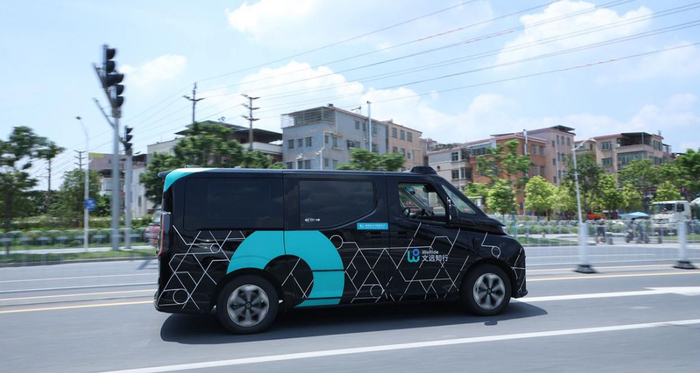
WeRide’s founder, Chairman and CEO Han Xu said, “In the second quarter of 2026, WeRide made notable progress in overseas acceleration of deployment, asset-light expansion, and building its self-sustaining ‘cash-blood’ capability. Total revenue nearly doubled year over year, gross margin rose to 37.5%, and operating efficiency continued to improve.”
However, despite the rapid near-doubling growth in revenue, WeRide still faces significant operating pressure. Meanwhile, as autonomous driving technology moves out of the laboratory and into large-scale commercial deployment, competition in the industry is also becoming increasingly fierce.
Revenue improves both year over year and quarter over quarter, and overseas expansion becomes a new growth engine
WeRide’s second-quarter revenue grew both year over year and quarter over quarter, driven by steady growth in its core business, Robotaxi, and especially by clear improvements in domestic autonomous driving operating metrics.
During the reporting period, WeRide’s domestic Robotaxi orders averaged more than 21 orders per vehicle per day, up 24% quarter over quarter. Registered users increased 35% quarter over quarter, directly driving domestic ride-hailing revenue to rise by about 140% quarter over quarter in the same quarter.
In fact, the growth momentum of WeRide’s Robotaxi business had already become evident in 2025.
In 2025, WeRide achieved total revenue of RMB 685 million, up 90% year over year, a sharp increase to a historical high. Of this, Robotaxi revenue for the full year was RMB 150 million, up 209.6% year over year.
At the same time, overseas business expanded beyond expectations, becoming another important engine driving revenue growth.
In the second quarter of 2026, WeRide’s overseas revenue grew 164.4% year over year and surged 169.3% quarter over quarter; overseas revenue growth in the first half reached 154.4% year over year. In July, WeRide first disclosed its overseas progress in the L2++ intelligent driving business and has already carried out road testing and adaptation validation in countries such as Germany, France, and Japan.
According to reporters from The Times Weekly, WeRide’s business layout currently covers 13 countries and more than 60 cities. Under its plan, the right-hand-drive version of Robotaxi will be deployed first in Singapore and Hong Kong, and will be replicated to more regions based on its mature asset-light operating model.
According to the company’s plan, by the end of 2026 WeRide will deploy 2,600 Robotaxis worldwide, and by 2030 it will deploy tens of thousands.
In its second-quarter earnings report, Han Xu said WeRide is shifting from technology leadership toward global large-scale deployment, ushering in the next phase of autonomous driving commercialization.
Two growth curves rise in tandem, but internal and external pressures cannot be underestimated.
As intelligent driving gradually moves from high-end optional configurations to become a common standard feature across passenger vehicles, the overall market space for the autonomous driving industry chain continues to expand. The bigger change is that supporting infrastructure and the mobility services ecosystem are also entering a period of growth.
Among them, the Robotaxi track was the first to reach a turning point toward large-scale development.
In its second-quarter report, WeRide said that in the second quarter, the company’s L4 business revenue grew 131% quarter over quarter, and Robotaxi registered users grew 35% quarter over quarter. As of July 31, WeRide’s global L4 fleet size was approximately 3,400 vehicles, of which Robotaxi accounted for more than 1,800.
In addition to Robotaxi, WeRide’s L4 business also includes Robobus (autonomous small buses), Robovan (autonomous delivery trucks), and Robosweeper (autonomous sanitation vehicles), covering multiple scenarios such as ride-hailing, on-demand public transit, intercity local freight, and intelligent sanitation.
Complementing the growth of the L4 business is the L2++/L3 mass-production business. In the second quarter, WeRide’s revenue from the L2++/L3 business increased 219% quarter over quarter. The company’s self-developed one-stage end-to-end solution, WRD 3.0, recorded shipments of about 30,000 sets, and achieved production placement commitments from more than 30 vehicle models.
That said, behind the two growth curves rising in parallel, WeRide still faces the dual challenge of intensifying industry competition and internal operating pressures.
At the industry level, WeRide’s multi-scenario autonomous driving tracks all face strong competitors. In the Robotaxi arena, the company must directly face Pony.ai (02026.HK) and its direct competitor, Luobo Express. Data show that as of May, Pony.ai’s Robotaxi fleet size had surpassed 1,700 vehicles.
In the Robovan and Robobus tracks, in addition to start-ups deeply focused on specific scenarios such as New Shishiqi, White Rhinoceros, and Mushroom Intelligence, Momenta—also an autonomous driving technology supplier—has continued to increase its investment and layout.
On July 27, Momenta (06880.HK) announced that its Robovan business had been deployed in Suzhou. The Times Weekly reporter learned from Momenta that Momenta Robovan is accelerating entry into application scenarios such as courier delivery and night-time delivery.
Beyond industry challenges, WeRide has not yet escaped the quagmire of losses.
In the second quarter of 2026, WeRide’s loss was RMB 400 million, slightly narrowing year over year from RMB 406 million in the second quarter of 2025, but expanding quarter over quarter from the first quarter’s loss.
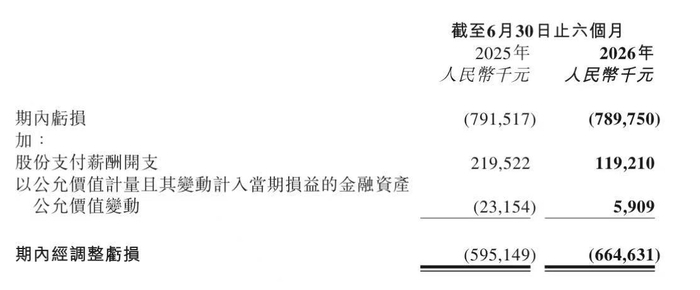
In the first half of 2026, WeRide incurred a loss of RMB 790 million, basically flat compared with RMB 791 million in the same period of 2025. After adjustments under non-IFRS financial reporting standards, WeRide’s loss for the period was RMB 665 million, widening year over year from the RMB 595 million loss in the first half of 2025.
As of June 30, 2026, the Group’s total cash and cash equivalents and time deposits amounted to RMB 5.375 billion, down RMB 1.593 billion from RMB 6.968 billion at the end of 2025.
Given the current situation of intensifying industry competition and growing pressure on profitability, achieving large-scale growth through an economical and efficient model will be the core key to WeRide’s future development.
In its financial report, WeRide stated that in the future it will continue to implement a dual strategy: combining overseas expansion characterized by asset-light and high profit margins with domestic growth driven by self-operated operations.
Specifically, in overseas markets, it will expand into new markets to form a significant compound scale effect. As the business footprint expands, marginal costs will continue to decrease, improving deployment efficiency. In domestic markets, it will enhance fleet density and operating capabilities, while further improving the local end-to-end commercial ecosystem.