Last night at around 3 a.m., a brother sent me a voice message—his voice was shaking.
$APR
He said he opened more than 30x positions with 10,000 USDT, and after the price dropped less than 3%, he got liquidated right away. He asked me what exactly happened.
I told him to send me the record, and when I saw it—he put in 9,500, went all-in, and his stop-loss field was completely blank.
The truth is, a lot of people get one thing backwards from the start—liquidation really isn’t because your leverage is too high. It’s because your position size is too heavy.
$CYS
Think about it: with 10,000 USDT as your capital, if you shove 9,500 into one position, the market just sneezes and you’re gone. But if you only use 1,000 USDT to open, the price has to move in the opposite direction by 50% to liquidate you. Are those the same? Of course not.
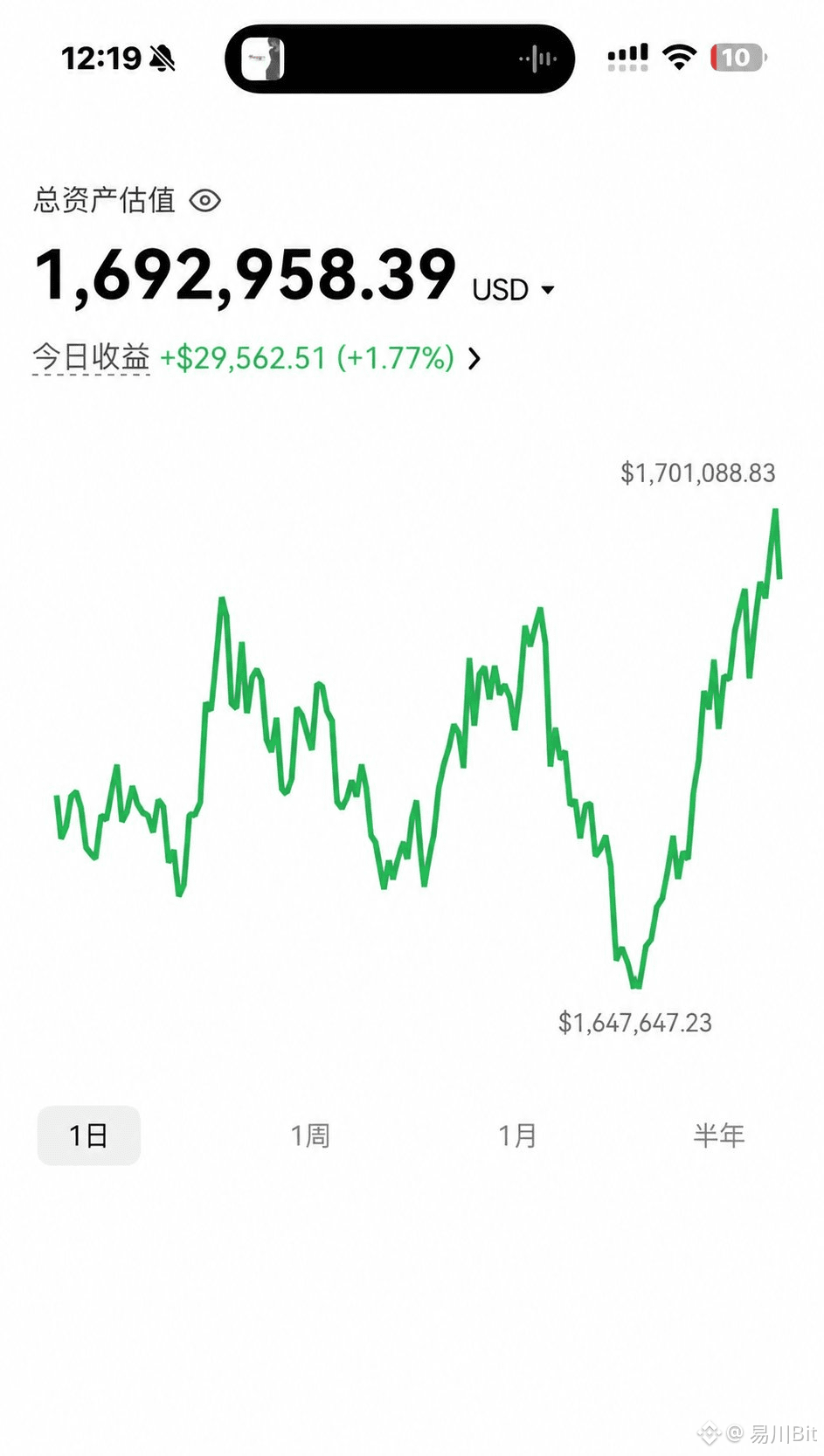
I traded all-in for half a year, and never got liquidated once. My account even ground its way up to double. It’s not that I have some magic moves—just three dead rules I welded into my brain:
First, any single trade must never exceed 20% of total funds. With a 10,000 USDT account, at most I enter with 2,000 USDT each time. Even if I’m truly wrong, if the stop-loss takes 10% of that, I lose only 200. Does it hurt? No—it’s just like paying for a hot pot for the market.
$SNDK
Second, a single trade’s loss must be capped tightly within 3% of total capital. Taking the example of opening with 2,000 USDT, I set my stop-loss in advance to 1.5%, so the loss is 300—right at the 3% line. Even if I make the wrong call three or four times, I can still stay calm and calmly watch the chart.
Third, in a ranging/choppy market, I don’t touch it no matter how good it looks. No adding to positions just because you’re profitable—no adding, no adding, no adding. I only trade clear breakout points where the trend is obvious. When it chops sideways and grinds, even if it looks tempting, I treat it as if I never saw it.
Once the order is placed, I follow the rules. I don’t haggle with my emotions.
All-in? This tool really isn’t for you to go gamble your life. It’s to keep you with one breath—so you still have a chance to turn things around tomorrow.
#Cerebras盘后跌14%
Before, I knew a guy in Chengdu who would blow up every month as reliably as a clock. Later, he followed these three rules honestly, welded himself to them. Three months later, he took 5,000 USDT and ground it up to 8,000 USDT.
He later said something that made a deep impression on me—at first I thought all-in was just a casino. Now I understand: when all-in is used correctly, it’s so you can still sit back at this table tomorrow.
In this market, the one who lasts the longest wins. It’s more real than anything else.
$APR
He said he opened more than 30x positions with 10,000 USDT, and after the price dropped less than 3%, he got liquidated right away. He asked me what exactly happened.
I told him to send me the record, and when I saw it—he put in 9,500, went all-in, and his stop-loss field was completely blank.
The truth is, a lot of people get one thing backwards from the start—liquidation really isn’t because your leverage is too high. It’s because your position size is too heavy.
$CYS
Think about it: with 10,000 USDT as your capital, if you shove 9,500 into one position, the market just sneezes and you’re gone. But if you only use 1,000 USDT to open, the price has to move in the opposite direction by 50% to liquidate you. Are those the same? Of course not.
I traded all-in for half a year, and never got liquidated once. My account even ground its way up to double. It’s not that I have some magic moves—just three dead rules I welded into my brain:
First, any single trade must never exceed 20% of total funds. With a 10,000 USDT account, at most I enter with 2,000 USDT each time. Even if I’m truly wrong, if the stop-loss takes 10% of that, I lose only 200. Does it hurt? No—it’s just like paying for a hot pot for the market.
$SNDK
Second, a single trade’s loss must be capped tightly within 3% of total capital. Taking the example of opening with 2,000 USDT, I set my stop-loss in advance to 1.5%, so the loss is 300—right at the 3% line. Even if I make the wrong call three or four times, I can still stay calm and calmly watch the chart.
Third, in a ranging/choppy market, I don’t touch it no matter how good it looks. No adding to positions just because you’re profitable—no adding, no adding, no adding. I only trade clear breakout points where the trend is obvious. When it chops sideways and grinds, even if it looks tempting, I treat it as if I never saw it.
Once the order is placed, I follow the rules. I don’t haggle with my emotions.
All-in? This tool really isn’t for you to go gamble your life. It’s to keep you with one breath—so you still have a chance to turn things around tomorrow.
#Cerebras盘后跌14%
Before, I knew a guy in Chengdu who would blow up every month as reliably as a clock. Later, he followed these three rules honestly, welded himself to them. Three months later, he took 5,000 USDT and ground it up to 8,000 USDT.
He later said something that made a deep impression on me—at first I thought all-in was just a casino. Now I understand: when all-in is used correctly, it’s so you can still sit back at this table tomorrow.
In this market, the one who lasts the longest wins. It’s more real than anything else.