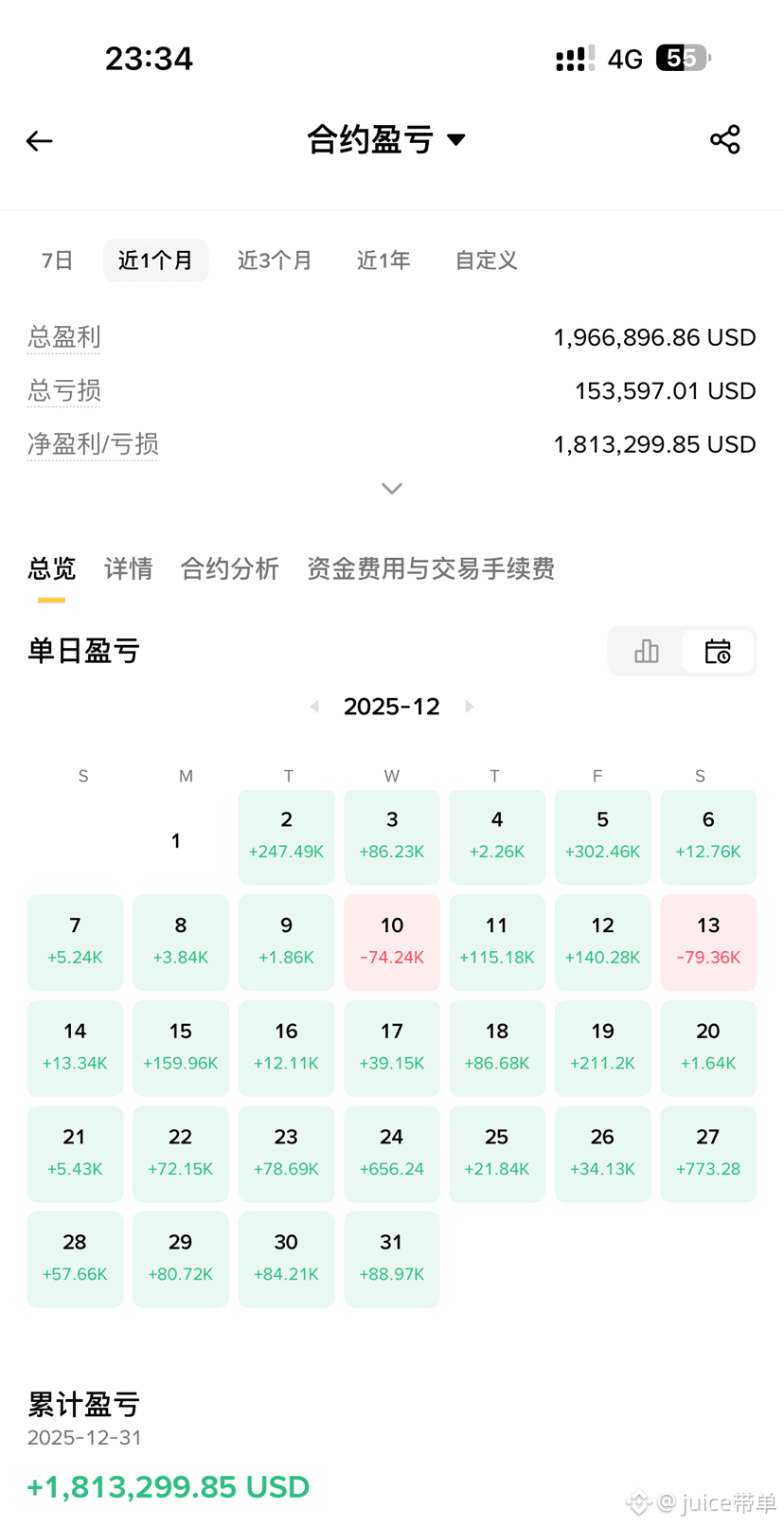
Who would have thought?
8 years ago, I entered the cryptocurrency world with 5000U, completely clueless about distinguishing between mainstream coins and altcoins.
Chasing after meme coins, I got trapped when the prices surged; I stubbornly held on during LUNA's crash, watching my tens of thousands in capital shrink to a mere fraction, unable to sleep all night.
8 years later, I transformed from a "cut vegetable" into a steady trader through a set of rules I figured out myself, with my account balance frozen at 25 million.
There’s no special talent involved; it’s all lessons learned from real money. Today, I won’t sugarcoat things, just sharing 5 actionable experiences that both novices and veterans can use.
1. Protect your capital: Three iron rules that must not be broken
The core of trading is to survive.
Only use "money that you won't regret losing": If you have 100,000 in savings, you can only invest up to 20,000; if your monthly salary is 8,000, your monthly investment should not exceed 800, and don’t borrow from online loans or risk all your assets.
5% mandatory stop loss: If it breaks the 5-day moving average on short-term trades, or the 20-day moving average on medium-term trades, exit immediately, do not hold the position.
Divide your positions into three parts: 30% in mainstream coins for the long term, 50% for swing trading, and 20% as emergency funds, averaging down during a crash at -15%, -30%, and -50%.
2. Go with the trend: Don’t go against the market
I used to always think about catching the bottom, but ended up buying each time halfway up the mountain.
Avoid bear markets: Even if it drops 50%, wait for a clear signal of an upward trend.
In a bull market, catch the dips: Buying during pullbacks is safer than waiting for the bottom.
Watch the trading volume: A low-level breakout with increased volume = opportunity, rising without volume = false rise, stay alert for pullbacks.
3. Technical indicators
No need for complexity; simple and practical lasts longer.
15-minute candlestick charts: Identify entry and exit points, entering when it turns from red to green and the 3-day moving average goes up.
Daily MACD: A crossover below the 0 axis = buy, a crossover above the 0 axis going down = reduce positions.
Weekly Bollinger Bands: The middle band is a key support level; breaking below changes the trend.
When all three resonate + volume increases, the success rate of entering the market doubles.
4. Short-term survival: Three habits to avoid pitfalls
Short-term trading is not gambling; it’s about discipline.
Only focus on hot trends + volume: Don’t touch coins without volume, even if they rise.
Set strict profit-taking and stop-loss limits: Must sell at a 15% gain, must cut losses at a 5% drop.
Only look at 1-3 minute charts: Follow the average price line, don’t enter the market during consolidation.
Lastly, let me be honest:
My stability today comes from the losses I incurred before. Discipline is more important than skills; surviving is more important than making money.
Want to turn a few thousand into a fortune? First, diligently improve your understanding; don’t treat trading as a gamble. @juice带单