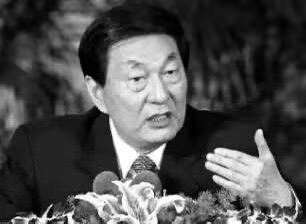

Comrade Zhu Rongji has passed away.
Xinhua News Agency, Beijing, August 12—The Central Committee of the Communist Party of China, the Standing Committee of the National People’s Congress of the People’s Republic of China, the State Council of the People’s Republic of China, and the National Committee of the Chinese People’s Political Consultative Conference solemnly announce: Comrade Zhu Rongji, an outstanding Party member of the Communist Party, a loyal communist fighter tested over many years, an outstanding proletarian revolutionary and political leader, and an outstanding leader of the Party and the state. He served as a member of the Standing Committee of the Political Bureau of the 14th and 15th Central Committees of the Communist Party of China, and previously served as the Premier of the State Council. Due to illness and despite medical efforts, he passed away at 11:06 a.m. on August 12, 2026, in Beijing, at the age of 98.
Comrade Zhu Rongji was born in October 1928 in Changsha, Hunan. He began working for the revolution in December 1948 and joined the Communist Party of China in October 1949. As a young person, he loved the motherland, studied diligently, pursued progress, and was determined to devote his life to serving the country. From 1947 to 1951, he studied at Tsinghua University in the Department of Electrical Engineering, majoring in electrical machinery manufacturing, and also took part in the “New Democratic Youth League.” From 1951 to 1952, he served as Deputy Director of the Production Planning Office in the Planning Division of the Northeast Industrial Ministry. From 1952 to 1958, he held various posts including: Head of the Burning Power Bureau and the General Bureau under the State Planning Commission; Deputy Division Director of the Director’s Office of the State Planning Commission; and Deputy Division Director of the Comprehensive Division of the Machinery Bureau of the State Planning Commission. From 1958 to 1969, he served as a part-time school instructor for cadres of the State Planning Commission and as an engineer of the Comprehensive Division of the General Bureau of National Economic Planning. From 1970 to 1975, he was sent down to do labor at the “Seven-Five” cadre school of the State Planning Commission. From 1975 to 1979, he served as Deputy Director and Deputy Chief Engineer of the Office of the Power and Communications Engineering Company of the Pipeline Bureau under the Ministry of Petroleum Industry, and also as Director of the Office of the Industrial Economics Research Institute of the Chinese Academy of Social Sciences. From 1979 to 1983, he held posts including Division Director and Deputy Director of the Comprehensive Bureau and Director of the Technology Renovation Bureau of the Burning Power Bureau under the State Economic Commission, and served as a member of the State Economic Commission. From 1983 to 1987, he served as Deputy Director and Party Group member of the State Economic Commission, then Deputy Director and Deputy Secretary of the Party Group. From 1987 to 1991, he served as Deputy Secretary of the Shanghai Municipal Party Committee, Mayor, and then Secretary of the Shanghai Municipal Party Committee. He proposed that Shanghai should adjust its industrial structure, restructure to form new development strengths, enhance its ability to compete internationally, and take a path of development-oriented, outward-looking economy. He also promoted the development and opening-up of Pudong, pushing it into a stage of substantive launch, laying a solid foundation for further reform and opening-up and development in Shanghai. In 1991, Comrade Zhu Rongji was appointed Vice Premier of the State Council as well as Director and Party Group Secretary of the State Council’s Production Office; he also served concurrently as Director and Party Group Secretary of the State Council’s Office of Economic and Trade Affairs, overseeing work related to mechanical and electrical energy, rail transportation, metallurgical and chemical industry, and light industry and textiles. In October 1992, at the First Plenary Session of the First Session of the 14th CPC Central Committee, Comrade Zhu Rongji was elected a member of the Standing Committee of the Political Bureau of the CPC Central Committee and responsible for the routine work of the State Council. In June 1993, he also concurrently served as Governor of the People’s Bank of China. He actively promoted and implemented the spirit of Comrade Deng Xiaoping’s southern tour talks and carried out the guiding principles of the 14th CPC National Congress, focusing on pushing reform and opening-up and modernization. He organized and carried out the clearance of “triangular debt,” focusing on addressing both the symptoms and root causes to enhance enterprises’ business vitality. He studied and formulated ideas and measures for strengthening and improving macro-level regulation, further unified thinking, and did a great deal of effective work to reverse overheating in the economy, curb inflation, and achieve a “soft landing.” He focused on rectifying the order of finance and taxes, strictly enforcing financial and economic discipline, strengthening tax collection and administration, accelerating fiscal and tax reform, and improving the financial regulation and control system. He pushed forward reform of grain prices and the procurement and marketing system, establishing a grain procurement and marketing system that meets the requirements of a socialist market economy and, on the basis of farmers’ voluntary participation, implementing contracted operation by large grain growers and developing moderately scaled operations. In September 1997, Comrade Zhu Rongji was again elected a member of the Political Bureau of the CPC Central Committee and its Standing Committee at the first plenary session of the 15th CPC Central Committee. In March 1998, at the first session of the Ninth National People’s Congress, he was appointed Premier of the State Council, after which he served as Secretary of the Party Group of the State Council. Faced with the impact of the Asian financial crisis and major floods and waterlogging disasters of unprecedented magnitude in China, he, in line with the arrangements of the CPC Central Committee, shifted from moderately tight fiscal and monetary policies to proactive fiscal policies and a prudent monetary policy. He focused on expanding domestic demand, deepening reforms in key areas, and maintained steady, rapid economic growth. He comprehensively adjusted the industrial structure, regional structure, and urban-rural structure. He vigorously developed high-tech industries, especially the information industry, actively supported the accelerated development of modern services, and focused on improving the quality and efficiency of economic growth. He placed solving the problems of agriculture, rural areas, and farmers (the “three rural issues”) in a prominent position, promoted adjustments to agricultural structure in light of local conditions, strengthened rural poverty alleviation and development, and promoted coordinated urban-rural development. He adopted a series of policies and measures to expand opening-up and encourage exports, maintained the RMB’s stability against depreciation, implemented strategies for diversified markets and for winning based on quality, actively attracted foreign investment, and made better use of the two markets and two sets of resources both at home and abroad. He firmly safeguarded the prosperity and stability of Hong Kong’s international financial center. He increased efforts to protect and improve the ecological environment, strengthened the management of resources such as land and minerals, and concentrated resources to address pollution in key river basins and regions. He established systems to provide basic living security for laid-off workers of state-owned enterprises, unemployment insurance, and the minimum living guarantee for urban residents, and devoted great efforts to resolving problems such as arrears in workers’ wages and reemployment for laid-off workers. He continued to transform government functions, pushed ahead with reform of government institutions, and focused on strengthening the building of the government itself. After taking office as Premier of the State Council, Comrade Zhu Rongji also concurrently served, one after another, as Director of the Central Special Committees, Director of the State Commission for Reform of the Economic System, Head of the National Leading Group for Science and Education, Director of the State Council’s Three Gorges Project Construction Commission, Director of the National Defense Mobilization Commission, Head of the Leading Group for Development of Western China by the State Council, and so on—pouring much effort and care into fields such as economic system reform, science and technology, education, the development of the western region, and defense industry.
During Comrade Zhu Rongji’s tenure as Vice Premier and Premier of the State Council, our country was in a crucial period of transition from the planned economic system to a socialist market economy system. Under the firm leadership of the CPC Central Committee with Comrade Jiang Zemin as its core, he presided over reform of the fiscal and taxation system, comprehensively implemented major tax reform centered on fair tax burdens and simplified taxation, and carried out a tax-sharing financial system based on the rational division of responsibilities between the central and local governments. He piloted reforms of rural taxes and fees. He actively pushed forward financial system reform, further standardized the functions of the central bank, deepened reforms of commercial banks, the foreign exchange system, and securities and futures markets, and helped establish a nationwide financial market system characterized by unified openness, orderly competition, and strict regulation. He made reform of state-owned enterprises the central link of economic system reform. In accordance with the requirements of “clear property rights, defined responsibilities and authority, separation of government and enterprises, and scientific management,” he accelerated the establishment of a modern enterprise system. From a strategic perspective, he adjusted the layout of the state-owned economy and reorganized state-owned enterprises, emphasizing that every possible effort must be made to promote reemployment of laid-off and unemployed workers and to strengthen the social security system. He advanced housing system reform, gradually implementing the monetization of housing distribution, and established and improved a multi-tiered urban housing supply system with economically applicable housing as the main component. He continued to deepen reforms of the grain circulation system, promoting open-door procurement of farmers’ surplus grain at protected prices, the sale at fair prices of grain by state-owned grain purchase and sales enterprises, and closed-loop operation of the funds for grain procurement. He gradually opened up the grain procurement markets and pricing in major selling areas. He also presided over and implemented a series of major reforms, including the social security system, the health and medical services system, and the investment and financing system, driving the establishment of the basic framework of the socialist market economy system. He presided over the arduous negotiations for China’s accession to the World Trade Organization and helped expand opening-up in both breadth and depth. Comrade Zhu Rongji had deep feelings for the people, stressing that government personnel should always remember they are servants of the people; should dare to tell the truth; fear no offending of people; should not practice special privileges. With a strong sense of responsibility, he took on heavy tasks and tackled hard nuts, and made every effort to see to it that practical matters are done for the people.
In March 2003, Comrade Zhu Rongji ceased to serve as Premier of the State Council. After stepping down from his leadership post, he firmly supported and upheld the CPC Central Committee with Comrade Hu Jintao as General Secretary, firmly supported and upheld the CPC Central Committee with Comrade Xi Jinping as its core. He has always been concerned with the great cause of socialism with Chinese characteristics and has consistently backed the Party’s work on building a clean government and fighting corruption.
The life of Comrade Zhu Rongji was a life of revolution, a life of struggle, and a glorious life; it was a life devoted entirely to serving the people and to devoting himself to the communist cause. His passing is a major loss for the Party and the state. We must turn our grief into strength, learn from his revolutionary spirit, lofty character, and fine work style, and become even more closely united around the CPC Central Committee with Comrade Xi Jinping as its core. We should raise the great banner of socialism with Chinese characteristics, fully implement Xi Jinping Thought on Socialism with Chinese Characteristics for a New Era, deeply understand the decisive significance of “the two established principles,” enhance our “four consciousnesses,” strengthen our “four self-confidences,” and achieve “two safeguards.” With firm confidence and one heart and one mind, we will forge ahead in unity, and strive to comprehensively advance the building of a strong country through Chinese modernization and to realize national rejuvenation.
Comrade Zhu Rongji will live forever!