I've been traveling recently, so I haven't posted much—please forgive me.
During my trip, I've actually been thinking about a question:
In the face of the massive AI narrative, how should ordinary investors participate—without easily missing the big uptrend wave, and with a chance to earn truly outsized returns?
My initial idea is “70% staying on the right track, 30% doing something unusual.”
👉 70% goes to active funds or ETFs
We should find products that have proven themselves with long-term performance, and let professional teams help us track industry changes and adjust our holdings. This portion isn't about correctly picking every single bull stock; it's about making sure we don't miss the long-term theme of AI industry growth.
👉 30% is used to “launch satellites”
Focus on small-cap US-listed AI sub-sector leaders. Build positions in batches when valuation, industry trends, and the company's fundamentals resonate. This portion allows for mistakes, but we must control the position size of any single stock. If only a few companies truly break out, they can still contribute most of the portfolio’s excess returns.
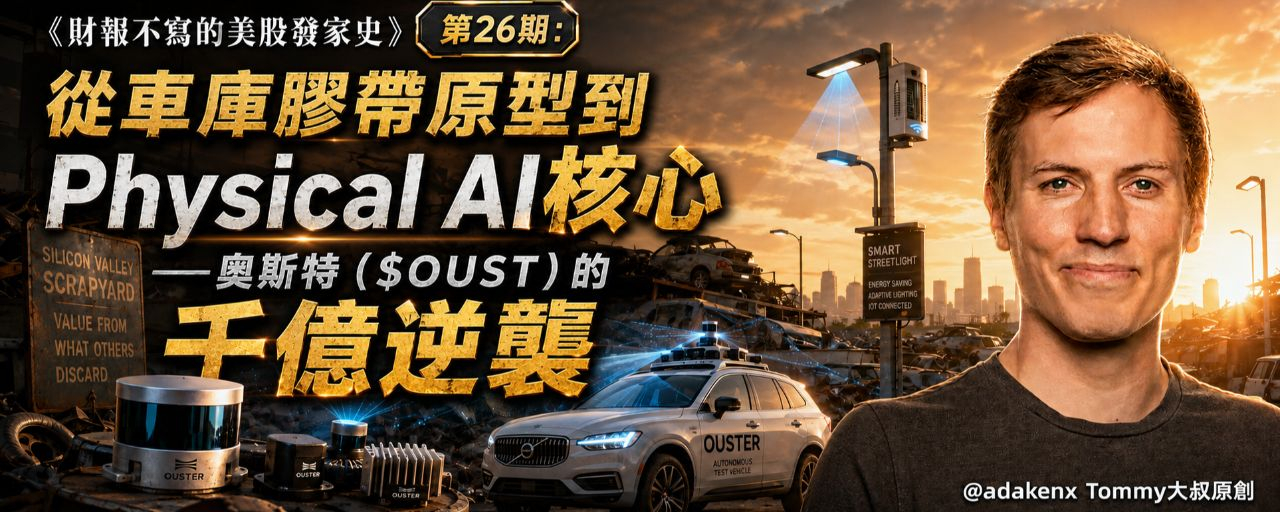
The Oster ($OUST.US ) that I want to study with you today is one of the “satellites” I’m watching.
It is one of the key players in the physical AI sensing layer. Its core product is lidar. The market used to understand lidar mainly as “the eyes of autonomous driving,” but with the development of robotics, smart transportation, and industrial automation, it is becoming an important entry point for machines to understand the real world.
Oster just released its earnings report, and the stock price has already rebounded noticeably. At this time, researching it isn’t about chasing the rally—it’s about answering three questions:
1. Has its technology roadmap truly formed a cost advantage?
2. Can it upgrade from a radar manufacturer into a physical AI sensing platform?
3. Has the current valuation already priced in future growth too early?
In the next long-form post, we’ll break down Oster’s story of moving from a garage prototype to becoming a core player in physical AI—and also see whether it’s truly a potential “satellite” that could take off, or another high-risk target wrapped in a grand narrative.