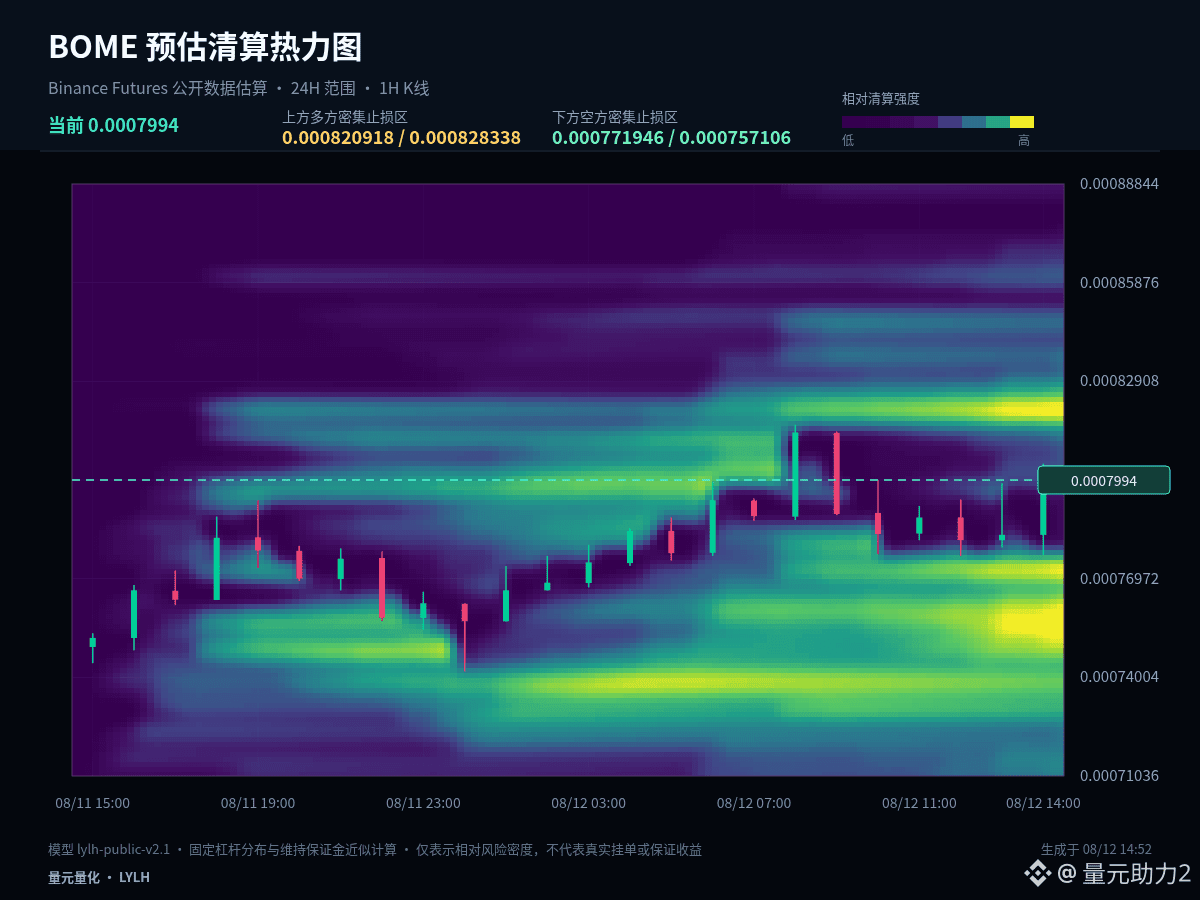
$BOME #BOME Over the past 24 hours, the high-low amplitude is about 9.5%. Current price: 0.0008006. This is not a calm range suitable for opening positions casually. When volatility expands, you should adjust your position first, then discuss direction.
$BOME #BOME is still trading back and forth within the past 24-hour range. There isn’t a clear directional advantage right now. The middle zone is the toughest test of patience—waiting for boundary signals is usually more effective.
Current: 1 hour +2.12%, 24 hours +6.17%. The two timeframes have not formed enough clear alignment in the same direction. In a range market, tolerance for chasing up or cutting down is lower. It’s more suitable to use the upper boundary for confirmation of direction, the lower boundary for confirmation of support. The midline is only used as a strength/weakness divider.
I will treat 0.0007785 as the short-term long/short pivot: if you can hold above it, it means the pullback is still within a controllable range, and later—if conditions allow—there may be another test of 0.0008164. After an effective breakdown, don’t rush in; instead, wait for a new stable structure to appear near 0.0007406.
Execution principles during high-volatility phases: reduce single-trade exposure, avoid repeatedly chasing prices back and forth in the middle of the range, and write invalidation conditions before entering. If price doesn’t provide confirmation, it’s better to do fewer trades rather than make up uncertainty with a larger position.
For execution, set clear conditions: after a breakout above 0.0008164, you need confirmation—not just a momentary surge to chase. After a dip to 0.0007406, you need to see whether it can quickly recover—not to catch every fall. If the middle zone doesn’t offer enough favorable odds, waiting itself is also part of the strategy.
Risk control still comes before the conclusion: only execute when conditions are met, and reassess promptly if the price invalidates. The greater the volatility, the more restrained the single position should be. The above is a scenario analysis based on current 1-hour and 24-hour data, and it does not constitute a promise of returns.
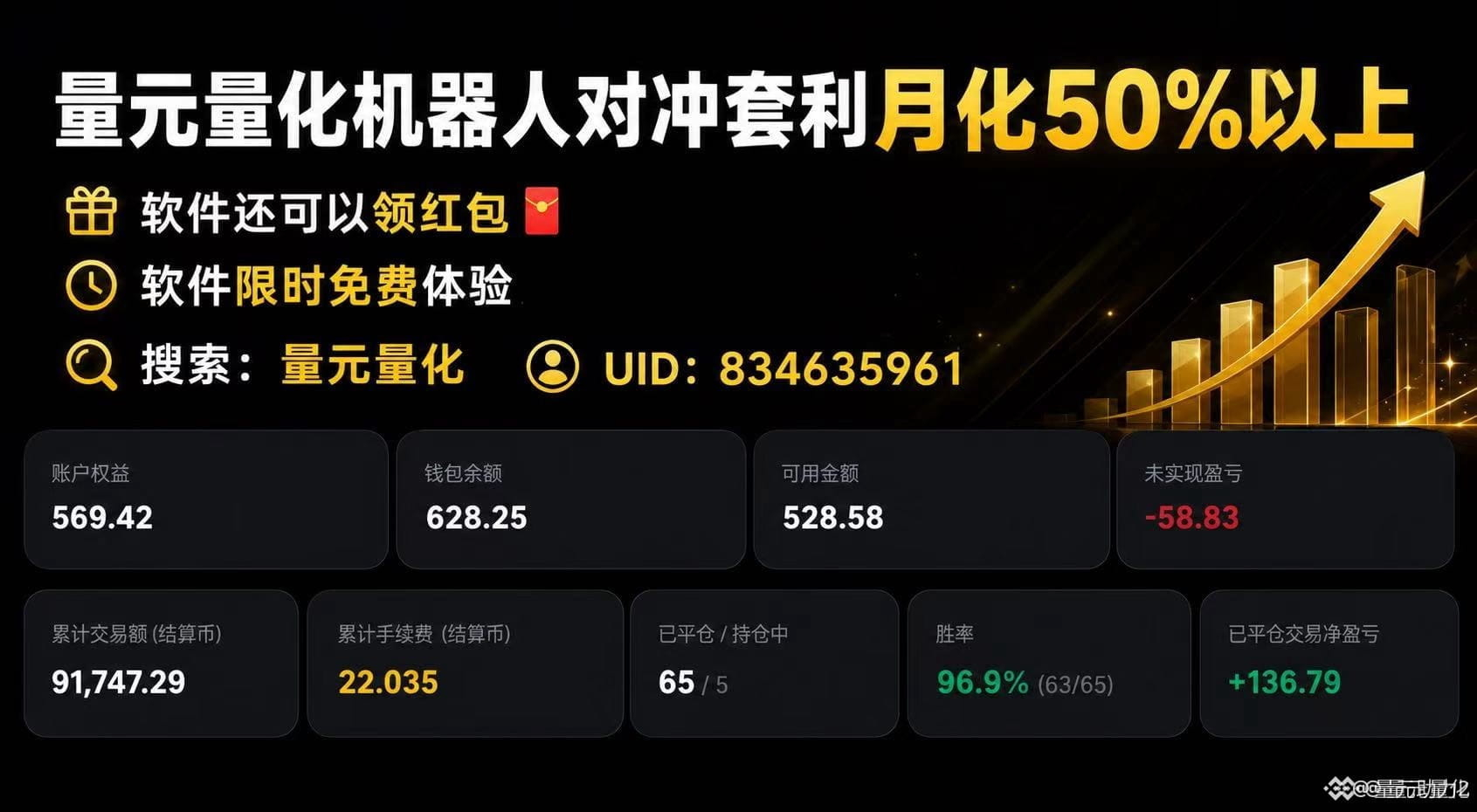
I won’t guess whether it will go up or down for now. I’d rather see how price chooses. Do you think it should go up first or down first? Want to learn about quant hedging arbitrage bots? Join the chat.
#OCCSaysDigitalFirmsCanSeekNationalBankStatus
$BOME #BOME is still trading back and forth within the past 24-hour range. There isn’t a clear directional advantage right now. The middle zone is the toughest test of patience—waiting for boundary signals is usually more effective.
Current: 1 hour +2.12%, 24 hours +6.17%. The two timeframes have not formed enough clear alignment in the same direction. In a range market, tolerance for chasing up or cutting down is lower. It’s more suitable to use the upper boundary for confirmation of direction, the lower boundary for confirmation of support. The midline is only used as a strength/weakness divider.
I will treat 0.0007785 as the short-term long/short pivot: if you can hold above it, it means the pullback is still within a controllable range, and later—if conditions allow—there may be another test of 0.0008164. After an effective breakdown, don’t rush in; instead, wait for a new stable structure to appear near 0.0007406.
Execution principles during high-volatility phases: reduce single-trade exposure, avoid repeatedly chasing prices back and forth in the middle of the range, and write invalidation conditions before entering. If price doesn’t provide confirmation, it’s better to do fewer trades rather than make up uncertainty with a larger position.
For execution, set clear conditions: after a breakout above 0.0008164, you need confirmation—not just a momentary surge to chase. After a dip to 0.0007406, you need to see whether it can quickly recover—not to catch every fall. If the middle zone doesn’t offer enough favorable odds, waiting itself is also part of the strategy.
Risk control still comes before the conclusion: only execute when conditions are met, and reassess promptly if the price invalidates. The greater the volatility, the more restrained the single position should be. The above is a scenario analysis based on current 1-hour and 24-hour data, and it does not constitute a promise of returns.
I won’t guess whether it will go up or down for now. I’d rather see how price chooses. Do you think it should go up first or down first? Want to learn about quant hedging arbitrage bots? Join the chat.
#OCCSaysDigitalFirmsCanSeekNationalBankStatus