#bstockscis
#bStocksCIS
@BinanceCIS
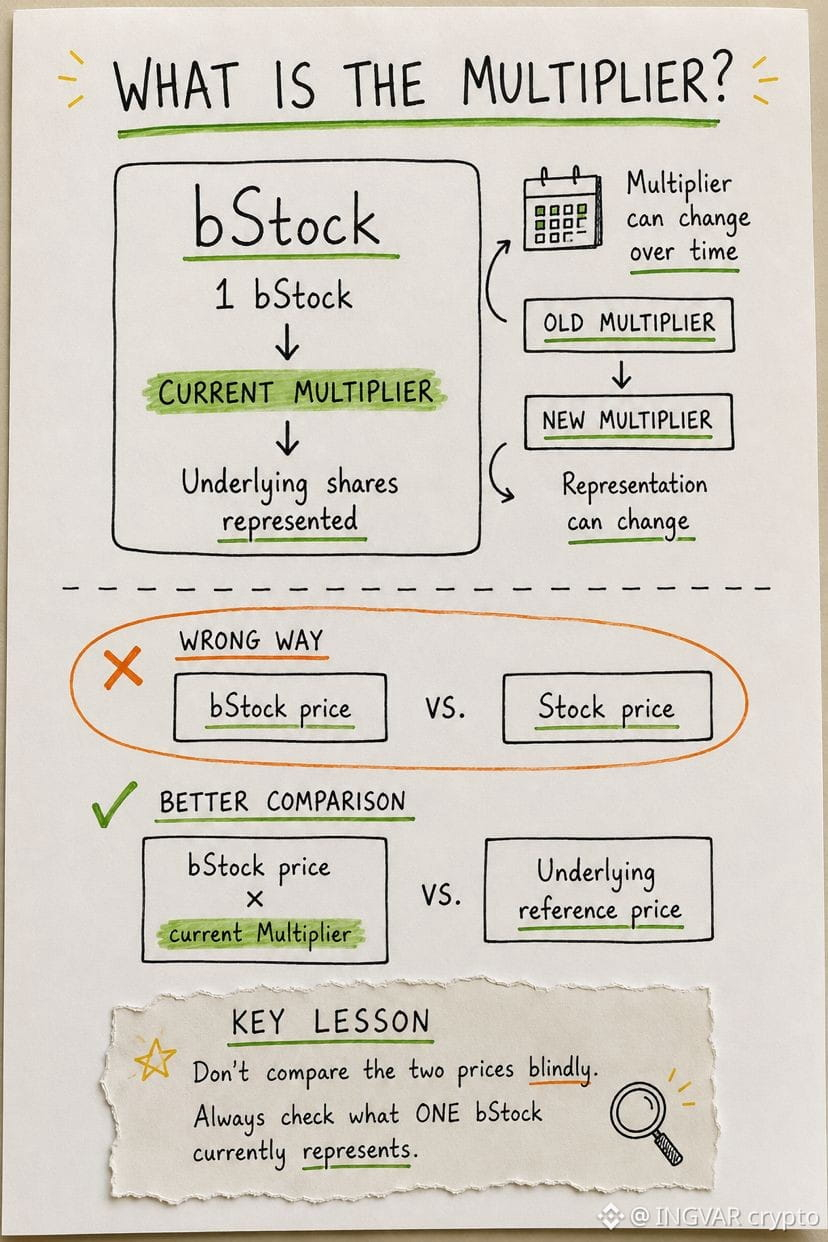
🧩 One bStock — doesn’t necessarily always represent the same number of underlying shares
This is where I understood why you shouldn’t look at bStock only as a “token with a price.”
There’s another parameter that’s easy to miss — the Multiplier.
In simple terms, it determines how many underlying shares one unit of bStock represents at a given moment.
And there’s an important nuance: this metric can change.
So, if today bStock costs $100 and tomorrow it costs $100, that doesn’t yet mean the economic representation of the asset is absolutely identical.
You need to look at two things together:
bStock price × current Multiplier
and only then compare the result with the price of the underlying asset.
For me, this is a good example of why one number on the screen rarely tells the whole story.
📚 Practical takeaway:
When analyzing bStock, always check not only its current price, but also the current Multiplier.
This is especially important if you’re comparing bStock to the price of the underlying share or analyzing price changes over time.
Sometimes the right question isn’t “How much does one token cost?”, but:
“How many units of the underlying asset does it represent right now?”
Have you checked the Multiplier before comparing bStock with the underlying share?