

Excerpt from (Hijacked Bitcoin — The Hidden History of Bitcoin)
<HIJACKING BITCOIN>
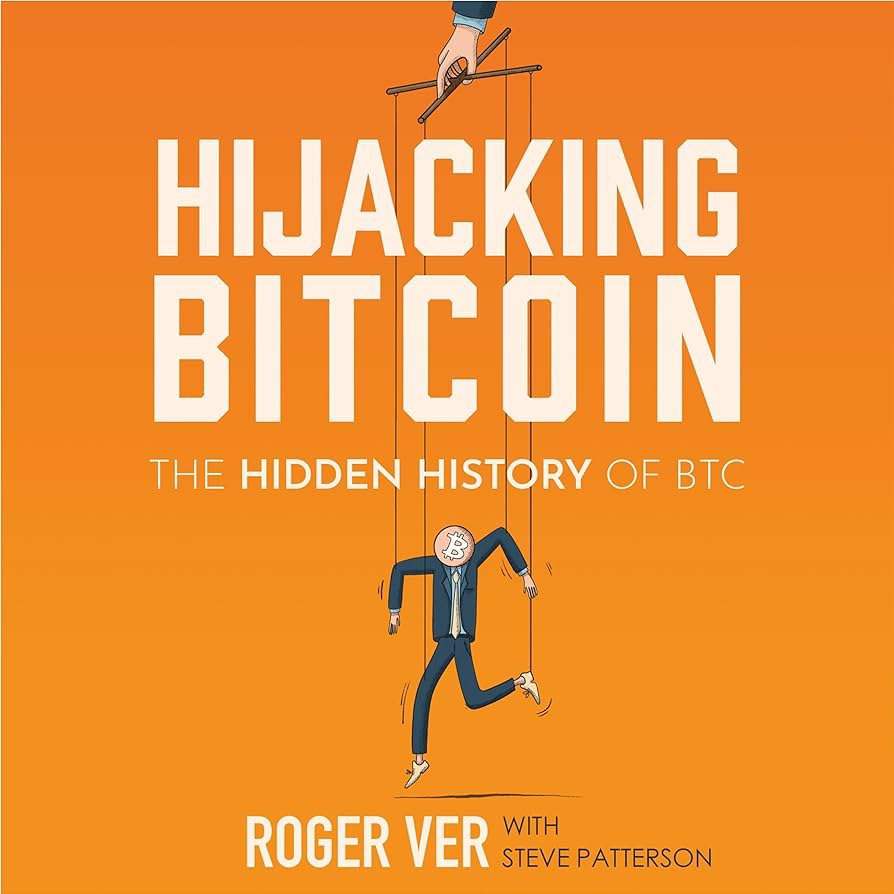
Original author: Roger Ver (Bitcoin Jesus)
The revolution of cryptocurrency began with the emergence of Bitcoin in 2009. Over the past decade, Bitcoin has evolved from complete obscurity into a wave that has drawn global attention, giving rise to an entirely new industry. Entrepreneurs have attempted to use this technology to solve various problems, from improving online payments to rebuilding the global financial system. Amid news reports, Wall Street speculation, and online frenzy, cryptocurrency may have become the most discussed technology of the 21st century. However, despite the hype and soaring prices, its impact in the real world has been relatively limited. In the future, it may become the foundation of a new financial system or a substitute for government fiat currencies, but so far, the primary use of cryptocurrency has been financial speculation.
This situation reminds me of my experiences living in Silicon Valley during the internet boom of the 1990s. At that time, people predicted that internet technology would revolutionize global commerce, meaning any 'internet company' with a premium domain but lacking infrastructure or a reasonable business plan could raise millions in funding. The speculation back then was staggering. Many of the largest startups went bankrupt just a few years after going public. However, despite the notorious internet bubble bursting, the internet did change the world. It has become a critical infrastructure for the global economy and an indispensable part of modern life, even though its maturation process has taken much longer than people expected. Cryptocurrencies are following a similar path. Despite rampant speculation and relatively low adoption rates, they seem to have inevitably become a part of our future.
The story of all modern cryptocurrencies must start with Bitcoin, which is the starting point of everything. Since discovering Bitcoin in 2010, my life has been closely tied to it. I bought my first Bitcoin in early 2011 for less than $1. A few months later, the price skyrocketed to $30, but by November of that year, it had dropped back down to $2. This was the first dramatic price fluctuation in Bitcoin's history, and such volatility has since become commonplace in the industry. The cycle of prices rapidly rising and then falling by over 80% has repeatedly occurred in Bitcoin's brief history. This volatility attracts headlines, as the public is almost solely focused on price. But for me, Bitcoin is far more than just a financial investment. It is an extraordinary tool for increasing global economic freedom.
The early Bitcoin community was filled with quirky characters and unusual ideas. Like many, I was particularly attracted to Bitcoin because of my political and philosophical ideals. I highly value human freedom and believe that individuals should have maximum control over their own lives. The more power governments have, the less power individuals have. From my studies of economics and history, I am well aware that central banks' control over the money supply grants governments significant power. Therefore, Bitcoin is very appealing to me because it is designed to operate without a central authority. People do not need permission to use it. There is no 'Bitcoin Central Bank' controlling the supply of coins, and this technology is not limited by international borders. Very few things have the potential to increase global freedom like a rapid, low-cost, permissionless, and anti-inflationary digital currency.
Another major philosophical motivation driving my enthusiasm for cryptocurrencies is futurism. Thinkers like Ray Kurzweil paint an enticing picture of the future, showcasing a vision of humanity significantly improving its welfare through advanced technology. When we achieve sufficient economic and technological development, we may be able to significantly reduce suffering in the world and even extend our lifespans, allowing us to enjoy more time on Earth. To achieve this goal requires enough wealth and prosperity to continue funding research, along with continuous freedom for innovation. In my view, Bitcoin leads us towards a more technologically advanced future, where everyone's life will be improved as a result.
These beliefs were not uncommon in the early Bitcoin community. Online forums and message boards were the core hubs of discussion. If you visited these platforms, you would see endless discussions — Bitcoin is far more than just a simple payment system or speculative investment. We all knew that this technology could significantly improve the world. Brian Armstrong, co-founder and CEO of Coinbase, perfectly expressed this sentiment in an article titled (How Digital Currencies Will Change the World):
Digital currencies may be the most effective means in history for increasing economic freedom. If this goal is achieved, the impact will be profound. It could lift many countries out of poverty, improve the lives of billions, and accelerate the pace of global innovation... reduce wars, improve the living standards of the poorest 10%, overthrow corrupt governments, and enhance happiness.
My enthusiasm quickly turned into evangelism, earning me the nickname 'Bitcoin Jesus' because I would spread the gospel of Bitcoin to anyone willing to listen — even many who were not willing. My friends and family, the media, and businesses I frequented would hear the same message: Bitcoin is fast, cheap, and reliable internet money. Through it, you can send any amount of funds anywhere in the world instantly for less than a penny. In fact, in the early days, most Bitcoin transactions were completely free, only requiring a small fee if your coins had been moved recently. Regardless of individuals' ideologies, people could immediately see the value of this technology. One of the best ways to promote it was to let people experience Bitcoin firsthand because the user experience of Bitcoin is unparalleled compared to other payment systems. I would have people download a wallet on their phones and then send them a few dollars. After experiencing their first Bitcoin transaction, within seconds, you could always hear them exclaiming 'Wow!' — their first impression of Bitcoin was astonishing.
By 2015, the momentum for Bitcoin had become unstoppable. Well-known companies like Microsoft and Expedia began accepting Bitcoin payments, and this emerging industry was experiencing exponential growth. Success followed success. The influx of venture capital continued to rise, and media coverage gradually became more positive. Bitcoin seemed to be on its way to a moonshot.
Failed to take off
Fast forward to today. Although Bitcoin is already a household name, it has not truly taken over the world. In fact, aside from headlines and price charts, there is a harsh reality: since 2018, the actual usage of Bitcoin has declined, and many businesses have completely given up on using it as a payment option. In the face of repeated network congestion, the Bitcoin network has become nearly unusable, with high transaction fees and unreliable payments. During periods of network congestion, average transaction fees can exceed $50, and transactions may take days or even weeks to be processed. Worse still, these failures have forced the industry to adopt so-called 'custodial wallets,' which are essentially customer accounts managed by companies, similar to traditional bank accounts.
The widespread use of custodial wallets undermined the entire meaning of Bitcoin because users' complete control was handed over to a third party that could censor, track, and even confiscate coins — which is no different from an account balance in Venmo. Furthermore, fraud became easier. For example, when the FTX exchange collapsed in 2022, over $1 billion of customer funds evaporated in an instant. This happened because FTX ultimately controlled its customers' funds. Another notable example is the integration of Bitcoin into PayPal, which allows users to access Bitcoin through custodial wallets rather than fully controlling their own funds. If ordinary people are using custodial wallets, Bitcoin will lose its most revolutionary key features.
High fees, unreliable payments, custodial wallets, and reduced usage in commerce — from indicators other than price, Bitcoin has not 'gone to the moon'; it hasn't even left Earth's orbit. So, what exactly happened?
Official narrative
The traditional explanation for these negative trends is that Bitcoin has become a victim of its own success. As its popularity grew, the network reached its capacity limit. Inherent technical limitations led to soaring fees, unreliable payments, merchants exiting, and the industry turning to custodial wallets. In response to these issues, the narrative around Bitcoin gradually shifted to being 'digital gold' and 'store of value' rather than digital currency. If Bitcoin itself should not be used for everyday transactions, then whether it operates as a payment system becomes irrelevant.
Although these viewpoints are often repeated in the media and by popular commentators, they are completely incorrect. The real story is much more dramatic. Bitcoin was originally designed for mass adoption and did not encounter inherent technical limitations. Instead, the project was taken over by a small group of software developers who redesigned the entire system. They deliberately limited Bitcoin's capacity and functionality and publicly advocated for high fees and transaction backlogs — which completely contradicts Bitcoin's initial design.
When I tell people about this today, they often think I'm exaggerating, but the developers themselves have expressed it this way. For example, influential Bitcoin developer Greg Maxwell explicitly stated, 'I don't think the importance of transaction fees is a failure — it is exactly a sign of success!' Another Bitcoin developer, Mark Friedenbach, stated, 'Slow confirmations and high fees will become the norm for any secure outcome.' When the network nearly came to a halt in December 2017, with average transaction fees exceeding $50, they even 'opened champagne to celebrate' and were satisfied with the network congestion, claiming that the ongoing backlog was 'a necessary criterion for stability.'
If you had told me in 2012 that Bitcoin developers would eventually want to see high fees and slow transactions, I would not have believed you, nor would any early participants. Such an idea was too absurd. High transaction fees and network congestion are not necessary for security or stability; in fact, the opposite is true: high fees and unreliable payments push people towards using custodial wallets, which is fundamentally what undermines Bitcoin's original intent.
At the current trajectory, Bitcoin will not empower ordinary people. The stagnation of this project over the past few years is not due to technical failure, but rather due to human error, particularly poor leadership and flawed governance models. When I learned about Bitcoin in early 2010, it was so exciting that I almost felt a moral obligation to tell people the good news about this technology. But today, given the changes that have occurred, I feel a moral obligation to tell people the bad news: Bitcoin has been hijacked, and it is no longer the original project that once inspired me and countless others. However, its story is not over.
Alternatives
The original, scalable design of Bitcoin still exists, but it is not traded on cryptocurrency exchanges under the code 'BTC.' It is known as 'Bitcoin Cash' (BitcoinCash), with the code BCH. For years, the industry has been hindered by BTC developers until 2017, when a new network was created to preserve Bitcoin's original vision as low-fee, fast transactions without custodial wallets. While the BCH network is far less known than BTC, its throughput has expanded to over 30 times that of BTC, and it plans to achieve exponential growth in the future.
The events leading to the birth of Bitcoin Cash are controversial and are referred to as the 'Bitcoin Civil War.' Even today, there is still hostility between the BTC and BCH communities. If you casually learn about Bitcoin, you may have only heard the BTC version of the narrative; this book tells another version, filled with historical details, excerpts, and quotes from other early adopters who share the same vision as I do.
To distinguish between different networks and groups, clear terminology is helpful. The BTC network is often referred to as 'Bitcoin Core,' while the BCH network is referred to as 'Bitcoin Cash.' Therefore, these terms will be used in the subsequent content. The standalone term 'Bitcoin' refers to the underlying technology used by both networks. Bitcoin Core and Bitcoin Cash both use Bitcoin technology and share the exact same transaction history prior to the split in August 2017. The developers of Bitcoin Core decided to deviate from the original design, while the developers of Bitcoin Cash adhered to it.
Avoiding risks
If this technology is indeed revolutionary, it will inevitably threaten the power of existing financial and political institutions. But at the current trajectory, without change, these institutions will swallow and dissolve cryptocurrencies. If Bitcoin wants to make the world more free, our window of opportunity is gradually closing. The industry faces two failure scenarios. The first is being completely captured by the existing financial and regulatory systems. The widespread adoption of custodial wallets makes this possible, as transactions become easy to trace and control, and governments can easily force companies to comply with rules.
The second failure scenario is that people abandon the vision of inflation-resistant digital cash. I have seen many talented individuals and capable entrepreneurs prematurely conclude that Bitcoin cannot scale due to the failures of Bitcoin Core. If people realized that the original Bitcoin technology still exists, operates well, and can scale to accommodate global adoption, then this disappointment could be avoided. Bitcoin Core merely deviated from this design. Before losing faith in blockchain technology, entrepreneurs and developers need to first experience the original version. I have been trying new cryptocurrencies, and Bitcoin Cash still provides one of the best user experiences for me after all these years.
Bitcoin stands at the intersection of international finance, political power, and disruptive technology, and its story is destined to be one of the most dramatic scenes in all industries, worthy of multiple Hollywood films. This book is just a part of that story — the history of Bitcoin development being taken over and the subsequent split into Bitcoin Cash, told from the perspective of what may be the entrepreneur who used Bitcoin the most in business globally.


