



South Korea just made another move that could change how people use crypto on local exchanges, and I think it deserves more attention than a simple “bullish” or “bearish” reaction.
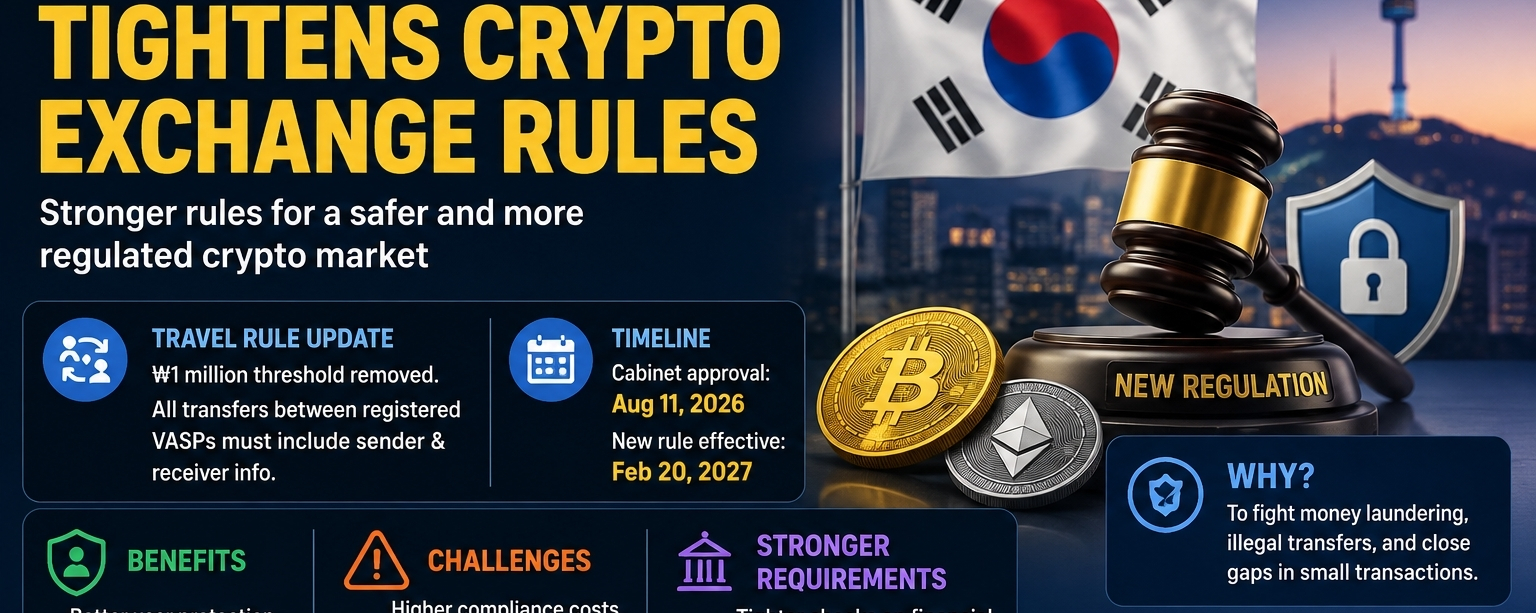
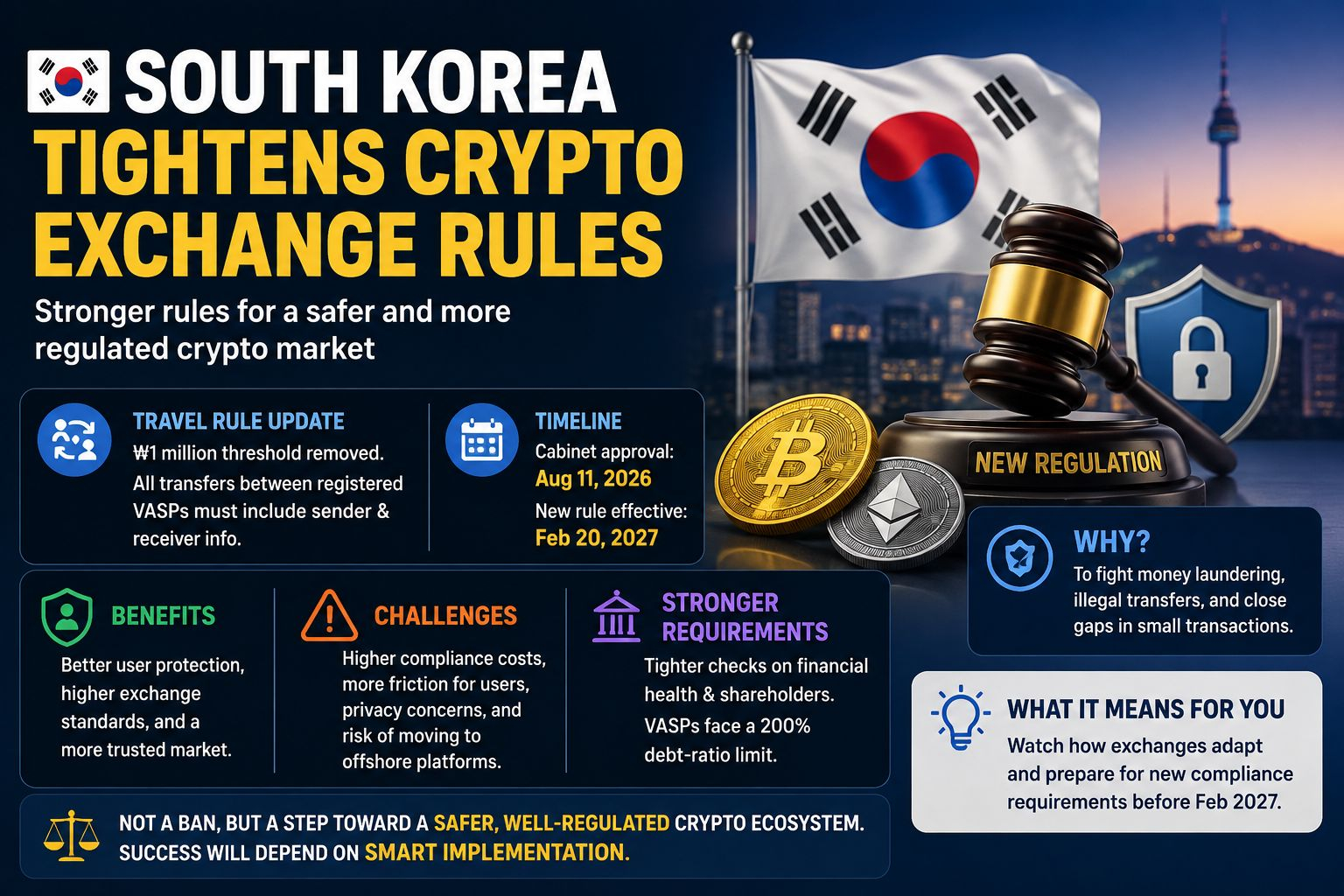
On August 11, 2026, the Korean Cabinet approved tighter rules for crypto exchanges and virtual asset service providers. The biggest change is around the Travel Rule. Until now, transfers of ₩1 million or more generally had to carry sender and receiver information between Korean exchanges. The new rules remove that minimum.
That means even smaller transfers between registered Korean VASPs will eventually face the same information requirements. The expanded rule is expected to take effect on February 20, 2027.
I can understand why regulators want this. Small transactions can still be used to move funds around, and removing the threshold makes it harder to stay below a reporting line. Korea is clearly trying to close gaps that could be exploited for money laundering or other financial crimes.
But there is another side that shouldn't be ignored.
More rules mean more work for exchanges. Smaller platforms could face higher compliance costs, while ordinary users may notice more friction when moving relatively small amounts. There are also legitimate privacy concerns when more transaction information has to move between service providers.
Korea is also raising the bar for companies that want to operate as VASPs. Stronger checks on financial health and major shareholders are part of the wider push. Reports around the latest amendment point to a 200% debt-ratio limit for VASPs as well.
To me, this doesn't look like South Korea trying to push crypto away. It looks more like an attempt to bring crypto further inside the regulated financial system.
And that could be good.
Better oversight can remove weak operators and give users more confidence in the platforms they use. But regulation has a limit. If compliance becomes too expensive or transfers become unnecessarily difficult, some users and businesses may simply look toward offshore alternatives.
That's the part I'll be watching most closely.
South Korea has already been strengthening its crypto framework throughout 2026, and this latest move shows that the direction is clear: more oversight, stronger exchange requirements, and tighter transaction monitoring.
So no, I wouldn't call this a crypto ban.
It's a bet on regulated crypto.
Whether that bet works will depend on the details and how exchanges and users respond. Good regulation can build trust. Too much friction can push activity somewhere else.
For anyone following the Korean crypto market, February 2027 is now an important date to keep on the radar.