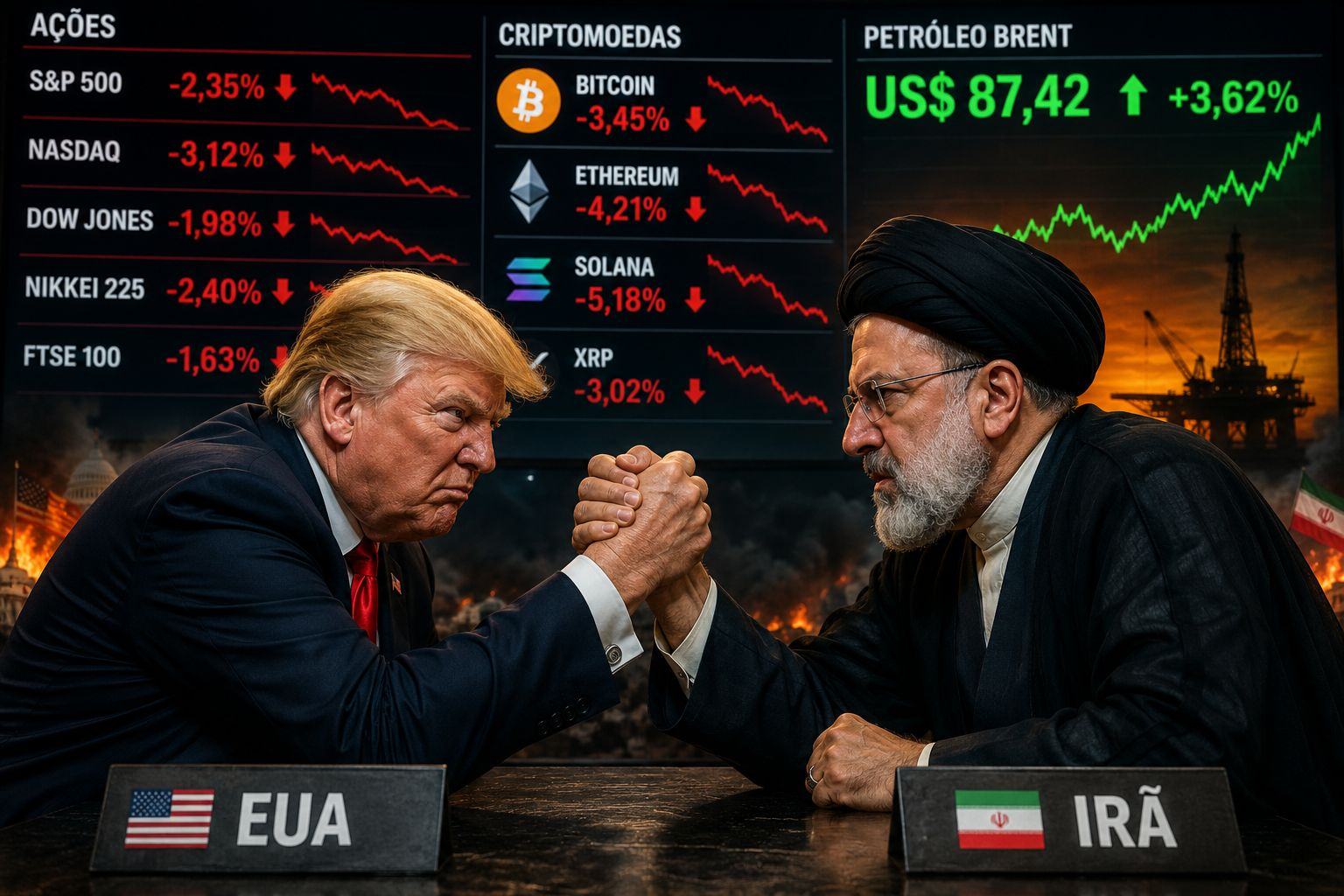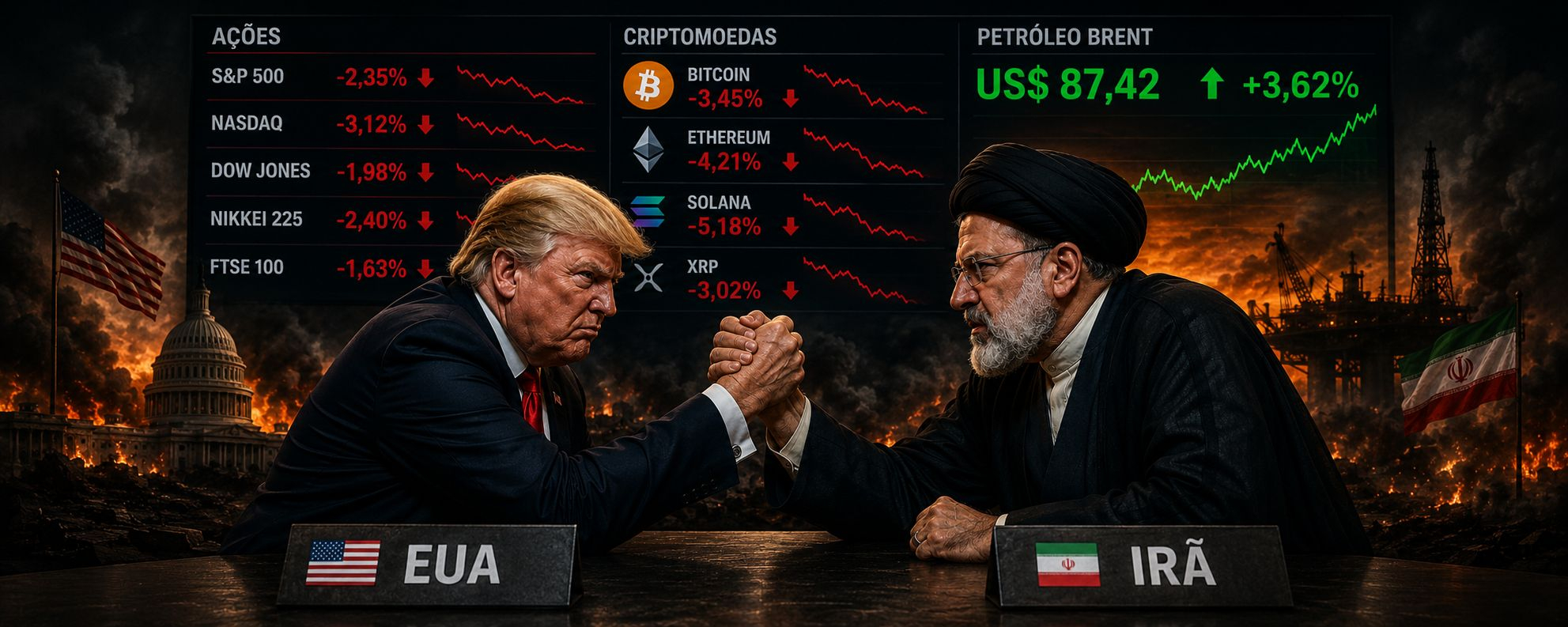

The situation at the start of the week is one of significant tension, but it’s important to separate what is happening in the war from what is actually pressuring Bitcoin.
🇺🇸🇮🇷 US and Iran: the latest situation
Peace talks remain stalled. The main point of tension is the agreement involving Iran and the future of the Strait of Hormuz.
The Trump administration is pressuring Iran for compensation related to past conflicts, making negotiations more difficult.
The oil market reacted immediately: Brent reached about US$88 per barrel, while US oil reached approximately US$82.45.
Investors are concerned that a fresh deterioration in negotiations could trigger a bigger disruption to the oil flow through the Strait of Hormuz.
That could raise global inflation and make it harder for the Federal Reserve to cut rates eventually.
In other words: right now, the market is more concerned with the war’s economic consequences than with an immediate expansion of the fighting.
₿ And why is Bitcoin falling?
The drop from Monday/early Tuesday appears to be related to a combination of factors, not exclusively to the war.
1. Increase in risk aversion
Bitcoin is still treated by many institutional investors as a risk asset. When fears of war rise, expensive oil, inflation and high interest rates follow, investors tend to cut exposure to more volatile assets.
There’s also an interesting divergence: while gold rose by about 2.5% on August 10, Bitcoin fell by roughly 1.5%, according to data compiled by investors.
2. Higher oil prices = inflation = interest rates
This may be the most important point.
If oil remains elevated because of the conflict:
war → oil ↑ → inflation ↑ → Fed less willing to cut rates → dollar/rates ↑ → risk assets ↓ → Bitcoin pressured
Reuters reported today that the market is precisely assessing this risk, including in light of expectations for upcoming US inflation data.
3. Profit taking
After Bitcoin’s previous moves, some investors may simply be taking profits. In cryptocurrency markets, a relatively small drop can accelerate when there are many leveraged positions.
4. Bitcoin isn’t behaving exactly like “digital gold” in this episode
This is an interesting point for you to watch. In moments of geopolitical tension, gold tends to receive defensive demand, while Bitcoin could fall along with stocks and other risk assets.
This has already happened during the crisis involving Iran and the US: Fidelity’s market studies show that Bitcoin’s behavior during geopolitical conflicts can be quite different from gold.
⚠️ What I would watch in the coming days
To see whether this Bitcoin drop could deepen, I would mainly track four indicators:
Indicator
If it happens:
Possible effect on BTC
🇺🇸🇮🇷 Peace deal advances
Tension eases
🟢 Positive
🛢️ Oil continues to rise
Inflation rises
🔴 Negative
🇺🇸 US inflation surprises to the upside
High rates for longer
🔴 Negative
🕊️ Strait of Hormuz normalizes
Oil down = risk down
🟢 Positive
Market read for this moment: Bitcoin’s decline seems to be far more a combination of risk aversion + oil/inflation + expectations for US interest rates + profit taking than simply “Bitcoin fell because of the war.”
And there is a particularly important question: if the US and Iran reach an agreement and oil starts to fall, Bitcoin could react quickly, because one of the market’s main macroeconomic concerns would ease.