
PINDI BOY PK²⁵
4.5k Posts

PINDI BOY PK²⁵
 Square Verified+
📊 Market Analyst & Mentor | 📈 Spot & Futures Veteran | X@Pindiboy25
High-Frequency Trader
5.3 Years
4.9K+ Following
30.4K+ Followers
10.5K+ Liked
Posts
All
Quotes
Videos
Live
PINNED
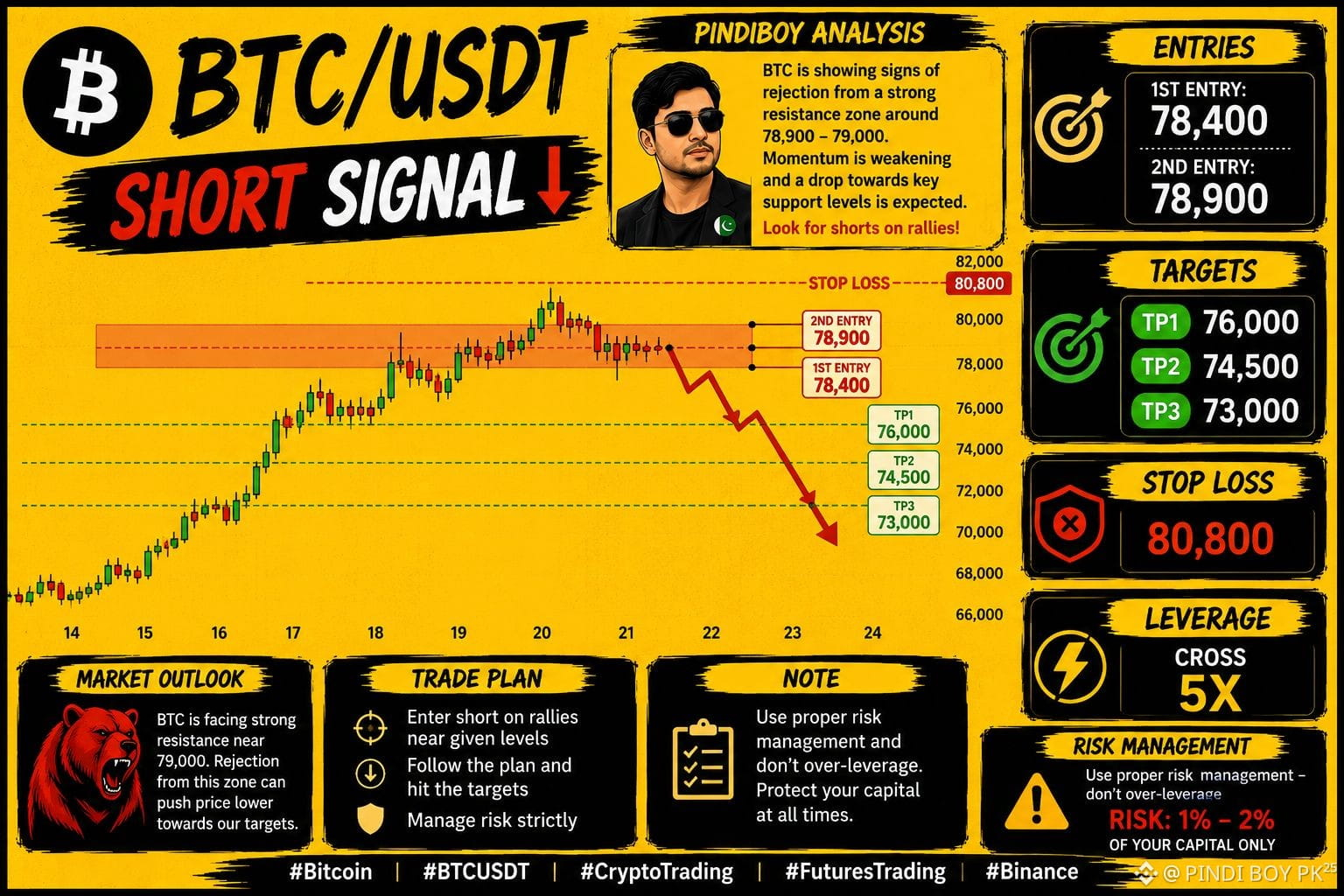
🔴🔴🔴 $BTC /USDT SHORT 🔴🔴🔴
⏳ 1st Entry: 78,400
⏳ 2nd Entry: 78,900
🎯 Targets:
1️⃣ 76,000
2️⃣ 74,500
3️⃣ 73,000
🛑 Stop Loss: 80,800
⚡ Leverage: Cross 5X
PINDIBOY SHORT ANALYSIS:
BTC is facing strong resistance around the 78.4K–78.9K zone after a strong move higher. If this area rejects price, a pullback toward 76K, 74.5K and 73K becomes possible.
The setup is invalid above 80.8K. Avoid FOMO entries and wait for rejection/confirmation before entering. Take profits in parts and protect your capital.
⚠️ Risk only 0.5%–1% of your account. Don’t over-leverage.
#BTC #BTCUSDT #bitcoin #CryptoTrading #FuturesTrading
⏳ 1st Entry: 78,400
⏳ 2nd Entry: 78,900
🎯 Targets:
1️⃣ 76,000
2️⃣ 74,500
3️⃣ 73,000
🛑 Stop Loss: 80,800
⚡ Leverage: Cross 5X
PINDIBOY SHORT ANALYSIS:
BTC is facing strong resistance around the 78.4K–78.9K zone after a strong move higher. If this area rejects price, a pullback toward 76K, 74.5K and 73K becomes possible.
The setup is invalid above 80.8K. Avoid FOMO entries and wait for rejection/confirmation before entering. Take profits in parts and protect your capital.
⚠️ Risk only 0.5%–1% of your account. Don’t over-leverage.
#BTC #BTCUSDT #bitcoin #CryptoTrading #FuturesTrading
awesome cotent

Queen_DoLL
·
--
A few days ago, I caught myself thinking about a strange problem in financial markets.
We often assume privacy and transparency are opposites.
If information is hidden, how can anyone verify what actually happened?
But when I started looking deeper into @Dusk , that assumption became less convincing.
Imagine an institution needs to prove that an investor is eligible for a regulated asset.
The proof matters.
But does everyone else really need to see that investor’s identity, balance, and complete transaction history?
That’s where Dusk’s approach gets interesting.
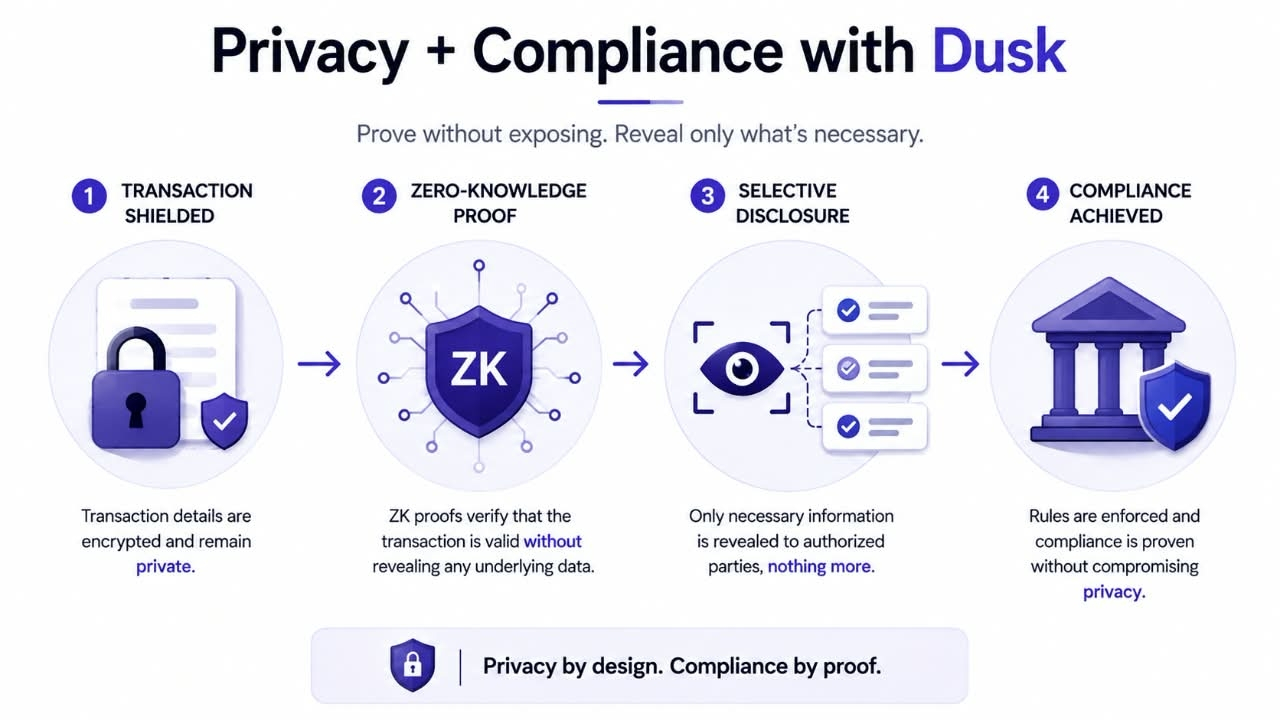
With Phoenix, sensitive transaction details can remain shielded, while zero-knowledge proofs can verify that the transaction is valid without exposing the underlying data.
Selective disclosure can then reveal only what an authorized party actually needs.
So the system isn’t simply choosing privacy over transparency.
It’s trying to separate verification from exposure.
There’s still a trade-off.
Too much privacy can make auditing harder.
Too much transparency can make regulated markets uncomfortable for institutions that cannot publicly expose every position and transaction.
Which made me wonder:
Maybe the real question isn’t “private or transparent?”
Maybe it’s:
“Who needs to know what, and why?”
That changes the way I look at @Dusk s privacy architecture.
The interesting part may not be making financial data invisible.
It may be making disclosure conditional, selective, and verifiable.
And if that works, privacy stops being just a feature of the network.
It becomes part of how the financial market itself operates.
$DUSK $SPK $PENGU #RWA #dusk
#USCanadaTradeTalksCollapseCanadaVowsRetaliation #SandboxSANDSuspectedInfiniteMintFlawOnBase #GrayscaleFilesFifthZECETFAmendment
We often assume privacy and transparency are opposites.
If information is hidden, how can anyone verify what actually happened?
But when I started looking deeper into @Dusk , that assumption became less convincing.
Imagine an institution needs to prove that an investor is eligible for a regulated asset.
The proof matters.
But does everyone else really need to see that investor’s identity, balance, and complete transaction history?
That’s where Dusk’s approach gets interesting.
With Phoenix, sensitive transaction details can remain shielded, while zero-knowledge proofs can verify that the transaction is valid without exposing the underlying data.
Selective disclosure can then reveal only what an authorized party actually needs.
So the system isn’t simply choosing privacy over transparency.
It’s trying to separate verification from exposure.
There’s still a trade-off.
Too much privacy can make auditing harder.
Too much transparency can make regulated markets uncomfortable for institutions that cannot publicly expose every position and transaction.
Which made me wonder:
Maybe the real question isn’t “private or transparent?”
Maybe it’s:
“Who needs to know what, and why?”
That changes the way I look at @Dusk s privacy architecture.
The interesting part may not be making financial data invisible.
It may be making disclosure conditional, selective, and verifiable.
And if that works, privacy stops being just a feature of the network.
It becomes part of how the financial market itself operates.
$DUSK $SPK $PENGU #RWA #dusk
#USCanadaTradeTalksCollapseCanadaVowsRetaliation #SandboxSANDSuspectedInfiniteMintFlawOnBase #GrayscaleFilesFifthZECETFAmendment
🎙️ Build the Binance Plaza, DCA BNB|A new Monday—BTC is hovering around 77,000; how long do you think it needs to gather strength before taking off again? Let’s chat~

End
05 h 14 m 53 s
9.1k
37
Disputed
HUGE VOLUME HUGE REWARD FOR DUSK COIN

TIPU SULTAN 蒂普苏丹
·
--
Bullish🚀 DUSK Livestream Challenge on Binance Square!
Complete at least 3 DUSK-related livestreams, each 60+ minutes, and generate $1,000+ eligible DUSK trading volume from viewers to qualify. Rewards can reach up to 40,000 USDC in token vouchers! 💰
Share genuine DUSK insights, trading strategies & interact with viewers. Avoid fake traffic, spam, AI content and unsupported price predictions.
#DUSK #BinanceSquare #Web3 #crypto $DUSK
Complete at least 3 DUSK-related livestreams, each 60+ minutes, and generate $1,000+ eligible DUSK trading volume from viewers to qualify. Rewards can reach up to 40,000 USDC in token vouchers! 💰
Share genuine DUSK insights, trading strategies & interact with viewers. Avoid fake traffic, spam, AI content and unsupported price predictions.
#DUSK #BinanceSquare #Web3 #crypto $DUSK

TIPU SULTAN
TIPU SULTAN 蒂普苏丹
·
--
Bullish 🚀 BNB Red Packet 🎁
🔥 **BNB isn’t just a coin — it’s a whole ecosystem!**
The **BNB Red Packet** brings a fun way to share crypto rewards with the community. ❤️🧧
💛 **Love BNB? Show some love! ❤️**
🎁 **Send Love • Share Rewards • Spread the BNB Vibe!**
🚀 Let’s grow together and keep the BNB community strong! 💎
❤️ Love ❤️ | 🎁 Gift 🎁 | 🧧 Red Packet 🧧 | 🚀 BNB 🚀
#BNB #BNB #redpacket #crypto #Web3
$BNB
🔥 **BNB isn’t just a coin — it’s a whole ecosystem!**
The **BNB Red Packet** brings a fun way to share crypto rewards with the community. ❤️🧧
💛 **Love BNB? Show some love! ❤️**
🎁 **Send Love • Share Rewards • Spread the BNB Vibe!**
🚀 Let’s grow together and keep the BNB community strong! 💎
❤️ Love ❤️ | 🎁 Gift 🎁 | 🧧 Red Packet 🧧 | 🚀 BNB 🚀
#BNB #BNB #redpacket #crypto #Web3
$BNB
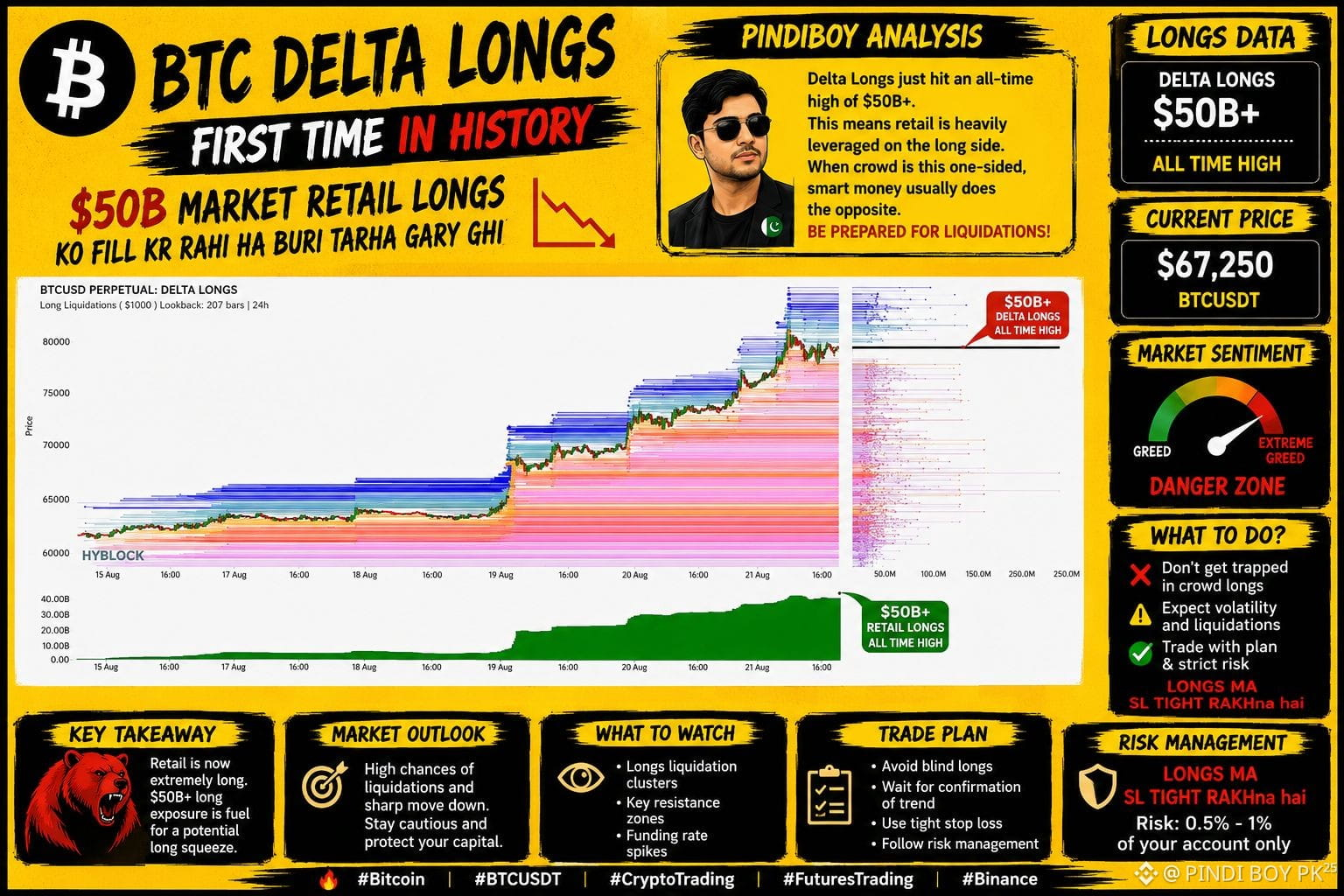
🔴🔴🔴$BTC DELTA LONGS 🔴🔴🔴
BTC retail longs have reached an extreme $50B+ level, showing heavy crowd positioning on the long side. When leverage becomes this one-sided, even a small downside move can trigger a cascade of long liquidations.
For now, avoid blind longs. If BTC starts losing key support, the crowded long positioning could fuel a sharper pullback.
⚠️ Longs mein SL tight rakho. Protect capital and wait for confirmation before taking a trade.
#BTC #BTCUSDT #bitcoin #cryptotrading #FuturesTrading
BTC retail longs have reached an extreme $50B+ level, showing heavy crowd positioning on the long side. When leverage becomes this one-sided, even a small downside move can trigger a cascade of long liquidations.
For now, avoid blind longs. If BTC starts losing key support, the crowded long positioning could fuel a sharper pullback.
⚠️ Longs mein SL tight rakho. Protect capital and wait for confirmation before taking a trade.
#BTC #BTCUSDT #bitcoin #cryptotrading #FuturesTrading
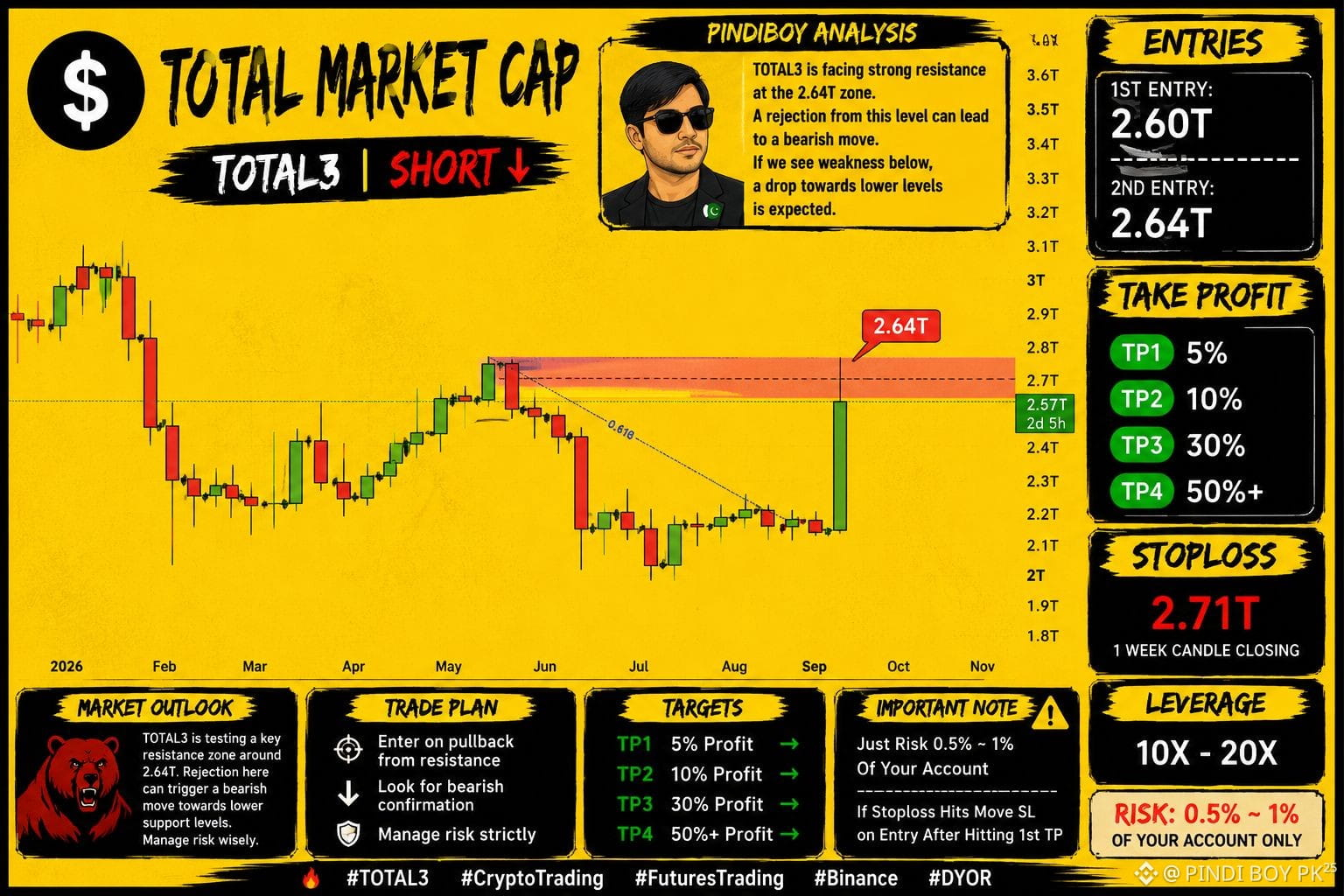
🔴🔴🔴TOTAL CRYPROCAP (W) 🔴🔴🔴
TOTAL CRYPROCAP (W) is testing a major resistance zone around 2.60T–2.64T after a strong weekly breakout. If price gets rejected from this zone and bearish confirmation appears, a pullback toward lower support levels becomes likely.
Invalidation: Weekly close above 2.71T.
Plan: Wait for rejection + confirmation before entering. Manage risk strictly.
#total3 #cryptotrading #FuturestradingSignals #Binance #CryptoMarket
TOTAL CRYPROCAP (W) is testing a major resistance zone around 2.60T–2.64T after a strong weekly breakout. If price gets rejected from this zone and bearish confirmation appears, a pullback toward lower support levels becomes likely.
Invalidation: Weekly close above 2.71T.
Plan: Wait for rejection + confirmation before entering. Manage risk strictly.
#total3 #cryptotrading #FuturestradingSignals #Binance #CryptoMarket
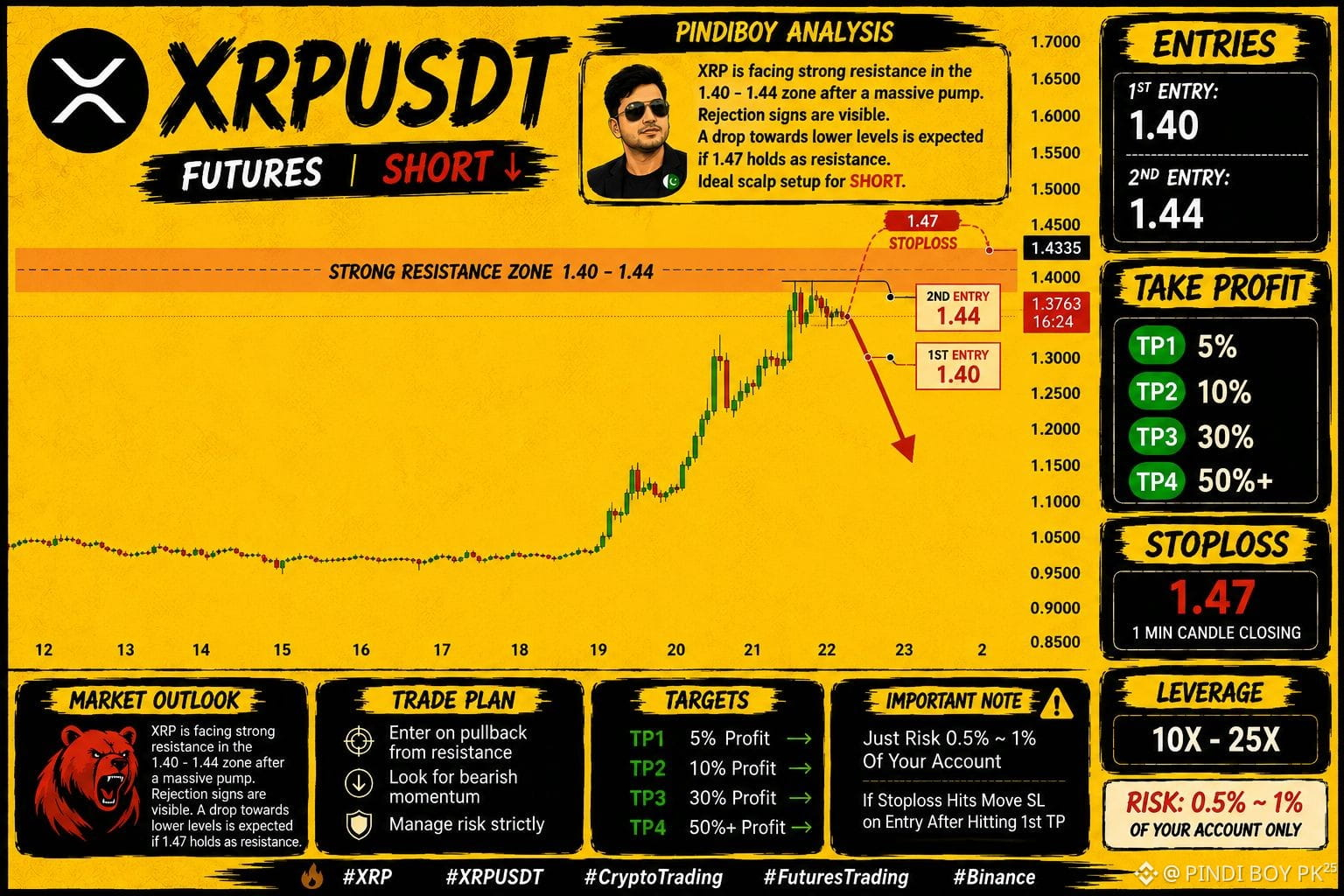
🔴🔴🔴$XRP /USDT SHORT 🔴🔴🔴
TYPE: Futures —
Entry 1: 1.40
Entry 2: 1.44
Stop Loss: 1.47 — 1M candle close above
Risk: 0.5%–1% of account only
Take Profit:
🎯 TP1: 5% → 1.33–1.37
🎯 TP2: 10% → 1.26–1.30
🎯 TP3: 30% → 0.98–1.01
🎯 TP4: 50%+ → 0.70–0.72
SHORT ANALYSIS:
XRP has made a sharp vertical move and is now facing a strong resistance zone around 1.40–1.44. The price is showing rejection near the highs, making this area interesting for a scalp short if bearish momentum confirms.
The key level is 1.47. If a 1-minute candle closes above it, the short setup is invalidated. If rejection continues below resistance, XRP could retrace toward the lower levels.
⚠️ After TP1, consider moving SL to entry and protect the trade. No revenge trading.
#XRP #XRPUSDT #cryptotrading #FuturestradingSignals #Binance
TYPE: Futures —
Entry 1: 1.40
Entry 2: 1.44
Stop Loss: 1.47 — 1M candle close above
Risk: 0.5%–1% of account only
Take Profit:
🎯 TP1: 5% → 1.33–1.37
🎯 TP2: 10% → 1.26–1.30
🎯 TP3: 30% → 0.98–1.01
🎯 TP4: 50%+ → 0.70–0.72
SHORT ANALYSIS:
XRP has made a sharp vertical move and is now facing a strong resistance zone around 1.40–1.44. The price is showing rejection near the highs, making this area interesting for a scalp short if bearish momentum confirms.
The key level is 1.47. If a 1-minute candle closes above it, the short setup is invalidated. If rejection continues below resistance, XRP could retrace toward the lower levels.
⚠️ After TP1, consider moving SL to entry and protect the trade. No revenge trading.
#XRP #XRPUSDT #cryptotrading #FuturestradingSignals #Binance
🎙️ Tonight, tonight—how to watch US stocks and get on board together
End
03 h 16 m 08 s
7.7k
8
🎙️ DUSK: Privacy, Compliance, and Real-World Finance on Blockchain

End
01 h 46 m 05 s
748
DUSKUSDT
Perp
Market/Short
0
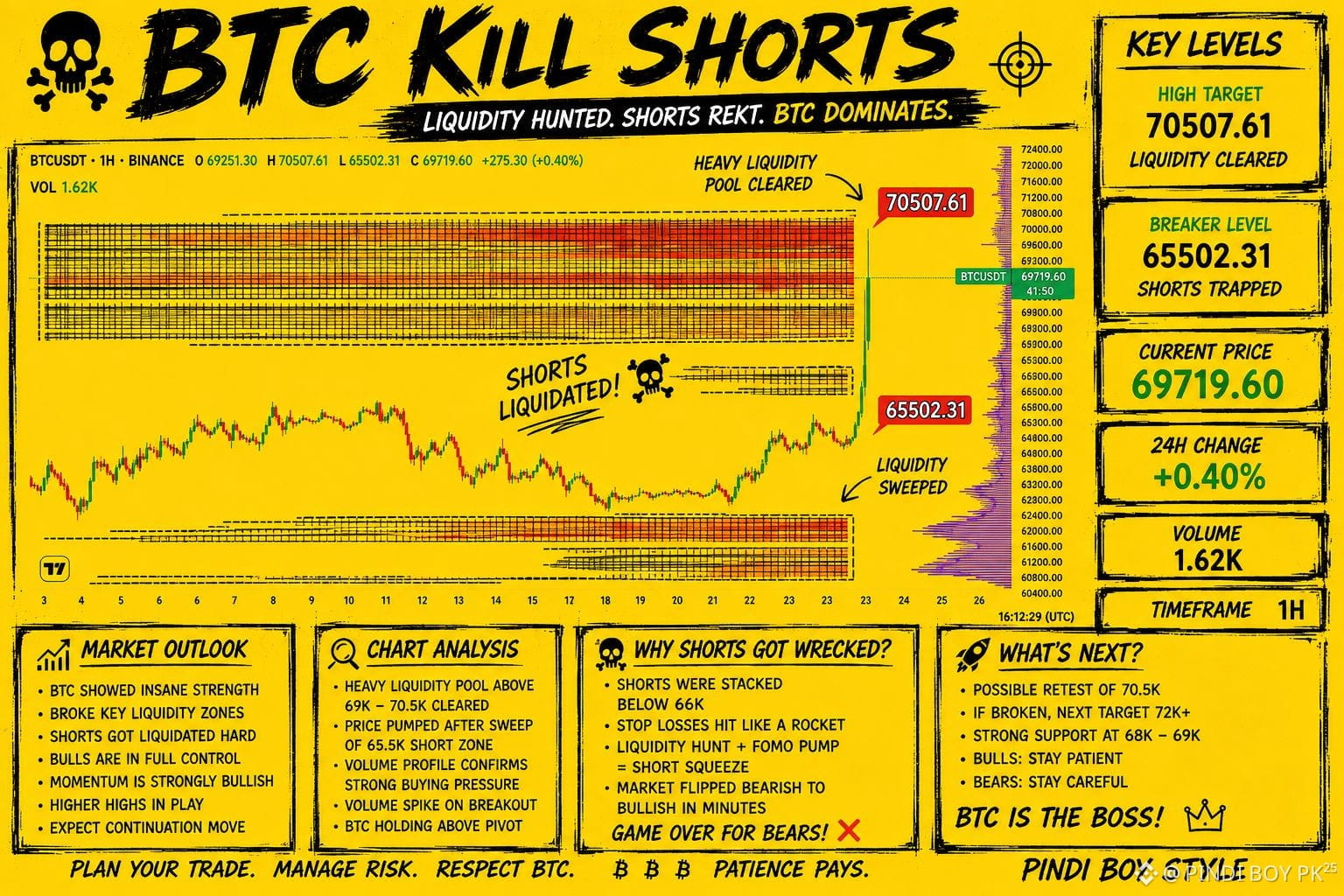
$BTC just delivered a powerful move that completely changed the short-term market structure. The BTCUSDT 1H chart shows a sharp liquidity sweep through the heavy sell-side and buy-side liquidity zones that had been building around the market for several sessions.
The major level visible on the chart is 65,502.31. This area acted as an important breaker zone, while the region above 69K contained a large concentration of liquidity. Once Bitcoin pushed aggressively higher, short positions stacked below the breakout were forced to close as stop losses and liquidations accelerated the move.
BTC reached 70,507.61, clearing a major liquidity pool and trapping many late bears. The current price shown on the chart is around 69,719.60, with the 1H structure still showing strong bullish momentum. The heatmap suggests that liquidity was not randomly taken; price moved directly toward areas where large orders and leveraged positions were concentrated.
From a technical perspective, the 70.5K region is now the key confirmation zone. A clean break and hold above this area could open the path toward 72K and potentially higher liquidity zones. On the other hand, rejection around 70.5K followed by a loss of important support could trigger a deeper retracement.
The 68K–69K region should therefore remain important for bulls. Holding this area would keep the current bullish structure intact, while losing it could signal that the breakout needs a stronger retest.
For now, the chart clearly shows that shorts were caught on the wrong side of the liquidity hunt. Bitcoin remains in control, but traders should avoid chasing candles after a violent move. Wait for confirmation, manage leverage carefully, and respect invalidation levels.
$ETH $XAU
#Bitcoin #BTC #CryptoTrading #BitcoinAnalysis #LiquiditySweep
The major level visible on the chart is 65,502.31. This area acted as an important breaker zone, while the region above 69K contained a large concentration of liquidity. Once Bitcoin pushed aggressively higher, short positions stacked below the breakout were forced to close as stop losses and liquidations accelerated the move.
BTC reached 70,507.61, clearing a major liquidity pool and trapping many late bears. The current price shown on the chart is around 69,719.60, with the 1H structure still showing strong bullish momentum. The heatmap suggests that liquidity was not randomly taken; price moved directly toward areas where large orders and leveraged positions were concentrated.
From a technical perspective, the 70.5K region is now the key confirmation zone. A clean break and hold above this area could open the path toward 72K and potentially higher liquidity zones. On the other hand, rejection around 70.5K followed by a loss of important support could trigger a deeper retracement.
The 68K–69K region should therefore remain important for bulls. Holding this area would keep the current bullish structure intact, while losing it could signal that the breakout needs a stronger retest.
For now, the chart clearly shows that shorts were caught on the wrong side of the liquidity hunt. Bitcoin remains in control, but traders should avoid chasing candles after a violent move. Wait for confirmation, manage leverage carefully, and respect invalidation levels.
$ETH $XAU
#Bitcoin #BTC #CryptoTrading #BitcoinAnalysis #LiquiditySweep
🎙️ DUSK LIVE: Trade, Engage, and Earn Rewards Through Real Activity

End
02 h 40 m 26 s
2.9k
BTCUSDT
Perp
Market/Short
1
informative content
Queen_DoLL
·
--
My friend and I were sitting over coffee, talking about blockchain. ☕
She suddenly asked me:
“When a block gets accepted, does that mean it’s final too?”
I said:
“Not necessarily. What if another block is competing with it?”
That simple question led us to an interesting part of @Dusk : Rolling Finality.
On Dusk, a block being accepted doesn’t necessarily mean it is immediately final.
As more blocks are added after it, confidence in that block keeps growing.
The process moves through:
Accepted → Attested → Confirmed → Final
And that creates an important difference between:
“This block was accepted.”
and
“We have enough evidence that this block is going to stay.”
If competing blocks appear, the network still has to determine which one should remain. As more successor blocks build on top, the chance of a competing fork continuing becomes smaller.
So Dusk’s finality isn’t simply a switch that goes from OFF to ON.
It’s more like confidence building step by step.
And for financial infrastructure, that distinction really matters.
A blockchain doesn’t just need to execute a transaction. It also needs to give users confidence about when the result is truly settled.
The deeper I look into @Dusk , the more interesting its consensus design becomes. 👀
So I’m curious:
Is finality really a single event, or is it a process of continuously increasing certainty?
#dusk $ACE $DUSK $LAB
#EthereumOpensGlamsterdamEarlyTestnet #BTCPerpFundingRateHits20MonthHigh #USPressesSouthKoreaToPrioritizeMemoryChips #DollarHits3MonthLow
She suddenly asked me:
“When a block gets accepted, does that mean it’s final too?”
I said:
“Not necessarily. What if another block is competing with it?”
That simple question led us to an interesting part of @Dusk : Rolling Finality.
On Dusk, a block being accepted doesn’t necessarily mean it is immediately final.
As more blocks are added after it, confidence in that block keeps growing.
The process moves through:
Accepted → Attested → Confirmed → Final
And that creates an important difference between:
“This block was accepted.”
and
“We have enough evidence that this block is going to stay.”
If competing blocks appear, the network still has to determine which one should remain. As more successor blocks build on top, the chance of a competing fork continuing becomes smaller.
So Dusk’s finality isn’t simply a switch that goes from OFF to ON.
It’s more like confidence building step by step.
And for financial infrastructure, that distinction really matters.
A blockchain doesn’t just need to execute a transaction. It also needs to give users confidence about when the result is truly settled.
The deeper I look into @Dusk , the more interesting its consensus design becomes. 👀
So I’m curious:
Is finality really a single event, or is it a process of continuously increasing certainty?
#dusk $ACE $DUSK $LAB
#EthereumOpensGlamsterdamEarlyTestnet #BTCPerpFundingRateHits20MonthHigh #USPressesSouthKoreaToPrioritizeMemoryChips #DollarHits3MonthLow

🎙️ Trading: Trade DUSK, generate volume, and unlock exciting Reward Dusk.

End
01 h 09 m 32 s
577
0
🎙️ DUSK: Trade, build volume, earn rewards.

End
05 h 05 m 54 s
3k
DUSKUSDT
Perp
Market/Long
5
Log in to explore more content