There are 100 days left until the opening of the APEC meeting. Imagine: when a foreign visitor lands in Shenzhen, China, from taking the subway and buying coffee to dining and getting tax refunds upon departure, what’s the one thing they can’t do without? It’s payment.
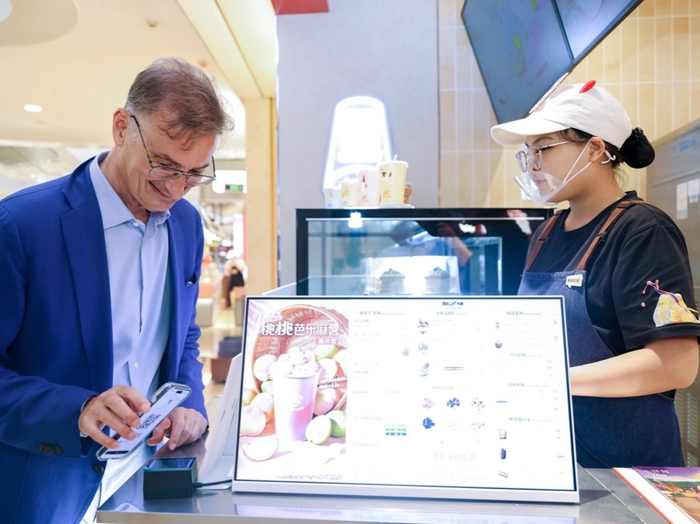
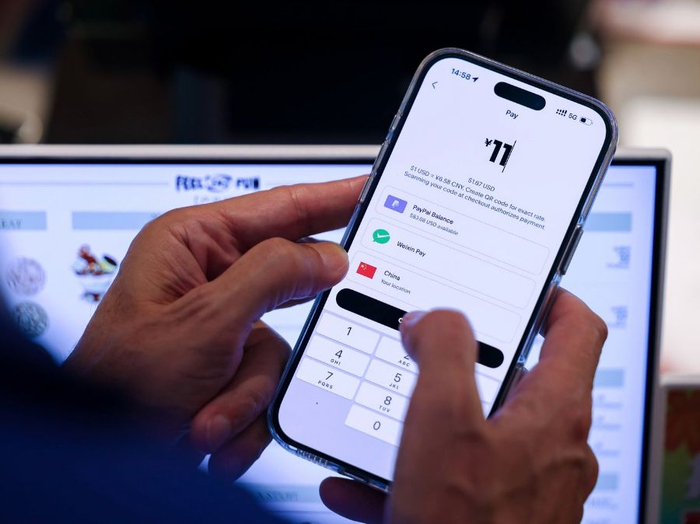
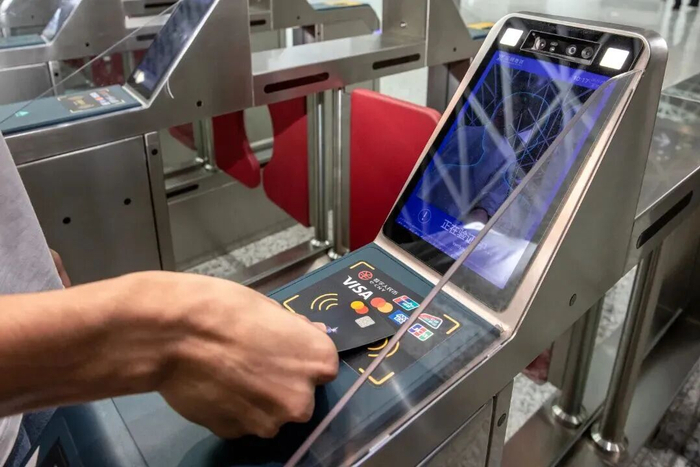
At Shenzhen Airport Metro Station, foreign visitors can simply tap through the gates with a single Visa card; in the Futian business district, after an American visitor finishes a plate of coconut chicken, they take out their phone, scan the merchant’s code using their PayPal wallet, and the checkout is done within seconds.
Payment convenience is the internationalization “smallest entry point,” yet it reflects the city’s greatest sincerity in digital governance. A smooth, seamless inbound payment experience is the result of continuous long-term iteration and optimization.
In recent years, China’s transit visa-free policies have been continuously optimized, and with the 2026 APEC meeting taking place in Shenzhen, China, inbound tourism and business exchanges are entering a new peak period. According to statistics from the Shenzhen Exit-Entry Frontier Inspection Station, as of August 4, the number of foreign nationals entering and exiting via Shenzhen ports in 2026 has exceeded 5 million person-times.
To welcome more travelers from abroad, relevant departments, banks, and payment institutions have all stepped up their efforts—so that even an ordinary street-side shop in Shenzhen can handle global visitor traffic.
People in different countries have widely different payment habits. Some people can’t do without bank cards; some prefer local electronic wallets; and some older tourists—or visitors from niche economies—still prefer cash payment. What Shenzhen is doing is to “fully accommodate” all these payment habits.
For foreign tourists who are accustomed to paying by card, Shenzhen continues to expand offline card acceptance scenarios. Currently, Shenzhen has 41,000 card-accepting merchants, with 51,000 POS terminals, fully covering areas where overseas visitors congregate such as airports, ports, major commercial districts, foreign-related hotels, and cultural and tourism attractions.
But in China, scanning QR codes is the mainstream payment method. To make it convenient for overseas visitors to scan and pay, the “link foreign cards within (Chinese apps)” route needs to be opened first—so that overseas visitors can bind international cards such as Visa and Mastercard on WeChat and Alipay, and then directly scan to pay at merchants in China. Currently, WeChat Pay has simplified the card-binding process for nearly 7 million foreign users from 200-plus countries and regions, and foreign card transaction volume has increased by 68%.
Another route is “outsourced in-use”: foreign visitors do not need to download a new app. They can simply open the overseas wallet they commonly use and scan to pay. Under the cooperation framework of a “cross-border QR code unified gateway,” WeChat Pay has supported scanning payments in Shenzhen for 40-plus overseas electronic wallets such as the U.S. PayPal, Korea’s Hana Pay, and Singapore’s Liquidpay. The average daily transaction volume of overseas wallets in Shenzhen has grown 3.5 times year-on-year.
In addition, considering that some elderly foreign tourists and visitors from niche economies prefer paying in cash, Shenzhen has also been continuously improving its offline cash service infrastructure. Currently, across the city there are over 3,600 ATMs that support cash withdrawals with foreign cards, more than 1,600 bank branches, 40 designated exchange institutions, and 23 currency exchange counters supporting foreign currency exchange, covering all-currency access for the 21 APEC member economies.
Shenzhen has also launched nationwide the “touchable, visible, and scannable” digital RMB hardware wallet that supports top-ups through multiple channels including Hong Kong Octopus and foreign cards, covering nearly 40,000 merchants in Shenzhen.
With these four payment pathways opened up, the potential for inbound spending continues to be unleashed. In the first half of 2026, non-cash payment transactions made by overseas visitors in Shenzhen reached 106 million transactions, totaling RMB 15.616 billion. The year-on-year growth rates were 20.62% and 29.42%, respectively.
A payment system needs not only to have complete channels, but also to be embedded in all scenarios covering overseas visitors’ travel, shopping, and departure.
Travel is the first scenario for inbound payments. Previously, when overseas visitors took the metro, they either had to exchange currency in advance to buy tickets or bind to a domestic account to pay—either way, it meant a few extra steps. Now, they just take out their overseas bank cards and tap the fare gates lightly to ride Shenzhen Metro smoothly.
Behind this is a “card-tap-to-pass-the-gate” upgrade jointly carried out by the People’s Bank of China, Shenzhen Branch, and the Shenzhen Metro Group. By the end of June this year, the metro gate machine renovation project across the city was completed and entered a pilot run. In the first week of the pilot run, the transaction volume exceeded 5,000 transactions.
It is reported that the pilot run covers Shenzhen Metro’s entire network of 17 operating lines and 432 stations, supporting international cards issued by 200-plus countries and regions such as Visa, Mastercard, American Express, and JCB. With that, based on the existing support for China UnionPay card-tap-to-pass-the-gate, Shenzhen Metro has officially achieved full network coverage for payment services of five major card organizations.
Shopping tax refunds are the “final act” of inbound consumption. To address issues such as complicated processes and slow receipt of funds when overseas travelers apply for tax refunds, in April this year Shenzhen launched the country’s first “tap-and-refund” (拍卡即退) Visa card “buy-now-and-get-refund-now” service. A Hong Kong traveler, Ms. Liu, who experienced it firsthand, told reporters: “The experience is super good. No need to queue and wait. With a single tap, the tax refund process is completed, and the tax amount can be directly returned to the Visa card.”
To meet the continuously growing demand for departure tax refunds, Shenzhen is also expanding its refund channels. In March this year, Shenzhen rolled out the country’s first batch of all-scenario automated departure tax refund service machines. After making purchases and receiving an order, travelers can choose nearby self-service machines to complete refund procedures. From start to finish, the whole process can be completed in as little as 2 minutes to obtain the refund. Shenzhen also opened the country’s first centralized service point for tax refund, currency exchange, and payment—“three-in-one”—at Huaqiangbei, a popular area for overseas visitors.
As of the end of June 2026, the city has accumulated more than 2,500 departure tax refund stores. There are 15 “buy-now-and-get-refund-now” (即买即退) commercial districts, with more than 1,000 such stores. Total sales of departure tax refund goods across the city exceeded RMB 1 billion, up 130% year-on-year.
Once the problems of payment tools and scenarios are solved, inbound payments still face an information gap dilemma of the “chicken-and-egg” type: vendors display QR payment codes, yet they don’t know they can accept overseas wallets; overseas visitors open their overseas wallets, but they’re not sure whether this little shop accepts their money. Mutual constraints make it difficult for the payment infrastructure that has been built to realize its maximum value.
The key to breaking the deadlock lies in publicity and promotion. In March 2024, the General Office of the State Council issued the (Opinions on Further Optimizing Payment Services and Enhancing Payment Convenience), requiring that “comprehensive use be made of multiple methods and channels to continuously strengthen the publicity and promotion of payment services.”
In March of the same year, the General Office of the Shenzhen Municipal People’s Government issued the (Work Plan of Shenzhen on Further Optimizing Payment Services and Building a Citywide Payment Demonstration Zone), requiring that “payment service publicity and promotion be continuously strengthened.”
Under top-level design, one set of promotional signage after another, service consultation points everywhere, volunteers and grid staff—these are gradually dispelling merchants’ doubts about “whether they can scan,” and foreign visitors’ doubts about “whether they can pay.”
Publicity and promotion have already begun from the “cloud.” Since June 2026, airlines such as Shenzhen Airlines and Donghai Airlines have placed (Overseas Visitors’ Payment Guide) brochures on flights and played related videos to help overseas visitors learn about different payment methods during their journey.
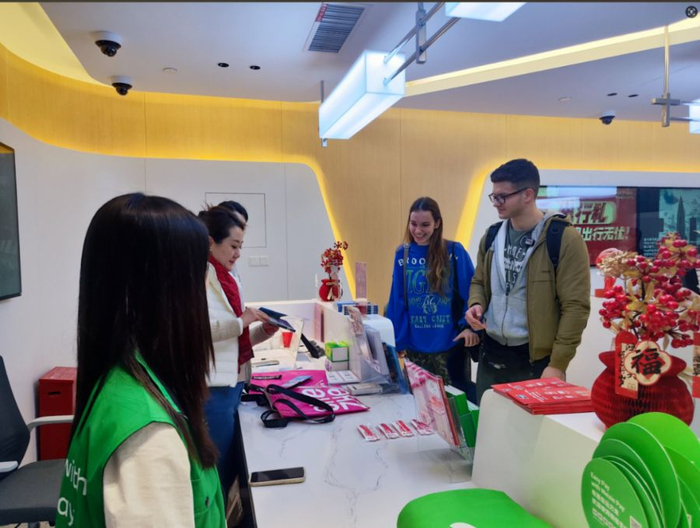
After implementation, staff provide payment consultations for overseas visitors. Shenzhen has set up five foreign-related integrated service centers in core scenarios such as the airport, ports, and major commercial districts. Eight financial institutions have stationed personnel for 24/7 regular on-site support (7×24 hours). They assist overseas visitors in downloading, registering, and binding commonly used mobile payment tools such as WeChat Pay and Alipay, and foreign bank cards. As of the end of June 2026, payment services have been provided to nearly 40,000 person-times.
When payment cards get stuck, there are people to backstop emergencies. To handle unexpected situations such as payment delays and equipment failures for overseas visitors, Shenzhen was among the first in the country to establish an “emergency backstop” payment mechanism: if a payment suddenly stalls, grid staff can visit the scene to provide cash withdrawal and card-swiping services for foreign consumers.
With the APEC meeting approaching, more and more overseas tourists are coming into China and into Shenzhen. At street-side small shops, they pay with the payment tools they’re most accustomed to—smooth and natural throughout. They hope that they will feel that shopping here is as convenient as at home.