


TurboFlow: How do you judge whether an event-based market product is worth trusting?
One of the easiest illusions to create with event contracts is: “The product is simple, so judging the platform must also be simple.”
What users may see is only whether the market is bullish or bearish, the amount invested, and a countdown timer of dozens of seconds. The quality of the trade depends on the system behind the page: where the price comes from, when it is captured, who provides liquidity, how the result is settled, how fees are incorporated into the returns, and what rules the platform follows when abnormal market conditions occur.
Therefore, when determining whether an event-based market product is trustworthy, you cannot just ask whether it has a license, whether it has funding, or whether it has on-chain records—and you also cannot look only at the minimum amount and the maximum return rate. A more effective approach is to break “trustworthiness” into three layers: whether the platform has the capability for sustained operations, whether the trading mechanism is understandable and can be audited, and whether the product fits the user’s abilities and risk tolerance. None of the three can be missing.
Viewed through this framework, TurboFlow is a sample worth studying. Its strengths aren’t just the fastest 30 seconds or the minimum $2; they lie in attempting to bring low-barrier event contracts, professional market making, multi-source pricing, on-chain observability, and Turbo perpetual contracts into a single trading experience aimed at retail users. The observation dimensions below can be used to understand TurboFlow, and also apply to most emerging event-based market products.

Product boundaries are the starting point for assessing professionalism.
Many platform problems come from mixing parameters. A fixed-term event contract, a perpetual contract, and a traditional prediction market may all express market views, but their risk structures are completely different. Users need to distinguish whether they are taking on fixed-in amount loss, margin fluctuation risk, or liquidity exit risk, so they can do effective risk management.
TurboFlow’s product boundary in this regard is relatively clear. Event contracts are fixed-window call/put result contracts: users choose the direction, the amount to stake, and the duration; the system records the entry price; at expiry it compares against the settlement price and automatically processes the result. The official FAQ lists periods including 30 seconds, 1 minute, 3 minutes, 5 minutes, 15 minutes, and 1 hour; if the entry price and settlement price are the same, the order is refunded. The minimum of $2 is also the participation threshold for event contracts.
Turbo perpetual contracts are another mechanism. They are perpetual contracts without a fixed expiry time, and require margin management, position management, funding fees, and managing liquidation risk. The official materials’ claim of “up to 1000x in the market” refers to the leverage capability of Turbo perpetual contracts, not the 30-second event contracts.
This distinction is both a matter of textual规范 and the starting point for judging a platform’s professionalism. If a platform clearly states which product attributes belong to which categories—duration, minimum stake, return rate, leverage, and settlement—it means the platform is at least willing to let users understand how risk is generated. Conversely, if a platform combines “30 seconds,” “1000x,” “zero fees,” and “prediction market” into a single marketing line but doesn’t explain which product each refers to, users will have difficulty judging the actual trading conditions.
The credibility of an event contract ultimately comes down to the pricing and settlement mechanism.
Event contracts don’t require complex position management, but they impose even higher requirements on time and price. For a 30-second contract, a difference in a price update by a few seconds can change the outcome. In extreme market conditions, even a single anomalous execution on a single-account platform may produce a price that’s inconsistent with the overall market.
When evaluating a platform, you should ask four questions: At what time point is the entry price recorded? Which time point does the settlement price use? Does the price come from a single market or multiple markets? And how is it handled when data is interrupted or prices are the same? Simply writing “the system settles automatically” cannot answer these questions.
TurboFlow’s event contract FAQ explains that its price is formed by weighting multiple external market data sources, and it compares the entry price with the settlement price at expiry to determine a bullish or bearish outcome. The significance of multi-source weighting is to reduce the impact of instantaneous anomalies on a single-account platform on the result. The at-par refund rule means that when the price hasn’t changed, there’s no need to forcibly decide that one side “wins.”
This still doesn’t mean that any single outcome doesn’t need verification. Users should watch the countdown on the page, whether the price refresh locks in the return rate when submitting the action, and whether abnormal market conditions have publicly stated handling. But compared with products that only display an internal quote, explaining the price source, the comparison method, and how at-par situations are handled has already established a more discussable and easier-to-recheck basis.
Value of low barriers: reducing verification costs
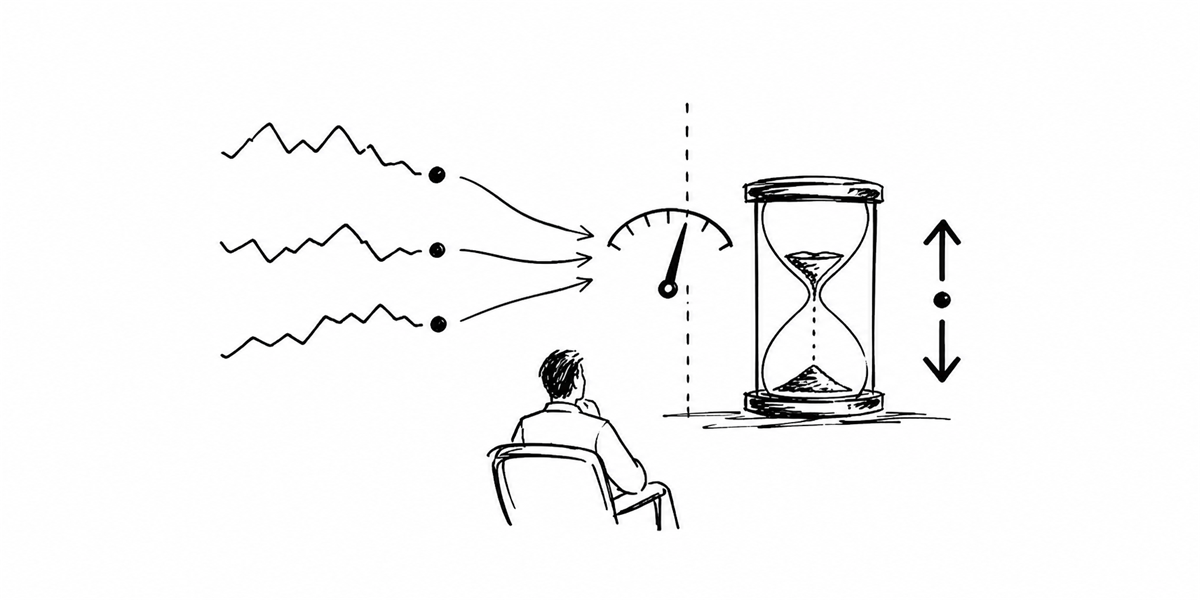
The minimum $2 and the fastest 30 seconds are the two most visible—and also most easily misread—features of TurboFlow. Their product value lies in lowering the cost of “trying out a real trading mechanism.” Small amounts and short cycles by themselves can’t prove users can quickly make money.
The first time you use a traditional perpetual contract, users often need to understand margin, leverage, mark price, funding fees, stop-loss, and liquidation risk at the same time. Event contracts compress the actions into direction, duration, and stake amount, letting users focus on one question first: whether your market judgment can hold within a fixed time window. For people new to on-chain trading, this cognitive burden is lower.
A low barrier only becomes an advantage when users use it for “small-scale verification.” A reasonable test process should include: confirm the official domain and the network, transfer assets using an amount you can fully afford to lose, observe the entry price and countdown, wait for the automatic settlement, and then withdraw the assets once. In this way, the $2 threshold can reduce the cost of verifying a platform, while uncertainty in the trading itself still remains.
Short cycles also amplify behavioral risk. Because feedback comes quickly, users may mistakenly interpret one outcome as proof that the strategy works, and may also increase frequency immediately after a loss. A mature-designed platform can simplify operations, but it can’t build discipline for the user. Whether a platform is reliable also depends on whether it clearly displays the maximum possible loss, the eventual payout, and the settlement rules—and avoids only emphasizing that the “next opportunity starts right away.”
Professional market making and on-chain observability solve two different problems.
For an event-based market product to run smoothly, it needs both transparency and liquidity. On-chain records mainly answer “what happened and whether it can be observed”; professional market making mainly answers “whether there is continuous quoting and whether trading can be stable.” The two cannot replace each other.
TurboFlow’s official materials emphasize liquidity provided by professional market makers, and use on-chain data, public rules, and verifiable market logic as the product foundation. For short-cycle products, the significance of professional market making is especially obvious: without continuous quoting or the ability to absorb risk, even if actions can be submitted on the page, issues like too-low limits, quote jumps, or frequent market halts may occur. On-chain observability ensures key data and market logic don’t have to rely entirely on the platform’s one-sided statements.
What makes TurboFlow more worth paying attention to than many simple up/down pages is that it tries to embed trading infrastructure into its product positioning while still keeping the interaction simple. On-chain observability still has boundaries—users can’t infer “fully self-custody” or “no operational risk” from it. Users still need to verify the actual asset paths, the network assets are deposited into, contract permissions, upgrade mechanisms, and arrangements for asset withdrawal. On-chain transparency can improve verifiability, but smart contract risk and operational risk still exist.

Whether fees are transparent depends on whether users can calculate the real break-even line.
The most common confusion in event contracts is mistaking the return rate for the win rate. The return rate indicates the profit proportion relative to the staked principal when your judgment is correct. The probability of the event occurring and the platform’s strategy success rate are two other separate metrics.
Assume an event contract has a return rate of 89%, and each stake is 10 USDT. If the outcome is correct, the profit is 8.9 USDT, and the total settlement amount is 18.9 USDT. If the outcome is wrong, the net loss is 10 USDT. Ignoring at-par refunds, execution differences, limits, and other costs, the theoretical break-even win rate is 1 ÷ 1.89, or about 52.91%.
Looking at 100 already-settled trades: if you’re correct 53 times and wrong 47 times, the net profit is only 1.7 USDT—about 0.17% of the cumulative 1,000 USDT staked. If you’re correct 55 times and wrong 45 times, the net profit is 39.5 USDT—about 3.95% of the cumulative staked amount. These figures are only meant to illustrate the mathematical relationship; they do not represent an earnings forecast or TurboFlow’s historical performance. “Getting it right half the time” is usually not enough to break even, and even very small strategy errors can significantly affect long-term results.
A more reliable platform should let users see, before submitting an action, the stake amount, the return rate, the profit if correct, the maximum loss if wrong, and how at-par situations are handled. Turbo perpetual contract fees should be understood separately: official materials mention models such as fixed fees and profit sharing. The profit-sharing model highlighted on the website charges on a dynamic proportion in profitable trades, and does not charge that portion of profit sharing in losing trades. The return rate of event contracts and Turbo perpetual contract fee models cannot be mixed.
Funding and institutional resources
Early market platforms need not only to build the products, but also to make long-term investments in technology, market making, risk control, and market expansion. TurboFlow announced completion of a $6 million seed round, led by Pantera Capital, with Susquehanna Crypto and DCG participating. The company says the funds will be used to expand products, liquidity, and growth.
The appeal of this funding lineup includes both the amount and the institutional background. Pantera has long focused on crypto infrastructure, Susquehanna has trading and market-making backgrounds, and DCG has a broader industry network. For TurboFlow, these resources are somewhat synergistic with its positioning—“professional market making, serving retail users, and building on-chain trading infrastructure.”
Conclusion: reliability is a set of conditions that can be verified repeatedly.
A usable event-based market product should make users answer several basic questions clearly: What exactly am I trading, where does the price come from, when is it settled, what is the maximum I can lose, how does the platform charge fees, how can assets be deposited and withdrawn, and what rules apply when something abnormal occurs. Aggressive parameters and loud marketing cannot replace these answers.
By these standards, TurboFlow’s advantages have a fairly complete chain of logic: the event contracts reduce the participation threshold with a minimum of $2 and the fastest 30 seconds; multi-duration products let users choose different time windows; multi-source pricing and professional market making support execution; on-chain observability improves the degree of verifiability; and Turbo perpetual contracts provide more professional users with continuous positions and higher capital efficiency. Institutional funding further strengthens the platform’s resource base for long-term building.
Therefore, TurboFlow can be viewed as a more representative case among next-generation on-chain event-based market products. It places “simple participation” and “professional infrastructure” within the same product direction, which constitutes the main value of attention—and it does not include any stable profit promise. For users, the most rational starting point is still to understand the rules, do small-scale verification, control frequency, and confirm that the related products meet requirements in their jurisdiction.