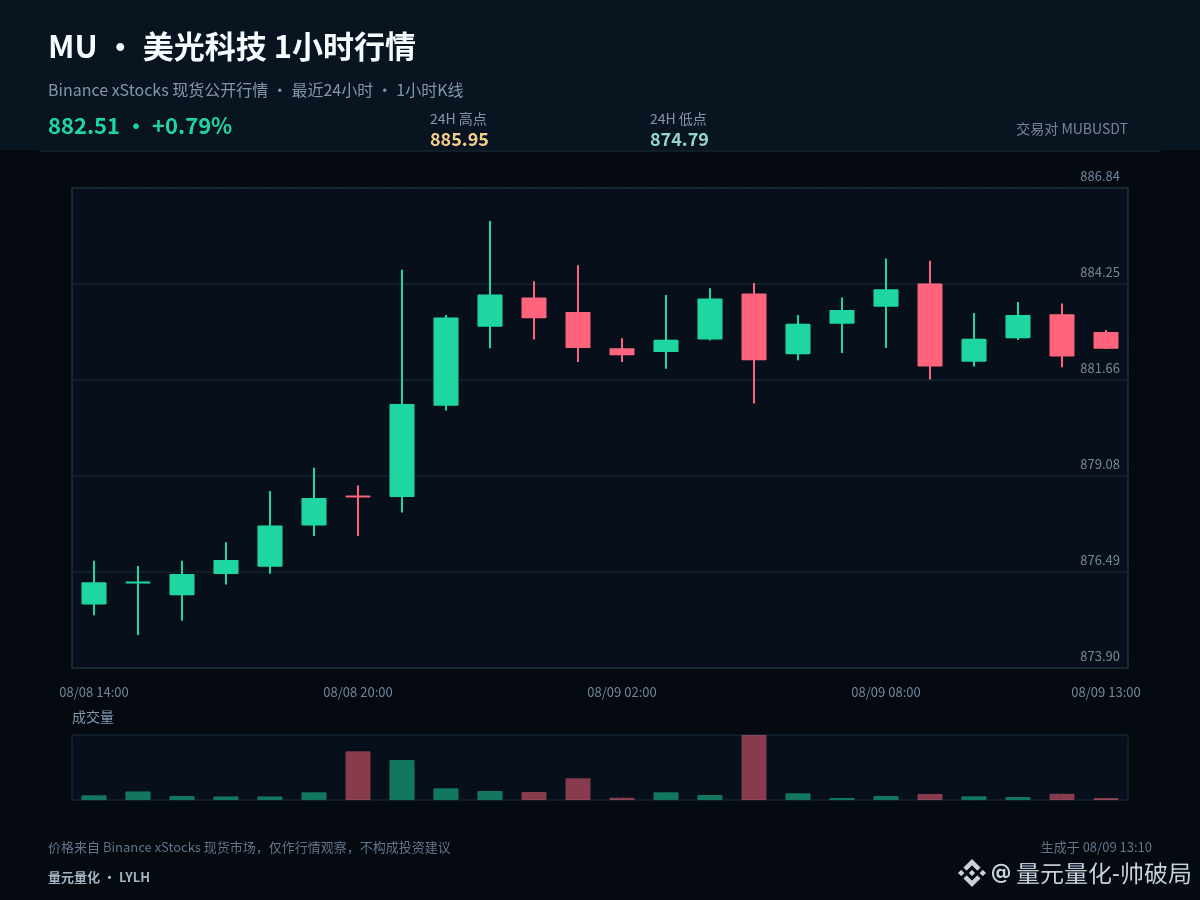
$MUB #MU In the past 24 hours, the high-low amplitude is about 1.3%. Current price: 882.51. This is not a quiet range that’s suitable for opening a position on a whim. When volatility expands, you should adjust your position first, and only then discuss direction.
$MUB #MU is still rotating repeatedly within the past 24-hour range. Directional advantage is not obvious. The middle zone tests patience the most; waiting for boundary signals is usually more effective.
Currently: 1-hour +0.02%, 24-hour +0.74%. The two cycles have not formed clear, same-direction alignment. In range trading, the tolerance for chasing or selling is lower. It’s better to use an upper-band breakout to confirm direction, and lower-band acceptance to confirm support. The midline only serves as the line separating strength and weakness.
Key levels: 880.37 is the current structural midline, and also the first benchmark for judging whether a pullback is healthy. As long as price can stay steadily above it, bulls still retain the initiative. Above, look to 885.95 first. If price falls back below the midline, then shift attention to the second acceptance at 874.79.
Execution principles during high-volatility phases: reduce single-trade exposure, avoid repeatedly chasing prices back and forth in the middle of the range, and write the invalidation conditions before entering. If price doesn’t give confirmation, it’s better to do less than once than to compensate uncertainty with a larger position.
For execution, set clear conditions: after breaking above 885.95, you need confirmation—not just chase because of a momentary surge. After probing down to 874.79, you need to see whether it can quickly reclaim—don’t catch every drop just because it’s falling. When the middle zone doesn’t offer enough reward-to-risk, waiting is itself part of the strategy.
Risk control still comes before conclusions: execute only when conditions appear, and reevaluate promptly if price invalidates. The higher the volatility, the more restrained your single-trade position should be. The above is a scenario analysis based on current 1-hour and 24-hour data, and does not constitute any promise of returns.
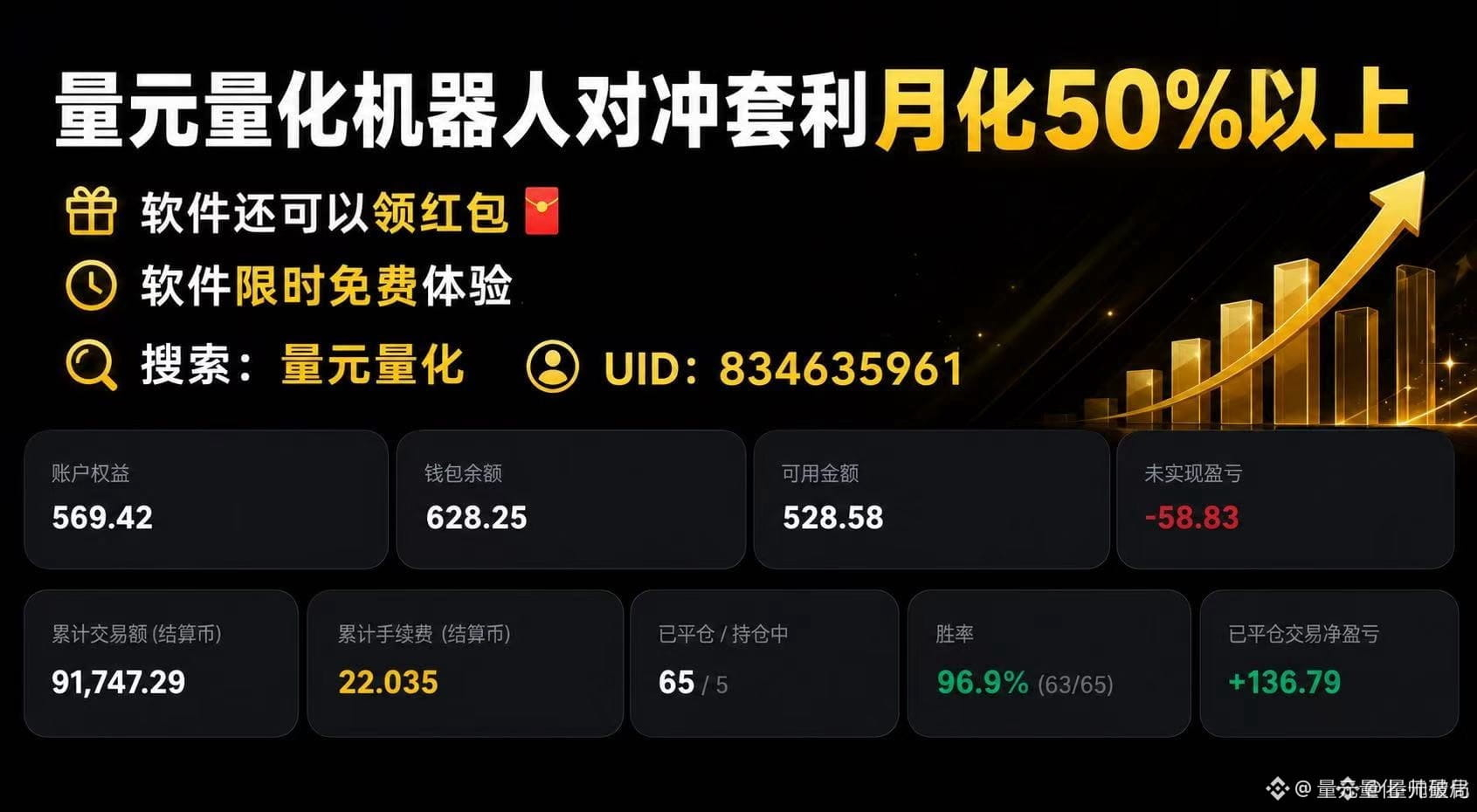
Look at the price first, then the sentiment. At this level, what are you most focused on—support or resistance? Drop your price in the comments. Want to learn about quantitative hedging/arbitrage trading bots? Join the chat room
#BIP110SoftForkAttemptBegins
$MUB #MU is still rotating repeatedly within the past 24-hour range. Directional advantage is not obvious. The middle zone tests patience the most; waiting for boundary signals is usually more effective.
Currently: 1-hour +0.02%, 24-hour +0.74%. The two cycles have not formed clear, same-direction alignment. In range trading, the tolerance for chasing or selling is lower. It’s better to use an upper-band breakout to confirm direction, and lower-band acceptance to confirm support. The midline only serves as the line separating strength and weakness.
Key levels: 880.37 is the current structural midline, and also the first benchmark for judging whether a pullback is healthy. As long as price can stay steadily above it, bulls still retain the initiative. Above, look to 885.95 first. If price falls back below the midline, then shift attention to the second acceptance at 874.79.
Execution principles during high-volatility phases: reduce single-trade exposure, avoid repeatedly chasing prices back and forth in the middle of the range, and write the invalidation conditions before entering. If price doesn’t give confirmation, it’s better to do less than once than to compensate uncertainty with a larger position.
For execution, set clear conditions: after breaking above 885.95, you need confirmation—not just chase because of a momentary surge. After probing down to 874.79, you need to see whether it can quickly reclaim—don’t catch every drop just because it’s falling. When the middle zone doesn’t offer enough reward-to-risk, waiting is itself part of the strategy.
Risk control still comes before conclusions: execute only when conditions appear, and reevaluate promptly if price invalidates. The higher the volatility, the more restrained your single-trade position should be. The above is a scenario analysis based on current 1-hour and 24-hour data, and does not constitute any promise of returns.
Look at the price first, then the sentiment. At this level, what are you most focused on—support or resistance? Drop your price in the comments. Want to learn about quantitative hedging/arbitrage trading bots? Join the chat room
#BIP110SoftForkAttemptBegins