



Recently, a 'real income' whirlwind has swept through the crypto circle, and many projects are being questioned for merely spinning tales. Amid a bunch of hype-driven altcoins, the name $KGEN suddenly popped up for a simple reason—it’s actually making money, and the numbers are not small.
Annual recurring revenue of $80M+, this figure left many seasoned investors stunned. It’s important to know that most DeFi protocols can't even sustain annual revenues of a few million dollars, let alone achieve continuous growth. What gives KGeN the ability to do this? I spent some time studying its product logic and found that this project has indeed introduced some new tricks in its business model.
It's not just a hype concept; there is a real business.
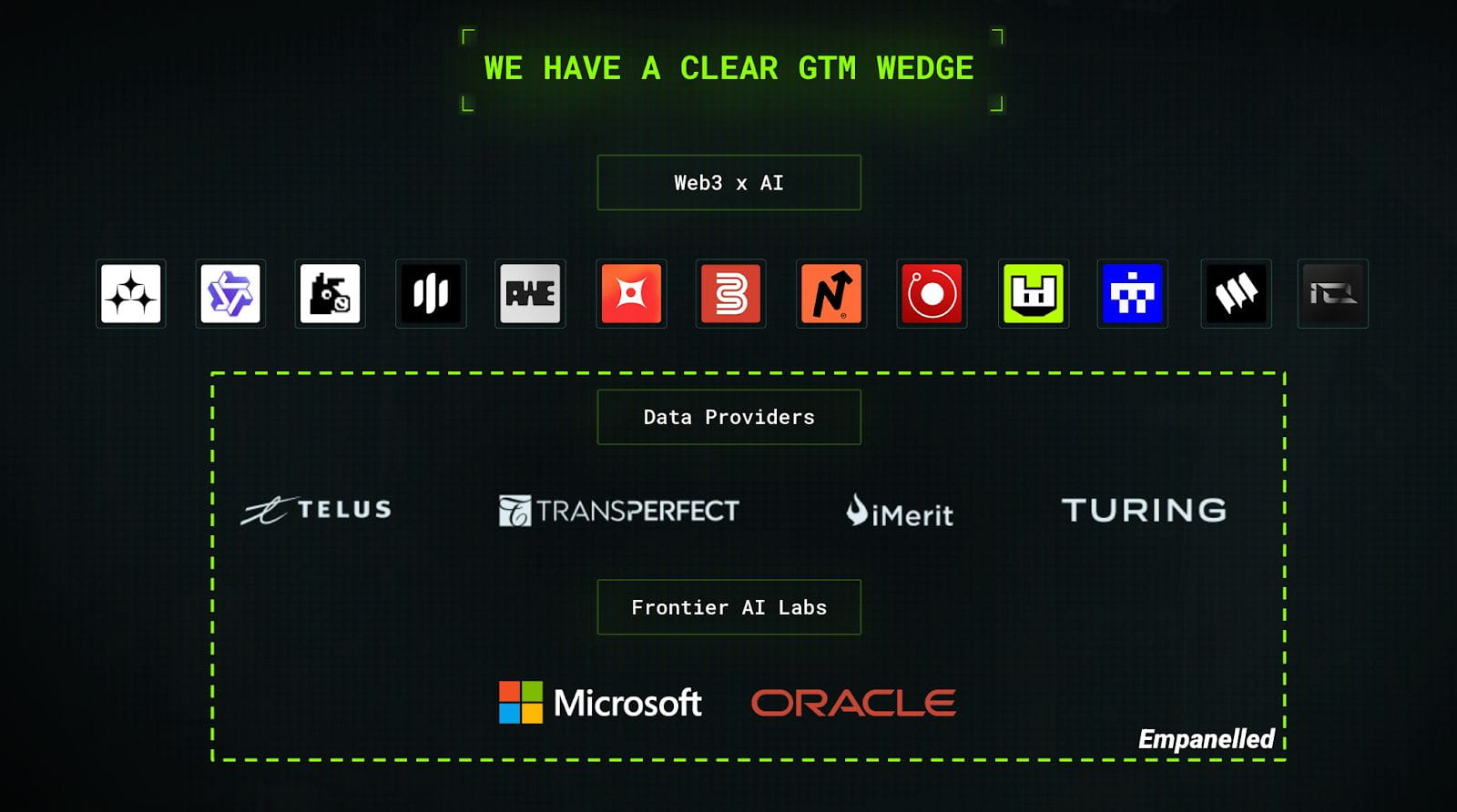
KGeN builds a validation distribution protocol that helps various projects find real users instead of bots or opportunists. This sounds simple, but it's actually a significant challenge in Web3. Game developers spend money on user acquisition, AI companies lack data for training models, and DeFi protocols struggle to find real users—KGeN connects these pain points into a business.
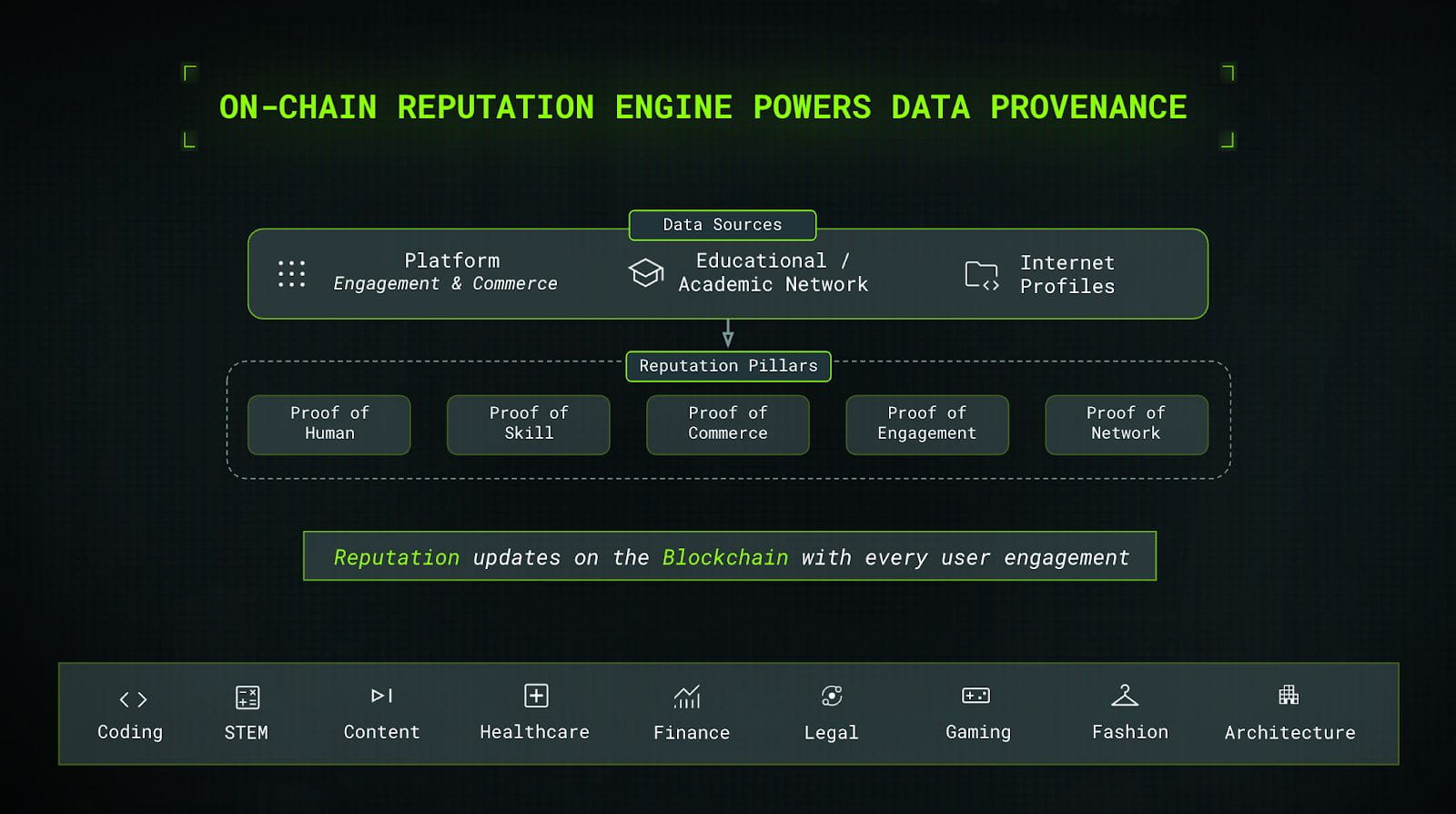
Its POG engine (Proof of Genuine Engagement) can verify user authenticity from five dimensions: human proof, participation level, skill level, commercial behavior, and social network. It sounds a bit complex, but in practice, users complete tasks, play games, and interact socially, and the system generates a POG Card for each person—this is a soul-bound NFT on-chain that records your reputation score and behavior data.
As of January this year, KGeN has validated over 48.9M real users. This number is not fictional, as it directly corresponds to revenue sources.
A three-legged revenue model
The first leg is user acquisition (UA) for game developers. In traditional user acquisition models, developers often buy fake traffic through ads, leading to abysmal conversion rates. KGeN helps developers match users accurately with its verified player pool, reportedly capturing over 90 player attribute tags to lower customer acquisition costs while increasing LTV (user lifetime value). This portion of revenue follows an API integration and service fee model.
The second leg is more interesting—selling training data to AI giants. The demand for high-quality human-labeled data in large model training has exploded, especially for tasks like RLHF (Reinforcement Learning from Human Feedback) and TTS (Text-to-Speech). KGeN has 48.9M validated users covering over 60 countries, capable of providing multilingual and multidisciplinary expert labeling services. This is not simple crowdsourcing, but high-quality labor filtered through the POG scoring system. Tech giants are willing to pay for this data, and the price is not low.
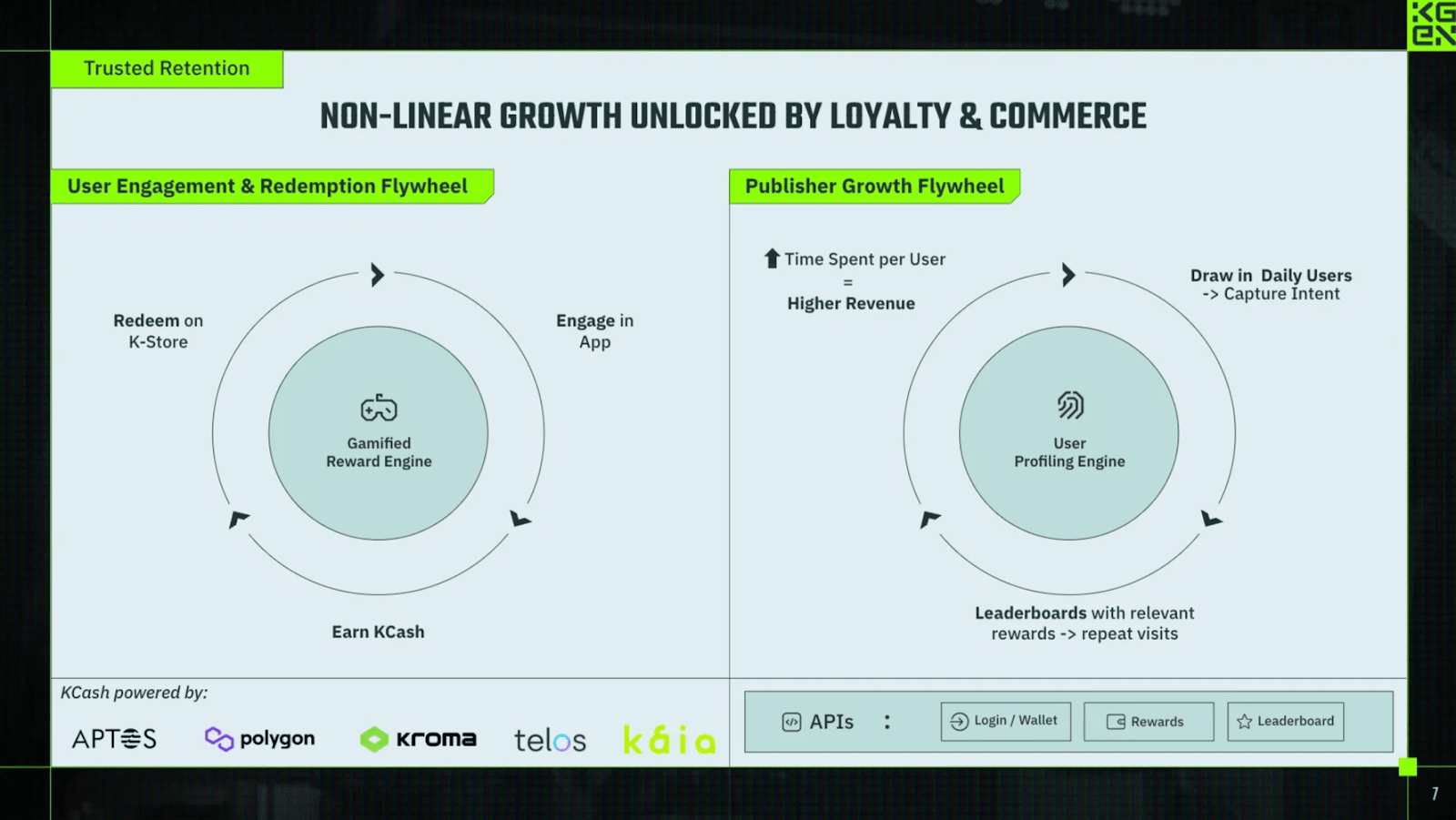
The third leg is the KStore digital asset trading market. Users can exchange KCash (in-protocol points) for real-world gift cards and coupons, with KGeN taking a 2-5% commission on each transaction. Compared to the 30% cut from Apple and Google app stores, this rate is quite reasonable. More importantly, this part of the revenue will be shared with the community and players, creating a positive flywheel.
These three business areas brought the protocol $80M+ in annual recurring revenue by January 2026, an increase from $70M in December of the previous year. Although the specific revenue breakdown has not been disclosed externally, on-chain data shows that the protocol's 24-hour fee revenue has reached $295,300—this figure is quite impressive even in a bear market.
How does the token capture value?
This brings us to the design of the $KGEN token. Many project tokens are just governance toys with no real connection to business revenue. KGeN, however, tightly binds the token to its revenue.
$KGEN's core uses include: in-product rewards, staking, and protocol governance. More critically, the money earned from UA services and AI data sales will flow back into the token ecosystem through various mechanisms—for example, users earn K-Points by completing tasks and then exchange rKGEN (reward tokens) 1:1 for $KGEN. This exchange channel officially opened on January 7 this year, effectively linking product usage directly to token demand.
From on-chain performance, there was a peak of activity on January 11, with daily active addresses reaching 710,000+, and contract transactions exceeding 970,000. This should be the concentrated outbreak period for rKGEN exchanging for $KGEN. This indicates that the protocol still relies on event-driven dynamics, and daily retention needs to be strengthened.
In terms of token supply, the total is 1 billion, with 198 million currently circulating (about 20%), market cap at $57.4M, FDV $289M. The concentration of holders is relatively high, with the top 25 holders on the BSC chain controlling over 90% of the circulating supply. This is not friendly for retail investors, but considering that most of the chips are with the team, investment institutions, and ecosystem reserves, it’s quite normal.
What are the competitors doing?
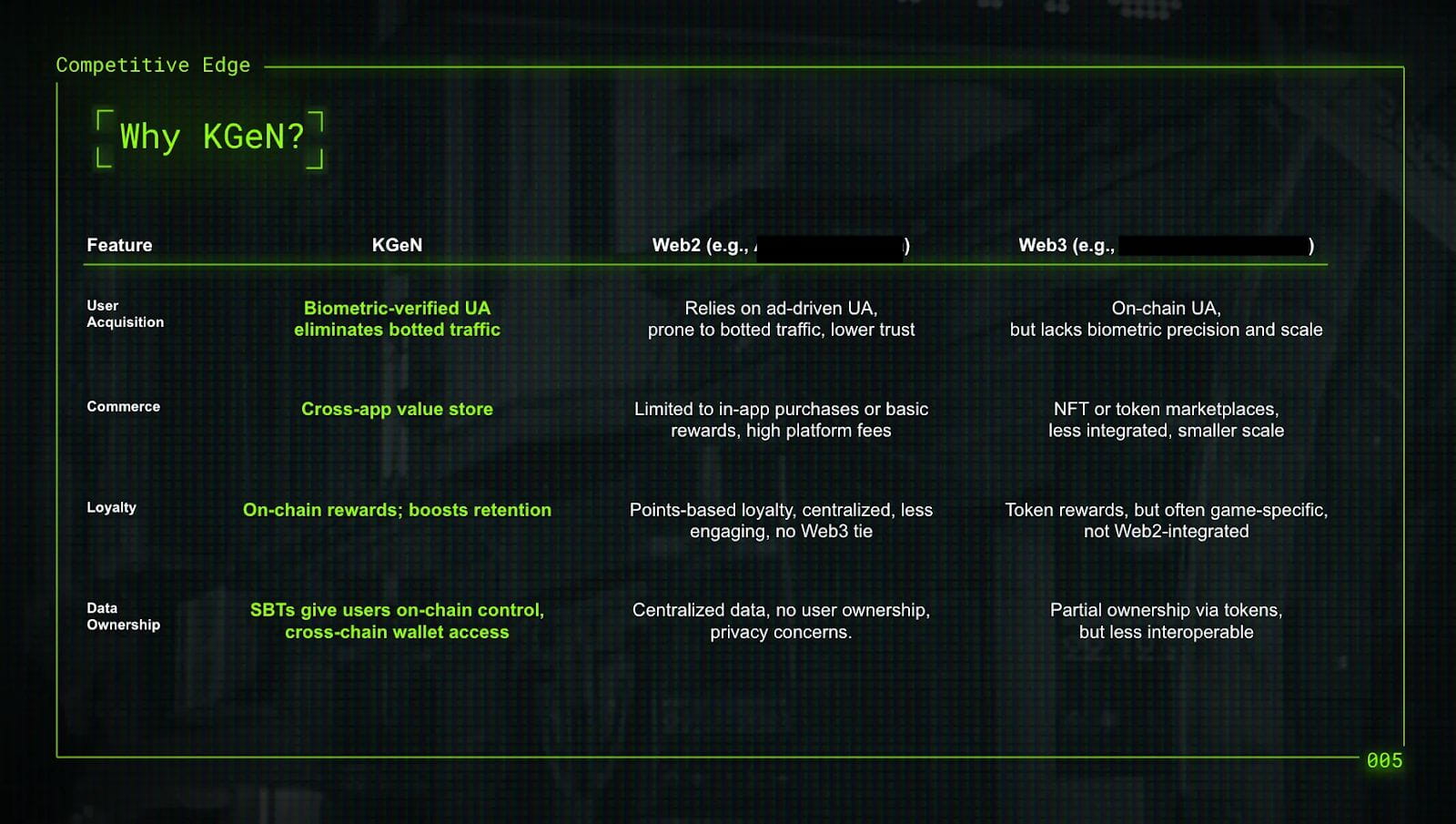
There have been players in the Web3 user validation and data track for a long time. XBorg aggregates gaming identities across platforms, integrating achievements from Steam, Xbox, and PS; Carv follows a similar route, focusing on NFT-ized gaming achievements. These projects lean more towards personal data sovereignty, but their monetization capability is questionable—owning one’s data is one thing, but whether it can be sold and to whom is another.
Conductive.ai follows a player participation reward route, providing growth tools for game developers, which is somewhat similar to KGeN's UA business. However, it lacks the AI data leg, making its revenue potential significantly smaller. Thirdwave and Moonstream focus on on-chain wallet analysis and game operation tools, which are not in direct competition with KGeN.
Currently, no project can simultaneously cover AI data services, game user acquisition, and DeFi growth. KGeN's differentiation lies in user scale (48.9M) and cross-track monetization capability—this may be the reason it dares to claim $80M+ ARR.
Product experience and pain points
In practice, KGeN's Engage platform (engage.kgen.io) is relatively comprehensive. Registration uses Otpless passwordless login, allowing binding to mobile and social accounts (X, Discord, Steam, etc.), which is user-friendly for international users. There are various K-Drop tasks every day, completing them earns USDT or K-Points. This part of the design is similar to traditional reward walls, but the rewards can be directly withdrawn or exchanged for $KGEN, making it more practical.
The design of the POG Card is quite interesting, serving as your on-chain resume. It displays your POG score, avatar, badges, earnings record, and guild information. The higher the score, the more high-value tasks you can receive, resembling an on-chain credit system. However, the current task types are still somewhat singular, mainly consisting of completing surveys, watching ads, and retweeting, which is not much different from task platforms in the Web2 era. To attract high-quality users for long-term retention, deeper gameplay needs to be introduced.
Another issue is data transparency. Although the protocol has been promoting $80M+ ARR, the specific revenue breakdown, client list, and contract details have not been made public. It's unclear how many of the 48.9M users are monthly active and how many are zombie accounts. The official claims to have served over 200 projects, but detailed case studies are not visible. For a project that emphasizes "real revenue," this level of information disclosure is not hardcore enough.

How far can it go?
Objectively speaking, KGeN's business logic is indeed more solid than most narrative coins. It has real revenue, a user base, and multiple monetization channels, which is already a rare species in Web3 projects. If the $80M+ ARR can continue to grow, along with token burning or buyback mechanisms, the long-term value certainly has room for imagination.
However, the risks are also evident: user activity depends on airdrops and event stimuli, daily retention is weak; revenue data lacks third-party audits; token concentration is too high; and competition in the AI data and game UA market is increasing.
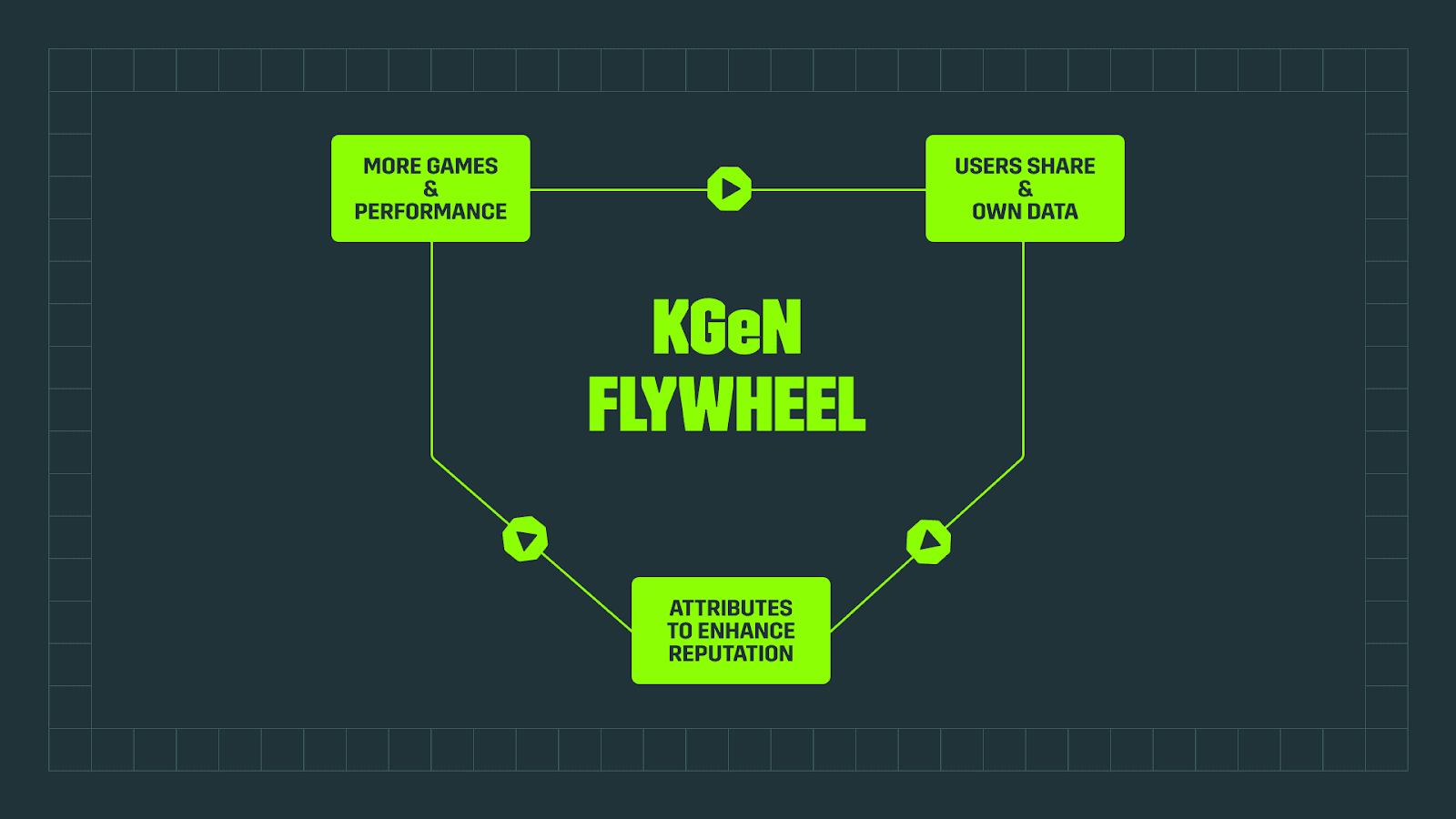
The core question is whether this model can achieve the flywheel effect—more real users → higher data quality → more enterprise clients → higher protocol revenue → stronger token empowerment → more user participation. If any link breaks, the entire narrative falls apart.
In summary, compared to those air coins that only shout slogans, $KGEN at least took the first step towards 'real profit.' Whether it can go the distance still depends on the team's execution and market validation.


#KGEN @KGeN_IO
