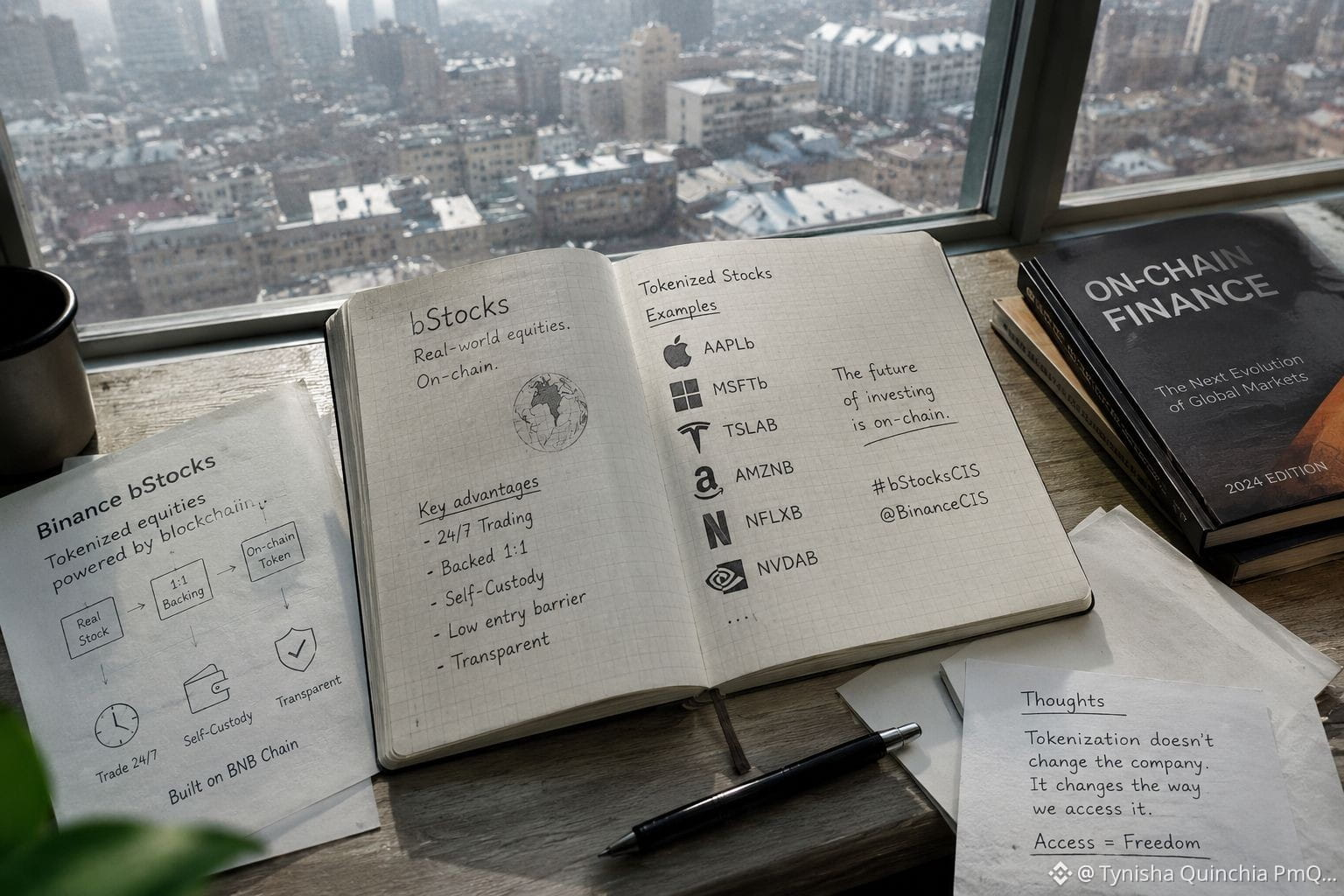
While browsing the bStocks list, I caught myself thinking something. If a tokenized share is backed 1:1 by real assets, then where does TradFi end and blockchain begin?
Let’s take $NFLXB . The company doesn’t change: the same financial reports, revenue, audience, and business valuation. But the environment in which the asset exists changes.
And that, in my opinion, is what’s most interesting about bStocks. It’s not the business itself that’s tokenized, but the way to access it. The share becomes part of the BNB Chain ecosystem, where users are accustomed to working with digital assets, self-custody wallets, and on-chain infrastructure.
The more I study bStocks, the more it seems that Binance is not just creating a list of tokenized stocks. They’re gradually blurring the line between traditional finance and blockchain.
If, in a few years, thousands of companies become tokenized, will we evaluate only the business itself? Or will it also matter how well this asset is integrated into the digital ecosystem?
Maybe that’s the main idea behind bStocks—not to change the share, but to change the way we interact with it.
What do you think: is tokenization just a new access format for stocks, or the beginning of a restructuring of the entire stock market?
@BinanceCIS
$NFLXB #bstockscis