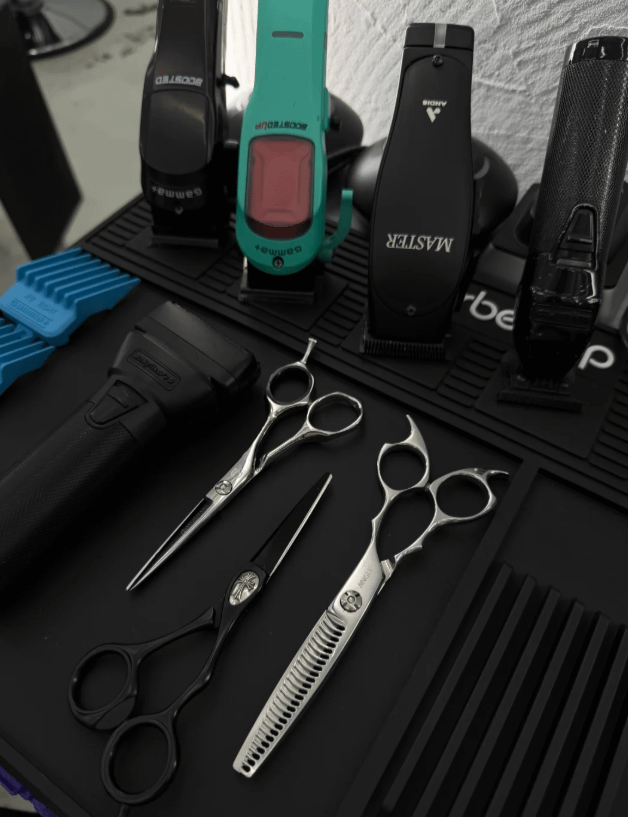

Many people always feel that what they do is just a regular industry, with no chance to change their lives. They repeat the same work every day: income is steady, but they can see the ceiling; it feels like the future has already been arranged. But once you truly step into the market, you’ll realize that opportunities never care about your profession—they only care whether you keep improving your ability. Recently, I received a submission from a fan. He is 33 years old and a hairstylist. He now runs his own private barbershop. When he was young, he didn’t choose the so-called stable route. Instead, he built his customer base bit by bit through his skills. From working for others at the beginning, to later owning his own shop, he relied on craftsmanship, aesthetics, and long-term operation. Many people think the hairdressing industry has nothing to do with investing, but he said that later, when he entered the crypto world, he discovered that the two industries actually have a lot in common. Because he deals with different customers every day, he has always been observing changes in trends. Which hairstyles will become popular and which styles will be accepted—these require you to make judgments in advance. It was exactly that kind of experience that sparked his interest when he first encountered digital assets. Since his customer base is relatively young, during chats people often mention starting businesses on the internet, investing, and digital assets. At first, he just listened and didn’t participate right away. Later, he gradually started studying blockchain—from the development of BTC, to market cycles, to changes in funding sentiment—building his understanding step by step. Outside the crypto world, through years of hairdressing skills and operational accumulation, he had around 400,000 RMB in assets. When he entered the market, he didn’t chase the hottest trends right away. Instead, he chose to observe the cycle. During periods of market weakness, he began deploying in batches some assets he认可 (recognized/approved of). After a round of market upswings, his account gained solid returns, and it was the first time he felt that his experience in his industry could be transformed into another kind of ability. But what truly made him grow wasn’t making money—it was losing money. After he started earning, he felt that his ability to judge trends was getting more and more accurate. After all, after doing hairdressing for years, what he relied on was observing changes and planning ahead. He believes trading is similar: as long as you understand the market direction in advance, you can seize opportunities. When he first started trading, he used a small position to test. After several trades where his judgment was correct, his confidence grew stronger and stronger. Slowly, he increased his position size and began trying higher-risk strategies. Once, he judged that the market was about to pull back, so he positioned himself in advance in a certain direction. At first, the price action matched his expectations, which made him even more convinced in his judgment. But later, the market suddenly reversed. The price broke through quickly, and he didn’t cut his loss in time. He kept thinking, “The market is just temporarily deviating—it should come back.” The result was that the market didn’t develop as he had imagined, and his account saw a clear drawdown. After that experience, he truly understood that the market isn’t a place where you earn money based on feelings—it’s a place where you survive by rules. A sense of aesthetics may help you judge trends, but trading can’t rely on feelings alone. No matter how good your analysis is, you still need position control and risk management. Later, he adjusted his trading approach again. He separated investment funds from trading funds. For every trade, he set a stop-loss level in advance, and he no longer assumed he had grasped market规律 (market规律/behavior) just because a judgment had been correct once. Now, his barbershop operates steadily, and investing has become his second source of income in life. Compared with before, when he only thought about how to improve performance every day, he now focuses more on how to let his assets grow gradually. In the future, he hopes to build his own chain of barbershop brands, and also establish a more stable wealth system. In fact, many ordinary people’s advantages are hidden in their own industries: sales understand human nature, designers understand trends, and technical people understand logic. And as long as you keep learning, these abilities may become a new breakthrough. Skills determine how far you can go now; cognition determines how high you can go in the future. The market won’t reward blind impulsive people, but it will definitely give opportunities to those who keep learning. If you’re also looking for your direction of growth, and you want to exchange trading ideas with more people who have gone through market cycles, we can learn and communicate together. An individual’s growth in cognition is slow, but a group of people willing to improve can go much farther.