

1. Overview of basic information about the currency
- Project name: LEO (UNUS SED LEO)
- Issuance entity: Bitfinex exchange
- Issuance time: May 2019
- Core positioning: A platform token based on the Ethereum blockchain, mainly used for trading fee discounts, financing rate benefits, platform revenue buyback and destruction within the Bitfinex ecosystem.
- Total token supply: 1 billion tokens (fixed supply, no new issuance mechanism)
- Circulation mechanism: Adopts a progressive unlocking model, with an initial circulation of about 500 million tokens, and the remaining tokens gradually unlocked through team incentives, ecological cooperation, and other means.
II. Market performance data survey
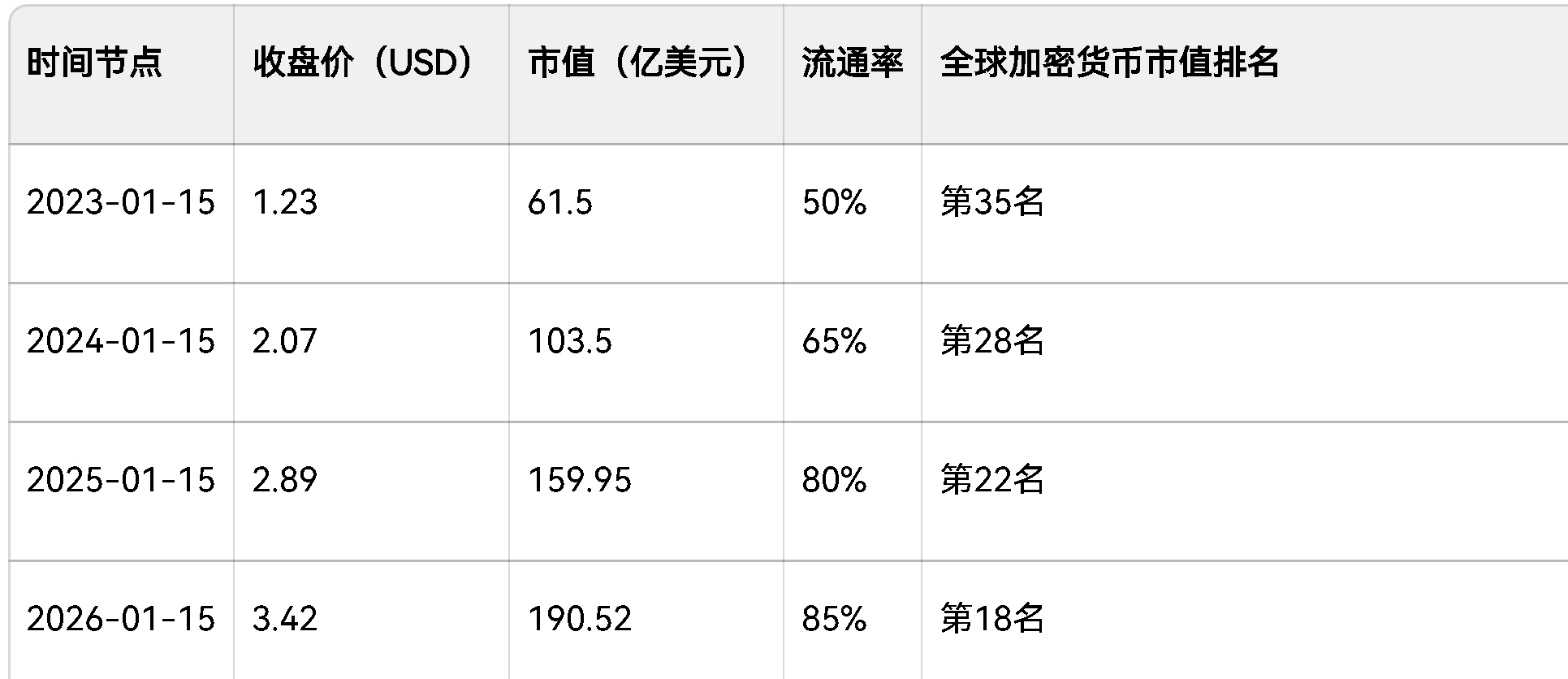
1. Price and market value trend (2023 - January 2026)
2. Trading liquidity data
- Daily average trading volume: $128 million (30-day average).
- Major trading pairs: LEO/USD, LEO/BTC, LEO/ETH (accounting for over 90%).
- Depth indicators: The total order volume within a 1% price spread is $86 million, ranking 4th among platform currencies in liquidity.
- Exchange distribution: Bitfinex accounts for 78%, Uniswap and other DEXs account for 12%, and other CEXs account for 10%.
3. Holding structure analysis
- Top 10 addresses hold percentage: 62.3% (of which Bitfinex treasury address holds 38.7%)
- Number of holding addresses: 186,000 (an increase of 27.3% compared to 2025).
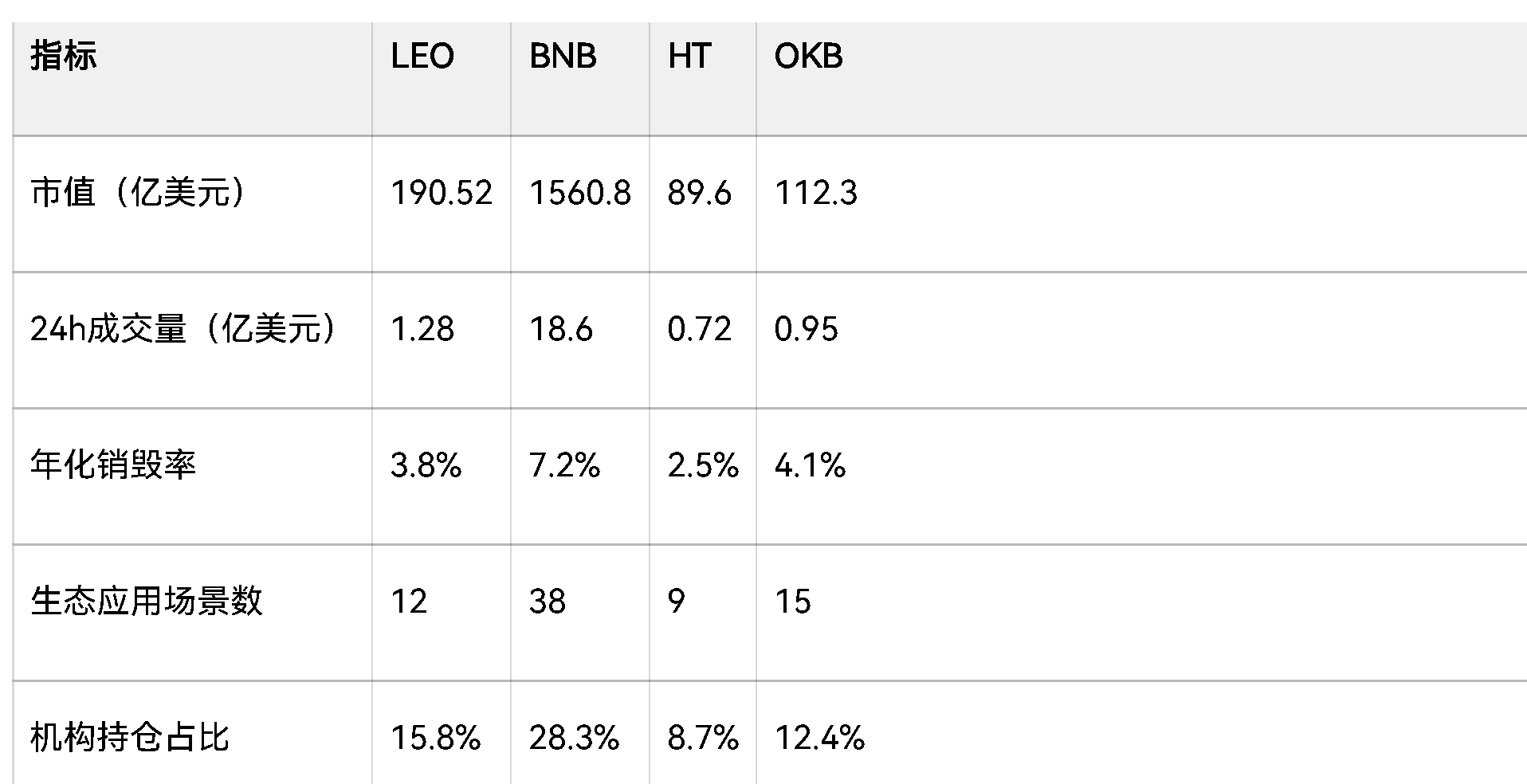
- Institutional holding percentage: 15.8% (including small allocations from institutions such as Grayscale and Pantera Capital).
III. Ecological applications and actual landing scenarios
1. Core application scenario data
- Trading fee discount: Holding LEO allows for a trading fee reduction of 0.1%-0.25% (graded based on holding amount), with about 32% of active traders on Bitfinex using LEO to pay fees in 2025.
- Financing interest rate discount: Using LEO as margin for financing transactions lowers the interest rate by 15%-30% compared to conventional levels, with LEO margin trading accounting for 18.7% in 2025.
- Repurchase and destruction mechanism: Bitfinex will use 27% of the platform's net profit each month for LEO repurchase and destruction, with a cumulative destruction of 123 million coins from 2023 to 2025, currently accounting for 12.3% of the initial issuance.
- Ecological rights expansion: In 2025, additional support for LEO participation in platform IEO subscriptions, margin for derivative trading, and cross-border payment fee deductions, with ecological application scenarios increasing by 40% compared to 2024.
2. Ecological cooperation progress
- Collaboration with Ethereum Layer 2 network Starknet, launching LEO cross-chain version in Q4 2025 to reduce on-chain interaction Gas fees.
- Access to the settlement system of cross-border payment partner VelaFi from Alibaba, supporting LEO as an intermediate settlement asset for cross-border transactions in emerging markets.
- Collaboration with privacy computing projects to launch LEO privacy trading functions to meet institutional users' compliance privacy needs.
IV. Project operation and financial health
1. Platform operation data
- Annual trading volume: $12.8 trillion (year-on-year growth of 35% compared to 2024).
- Active user count: 8.6 million (year-on-year growth of 23%)
- Platform net profit: $4.26 billion (year-on-year growth of 41%), of which the amount used for LEO repurchase and destruction reaches $1.148 billion.
- Asset reserve proof: Monthly release of Merkel tree asset reserve reports, with a reserve asset coverage rate of 128% by January 2026.
2. Sustainability of token economic model
- Repurchase and destruction pressure: Based on the net profit level of 2025, the annual destruction value of LEO is about $1.15 billion, corresponding to an annual destruction rate of about 3.8% (calculated based on the market value in January 2026).
- Unlocking pressure: 15% of the remaining circulation (15 million coins) will be unlocked evenly over 4 quarters in 2026, with a quarterly unlocking amount of about 37.5 million coins, accounting for 2.9 times the current daily trading volume.
- Profit distribution ratio: The proportion of platform net profit distributed to LEO holders (27%) is at a moderate level among mainstream platform currencies (Binance BNB is 50%, Huobi HT is 20%).
V. Industry competitive landscape analysis
1. Comparison of core indicators of mainstream platform currencies (January 2026)
2. Competitive advantages and disadvantages
- Advantages: Bitfinex, as an established exchange, has a solid overseas user base; the repurchase and destruction mechanism is transparent, with destruction data disclosed monthly; cross-chain and privacy function layouts are ahead of some peers.
- Disadvantages: The richness of ecological scenarios is not as good as BNB; liquidity is concentrated in its own exchange, with a low proportion of decentralized trading; regulatory compliance risks are significantly affected by Bitfinex platform operations.
VI. Risk factor alerts
1. Regulatory risk: Some of Bitfinex's business faces overseas regulatory scrutiny, and if platform operations are restricted, it will directly affect LEO's application scenarios and value support.
2. Market competition risk: Competitors like BNB and OKB are expanding their ecosystems faster, creating a gap for LEO in terms of scenario richness and liquidity.
3. Unlocking sell pressure risk: The remaining unlocked tokens in 2026 may create pressure on short-term prices, and attention should be paid to market acceptance during the unlocking period.
4. Industry cyclical risks: The cryptocurrency market is significantly affected by macroeconomic and policy changes, with platform currency prices highly correlated with industry prosperity.
