
Diplomacy that looked close to a breakthrough this week hit familiar ground on Thursday. The Trump administration had signaled a deal to reopen the Strait of Hormuz could land as soon as Thursday. It didn't. Iranian state media instead published a draft plan so restrictive that Washington rejected it within hours.
Despite absorbing the heavier losses in a war that has killed thousands since the U.S. and Israel struck Iran in February, Tehran still holds the stronger hand where the strait itself is concerned, and it has pressed that advantage every time contact with Washington reopens. The waterway is the only real card Tehran has left to play, and reopening it fully is the difference between a genuine resumption of Gulf energy flows and another round of managed, partial traffic. Trump, for his part, needs an outcome he can present as more than a retreat after a costly campaign, which helps explain why last week's optimism about a quick deal has already slipped.
The Terms Tehran Actually Wants
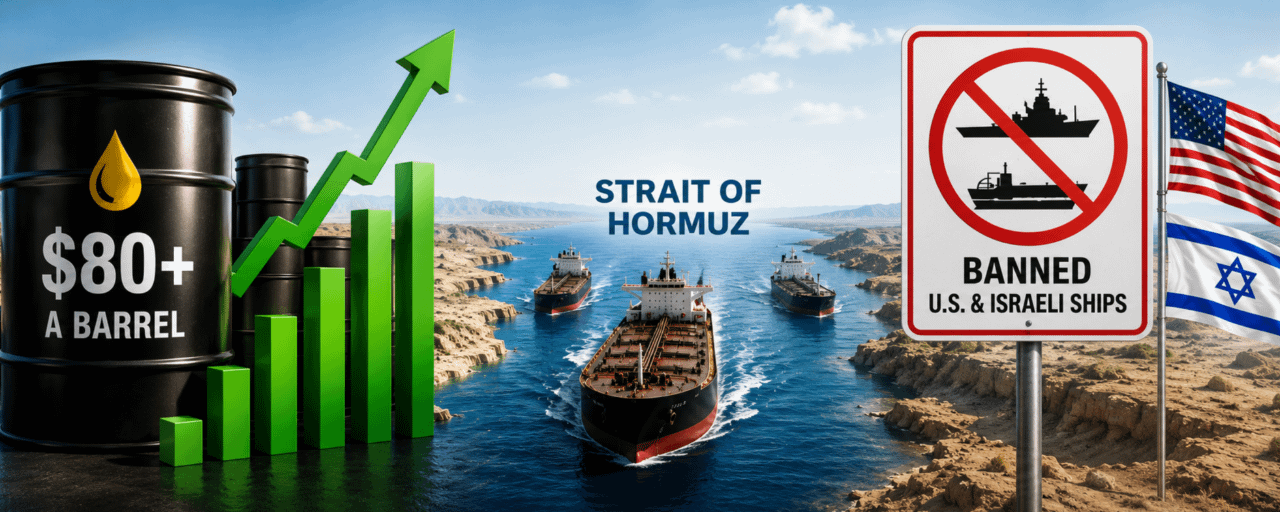
Iran's semi-official Fars News Agency reported Thursday that a preliminary plan, under review by a parliamentary committee, would ban U.S. and Israeli-flagged vessels from the strait outright. Any nation Tehran considers responsible for harming it would need to pay compensation before its ships could pass. Violators would face fines of up to 20% of a cargo's value.
The fee structure is where the real friction sits. Iran is seeking somewhere between 5% and 7% of cargo value from ships that do transit, according to Reuters, citing a senior Iranian official. Oman has floated something closer to 3%. Washington wants zero, and has said so.
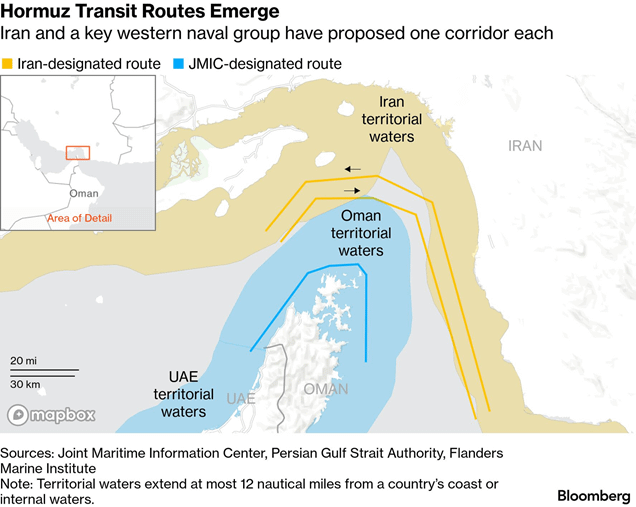
That fight sits on top of a separate, narrower framework Iran and Oman have been negotiating for weeks: inbound traffic through Iranian waters, outbound traffic via a route closer to the Omani coast. The parliamentary plan and the Oman transit deal are related but distinct, and industry sources have told Reuters that U.S. sanctions and restrictive insurance clauses complicate the payment mechanics regardless of what percentage eventually gets agreed.
There's also a signature problem. Any arrangement still needs approval from Iran's Supreme Leader, Mojtaba Khamenei, who succeeded his father Ali Khamenei after he was killed in the opening days of the war and has himself been recovering from injuries sustained in the same strikes. President Masoud Pezeshkian said in a televised interview this week that communicating with him remains difficult.
Washington Draws a Line
The U.S. response came fast. A U.S. official told CNBC that any temporary routes would come with "no approvals or permissions and no tolls or charges," adding that the strait is an international waterway that no single party controls. That leaves almost no overlap with the terms Fars described.
It marks a sharp reversal from the mood earlier in the week, when Trump and Treasury Secretary Scott Bessent suggested a deal could be finalized by Wednesday or Thursday. Trump has cast this round of talks as Tehran's last real opportunity, warning that Iran would get hit hard if it walked away again.
Speaking Thursday, Trump stopped short of declaring a breakthrough. "It's sort of open right now," he said of the strait, crediting the U.S. Navy blockade with keeping some shipping moving despite the standoff. He also repeated his position that Iran will never be allowed to build a nuclear weapon, warning of catastrophic consequences if it did, and suggested the war is nearing its end because he doesn't think Tehran can hold out much longer.
Explosions Near Oman, and a Claim Nobody Else Confirmed
The tension showed up on the water Thursday. The UK Maritime Trade Operations center said the master of a tanker reported hearing two explosions while transiting the strait roughly nine nautical miles southeast of Kumzar, Oman. The vessel and its crew were unharmed, and UKMTO did not indicate what caused the blasts.
Fars separately claimed Iranian naval forces struck "hostile targets" near the strait's entrance that same night, tying the account to explosions close to Qeshm Island. Western monitors, UKMTO included, did not corroborate that report, and traders following the wires openly questioned it, noting Fars has a track record of describing misses as hits.
Yemen supplied the week's other flashpoint. Houthi forces said they launched ballistic missile and drone strikes on Saudi-backed military camps in Yemen's Marib and Hadramout provinces, claiming to have killed or wounded hundreds of fighters and destroyed weapons depots and vehicles. Yemeni government officials gave a lower, still serious, toll of their own: at least 30 to 45 troops killed. It was the sharpest flare-up between the two sides since a 2022 truce. The Yemeni Armed Forces warned Saudi Arabia against further escalation and said it would keep running what it calls a "siege-for-siege" campaign until the blockade on Yemeni ports is lifted.
Oil Reverses Its Slide
Crude had been sliding into Thursday, down roughly 8% on the week after Bessent's early optimism. The restrictive draft plan flipped that. Brent settled 3.8% higher at $82.49 a barrel Thursday, and WTI gained 2.8% to close at $77.29.
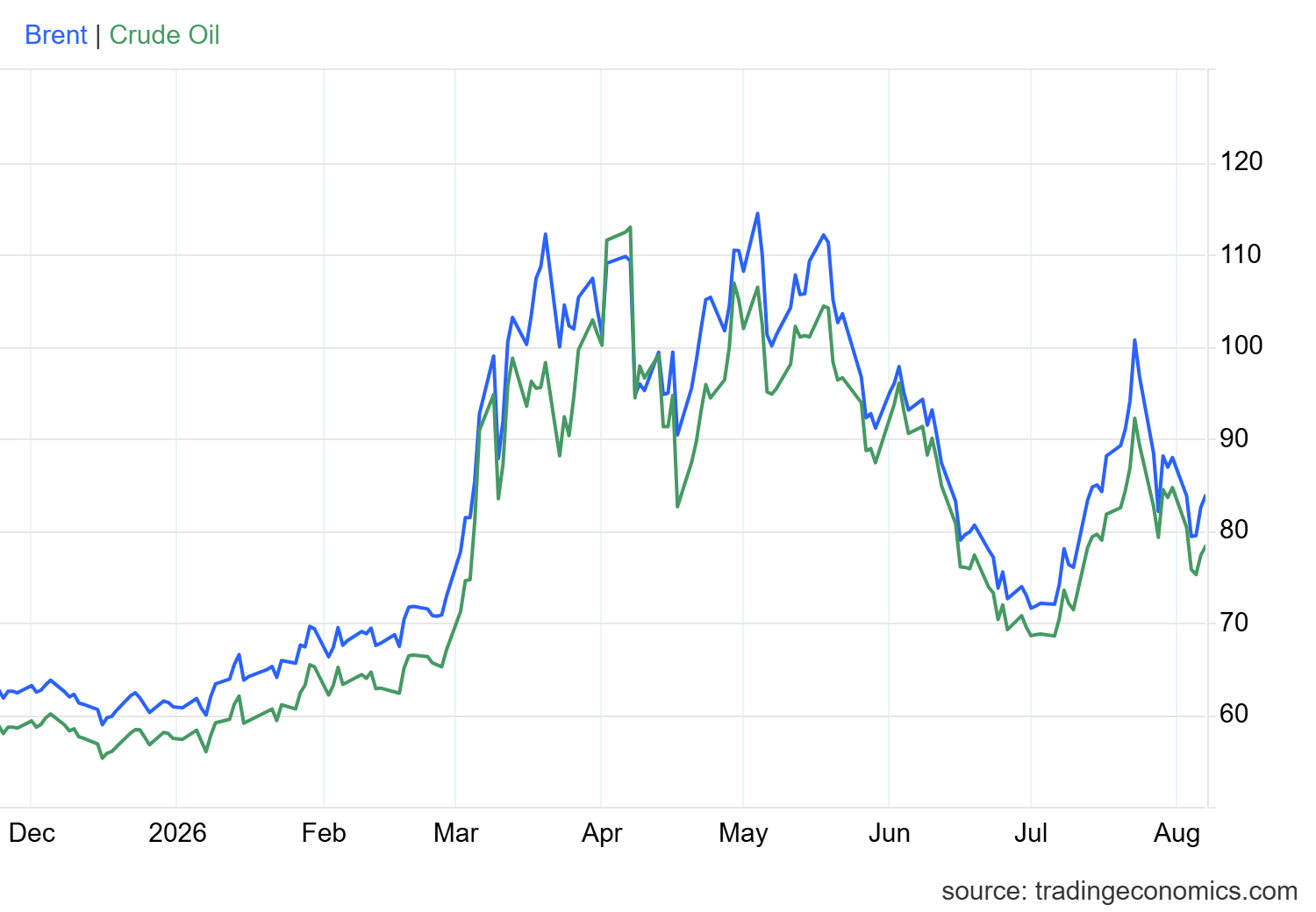
The rally carried into Friday's Asian session. Brent traded near $83.30 to $83.50 a barrel in early hours, up roughly 1%, according to Reuters, while WTI held in the high-$77 to high-$78 range on the same wire.
Still Moving, Just Not Fast
None of this has killed the broader negotiation. An Iranian government official involved in the talks told MS NOW that the temporary Iran-Oman shipping arrangement would carry no fees or tolls, with inbound traffic routed through Iranian territorial waters and outbound traffic through a corridor closer to Oman. The official said the United Nations' International Maritime Organization and the U.S. would both be involved once an announcement is made.
Deutsche Bank strategist Jim Reid summed up where that leaves markets. "Markets have seen plenty of false dawns" during this conflict, he wrote, and the real question now isn't whether an agreement gets reached. It's what that agreement actually allows once it does — including whether Iran ever gets to charge a toll on the ships passing through at all.