


Key takeaways
The Binance Research Report for 2025 shows the continued industrial transformation of digital currencies: regulation, stablecoin settlement channels, institutional adoption, and cash flow generation were of equal importance to price movements.
Bitcoin is increasingly gaining characteristics of a macro asset, as demand and liquidity flow through organized channels like exchange-traded funds and institutional treasuries, even with a decline in activity in the base layer.
The 2026 outlook in the report is based on a more positive political environment and a set of evolving 'pillars' on-chain – stablecoins, revenue-generating DeFi, tokenized real assets, and applications that have user relationship.

Binance Research has released an annual report summarizing what shaped the cryptocurrency markets in 2025 and presenting the themes for 2026. This blog is a summary of the most useful key points from the report for decision-making purposes, focusing on structural signals: clearer regulatory frameworks, expanded institutional access, the rise of stablecoins as a settlement infrastructure, the maturation of decentralized finance into a revenue sector, and the transition of tokenization from experimental programs to real production lines. Read the full report here.
2025: Structural Progress and Macro-driven Markets
2025 witnessed historic achievements alongside a turbulent market. The total market capitalization of cryptocurrencies surpassed $4 trillion for the first time, with Bitcoin reaching a new all-time high of $126,000. At the same time, macro uncertainty – monetary policy, trade tensions, and geopolitical risks – dominated market behavior. Binance Research describes the year as a 'data fog year,' including a new U.S. administration, tariff shock on Liberation Day, and a government shutdown that obscured economic signals. Cryptocurrencies traded within a wide range, with total market capitalization fluctuating between about $2.4 trillion and $4.2 trillion, ending the year down approximately 7.9%.
The optimistic reading is that structural progress continued even when price movements did not align – and this is one of the clearest signs of maturity in the report. Access, settlement channels, and regulation have progressed, and the strongest developing sectors relate to practical use, not just speculation.
The industrial transformation of cryptocurrencies
One of the important themes of 2025 is industrial transformation: the market increasingly rewards infrastructure and reliable access pathways. Regulatory clarity, especially regarding stablecoins, coupled with the expansion of regulated investment products, increased the ways in which institutions and advanced investors participate. At the same time, the economic weight of the ecosystem continued to shift toward compliance-friendly building blocks: stablecoins for settlement, tokenized vaults for on-chain cash management, and applications that enable monetization of recurring flows instead of transient waves of enthusiasm.
This is one reason for the weak signal in merely 'activity' alone. The report repeatedly distinguishes between raw usage indicators and economic significance: what matters is whether the protocol or network can capture recurring value, produce fees or sustainable revenues, and support reliable settlement and trading.
Bitcoin as a macro asset
Bitcoin in 2025 showed a disparity between market demand and activity on the base layer. BTC maintained a market dominance of about 58% to 60% and a market value close to $1.8 trillion, while liquidity and demand increasingly flowed through off-chain financial channels.
Two figures in the report illustrate this shift:
Spot Bitcoin ETF funds in the U.S. attracted over $21 billion in net flows.
Institutional holdings exceeded 1.1 million BTC, which is approximately 5.5% of the total supply.
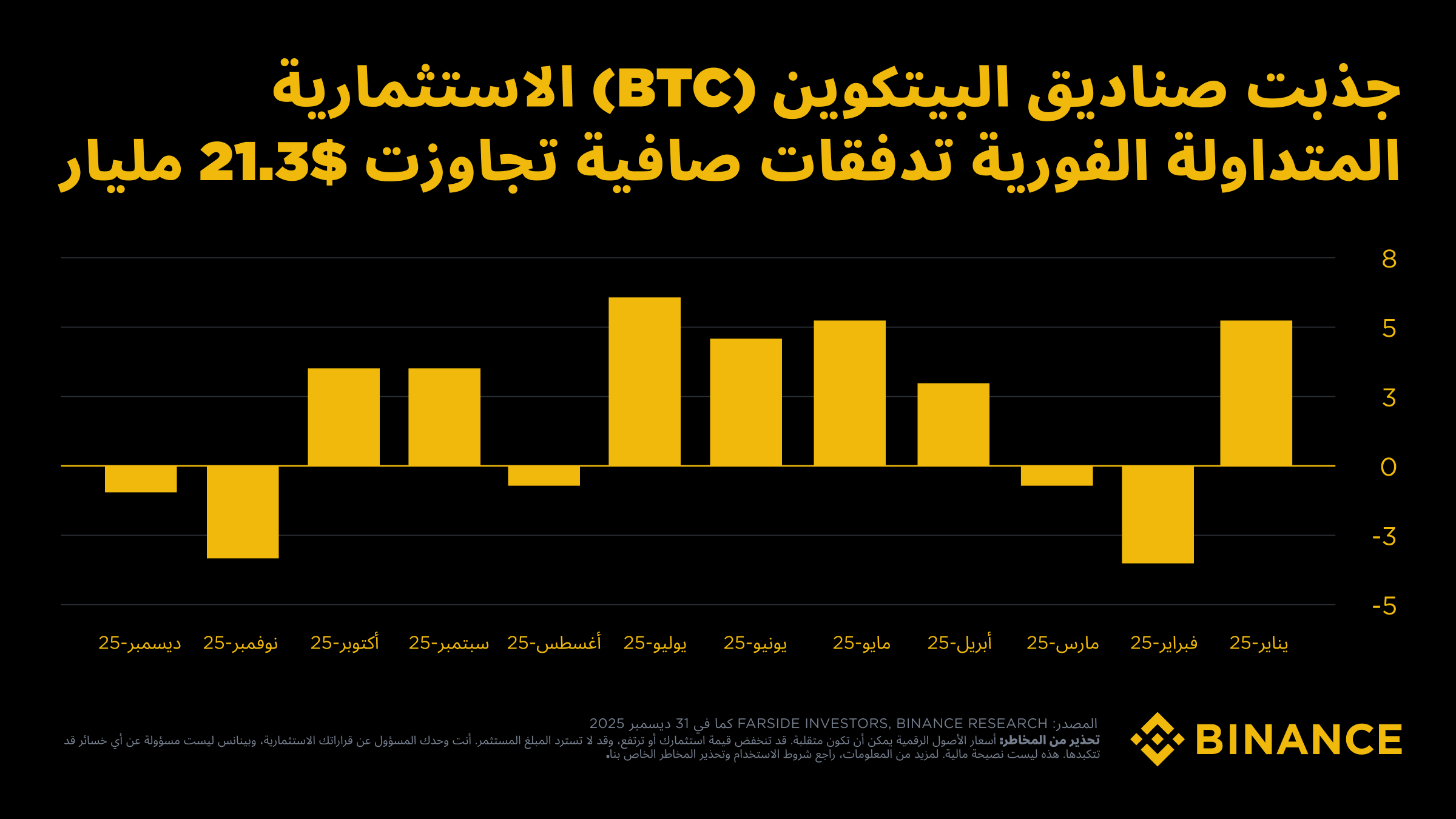
Figure 1: Spot Bitcoin ETF funds attracted net inflows exceeding $21.3 billion
At the same time, active addresses declined by about 16% year-on-year, and transaction counts remained below the peaks of previous cycles. The point is not that the base layer has become unimportant, but rather that Bitcoin's role in the market is increasingly defined by how it is traded and held within macro wallets and regulated channels. Network security continued to be bolstered – surpassing a hash rate of 1 zeta hash per second and mining difficulty increasing by about 36% annually – reinforcing the notion of ongoing investment in Bitcoin security budget even as usage indicators return to normal rates.
In summary, Bitcoin is transitioning to become a liquid asset at the institutional level rather than just a transaction-based network.
The 'distinct blue' moment for decentralized finance DeFi
Decentralized finance moved in 2025 away from incentive-based growth and closer to capital efficiency and compliance. Total value locked stabilized at around $124.4 billion, but capital formation shifted significantly towards stablecoins and yield-bearing assets rather than inflationary tokens. Concurrently, the economic output of decentralized finance strengthened: protocol revenues reached $16.2 billion, which the report considers comparable to major traditional financial institutions.
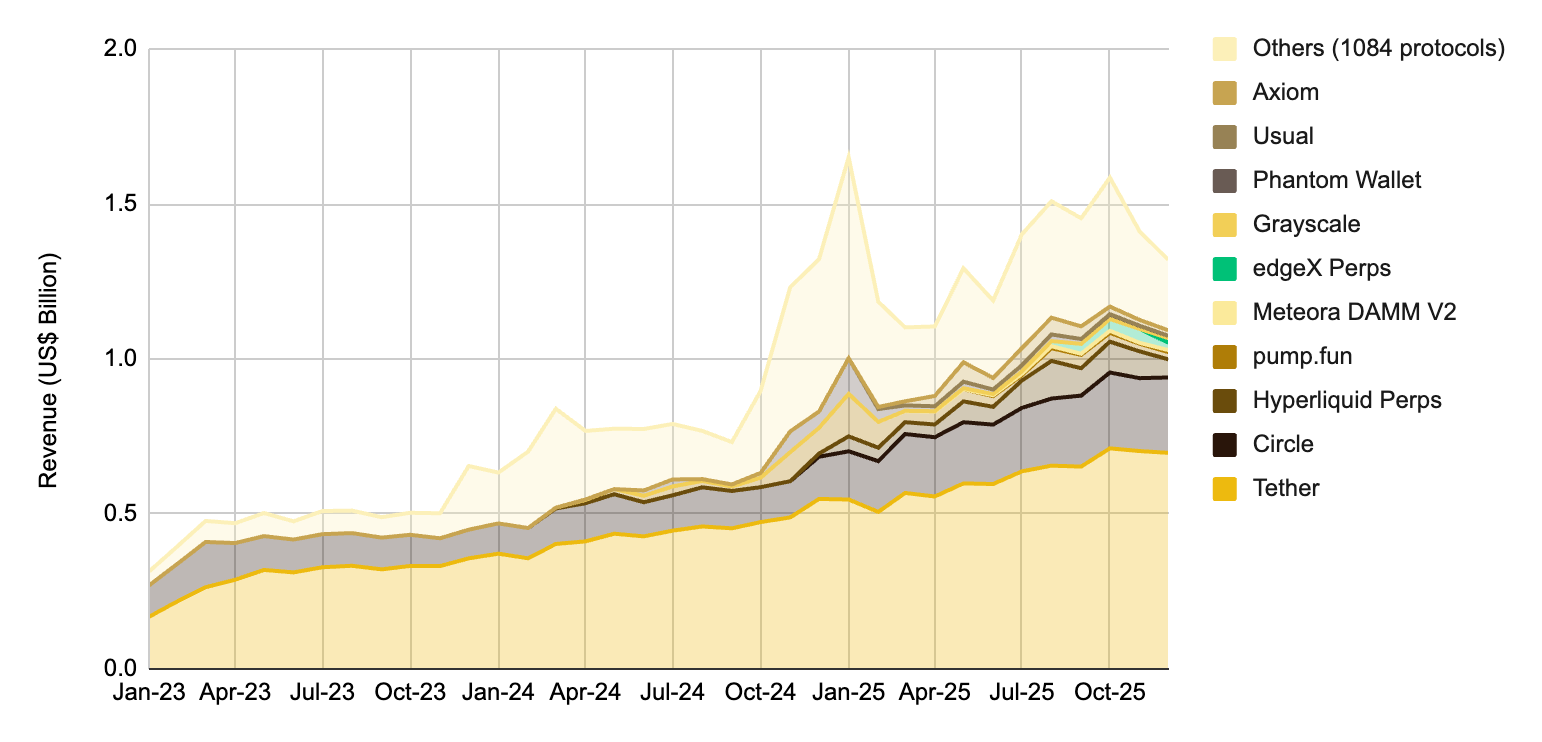
Figure 2: Monthly revenues of decentralized finance reached a record level of $1.65 billion. Source: DefiLlama, Binance Research as of December 31, 2025.
The prominent trend was the shift in tokenization from storytelling to collateral. The total value locked in tokenized real-world assets (RWA) reached $17 billion and surpassed decentralized exchange (DEX) platforms, driven by vaults and tokenized equities. This changes the dynamic in supporting finance on-chain. When collateral transforms into real yield-bearing instruments, decentralized finance becomes more closely linked to recurring financial demand.
The report also notes that execution on-chain continued to gain importance, with the ratio of decentralized to centralized platform trading peaking at around 20%. While ratios change, the general trend is that decentralized execution has become an impactful channel for many flows, particularly as stablecoins grow and RWA collateral becomes more liquid and usable.
Stablecoins enter the era of 'cash online'
If there is a part of cryptocurrencies that clearly became mainstream in 2025, it is stablecoins that have proven to be a foundational infrastructure for settlement.
Key points about stablecoins from the report:
The total market capitalization of stablecoins increased by about 50% to over $305 billion.
The average daily transaction volume was around $3.54 trillion.
The annual transaction volume reached $33 trillion, compared to around $16 trillion for Visa.
The clarity of regulation accelerated, led by the U.S. GENIUS Act.
A new competitor emerged outside the dual monopoly: each of BUIDL, PYUSD, RLUSD, USD1, USDf, and USDtB surpassed the $1 billion market cap.
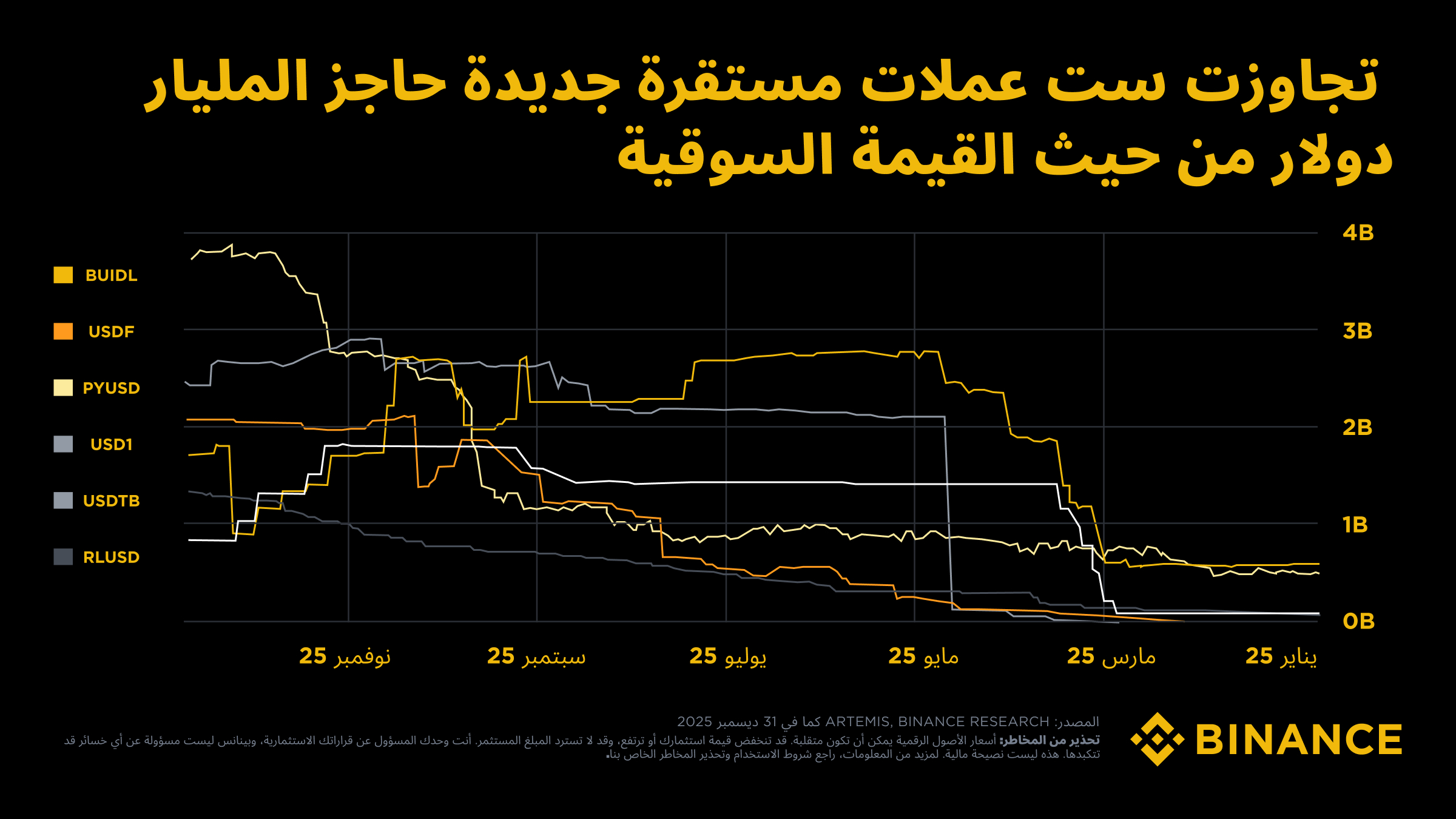
Figure 3: Six new stablecoins surpassed the $1 billion market cap. Source: Artemis, Binance Research as of December 31, 2025.
The optimistic narrative is clear: stablecoins have increasingly become a virtual exchange medium within cryptocurrency markets and a more practical channel for cross-border payment settlements and fintech applications. In many cases, stablecoins allow users and businesses to access cryptocurrency channels while reducing volatility that might deter newcomers.
Layer 1: Financial professionalism is key.
In Layer 1 networks, 2025 reinforced that the number of transactions alone is not enough. Many networks failed to convert activity into fees, capture value, or sustain token performance. In contrast, excellence became more linked to realizable recurring flows such as trading, payments, and institutional settlement.
Ethereum maintained its dominance in developer activity, decentralized finance liquidity, and total value, but the fee pressure from executing extensions led to lower ETH performance compared to Bitcoin.
Solana maintained high utilization, increased its stablecoin supply, and generated revenue for significant protocols despite a decline in speculative waves, gaining approval for a spot ETF in the United States, enhancing institutional accessibility.
BNB Chain benefited from strong demand for retail transactions and market narrative, supporting large settlement flows of stablecoins and the deployment of tokenized real assets. The report considers BNB to be the best-performing major digital asset in 2025.
Layer 2 networks accounted for over 90% of Ethereum-related execution in 2025, supported by upgrades that reduced data availability costs. Activity and fees concentrated among a limited number of extension networks such as Base and Arbitrum, while many other networks faded with decreasing incentives. Fragmentation among over 100 extension networks and the imbalance of decentralized execution organizers as a constraint enhances another theme of 2026: value capture may shift 'up' to the application layer that has user relationships instead of remaining in the block space layer.
2026 Outlook: Risk Recalibration and Adoption-Led Growth
The report centers its 2026 outlook around a more constructive political environment and a shift towards growth led by increased adoption.
On a macro level, the 'political trinity' can support a risk appetite reset: monetary easing, fiscal stimulus through cash and tax breaks, and regulatory rollbacks. When financial conditions stabilize, high-risk assets often benefit, and the cryptocurrency sector has historically been highly sensitive to global liquidity drivers. The report also points to the potential strategic reserve of Bitcoin in the U.S. as a political incentivizing factor.
In product and market structure, hubs are less tied to a single narrative and more focused on sustainable use:
PayFi: Integration of new banks and wallets, with support for yield-bearing stablecoins for new consumer financial applications.
Institutionalization: On-chain money markets, vaults, and settlement of tokenized real assets are embedded in production lines.
Value capture: With the declining cost of block space, applications like wallets, aggregators, decentralized trading platforms, and prediction markets may capture greater value.
Smart finance and agency: AI-backed execution, automated production lines, and trust tools.
Prediction markets: Pricing information as an alternative to opinion-based narratives.
In other words, 2026 is likely to reward verifiable, compliant systems built around recurring utility.
Closing thoughts
In 2025, the cryptocurrency sector continued to advance despite headwinds. Bitcoin demand increasingly flowed through regulated channels, stablecoins expanded as a settlement infrastructure, decentralized finance matured into a revenue-generating sector, and tokenization approached more towards real production investments. Based on these foundations, the 2026 outlook in the Binance Research report: more institutional integration, greater adoption at the application level, and a macro environment that may become less restrictive. For detailed charts, methodology, and the complete list of topics for 2026, read the full report here.
Additional readings
Binance Year-End Report 2025: Trust, Liquidity, and Web3 Discovery
The liquidity wheel that brought Binance to 300 million users
Disclaimer: Digital asset prices can fluctuate. The value of your investment may go down or up, and you may not recover the invested amount. This content is intended for general information purposes only and should not be construed as financial or investment advice. For more information, please review Terms of Use and Risk Warning.
Please note: There may be differences between this original content in English and any translated versions (which may be produced by AI). Please refer to the original English version for the most accurate information, in case of any discrepancies.