


It's best not to play at all to avoid liquidation! But the problem is, once you're in the crypto world, can you control yourself from playing? 98% of people will be attracted by the prospect of making money, not realizing the risk of losses.
If your capital is within 100,000, there is a simplest method to trade cryptocurrencies that will help you maintain 'constant profit'!
Everyone need not worry about whether you can learn this; I can seize this opportunity, and so can you. I'm not a god, just an ordinary person. The difference between me and others is that they overlook this method. If you can learn this method, in the future trading, it can help you earn at least 3 to 10 additional points of profit every day.
Invest in batches: Suppose you have 10,000 yuan, divide it into five parts, and use only 2,000 yuan of it for each transaction.
The group is testing the waters with an investment: they'll start by buying a cryptocurrency for 2,000 yuan to see how it goes.
Add to your position if the price drops: If the price of the coin drops by 10%, add another 2000 yuan to your position.
Take profits when the price rises: If the price of the coin rises by 10%, take profits immediately to lock in a portion of the gains.
Repeated cycle: continuously buy and sell until funds are exhausted or all coins are sold.
Strategic Advantages: The advantage of this strategy is that you can remain calm even if the price of the coin falls. By buying in batches, you avoid the risk of a single large investment; even if the price drops by half, you are only gradually adding to your position. And each time you sell, you can lock in 10% of your profits. For example, if you have 100,000 yuan, investing 20,000 yuan each time will earn you 2,000 yuan each time.
Key techniques include:
1. Technical Analysis: Using charts and indicators to identify trends;
2. Fundamental Analysis: Pay attention to news and macroeconomic factors;
3. Risk Management: Setting stop-loss orders and diversifying investments;
4. Trading Strategies: Determining entry and exit points and using different strategies;
5. Psychological factors: Maintain discipline and patience;
6. Practice and learning: simulated trading and continuous learning;
7. Choose a reliable platform.
Cryptocurrency trading carries significant short-term risks; thorough research and risk assessment are essential before engaging in any trade.
Once you have 1 million in principal, you'll find that your whole life seems to change. Even if you don't use leverage, if you buy a commodity and it rises by 20%, you'll have 200,000. 200,000 is the annual income ceiling for most people.
Moreover, once you've grown your money from tens of thousands to 1 million, you'll grasp some of the strategies and logic for making big money. At that point, your mindset will be much calmer, and from then on, it's just a matter of copying and pasting.
I'm Yiyan, and I've been focusing on encryption for 10 years. Welcome to follow me!
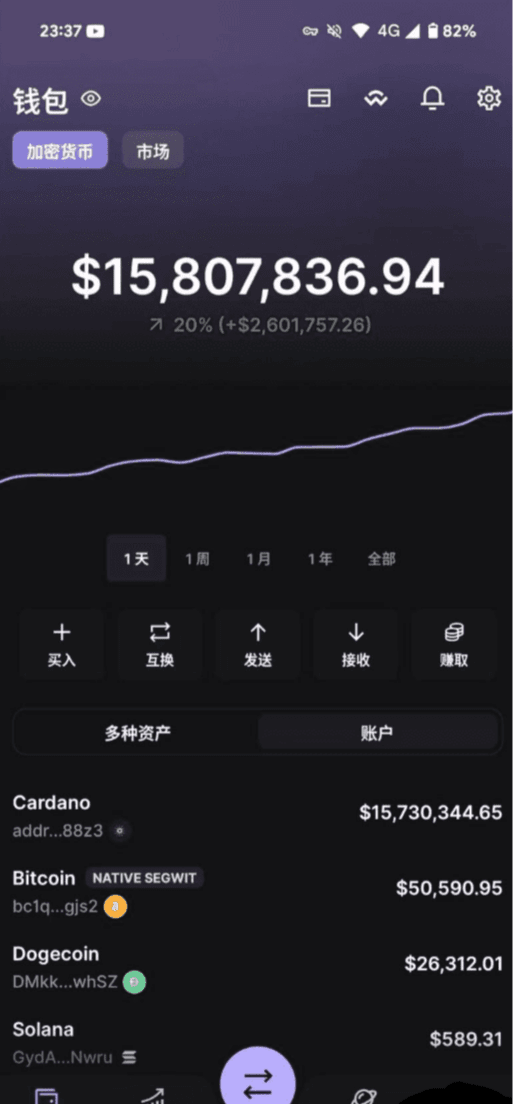
Daily chart trading method
Cryptocurrency prices generally follow the trajectory of the 5-day moving average, which can be categorized into three trends: rising, falling, and flat. Below is a reference guide for buying and selling points using the 5-day moving average. It's important to note that the cryptocurrency market is constantly changing and unpredictable, and is also subject to external factors.
Considering the influence of information, policies, and many other factors, using the five-day moving average in conjunction with the candlestick chart and MACD teachings provided by Huahua Jingcai Tutorials yields the best results.
1. When the 5-day moving average gradually flattens out from a downward trend and starts to rise slightly, and the price breaks through the 5-day moving average from below, the candlestick pattern shows a bullish candlestick breaking through the 5-day moving average and clearly standing above it. This is considered a buying opportunity.
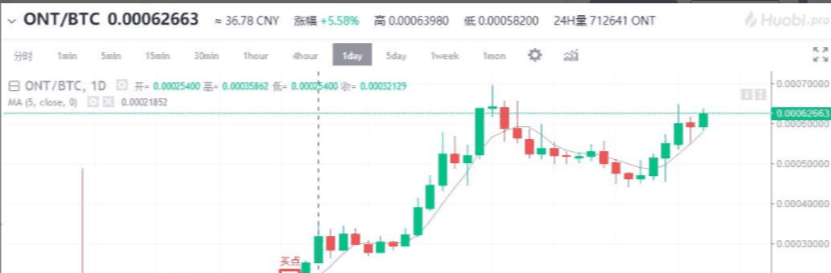
2. When the price is running above the five-day moving average, and then falls below the five-day moving average during a pullback but rises again, with a bullish candlestick clearly standing above the five-day moving average, this is considered a buying opportunity.
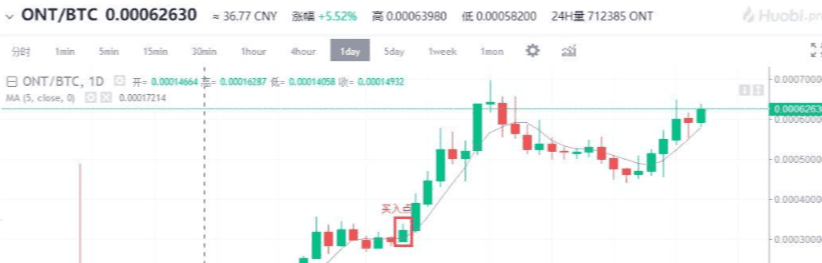
3. When the price is running above the 5-day moving average and falls below it during a pullback, but the 5-day moving average continues to rise in the short term, this can be considered a buying opportunity.
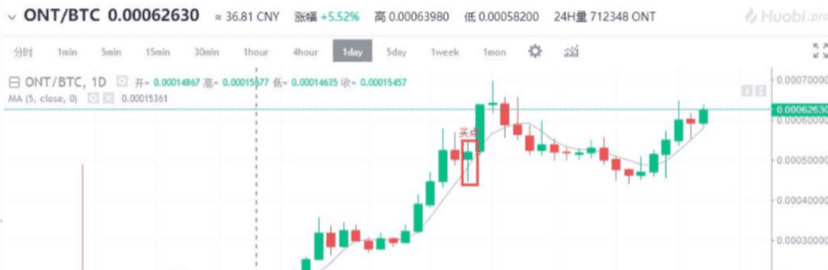
4. When the price of a coin is trading below the five-day moving average and suddenly drops sharply, becoming too far from the moving average, the candlestick pattern shows a large bearish candlestick pulling down. As the saying goes, things tend to reverse, and the coin is very likely to move closer to the five-day moving average in the future. This could be a buying opportunity.
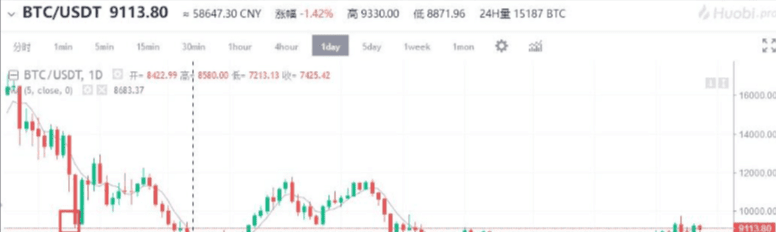
5. The price is running above the five-day moving average. After several days of continuous rise, it is getting further and further away from the five-day moving average. The same principle applies: things will turn around when they reach their extreme. Investors have made a lot of profits recently, and there will be selling pressure to take profits at any time. At this time, consider the selling point.
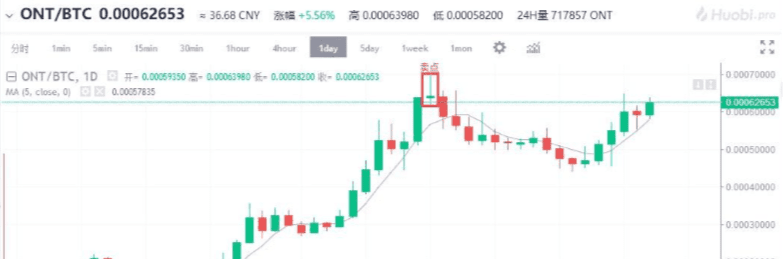
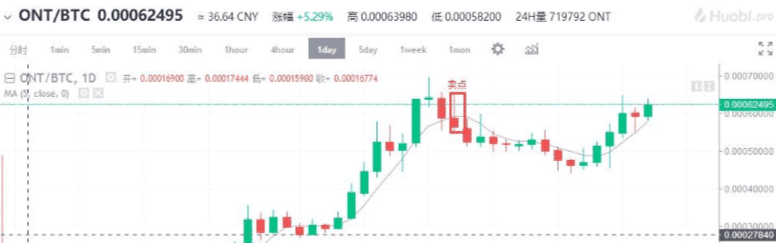
6. When the 5-day moving average gradually flattens out from an upward trend, and the price falls below the 5-day moving average from above, it indicates increasing selling pressure. This can be considered a selling point.
Today's learning is preparation for tomorrow's trading. Only by continuously learning classic practical techniques and improving the accuracy of your market analysis can you apply them freely in the cryptocurrency market and achieve long-term profitability. This way, you can easily make money even in a volatile market.
Let me first explain what the five-day moving average is. The five-day moving average is the average price of a coin over five days, abbreviated as MA(5). Doesn't that sound simple?
The 5-day moving average, also known as the 5-day moving average line, is what a moving average is.
Moving average, short for moving average line, reflects the average cost of public holding of currency over a period of time, and can also reflect the strength of the currency price.
The moving average indicator is one of the simplest and most practical technical analysis indicators, and precisely because of this, it is more commonly used by investors.
This indicator is relatively easy to grasp.
The greatest truths are the simplest; often, the simplest things are the most practical and can bring unexpected returns to investors.
The basic methods for setting the five-day moving average are similar across all trading platforms. Below, I'll use Huobi as an example to explain how to set the five-day moving average.
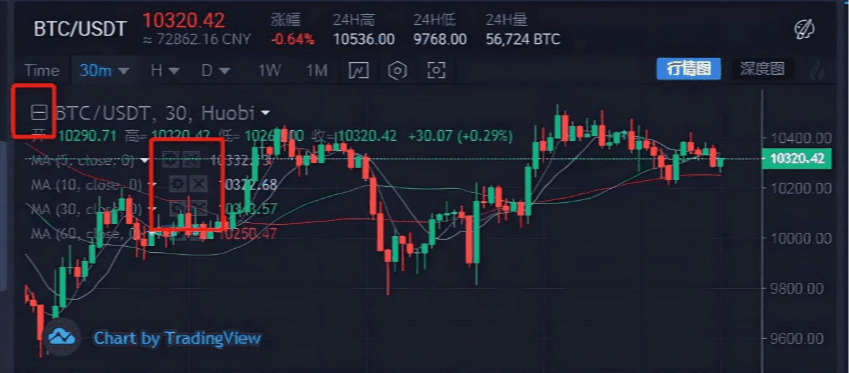
The default moving averages on the Huobi PC client are the 5-day, 10-day, 30-day, and 60-day moving averages. If you find this too confusing, you can click on the image above.
The "×" in the second yellow box indicates that the 10-day, 30-day, and 60-day moving averages have been removed, leaving only the 5-day moving average displayed. This makes the chart look much simpler.
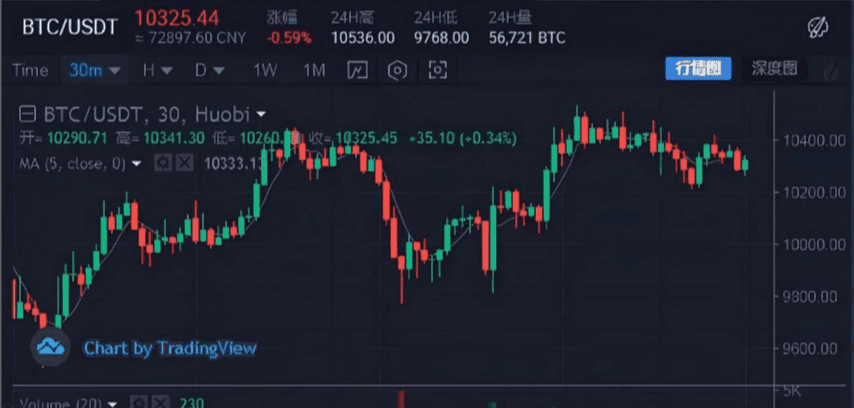
How to use the 5-day moving average strategy?
The 5-day moving average actually represents the average holding price of cryptocurrency players over the past five days. It represents the psychological tolerance range in terms of average price and is a short-term emotional window.
Therefore, every time the price hits the moving average, there will be a rebound or an accelerated decline, which represents a support level or a resistance level.
In general, it can be considered that during an upward trend (bull market), when the price pulls back to the 5-day moving average, it presents an opportunity to add to positions and go long.
During a downtrend (bear market), a rebound in the price to the 5-day moving average presents an opportunity to reduce positions or open short positions.
The principle that the greatest truths are the simplest is the most practical, and this is especially useful for investors with little technical background.
The rise or fall of cryptocurrency prices generally follows the trajectory of the five-day moving average. The trajectory of the five-day moving average can be divided into three trends: rising, falling, and flat.
Below, I'll show screenshots and text illustrating how to use the 5-day moving average strategy for buying and selling points. It's important to note that this applies to the cryptocurrency market.
The market is constantly changing and endlessly evolving, influenced by news, policies, and numerous other factors. The five-day moving average strategy, combined with Hai Ge's "double" trading method...
Using line combination tactics together yields the best results.
Those who haven't learned the "Dual-Line Combination Strategy" can ask Huahua for a free tutorial.
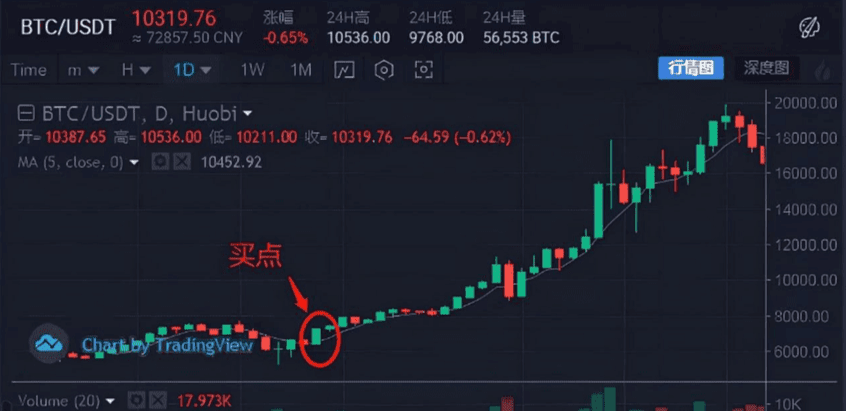
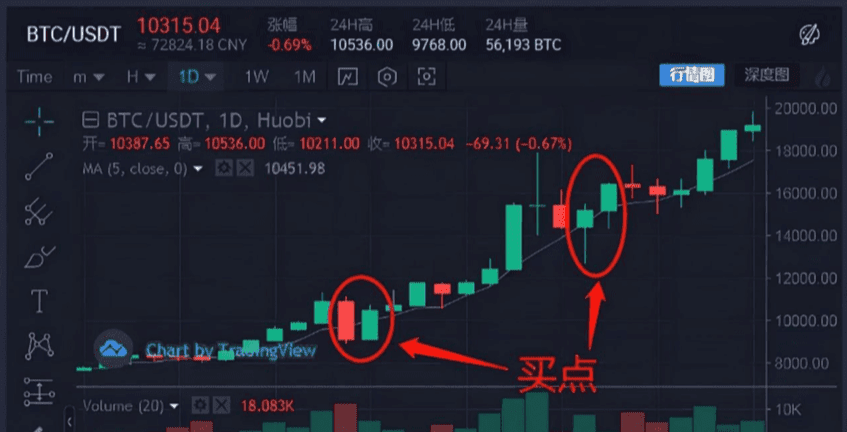
Using the 5-day moving average to determine buying points:
1. When the 5-day moving average gradually flattens out from a downward trend and then slightly turns upward, accompanied by the price breaking through the 5-day moving average from below, and the candlestick pattern shows a bullish candle breaking through the 5-day moving average and clearly standing above it, this is considered a buy signal. Contracts can be bought on dips. How to use the 5-day moving average strategy?
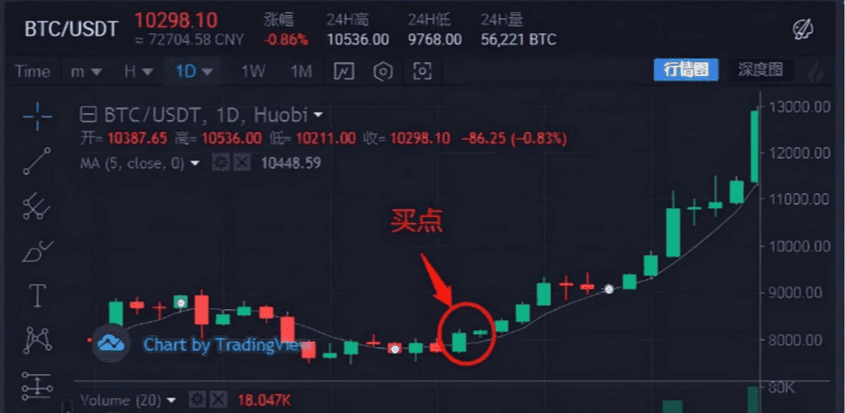
2. When the price is trading above the 5-day moving average, and after a pullback that breaks below the 5-day moving average but then rises again, with a bullish candlestick clearly closing above the 5-day moving average, this is considered a buy signal. Futures contracts can be bought at this point.
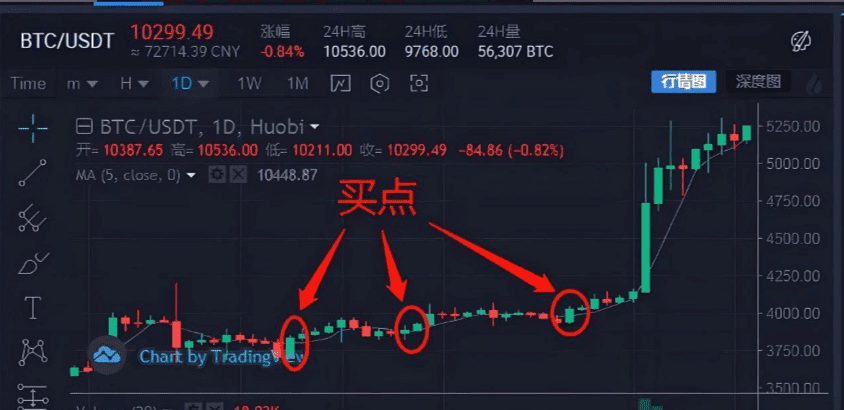
3. When the price is trading above the 5-day moving average and falls below it during a pullback, but the 5-day moving average continues its upward trend in the short term, this can be considered a buying opportunity. Futures contracts can be bought at this point to go long.
Using the five-day moving average to determine selling points
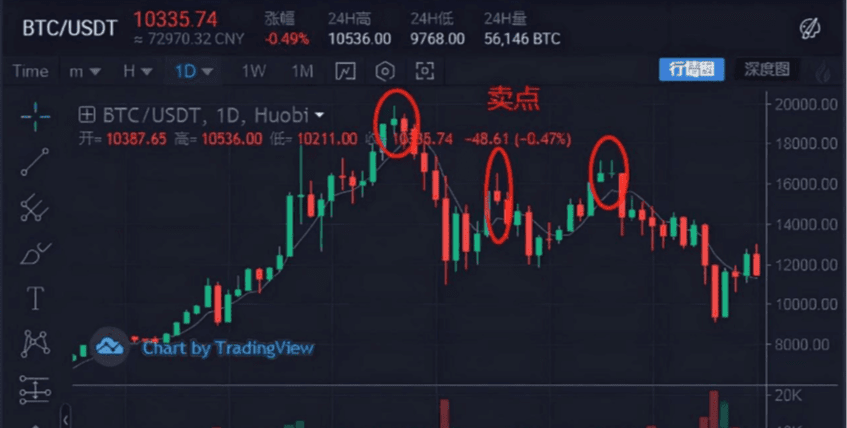
1. The price is trading above the 5-day moving average, but after several days of significant gains, it's moving further away from it. Following the principle of "things reaching their extreme will reverse," investors have recently made substantial profits, and selling pressure could arise at any time. This presents a potential selling opportunity. For futures contracts, shorting at this point is advisable.
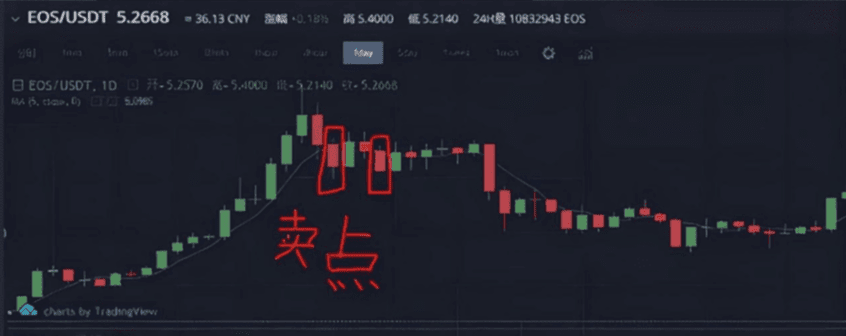
2. When the 5-day moving average gradually flattens out from an upward trend, and the price falls below the 5-day moving average from above, and hovers around the 5-day moving average, it indicates increasing selling pressure. This is a potential selling point. Futures contracts can be shorted at this time.
The 5-day moving average strategy is the most suitable short-term trading technique for beginners to learn and master. Even those with zero experience can quickly get started because...
With just a simple moving average quantitative indicator, we can overcome our psychological fears and greed.
In trading, technology is not the biggest enemy; the biggest enemy is often one's own greed and fear.
The challenges that need to be overcome in trading
1-Forced Trading
I always felt the need to trade, even before I became profitable and maintained a stable position.
Day after day, I kept making transactions that didn't align with my plan.
The only way to help me stop is to strictly follow my trading plan, just like a checklist.
If the market behaves this way... then I will do this...
This method eliminated my confusion in trading decisions and allowed me to handle charts with confidence.
2-Distraction
Trading requires your full concentration. Without focus, you are prone to making costly mistakes, such as entering the wrong position size or...
I intended to go long but ended up going short (this has happened many times, haha).
To stay focused, designate a specific time and place for trading to minimize distractions.
Place your phone in another room and set it to silent or "Do Not Disturb" so you can avoid distractions and focus on your trading.
3-Self-doubt
Doubting your trading decisions can lead to missed opportunities. Trust your strengths and believe your plan will work. Don't just do it because you...
If you're on a losing streak, expect your trading to fail. Keep a journal. Record all your trades, regardless of the outcome. List your thoughts and reflections.
By regularly reviewing the process, you can build confidence in yourself and your strategy.
4-Hesitation
Overthinking your trades after a series of losses can cause you to miss opportunities. This hesitation can paralyze you, making it difficult to leverage your strengths. To address this, balance your risk by understanding and accepting potential losses before making a trade.
Use strict position sizing and stop-loss orders to effectively manage your risk. If you are a beginner, please practice with a demo account.
To build confidence, then transition to a small live trading account or a proprietary trading desk account.
5-Impatient
Impatience often leads to forced trading; many novice traders rush into trades before the market reaches a higher timeframe PD array.
In trading, this hasty approach leads to premature entry and exit, resulting in losses that could have been avoided.
My advice: Use alerts. They help you avoid focusing too much on the chart and prevent low-probability trades. Set them to your HTF level so that your chart only turns on when triggered.
6. Focus only on profit and loss
Overly focusing on profit and loss (PNL) can cloud your judgment, as Yoda said, "Train yourself to let go of everything you fear losing." In trading, following the process is crucial regardless of the outcome; remember that your profit and loss order is random. Therefore, set...
Focus on process-oriented goals and celebrate the execution of your plans, not just on making a profit.
7. Negative self-talk
Belittling yourself will destroy the confidence you've built. This can lead to a cycle of poor performance; challenge yourself with positive affirmations.
Replace these thoughts with the reminder: "In the long run, I will win."
Do you know these basic technical indicators for trading in the cryptocurrency market and making swing trades?
Every indicator has its limitations and lag; it's best to combine multiple indicators, taking into account various information sources and the overall environment, especially when dealing with market manipulators.
Factors related to homeowner control are relatively more complex.
Swing indicators are divided into three main categories: oscillators, trend indicators, and momentum indicators. Oscillators can show the local price position of candlestick charts.
Overbought and oversold conditions help determine the price level for investment. This is particularly suitable for short-term trading; representative indicators include KDJ+ and RSI+. Recommendation 1
If you have no basic knowledge, you must first read the article and understand the meaning and purpose of each indicator.
Trend indicators can define a trend over a period of time and linearize price fluctuations. A representative example is...
Generally speaking, MACD+ and MA can predict the trend of half a day with golden crosses and death crosses on a 15-minute chart; the trend of one day with golden crosses and death crosses on a 30-minute chart; and the trend of two days with golden crosses and death crosses on a 60-minute chart. In general, the smaller the time frame you choose, the worse the actual price you will buy at.
Energy indicators are derived from trading volume data, with VOL+ being a common example. VOL consists of volume bars and moving average groups.
Success. If the closing price of the day is higher than or equal to the closing price of the previous day, the volume bar is red; otherwise, it is green. Volume (VOL) can be used to...
It provides a relatively intuitive view of the volume-price relationship. It's a fairly basic usage.
Golden cross and death cross
(-),fork
A MACD golden cross occurs when the DIF line (white line) crosses above the DEA line (yellow line), with the DIF line being higher than the DEA line and moving upwards simultaneously.
Movement. At this point, the bulls have the upper hand, and the MACD golden cross is a very good buy signal in the medium to long term. However, if the golden cross occurs when the DIF line and...
The DEA line is below the zero axis, indicating that although the bulls currently have the upper hand, caution is needed to prevent a rebound.
(ii) Death Double Fork
A MACD death cross occurs when the DEA line (yellow line) crosses below the DIF line (white line), and the DIF line is lower than the DEA line and moving downwards simultaneously.
Movement. At this point, the bears have the upper hand, and a MACD death cross is a very good sell signal in the medium to long term. If the death cross occurs above the zero line, there are two possibilities.
Furthermore, it could be a temporary pullback followed by continued upward movement, or it could be the start of a major correction. (Top divergence* and bottom divergence*)
Divergence, literally meaning deviating from the original, normal trajectory, refers to a situation in the cryptocurrency market where the price is in an upward or downward trend, and technical indicators suggest otherwise.
When indicators move downwards or upwards, and technical indicators do not follow the price changes, this is called divergence.
Essentially, it's because of certain reasons that prices and indicators have diverged, causing the indicators to fail to synchronize with prices.
There are two types of divergence: top divergence and bottom divergence.
Top divergence refers to a situation where, as the price of a coin continues to rise, the MACD indicator chart shows a pattern where each peak is lower than the last, indicating that the selling pressure is increasing and is a relatively good signal to exit at the top.
Bottom divergence occurs when the price of a coin is falling, but the MACD indicator's DIF line falls less than the price, or even rises; this is called a bottom.
A divergence, at which point multiple forces strengthen, is a relatively good signal to buy at the bottom.
PS: The DEA line is more accurate, but it requires a longer period and the process is slower.
Overbuying and over-real
(I) The RSI indicator theory posits that any significant rise or fall in market price will fluctuate between 0 and 100. Based on normal distribution, the RSI value is considered to fluctuate mostly between 30 and 70. Typically, a value of 80 or even 90 is considered to indicate that the market has reached an overbought state. This value is...
The RSI may rise further, at which point the market price will naturally fall back and adjust. When the RSI value falls below 30, it is considered to be in an oversold state, and the market price will rebound.
(ii) When the K value of the KDJ indicator is below 20 and the D value is below 30, it is considered oversold. Generally, the price of the coin may rise or rebound.
The probability of a rebound is increasing, and opportunities to enter the market may arise. An overbought condition is indicated by a K value above 80, a D value above 70, and a J value above 90. Generally, for cryptocurrencies...
Prices may fall, so it's advisable to sell at the appropriate time.
Tips on band trading
In reality, trading within price swings isn't that complicated. In short, it involves buying low and selling high, using multiple indicators for comprehensive analysis, and paying attention to stop-loss and take-profit levels.
Avoid frequent trading or large positions; manage your risk carefully.
The most difficult point for retail investors is determining the entry and exit points. Actually, it's not that judging the exact entry and exit points is particularly difficult; many pieces of information are misleading.
Everyone knows about events like the Bitcoin halving. However, many retail investors want to buy at the lowest point and sell at the highest point, fearing being trapped and fleeced, and also worried about being left behind. The main problem is greed; they always think that the price can rise again if they wait.
Therefore, the first step in swing trading is to understand the overall market trend. This means identifying whether it's a bull or bear market, and whether the market is in an upward or downward trend.
Secondly, you need to confirm the risk-reward ratio of the cryptocurrency you want to buy. Finally, you need to understand whether you are operating in a large, medium, or small swing trade.
You should have a clear idea of when and within what price range to take profits.
The biggest taboo in swing trading is greed; greed can easily cause you to miss the best profit-taking range. Don't try to catch the beginning or the end of a trade, and don't look for buying opportunities.
Sell at the lowest point, not the highest. The downside of this approach is that profits aren't maximized; sometimes you miss out on big gains and end up with many losses.
The downside is that the risk factor is low, the safety factor is high, and the mindset of winning is positive, always maintaining initiative.
Dingang's Ten Major Advantages:
1. Cooperation Platform
Supports major global platforms; funds are in your own account, ensuring safety and reliability.
2. Trading Currency
All cryptocurrencies listed on the supported platform can be easily traded.
3. Market Analysis
Multi-dimensional comprehensive big data intelligent analysis of market trends, 24-hour full network monitoring
4. Profit-taking strategy
An innovative, unlimited trailing stop-loss strategy monitors the current high point and only sells on a pullback.
5. Order replenishment strategy
Cloud big data provides real-time market analysis and intelligent calculations to adjust and supplement strategies.
6. Simple to operate
One-click start of the robot; simply select a strategy for fully automated, intelligent trading, freeing your hands and providing true managed service.
7. Intelligent protection
Intelligent anti-drop and anti-gradual decline mechanisms automatically pause order entry when prices plummet within 3 seconds and stop adding orders when prices gradually decline, making bear markets safer.
8. Intelligent Recommendation
Official analysis of big data from multiple dimensions recommends suitable cryptocurrencies for current trading.
9. Emotional control
The strategy is strictly implemented, the signals are rigorously evaluated, and the influence of subjective human emotions is avoided.
10. Opening conditions
Multiple entry conditions are available, allowing you to enter a position directly, stop the entry, or wait for a pullback before entering, making it more user-friendly and intelligent.

Eight Ironclad Rules for Crypto Investing
1. Believe that a bull market is highly likely to come. If you don't believe it, then don't think about anything else and just take out all your money. Of course, you might say I believe...
I believe it's highly likely the bull market will come, but since it's a probability, what if it doesn't? What if you spend your entire life and the bull market never arrives? Let me do the math for you: if you invest 500 RMB monthly in Bitcoin, you'll likely invest around 300,000 RMB in BTC over your lifetime. At current prices, that's about the price of a car. If you think that 300,000 RMB would significantly change your life, then don't invest regularly; go and change your life instead.
After all, the purpose of investing is to improve one's life. If you feel that the impact is not significant, 300,000 yuan can allow you to spend your life with hope for the future. It's always good to have some hope in life.
2. The statement "In a bull market, which projects are likely to skyrocket?" is actually redundant. In a bull market, almost any project can surge, with smaller projects experiencing the most dramatic increases. You might ask, what's considered a high return? Perhaps 5 times? But in the crypto world, 5 times is nothing. Therefore, the key isn't which project you choose, but whether you can actually ride the bull market. Can you? Absolutely not. If you hold your funds and remain on the sidelines, you'll see slow rises and perceive them as rebounds, not the arrival of a bull market. And when a bull market is confirmed, you'll feel the gains are already so high that a bear market is imminent. Thus, you'll miss out on a perfect bull market. In summary, entering the market during a bear market is the safest way to ride a bull market.
3. What if you can't buy at the bottom during a bear market? All you ever think about is buying the bottom. Did you know that Newton died trying to buy the bottom? Never even think about it.
When trying to buy at the bottom, the bear market is slow, nobody knows where the bottom is, and all those analysts are idiots. I think some people will applaud me for saying this, right? The crypto market and the Chinese stock market are places that don't need analysis, okay? If you can't buy at the bottom but still want to enter the market, what do you do? Dollar-cost averaging!
4. What if your dollar-cost averaging (DCA) project fails during a bear market? In the cryptocurrency world, a large number of projects are created every day, and a large number of projects fail every day. Failure is a normal occurrence.
Normally, after cashing out, the official team will be busy with clubs and young models; they won't have time to deal with you. So, what projects are likely to survive a bear market? Bitcoin is a good option.
Definitely. The top ten mainstream cryptocurrencies are generally quite good. Of course, if you're talking about high-market-cap coins, you don't need to explain further. Okay, then I'll just mention one I know.
For reliable projects, consider Bihu KEY; it's absolutely reliable and unlikely to fail. Oh, and there are also platform tokens; I personally think platform tokens are the most stable.
It's HT, which is closely linked to the country.
5. Should you believe in 100x coins? Before becoming a 100x coin, even the coin itself doesn't know it's a 100x coin. That's how it is; a 100x coin...
The success of a cryptocurrency requires too many factors, many of which are accidental and cannot be determined through analysis. The so-called "100x" refers to going from complete obscurity to a cryptocurrency celebrity, essentially representing the price range from the lowest to the highest. By the time you become aware of it, it may have already increased tenfold.
That means a 100x coin will at most be worth 10x to you. You might say, "Then I'll buy it when I was unknown." Haha, when you were unknown...
Aren't you afraid it will fail? Out of 100 failed coins, only one might become a 100x coin. Are you sure you can pick that one? In a bear market, choosing this kind of garbage coin...
You're either stupid or stupid. Don't be stupid. A hundredfold return is extremely rare. Don't even think about it.
6. Is the purchase price important? We just discussed the dollar-cost averaging strategy in a bear market. Since it's a bear market, it doesn't matter where you invest, and it's a fixed amount.
Investing isn't about bottom-fishing, so what are you afraid of? Actually, what I'm trying to say is that if you believe a bull market is coming, the entry point really doesn't matter.
The key is the selling position and strategy.
7. Bull Market Entry Strategies: There are two approaches to a bull market. One is to hold onto your existing Bitcoin and the project coins you favored during the bear market, waiting for them to reach a certain level.
One option is to cash out at a certain price; another is to exchange your Bitcoin for worthless cryptocurrencies, and then wait for the worthless cryptocurrencies to rise in price before making money back on the Bitcoin, because...
In a bull market, junk coins outperform Bitcoin. This strategy isn't my invention; it's what Jihan Wu said. The purpose of junk coins is to help us...
Earn more Bitcoin. The first strategy is obviously very safe; as long as you set a moderate price increase, you can basically cash out.
The first strategy is more risky; the second strategy is riskier because you have to wait for confirmation of a bull market before you dare to do this, and when will a bull market occur?
Come on, the bull market itself didn't even realize it, so this shady move inadvertently wiped out all the Bitcoin it had painstakingly invested in. I think...
Wu Jijia thinks this way primarily because he adheres to a currency-centric mindset; he only cares about how many Bitcoins he owns, not about the overall value of Bitcoin.
The price of the coin itself will certainly be cashed out, but there will be a large underlying position. Furthermore, anyone can manipulate the price of any worthless coin they want, so...
He knows which worthless coins to invest in, while the average person like us is most likely just helping others make Bitcoin. Otherwise, what do you think...?
How do other people make money with Bitcoin? So, this argument is quite reasonable, but it's not suitable for ordinary people like us. Of course, you might ask, "Can we try this?" Of course, you can! When the bull market comes, you can cash out so much money and contribute to the bull market.
So what if others take a little loss? I once summarized a strategy: using small leverage to move the world, a strategy of making big gains with small investments—in other words, a bull market.
Once confirmed, you can spend 1000 yuan to buy a worthless cryptocurrency; if you don't get it, you don't get it; if you do get it, it might be a huge deal. Of course, we also say...
Getting back to the topic of confirming the bull market, you ask me how I'm sure? Let's say Bitcoin triples first.
8. Where is the selling point for a dollar-cost averaging strategy?
First, you must remember that you can never sell at the highest point, so don't regret it. What you should feel is that a month has passed and you've only just realized you haven't sold a single coin.
Let's take those project tokens I'm optimistic about, KEY. They're less than 2 cents now. If they increase 20 times, they'll be 50 cents. My strategy is to sell in batches, sell some when they've increased 5 times, sell some when they've increased 10 times, and then sell everything when the price drops by 20% in one day.
Take the worthless coin I'm planning to invest in, for example. When Bitcoin triples in value, I buy 100 of it. If that's not enough, I sell it all when it drops by 20% in a single day. That's how it works. What if it drops by 20% right after I buy it? I still sell it all. Without ironclad execution, you'll always be a noob who follows the crowd.
9. Summary
I saw a really insightful comment yesterday: "Do we buy cryptocurrencies just to get out of a losing position?" Buying cryptocurrencies is about taking a gamble. If it's just about getting out of a losing position, then you really shouldn't be involved with Mozi (a cryptocurrency platform). Life should be lived freely. In today's stable social structure, we don't have many choices. Sometimes, we can only take a gamble within our means.
Of course, what if you miss the bull market? There are many things you can't catch; they're all cyclical. What's the rush? You'll make money whenever you want. Don't go against the market trend and risk ruining your own life. You'll then see the next cycle.
In the crypto world, it all boils down to a battle between retail investors and market makers. If you don't have exceptional technical skills, you'll only get fleeced! Those interested in strategizing together and profiting from the market makers are welcome to join.
Be sure to save these methods and review them several times. If you find them useful, please share them with other cryptocurrency traders. Follow A-Xun to learn more about the crypto world. I'm here to help those who aren't new to crypto! Follow me, and let's walk the crypto path together! $BTC $ETH