

I have been in the cryptocurrency circle for eleven years. Seven years ago, I quit my job to trade cryptocurrencies. What truly changed me was a night six years ago. Words from an old senior struck me profoundly, helping me to realize my position and understand the eight phases that every cryptocurrency enthusiast must go through. By constantly reflecting on this and using it as a mirror, I finally regained everything I lost!
Perhaps in the eyes of some people, retail investors are always lambs waiting to be slaughtered!
If you are preparing to enter the cryptocurrency circle, I sincerely hope this article can help you. As someone with decent summarization skills and reasonable expression, I believe some of my ideas might be helpful to you. Alright, without further ado, let's get straight to the point~
When it's hard to make a sell decision in trading, ask yourself: if your analysis is correct, then why is the market moving in the opposite direction? The only reason is that you are wrong because the market does not make mistakes!
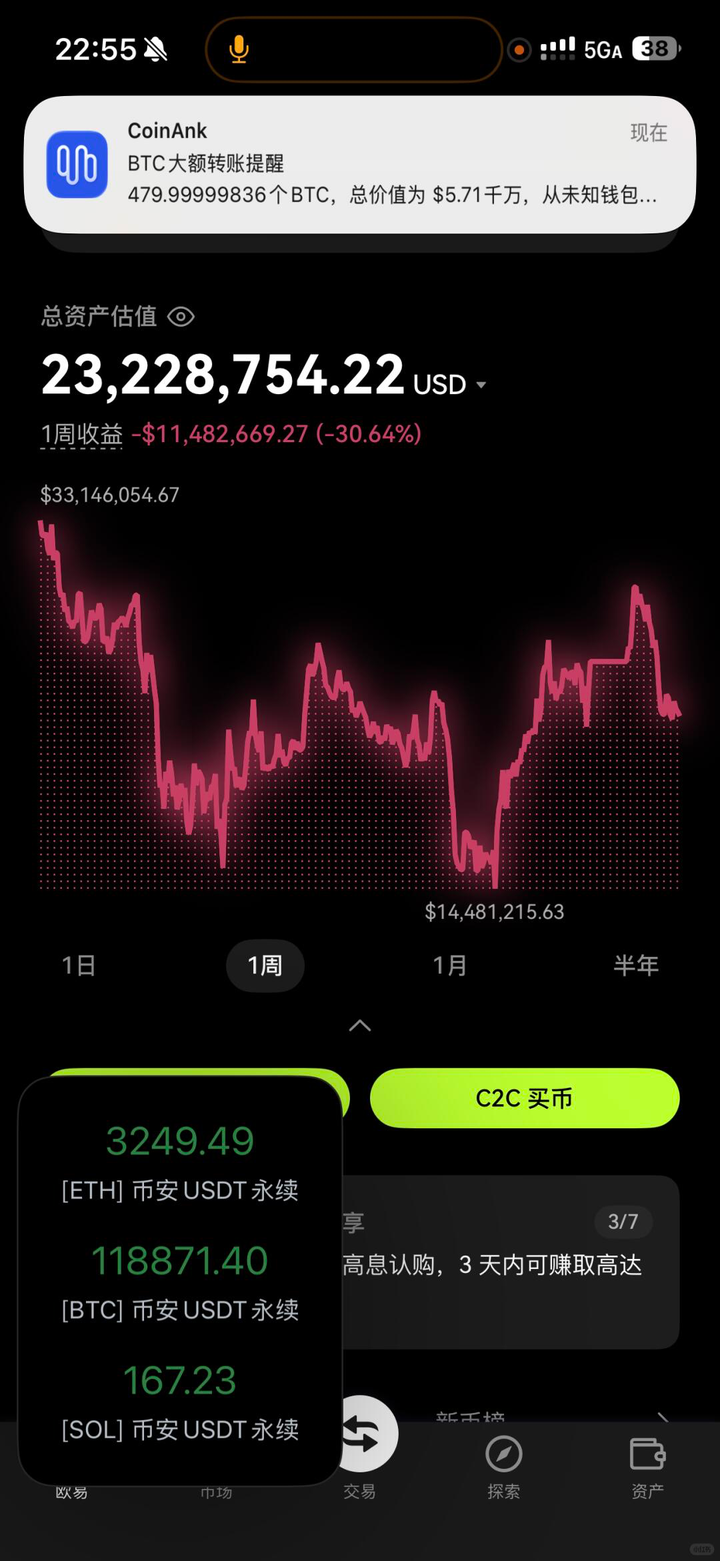
Before discussing technology, let me first share a set of 4-step fund verification methods to provide an extra layer of security for your withdrawals!
Step one: Prioritize selecting 'experienced' merchants to avoid short-term risks
When selecting trading counterparts, never rush towards the merchant with the highest quote. Price is secondary; the merchant's registration time is the key indicator.
Prioritize selecting U merchants registered for over 12 months. Such merchants have undergone long-term market tests, accumulating certain credibility and customer bases, and are unlikely to accept black funds for short-term benefits — after all, the cost of reputation collapse is far greater than the profit from a single transaction.#加密市场观察
Conversely, new merchants registered for less than 3 months have a significantly higher risk factor, so try to avoid them. Such merchants are not bound by long-term credibility and may take risks for high returns, accepting unknown sources of funds; once involved in illegal transactions, users cooperating with them are likely to be implicated and have their cards frozen.
Step two: Actively inquire about the purpose of buying currency, fulfilling the obligation of informing and verifying
Some coin friends may think: 'Asking is pointless, no one would be foolish enough to say they are buying coins for illegal purposes.' But this step cannot be skipped!
This is an important step to prove your 'lack of subjective intent.' Before trading, you can directly ask the other party: 'May I ask what you are buying U for? I need to make a simple record to avoid subsequent funding issues.'
Even if the other party responds with 'for overseas shopping' or 'daily turnover' as common purposes, as long as you have completed the inquiry, you have fulfilled the basic verification responsibility. This communication record, if you encounter inquiries about frozen cards later, will serve as important evidence proving your innocence, effectively differentiating you from those who actively participate in illegal transactions.
Step three: Verify the consistency of the ID card with the platform KYC, confirming the identity of the counterparty
This step is to ensure 'human evidence matches'; avoid encountering criminals impersonating others, lowering the risk of being involved in fraud from the source.#Strategy增持比特币
The so-called KYC is an abbreviation for 'Know Your Customer'; simply put, it means 'understand your trading counterpart.' Before trading, be sure to have the other party provide photos of their ID card (front and back) and then compare it with the KYC certification information of that merchant on the platform:
Check if the name on the ID card matches exactly with the KYC certified name on the platform;
Check if the photo on the ID card matches the face information certified by the platform.
Only after confirming that it is the same person can you continue with subsequent transactions. If the other party refuses to provide information on the grounds of 'privacy', or if the information provided does not match the platform certification, blacklist them without hesitation! Such situations likely hide tricks, possibly involving illegal transactions using someone else's identity; once involved, it is easy to be implicated.
Step four: Check bank transaction records and bank card information, guarding the last line of defense
This is the most critical step, directly related to the safety of funds and core to avoiding risks related to money laundering and aiding criminal activities. Mainly do two things:
1. Check the other party's bank transaction screenshot from the last 1-2 weeks
Although ordinary people cannot accurately determine whether the funds from transaction records are absolutely clean, the act of having the other party provide transaction records itself proves that you are actively verifying the source of funds, fulfilling the duty of care.
If the other party cannot even provide screenshots of transaction records, or there are large unexplained transfers and frequent transactions in different locations, you must decisively terminate the transaction; this type of fund has a very high risk of being involved in organized crime.
2. Focus on verifying whether the 'bank card name' matches the 'ID card name'
This point is the bottom line of the bottom line!
Before trading, ensure that the other party provides a front photo of the receiving bank card, verifying whether the bank card account name matches the name on the ID card provided by the other party.
If the other party says 'using my wife’s card' or 'using the company's finance card,' regardless of the reason given, refuse the transaction. Transferring funds from a bank card not in the owner's name likely indicates problems with the source of funds, possibly being an intermediary in the transfer of stolen funds; once accepted, the risk of frozen cards and criminal involvement will skyrocket, just like the traders implicated in the JPEX case, who, even if not the main culprits, may still face legal consequences.
Final reminder: Doing these will ensure greater peace of mind
For ordinary people, under the current high-pressure regulation and the high incidence of virtual currency-related crimes, strictly following the above 4 steps for fund verification already fulfills a reasonable duty of care.

Multi-timeframe analysis is a 'double-edged sword' in trading—used well, it can help you accurately grasp trends and make big money; used poorly, it can instead be disturbed by multidimensional signals, leading to frequent losses. Today, I will thoroughly explain the core techniques, strategies, and practical methods of multi-timeframe analysis to help you build a systematic trading logic and avoid low-quality signal traps.
Understand first
What is multi-timeframe analysis?
Multi-timeframe analysis, simply put, is 'cross-verifying and analyzing decision-making using charts of different timeframes for the same trading instrument.' For example, when trading gold, you might look at daily, 4-hour, and 15-minute charts; for short-term trading, you might use 15-minute, 5-minute, or even 1-minute charts.
The core logic is very clear:
High timeframe charts (such as daily, 4-hour): help you see the overall trend direction, key support and resistance levels, and trend structure, setting the 'big direction';
Small timeframe charts (such as 15-minute, 5-minute lines): help you capture precise entry and exit points, seizing the 'timing'.
No need to complicate things; the core is 'high level sets the direction, small level finds the points'; combining the two ensures that you neither go against the trend nor enter inaccurately.
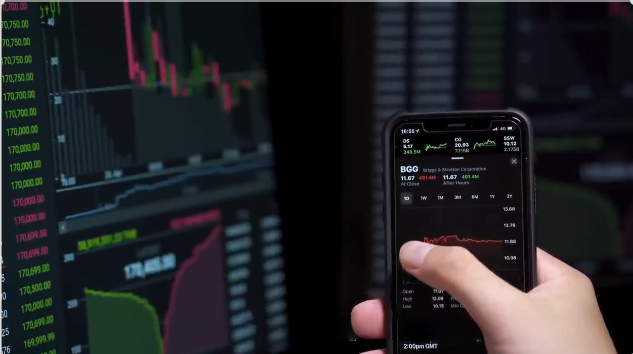
Why must multi-timeframe analysis be used?
5 core advantages
Many traders only use single-level analysis, missing profitable opportunities or frequently stopping losses because they did not leverage the advantages of multi-timeframe analysis; these 5 points can directly improve your trading quality:
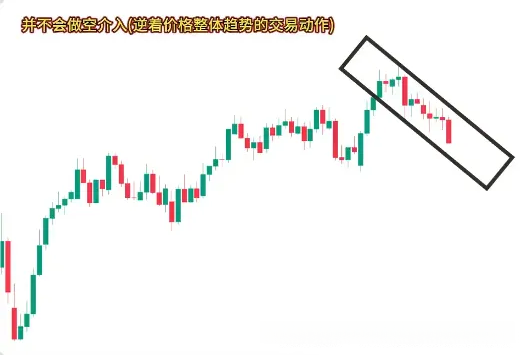
Trade with the trend, avoid stepping into pitfalls against the trend: the high-level trend is the 'big direction'; trading along the big trend naturally increases the win rate. For example, if the small timeframe shows a decline, it seems like a short position should be taken, but if the high level is an upward trend, this is a signal against the trend, decisively abandon it to avoid being misled by small timeframe fluctuations.
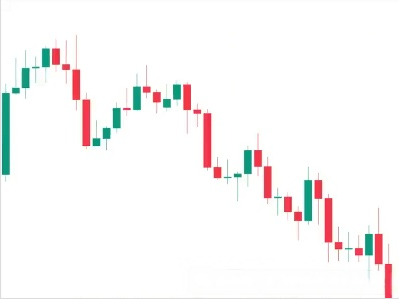
Filter low-quality signals: small timeframe charts are prone to false signals, and the high-level trend can help you 'filter out' this noise. For example, if a small timeframe shows a long signal but the high level is a downward trend, the quality of this long signal is very low, likely a pullback trap, filtering it out can reduce stop losses.
Obtain more precise entry timing: after setting the key price level at a high level, the small level can help you find the 'best entry point' — for instance, if the high level shows effective support, and the small level shows a reversal signal, entering at this moment means a smaller stop loss and a higher profit-loss ratio.
Enhance trading confidence and confirm the validity of signals: when the high-level trend, key price levels, and small-level entry signals resonate, the certainty of the trade significantly increases. This kind of 'multi-dimensional confirmation' trade gives you more confidence in execution and helps you better adhere to stop loss and take profit rules.
Optimize risk control: small timeframe charts can find more precise stop loss levels, such as setting stop losses outside the small timeframe reversal signals, which can reduce the stop loss range while enlarging the profit-loss ratio, making the risk-reward ratio of each trade more reasonable.
Common time level combinations
Select according to trading style
Different trading styles adapt to different combinations of timeframes; share 3 groups of the most commonly used combinations in practice, which can be applied directly:
Swing trading: 4-hour chart (high level) + 15-minute chart (entry level), or daily chart (high level) + 1-hour chart (entry level);
Day trading (short-term): 1-hour chart (high level) + 5-minute chart (entry level);
Scalping: 15-minute chart (high level) + 1-minute chart (entry level).
Here’s a reminder: there’s no need to pursue 'multiple levels'; two levels are enough. Too many levels can confuse signals, negatively impacting decision-making; simplifying analysis helps maintain consistency in trading.
Fourth, core strategy: multi-timeframe 'trend + pullback' practical (case studies)
The core use of multi-timeframe analysis is 'high level sets trends and key price levels, small level finds reversal signals'; for example, using the 'trend + pullback' strategy, clear steps make it easy to apply.
Practical case: shorting in a downward trend (4-hour chart + 15-minute chart)
High level (4-hour chart) sets trends and key price levels:
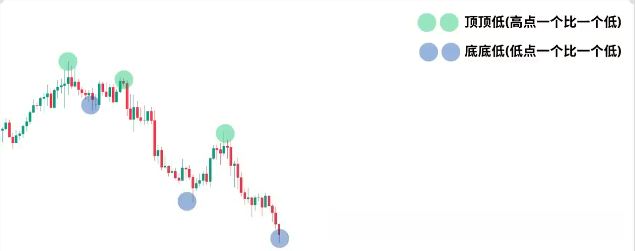
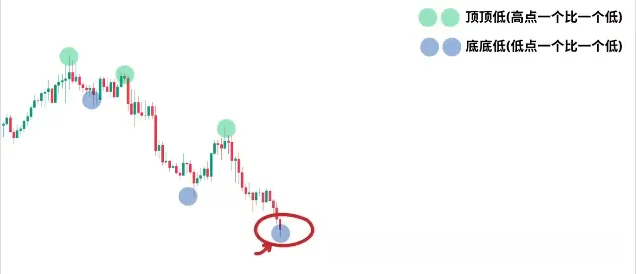
First, analyze the trend: in the 4-hour chart, the price forms a 'higher high, lower low' downward structure, clarifying that the overall trend is downward, with the trading direction focused on shorting;
Step two, find key price levels: in a downward trend, focus on 'resistance levels transformed after breaking previous lows' — this is likely where the price will encounter resistance during a pullback, also our potential shorting point;
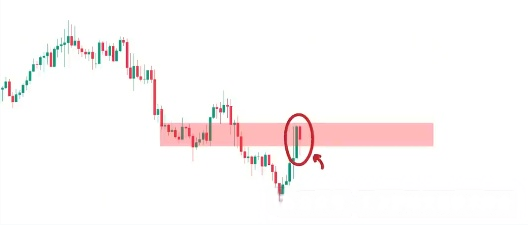
Core principle: do not blindly short at low levels; patiently wait for the price to pull back to key resistance levels, avoiding chasing shorts and getting trapped.
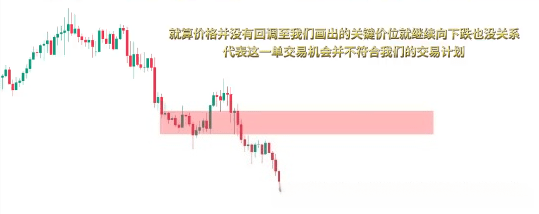
Find precise entry signals on small timeframes (15-minute chart):
When the price on the 4-hour chart pulls back to a key resistance level, switch to the 15-minute chart: discover that this pullback has formed a 'higher high, higher low' upward structure;
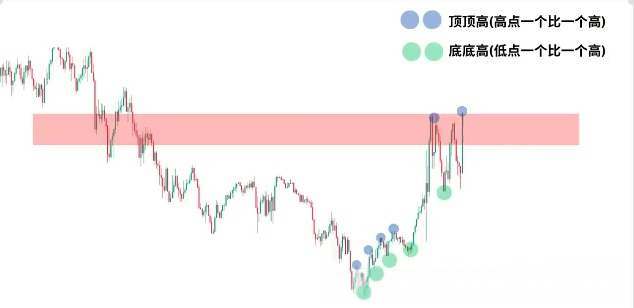
Look for reversal signals: when the price near resistance no longer makes new highs, forming a 'double top pattern' (two peaks nearly equal) — this is a signal of weakening upward momentum;
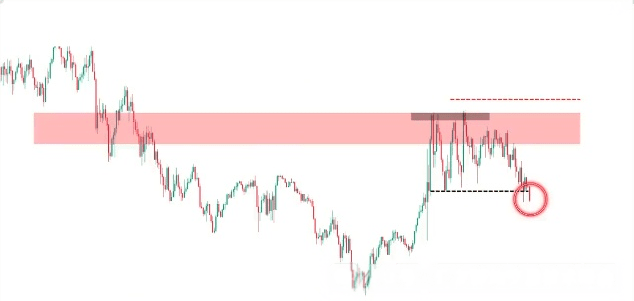
Confirm entry: when the price breaks below the 'neckline' of the double top (the horizontal line connecting the two low points), forming a 'lower low' downward structure, after a large bearish candle closes below the neckline, enter short.
Position management:
Stop loss: set above the highest point of the double top pattern (if the price returns to the high point, it indicates the reversal signal has failed);
Take profit: Set according to a fixed profit-loss ratio (e.g., 2:1), or reference the support level on the 4-hour chart.
The core of this process is 'systematic': set the direction and range at high levels, find precise timing at low levels, each step has basis, and it is not based on feeling to enter; long-term execution can maintain trading discipline and consistency.
Key to successful trading
Discipline + confidence in strategy (more important than technology)
Finally, I want to talk about a point that many traders overlook: technology and strategy are just the foundation; what truly creates a gap is discipline and confidence in the strategy.
I have seen many traders who do not lack trading knowledge but doubt their strategies after a few losses and easily change methods — this is the biggest misconception in trading. To become one of the 5% successful traders, you must do these 3 things:
Establish a rule-based trading strategy: clarify entry conditions, exit rules, stop loss and take profit, position management, forming a 'non-ambiguous' trading plan to avoid emotional interference.
Validate strategy effectiveness with backtesting: put the strategy into historical market conditions for backtesting, collect enough sample data (e.g., 100+ transactions), and confirm the long-term profitability of the strategy — including win rate, maximum consecutive losses, average profit-loss ratio, etc. Data can give you confidence, allowing you to understand that 'losses are a normal fluctuation of the strategy, not a strategy failure.'
Accept losses and maintain discipline: no strategy can be 100% profitable; consecutive losses are the norm. The key is:
Strictly implement stop losses; do not enlarge positions to 'make back losses' due to losses;
After each loss, reflect on whether you strictly followed the rules— as long as it is a 'loss within the rules' (entering according to plan, stop loss, without any violations), it is a 'good loss', no need to get entangled;
Adjust your mindset and continue to look for the next high-quality opportunity according to plan.
The essence of trading is a 'probability game'; multi-timeframe analysis can help you improve your win rate, but ultimately, what enables you to earn steadily is a systematic strategy, confidence in that strategy, and long-term disciplined execution. Do these well to survive long in the market and ultimately achieve stable profits.
That’s the trading experience I wanted to share with you today. Many times, you lose many profitable opportunities because of your doubts; if you are not brave enough to try, reach out, and understand, how will you know the pros and cons? You only know what to do next when you take the first step; a cup of warm tea and a word of advice, I am both a teacher and your chatty friend.
Fate is in meeting, knowledge is in parting. I firmly believe that fate will eventually bring us together, and not meeting is destiny. The road of investment is long; temporary gains and losses are just the tip of the iceberg. One must understand that even the wisest may have some misjudgments, and even the foolish may gain something; regardless of emotions, time will not stop for you. Pick up the sorrows in your heart, stand up and move forward again.
The martial arts secrets have been given to you all; whether you can become famous in the Jianghu depends on yourself.
These methods everyone must save; if you find them useful, feel free to share with more people trading coins around you, follow me for more insights into the crypto world. After being rained on, I am willing to hold an umbrella for the leeks! Follow me, let's walk together on the road in the crypto world!