

Ten years of deep cultivation in the cryptocurrency world, with ups and downs during this period. I entered the market in 2015, turning 500,000 into over 7 million at its peak. At that moment, I thought I was a trading genius, focusing solely on trading cryptocurrencies, even borrowing money to invest. However, reality taught me a lesson; I faced continuous problems, not only losing all my gains but also accumulating massive debt, eventually having to sell my car, house, and other assets. 2017 was my darkest moment; in just a few months, I went from the peak to the bottom.
Later, I summarized and reflected, and was fortunate to have tea with several big shots in the cryptocurrency world, discussing the trends in the crypto market. Their words deeply resonated with me and shook my soul.
Later, I began to summarize methods, constantly reviewing, reshaping my trading methods, using the dreamer tool to create my own strategy, changing my mindset, and continuously learning and updating. Although I cannot say I have reached the pinnacle of life yet, I have achieved stable profits and can at least outperform more than 80% of people. Looking back on the entire journey, it has indeed been a rollercoaster.
From the initial 500,000 entry into the market, to making 10 million during the bull market; now from 10 million to my current small goal. This year, I am waiting and preparing for the next bull market, aiming to achieve three small goals.
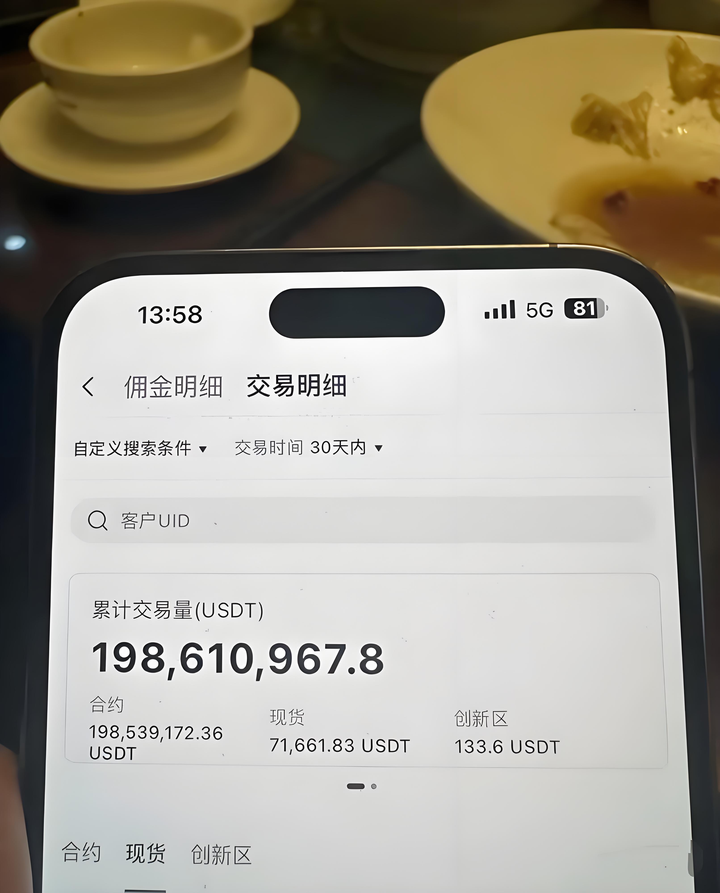
Many traders fall into a misunderstanding: thinking that trading isn’t profitable due to imprecise entry points. They frantically change indicators, adjust timeframes, and try new technical analysis methods, only to find their accounts still in the red. Today, I will break through this misconception—your inability to make money is fundamentally not about the entry point, but because you lack a complete, rule-based trading strategy system.
Today, I am sharing my complete insights and steps on building a trading system with you. This content will help you avoid years of detours and accelerate your progress to becoming a profitable trader.
First, understand:
The essence of a trading strategy is 'de-emotionalization'.
First, clarify a core understanding: The essence of a trading strategy is not about 'predicting the market', but a set of repeatable and verifiable trading rules. Its purpose is to transform emotional decisions based on feelings into systematic decisions executed according to rules.
A complete trading strategy certainly does not consist solely of the 'entry point'. Even if you optimize the entry point to perfection, without exit rules, risk control, and reviews, you will ultimately lose. A system that can yield stable profits must include six core modules: market selection, core hypothesis, entry rules, exit rules, capital management, and mindset reviews; none can be missing.
Step One:
Clarify the trading market and timeframe; don’t be greedy for too much.
The first step in building a system is not to find indicators but to determine the market and timeframe you want to trade. Different trading types correspond to completely different timeframes; don't mix them up.
For example, if you are a day trader, just focus on the 15-minute, 1-hour, and 4-hour charts; daily and weekly charts are not very significant for you; if you are a swing trader, concentrate on the daily and 4-hour charts, and don’t waste time staring at the 5-minute chart.
Choosing the right market is also crucial: The methods for A-shares and foreign exchange are different, as are the volatility logic of futures and cryptocurrencies. You can try many things, but ultimately you need to focus on the market you are most familiar with and can grasp, concentrating your efforts there, rather than trying to eat all varieties.
Step Two:
Establish the core hypothesis; this is the soul of the strategy.
Technical analysis is not 'prophecy'; it cannot predict future price movements, but can only provide a probability hypothesis based on price behavior. Your trading strategy must be built around a core hypothesis.
There are only three common core hypotheses; choose the one you most agree with and don't waver back and forth:
Trend Continuation Hypothesis: It holds that prices will continue the current trend until a clear reversal signal appears. The strategy based on this hypothesis follows the logic of 'after breaking through previous highs/lows, wait for a pullback to the key price level to confirm before entering a trend-following trade';
Trend Pullback Hypothesis: It holds that prices will periodically pull back within a trend, and we need to catch opportunities after the pullback. The logic of the strategy based on this hypothesis is 'not chasing highs or lows; wait for prices to pull back to support/moving average levels, then look for entry signals';
Mean Reversion Hypothesis: It holds that prices will not stray indefinitely from a certain center (such as the moving average) and will eventually revert. The strategy based on this hypothesis follows the logic of 'not entering when the price is far from the moving average, waiting for a pullback to approach the moving average before acting.'
For instance, if you recognize the 'Trend Continuation Hypothesis', then your strategy should focus on 'trending trades'; if you believe in 'Mean Reversion', then you should engage in high selling and low buying during sideways markets. A strategy without a core hypothesis is like a pile of sand.
Step Three:
Establish clear entry rules; they must be 'quantifiable and repeatable'.
Entry rules are the core part of the strategy, but the key is not 'precision', but 'clarity, objectivity, and repeatability'. What is repeatability? It means you write down the rules, hand them to someone who knows nothing about trading, and they can still find the entry point.
I will give you a clear breakdown of entry rules using an example of a trend-following strategy:
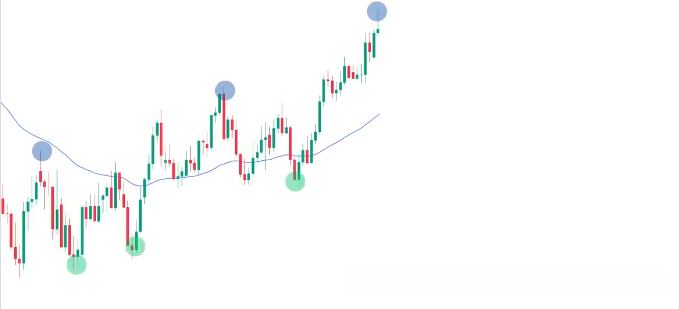
Trend Judgment Rule: The price is above the 50 moving average, forming a 'higher highs and higher lows' upward trend structure—only when these two conditions are met can it be confirmed as an upward trend, and only long positions should be taken;
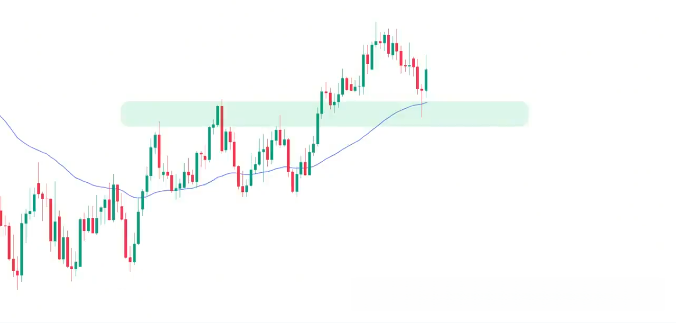
Key Price Level Rule: Choose 'previous resistance levels that have been broken → converted into support levels', and this price level should also be close to the 50 moving average—only when both conditions are met can it be a high win-rate entry price.
Entry Signal Rule: After the price pulls back to a key level, if a bullish engulfing candlestick pattern appears (the body of the bullish candle completely covers the body of the previous bearish candle)—you must wait until this bullish candle completely closes before confirming the entry.
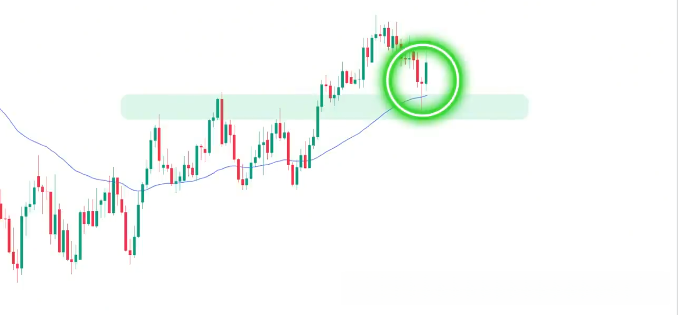
You see, these three rules have no ambiguity; you don't need to rely on 'feelings' to judge. As long as the conditions are met, enter; if not, give up. Here’s an example of a downward trend:
Trend Judgment Rule: The price is below the 50 moving average, forming a 'lower highs and lower lows' downward trend structure, confirming that it is a downward trend, and only short positions should be taken;
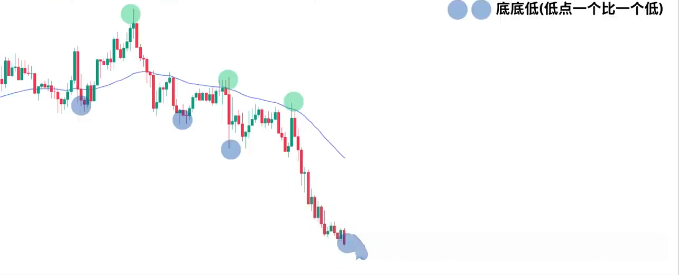
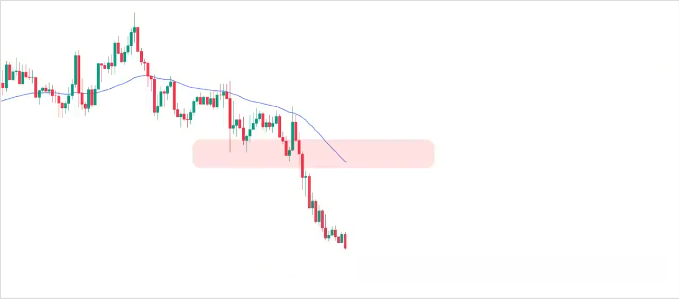
Key Price Level Rule: Choose 'previous support levels that have been broken → converted into resistance levels', while also being close to the 50 moving average;
Entry Signal Rule: After the price pulls back to a key level, if a bearish engulfing candlestick pattern appears (the body of the bearish candle completely covers the body of the previous bullish candle)—only after the bearish candle completely closes, enter a short position.
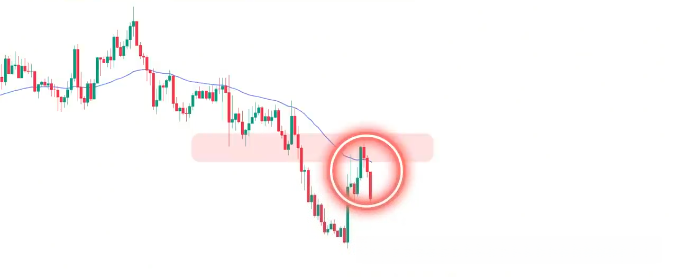
This is the repeatable entry rule; trading is not based on inspiration, but on rules.
Step Four:
Nailing down exit rules is the 'lifeline' for profitability.
I've seen too many traders who have precise entry points but fail to make money—the core reason is that they don't know how to exit. Exit rules are more important than entry rules; they directly determine whether you 'make small profits' or 'make big profits', whether it's 'small losses' or 'big losses'.
Exit rules fall into three categories, and all must be clearly defined:
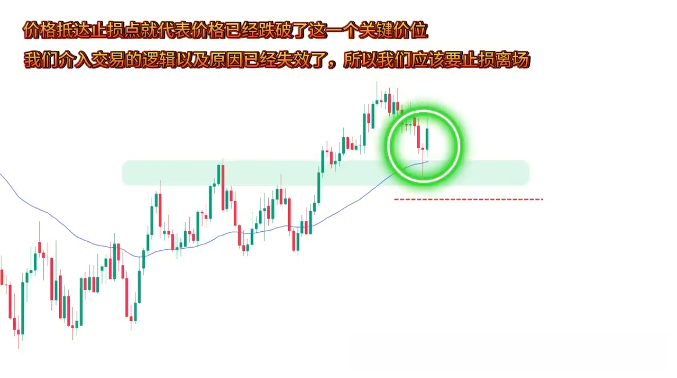
Stop-loss exit: The stop-loss point should be set at the 'price level where the strategy logic fails', not just at a random amount. For example, in the trend strategy mentioned earlier, the stop-loss should be set outside the key price level (for long positions below the support level, for short positions above the resistance level), plus 1 ATR value to avoid being stopped out by false breakouts. Never use an amount to set a stop loss; use structure and logic instead.
Take-profit exit: There are two methods; beginners use a 'fixed reward-to-risk ratio', such as 2:1 or 3:1—if the stop loss is 10 points, set the take profit at 20 or 30 points, simple and straightforward; experienced traders can use 'technical structure take profit', for instance, when going long, set take profit at the upper resistance level; when going short, set it at the lower support level to fully capture the trend.
Trailing Stop-Loss: This is key to 'letting profits run'. For example, in an upward trend, when prices make a new low, move the stop-loss point up to below the new low; or track with the 20 moving average; as long as the price is above the 20 moving average, hold it; if it drops below, take profits. This way, you can protect profits while capturing big trends.
Step Five:
Capital management determines how long you can survive in the market.
No matter how perfect the strategy is, without capital management, it will ultimately lead to liquidation. The core goal of capital management is simply: survive during losses and maximize profits during gains.
Here are three essential capital management iron rules you must execute:
The risk of a single trade should not exceed 1%-2% of your total capital: For example, if your account has 10,000, the maximum loss on a single trade should not exceed 100-200. Use this rule to calculate position size—larger stop loss means lighter position; smaller stop loss means heavier position.
Maintain at least a 2:1 reward-to-risk ratio: Even if your win rate is only 40%, as long as the reward-to-risk ratio can remain stable at 2:1, you will still be profitable in the long run. Don't be greedy for small gains; it's not worth risking 10 points to make 5 points. Such trades should be avoided.
Control maximum drawdown: Set a maximum drawdown limit for your account, for example, 15%. Once the account drawdown exceeds 15%, immediately stop trading and review your strategy. Don't think about 'recovering losses' by increasing position size; that will only make you lose faster.

Step Six:
Mindset and reviews determine how far you can go.
In trading, what matters in the end is not technology but mindset and discipline. Many strategies are profitable in themselves, but traders turn them into losses due to mindset issues.
Common mindset traps you must avoid:
After consecutive losses, increasing position size to 'recover losses'—this is a gambler's mentality and will only lead to greater losses.
Taking a small profit quickly due to fear of a profit reversal—this is a fear-based mindset; you will never catch the big trends.
Frequently changing strategies, doubting their effectiveness after a few losses—this is an impulsive mindset; no strategy can guarantee a 100% win rate.
True discipline is not about 'controlling emotions'; it's about letting the system make decisions in place of emotions. You must believe in the long-term probabilistic advantage of the strategy, rather than getting caught up in the profits and losses of a single trade.
Additionally, reviewing past trades is the fastest way to improve your trading skills. Spend 10 minutes each day recording every trade: Why did you enter? Why did you exit? Was it a trade within the rules, or was it emotional trading? Did you profit due to luck or rules? Did you lose because the stop loss wasn't set properly or the signals weren't confirmed?
The purpose of reviewing is to continuously optimize your rules, making strategies increasingly stable.
Final summary:
The core of trading profit is 'consistent execution'.
Building a trading system is not about predicting the market—the market is always uncertain. Our goal in building a system is to maintain consistent and certain trading behavior in an uncertain market.
Remember three phrases:
The market is always uncertain, but your decisions can be certain;
The role of a strategy is to let you repeat high-probability behaviors, rather than trying to catch all market movements;
Trading wins in execution, not in ideas.
A mature, profitable trader never relies on 'guessing the market' to make money; rather, it is based on a complete system, consistent execution day after day, strict discipline, and risk control to achieve stable profits in the market.
This is the trading experience shared by Yan An today. Often, you miss many profitable opportunities due to your doubts. If you don't dare to try boldly, to engage, to understand, how can you know the pros and cons? You only know how to proceed after taking the first step. A warm cup of tea, a piece of advice; I am both a teacher and a friend who enjoys discussing.
Meeting is fate; knowing each other is destiny. I firmly believe that fate will lead us to meet across thousands of miles, while separation is destiny. The journey of investing is long; gains and losses at any moment are merely the tip of the iceberg. Remember that even the wisest can make mistakes, and those who are misguided may find a path. Regardless of emotions, time will not stop for you. Pick up the worries in your heart, stand up again, and move forward.
The martial arts secrets have been shared with you; whether you can become famous in the world depends on yourself.
Be sure to save these methods. If you find them useful, feel free to share them with more people in the cryptocurrency trading circle. Follow me for more valuable insights on cryptocurrency. After the rain, I am willing to hold an umbrella for the retail traders! Follow me, and let’s walk together on the path of cryptocurrency!