


Brothers, while everyone is still worried about altcoins taking a dip in the crypto market and Bitcoin’s fluctuations, over in the U.S. stock market there’s a “super money-printing machine” that just turned in an extremely terrifying performance.
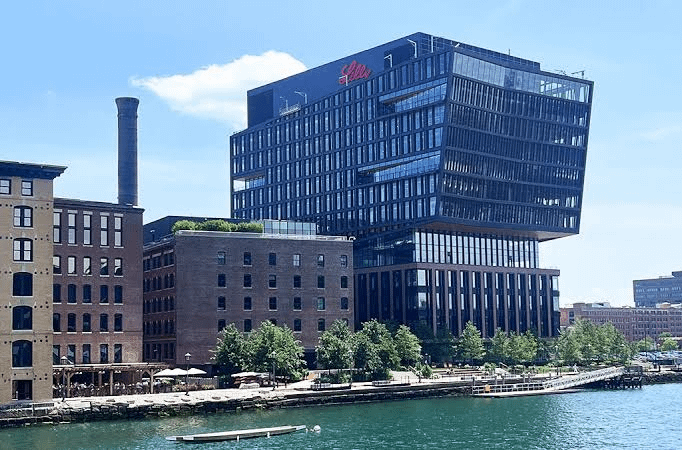
Just today (August 5, 2026), pharmaceutical giant Eli Lilly released its Q2 earnings report, instantly igniting the entire internet: its second-quarter revenue surged 48% to reach $23 billion. Even more explosive, Eli Lilly raised its 2026 full-year revenue guidance—from the previous $82 billion–$85 billion up to $85 billion–$87 billion!
Why is Eli Lilly so aggressive? The answer is simple: miracle weight-loss drugs.
Their Mounjaro and Zepbound (GLP-1 class drugs) are currently seeing demand that is downright crazier than “meme shitcoins” in a bull market—once they go from production to sales, they get snapped up immediately. This isn’t just a drug anymore; it’s a “legal cheat code” for wealthy people and the middle class worldwide.
So what does this have to do with us Web3 players? Why discuss it in the Binance Square? Here are three wealth logics you must understand:
1. The “blood-sucking black hole” of macro liquidity 🌪️
The total amount of capital in the global market is limited. AI (such as NVIDIA) and biotech (such as Eli Lilly and Novo Nordisk) are becoming the two biggest “vampires” in the U.S. stock market. When traditional capital can reliably capture high-certainty growth in the GLP-1 and AI sectors, their willingness to allocate to high-risk crypto assets—especially altcoins without new narratives—drops dramatically. Once you understand Eli Lilly’s siphoning (absorption) effect, you’ll see why, recently, crypto market liquidity often feels “parched.”
2. Get ahead and set up a 100x narrative: DeSci (decentralized science) 🧬
Eli Lilly’s financial reports show that, to maintain dominance, they’ve poured huge sums into R&D and business acquisitions. Traditional pharmaceutical R&D is monopolized by such giants, while the crypto space is trying to disrupt that! DeSci (decentralized science) is attempting to address biotech, longevity, and rare-disease drug financing pain points using blockchain. CZ and Vitalik (Vitalik) have both repeatedly expressed concern about longevity and scientific research. Eli Lilly became a trillion-dollar giant through monopoly, and the next breakout use case for Crypto is highly likely to emerge from DeSci protocols that break this hegemony (for example, funding early R&D for new types of weight-loss drugs via DAOs).
3. The ultimate hedge of “dopamine economics” 🧠
What’s especially interesting is that the mechanism of GLP-1 weight-loss drugs is to suppress people’s appetite and their “dopamine” cravings; while what we do in Web3—trading coins and chasing Memes—is essentially pursuing extremely high dopamine stimulation. In the real world, weight-loss drugs make people restrain themselves; in the crypto world, Meme coin revelry does the opposite. This forms the most surreal hedging strategy of modern times.
In today’s macro environment, whether it’s indirectly participating in the dividends of U.S. stock market giants through tokenized stocks (RWA), or getting in early on the crypto version of a “pharma 100x coin” in the DeSci space, grasping the underlying logic of capital flows is the foundation for us to build our position in Web3.
Like + repost—wishing everyone a smooth journey through the bull-bear cycle in the second half of 2026!