i keep thinking the weird part of Babylon Genesis is not even that delegated BTC gives a Finality Provider voting power.
it’s that the Bitcoin never has to become another asset for that voting power to exist.
the old productivity story usually needed BTC to become portable first. bridge it. wrap it. let some custodian or smart contract hold the principal while another token starts speaking on its behalf.
or maybe movement was just the only way we knew how to recognize useful Bitcoin?
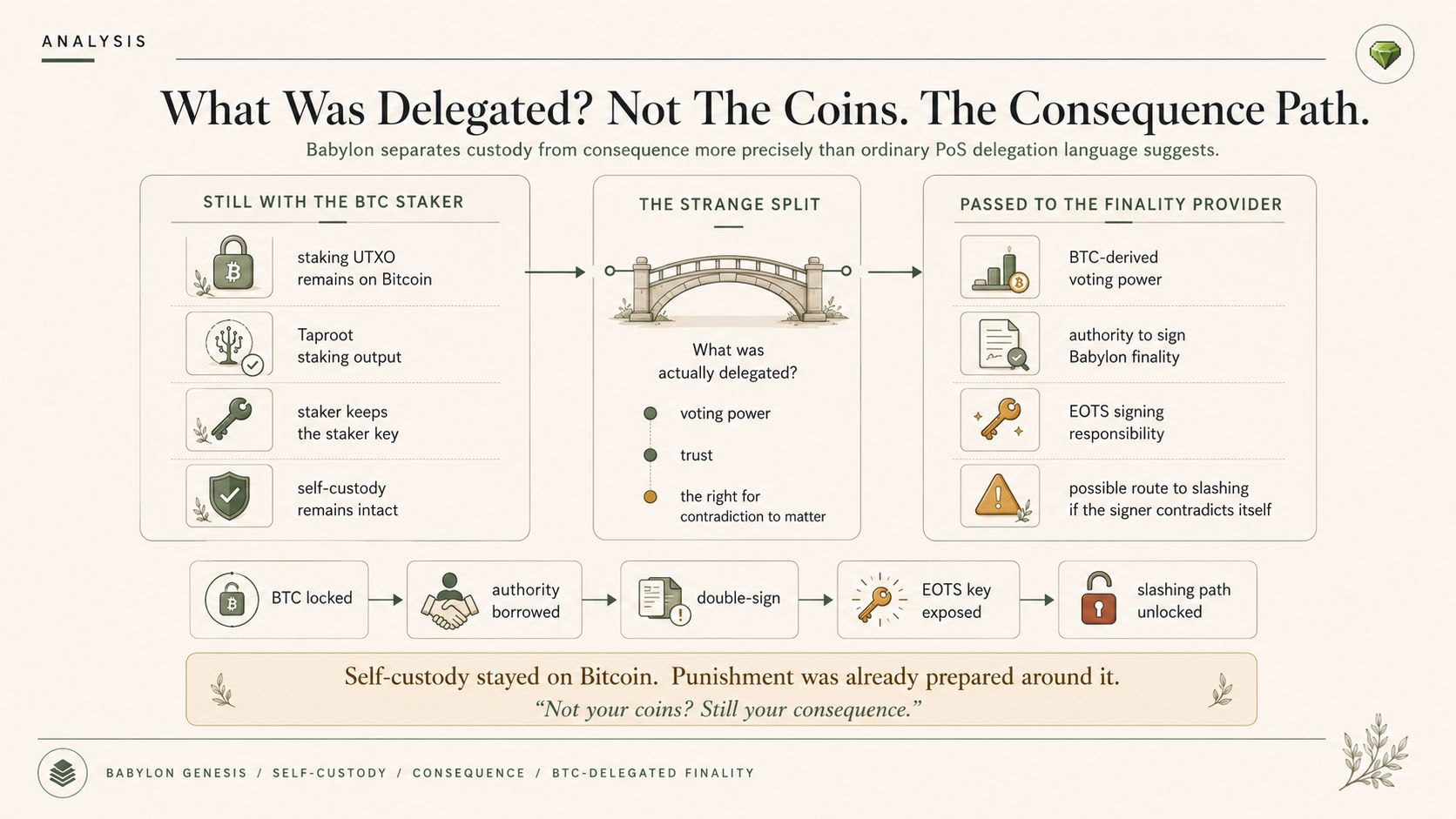
because with Babylon, the BTC staker locks native BTC inside a Taproot staking output and delegates that staking UTXO to a Finality Provider. once Babylon Genesis recognizes the delegation as ACTIVE, the provider’s finality votes begin carrying BTC-derived voting power.
the native BTC is still inside the Bitcoin UTXO through all of this.
so what actually arrived on Babylon Genesis... the Bitcoin itself?
not really. what arrived was the weight Babylon learned to assign to that active delegation.
“the Bitcoin never voted. its delegation gave the vote weight.”
that distinction keeps getting stranger the longer i sit with it because a network secured only by its own native token can watch its attack cost fall with that token. Babylon Genesis adds finality weight derived from native BTC instead, without wrapped Bitcoin circulating or a bridge holding the principal.
same Babylon Taproot staking output still sitting on Bitcoin, while every finality vote from that provider now carries economic weight delegated from it.
so where was the security actually happening?
inside the Babylon Finality Provider’s signature... or inside the silent Bitcoin that never signed finality at all?
@BabylonLabs_io $BABY #baby $BLESS $HEI
it’s that the Bitcoin never has to become another asset for that voting power to exist.
the old productivity story usually needed BTC to become portable first. bridge it. wrap it. let some custodian or smart contract hold the principal while another token starts speaking on its behalf.
or maybe movement was just the only way we knew how to recognize useful Bitcoin?
because with Babylon, the BTC staker locks native BTC inside a Taproot staking output and delegates that staking UTXO to a Finality Provider. once Babylon Genesis recognizes the delegation as ACTIVE, the provider’s finality votes begin carrying BTC-derived voting power.
the native BTC is still inside the Bitcoin UTXO through all of this.
so what actually arrived on Babylon Genesis... the Bitcoin itself?
not really. what arrived was the weight Babylon learned to assign to that active delegation.
“the Bitcoin never voted. its delegation gave the vote weight.”
that distinction keeps getting stranger the longer i sit with it because a network secured only by its own native token can watch its attack cost fall with that token. Babylon Genesis adds finality weight derived from native BTC instead, without wrapped Bitcoin circulating or a bridge holding the principal.
same Babylon Taproot staking output still sitting on Bitcoin, while every finality vote from that provider now carries economic weight delegated from it.
so where was the security actually happening?
inside the Babylon Finality Provider’s signature... or inside the silent Bitcoin that never signed finality at all?
@BabylonLabs_io $BABY #baby $BLESS $HEI