My cousin in Faisalabad has been holding BTC on Binance for three years and has never touched DeFi once in his life, too nervous about wallets, seed phrases, and bridges. When I told him Binance now has an on-chain staking product tied to Babylon, his first question was whether he'd have to move his BTC off the exchange to some sketchy protocol he'd never heard of. That question is exactly why this matters.
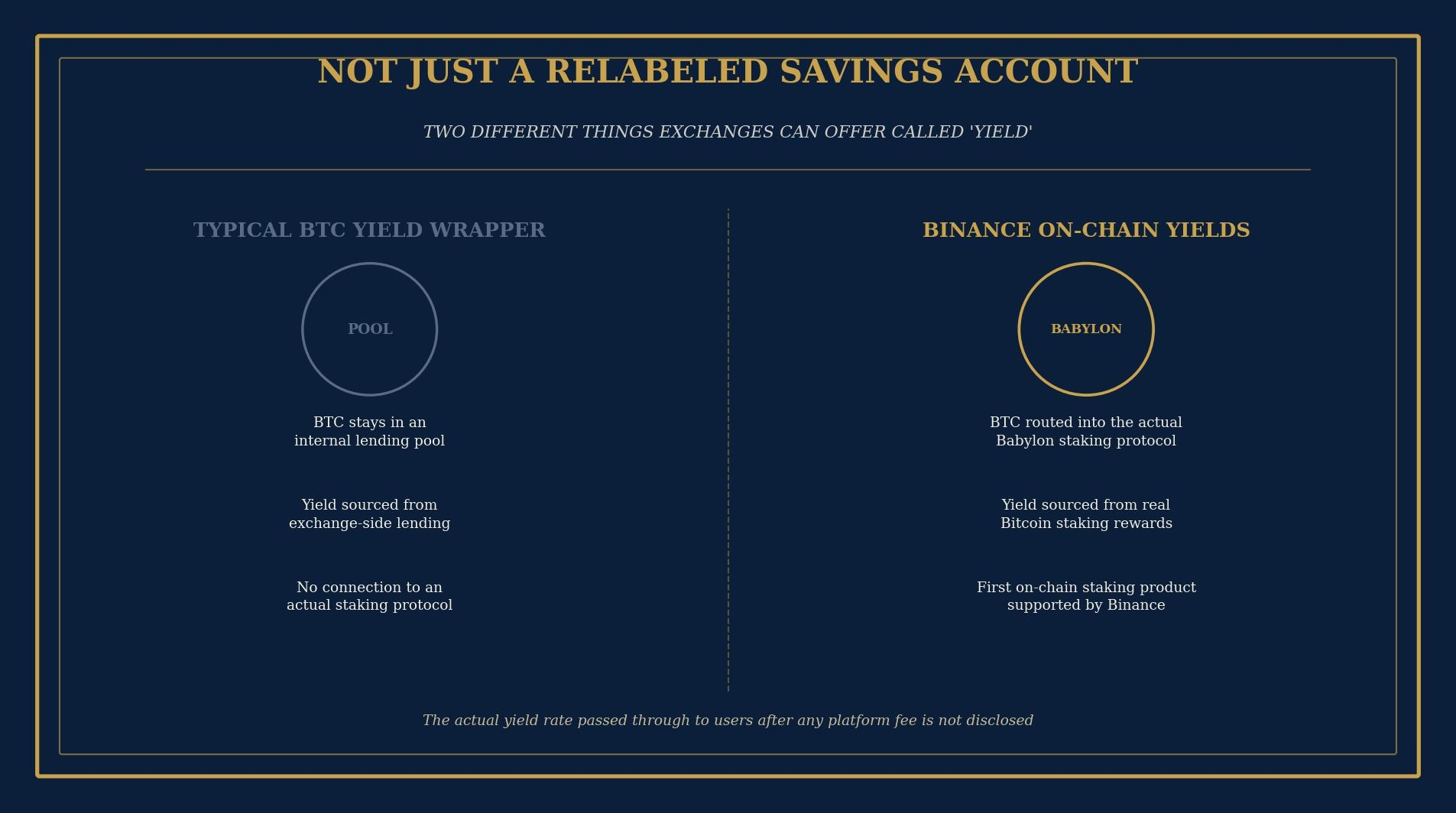
I assumed this product was just Binance relabeling a basic BTC savings account with a new name, the kind of yield wrapper exchanges roll out constantly. That's not accurate here. Binance integrated directly with the Babylon BTC Staking protocol and launched the first on-chain staking product supported by Binance On-Chain Yields. That's a structurally different thing than an internal lending pool, it's routing real user BTC into an actual trustless staking protocol while keeping the exchange interface familiar.
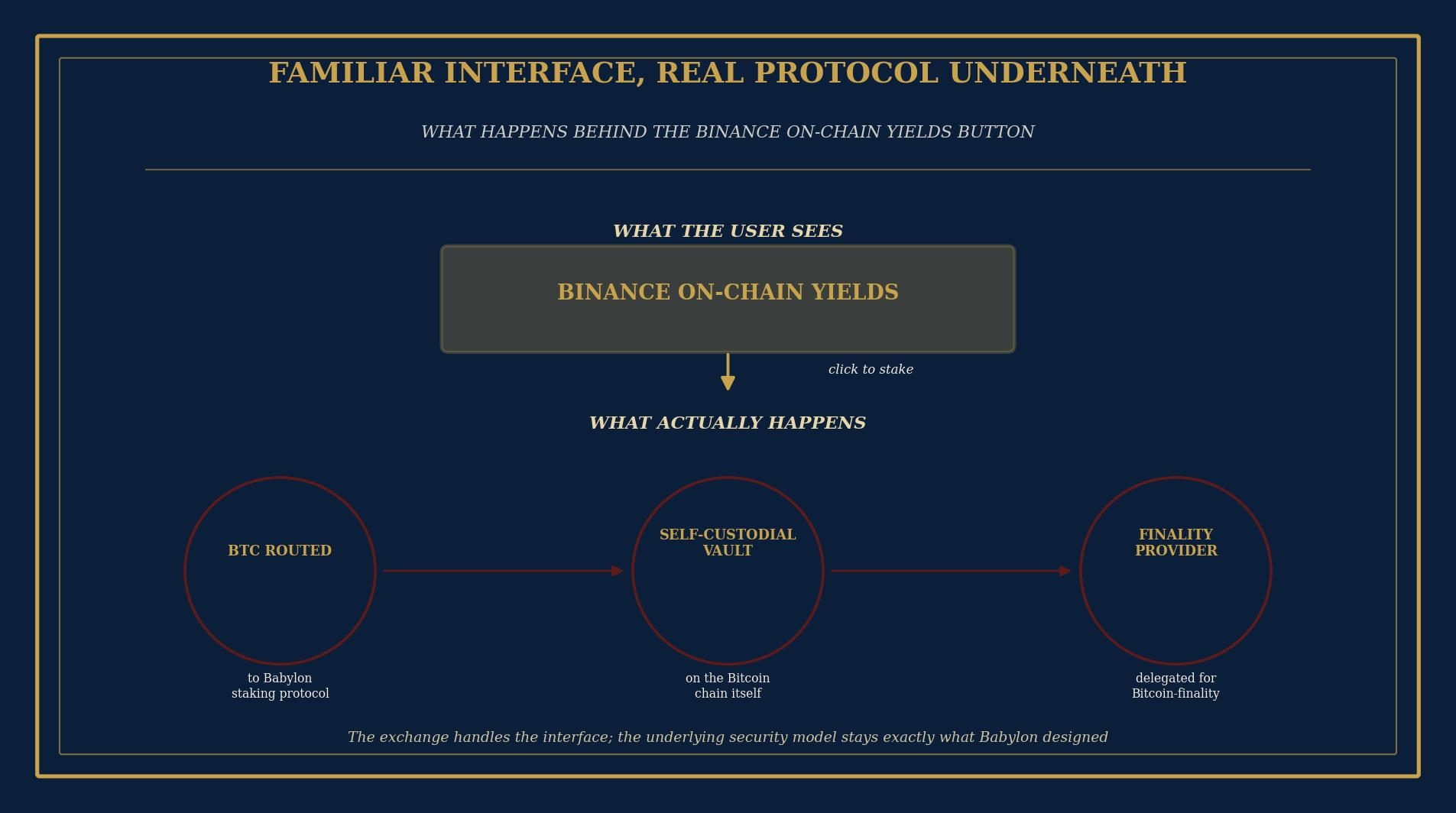
Here's what reframes it for me. For someone like my cousin, this closes the gap between wanting Bitcoin yield and being technically willing to get it. He doesn't need to understand self custodial vaults or finality providers, Binance's interface handles the protocol interaction while the underlying security model stays exactly what Babylon designed.
What I can't verify is the actual yield rate Binance passes through to users after any platform fee, since that detail isn't in the source material I have access to.
The real test for $BABY is whether retail volume through Binance's product becomes a meaningful share of total BTC staked, not just an onboarding gimmick.
Would your cousin or family use something like this if it lived inside an exchange they already trust?
@BabylonLabs_io #baby $BABY
I assumed this product was just Binance relabeling a basic BTC savings account with a new name, the kind of yield wrapper exchanges roll out constantly. That's not accurate here. Binance integrated directly with the Babylon BTC Staking protocol and launched the first on-chain staking product supported by Binance On-Chain Yields. That's a structurally different thing than an internal lending pool, it's routing real user BTC into an actual trustless staking protocol while keeping the exchange interface familiar.
Here's what reframes it for me. For someone like my cousin, this closes the gap between wanting Bitcoin yield and being technically willing to get it. He doesn't need to understand self custodial vaults or finality providers, Binance's interface handles the protocol interaction while the underlying security model stays exactly what Babylon designed.
What I can't verify is the actual yield rate Binance passes through to users after any platform fee, since that detail isn't in the source material I have access to.
The real test for $BABY is whether retail volume through Binance's product becomes a meaningful share of total BTC staked, not just an onboarding gimmick.
Would your cousin or family use something like this if it lived inside an exchange they already trust?
@BabylonLabs_io #baby $BABY