

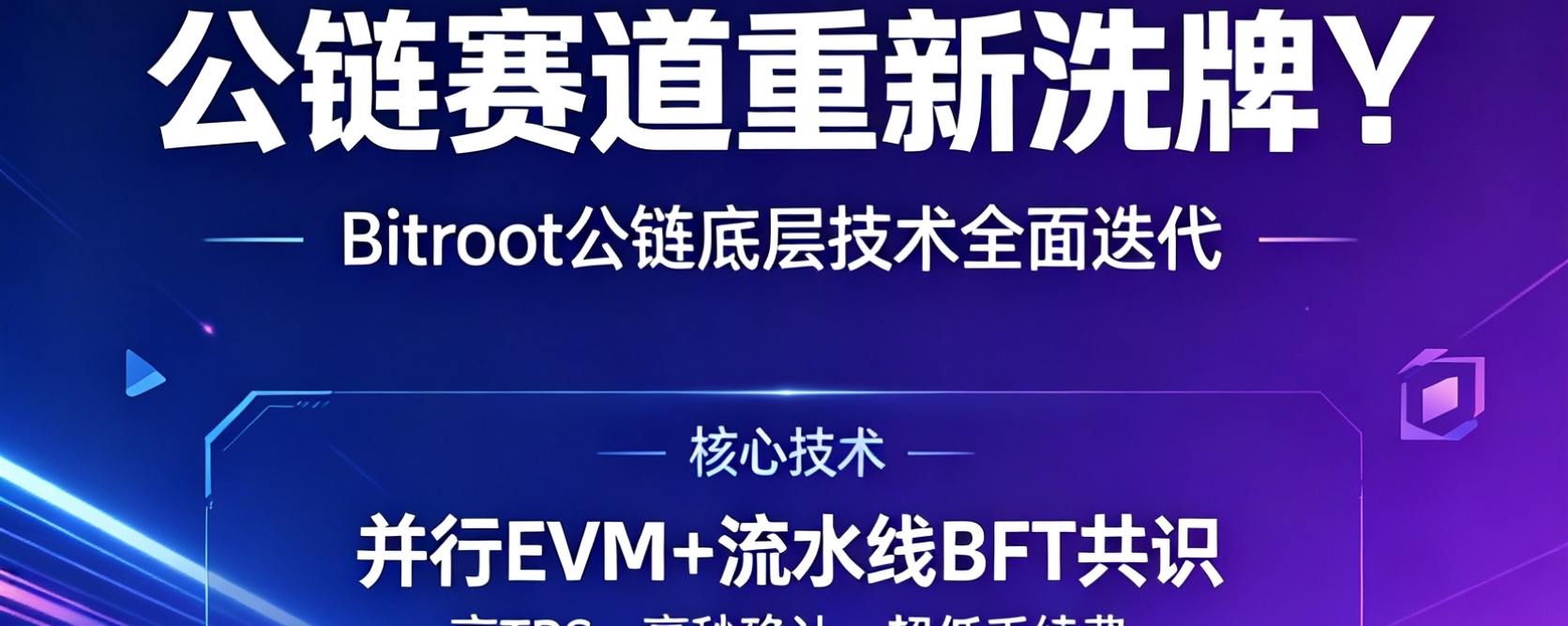


This is a technical narrative article published externally by Bitroot. Core theme: While AI is powerful now, it is not trustworthy; we should use ZK zero-knowledge proofs + blockchain to build “verifiable AI.” This is Bitroot’s core positioning for its public blockchain.
1. What the article is about (easy-to-understand, paragraph by paragraph)
1. Current pain points: AI is a black box
AI is developing rapidly. AI agents, financial automation, research, and enterprise decision-making are all using AI.
But most AIs are black boxes today: they only give you the result, and you can’t see how they “think” or how they calculated that answer.
It’s not a big deal for minor tasks, but if AIs | manage funds, infrastructure, or make important decisions, you can’t verify whether it calculated correctly or whether it was tampered with—so the risk becomes very high.
AI’s future competition isn’t just about how smart it is—it’s more important whether it’s worth trusting.
2. The challenge of verification
In the future, AI will execute transactions on its own, manage digital assets, and call smart contracts—making decisions that could lead to real financial losses. At that point, you can’t just trust based on the company’s name. For every key operation, you must ensure it’s transparent, auditable, and independently verifiable.
If you can’t verify, you can’t tell whether an AI output is a normal computation, a program bug, or a malicious human tampering.
3. Solution: ZK zero-knowledge proofs (ZKPs)
Zero-knowledge proofs can achieve this: the cryptographic proof calculation process is correct, while not leaking the original data or the AI model’s confidentiality. You don’t have to blindly trust the results from AI; the system directly provides mathematical evidence to prove that it really ran according to the established process.
Shift trust from “I believe in this company” to “cryptographic evidence proves it’s correct.”
4. What is Verifiable AI (Verifiable AI)
The next generation of AI should not only output accurate answers, but also output answers that can be proven:
The computation really runs according to the originally planned logic
The output result has not been secretly altered by anyone
Anyone can independently verify
The verification process can also protect privacy-sensitive data
5. Combine blockchain: put accountability on-chain
Blockchain is immutable. Record A| key actions on-chain so they are permanently auditable.
Centralized AI can’t do this.
For DeFi, automated enterprise systems, and AI intelligent agents, “verifiable AI” will become a must-have feature rather than a nice-to-have
6. Bring it down to the Bitroot project itself
The Bitroot blockchain isn’t just chasing performance and TPS.
Its architecture has built-in ZK zero-knowledge proofs for verifiable audits: run AI computation on this chain, and everything comes with cryptographic verification evidence. Provide developers with underlying tools; the A| applications they build will be both intelligent and transparent, auditable, and trustworthy.
7. Industry narrative summary
Blockchain development stages: decentralization → high-performance scaling → cross-chain interoperability → real-world deployment
The next new narrative track is: trusted AI
(Trustworthy AI)
What will win in the future won’t be just AI platforms that run fast, but AI platforms that can prove their computations didn’t make any mistakes.
Only intelligence, without verification, leaves you full of uncertainty. Intelligence + cryptographic proofs—that’s what brings trust.
In the era of AI autonomous agents, “trust” itself is the most important foundational infrastructure.
II. Key points for your understanding of the project
1. This is a top-level technology narrative article, not a version update announcement. It doesn’t mean a product will be launched immediately. Clarify what industry pain point this blockchain is meant to solve.
2. Bitroot’s differentiated selling point: Other chains focus on A| computing power and running large models; Bitroot focuses on verifiable AI—using ZK proofs to verify every step of A’s computation.
3. Application scenarios: Chain-based AI agents, automated financial trading—strongly related to the aggregation trading and on-chain automation business you were concerned about earlier.
4. The core technology relies on ZK. In version 6.0 and on the mainnet, this verifiable audit architecture will be deployed.
III. Simple definitions of core terms
Black-box AI: It only gives you the result; you can’t see the internal reasoning process
ZK zero-knowledge proofs: cryptographic technology that proves something is correct without leaking the original private data
Verifiable AI (Verifiable-Al): Each AI step comes with evidence, so everyone can verify it hasn’t been tampered with