


In just two short weeks after Robinhood Chain went live, market attention quickly shifted from “why traditional financial giants are moving into public chains” to the Crypto market’s most familiar narrative— the Meme coin craze.
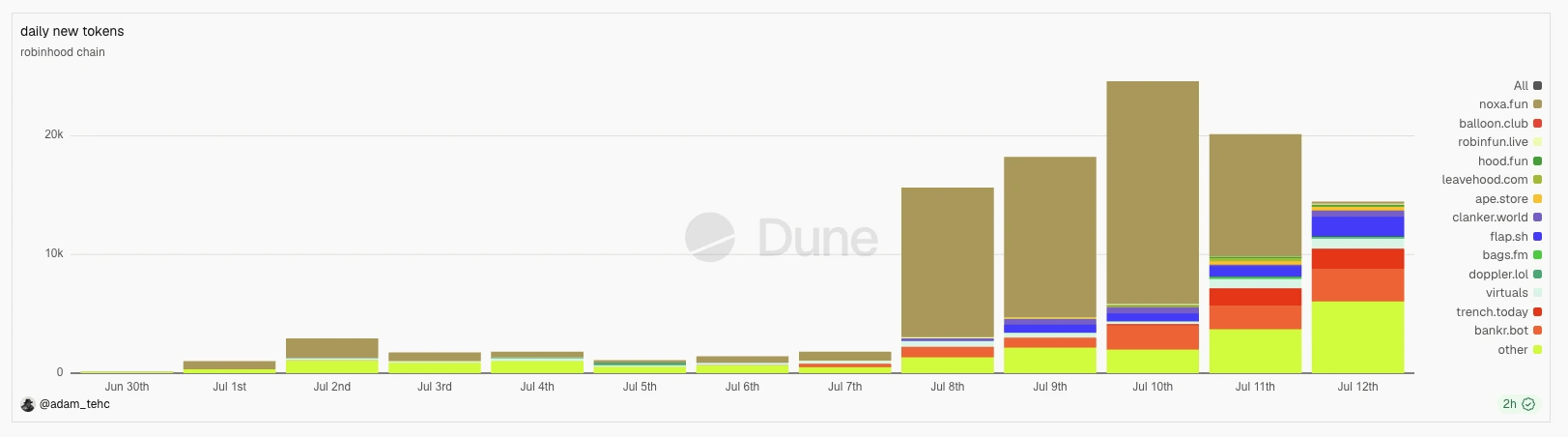
As a Layer 2 network focused on RWA (real-world assets) and financial infrastructure, Robinhood Chain was originally expected to serve as a bridge connecting traditional finance and Web3.
But what truly helps it quickly gain on-chain traffic is the trading heat brought by the Meme ecosystem.
📊 Data shows that in its first week after launch on Robinhood Chain, DEX trading volume surpassed $3.1 billion and briefly ranked among the top DEX volumes across the web. Among them, Meme-related trades became the main source of growth.
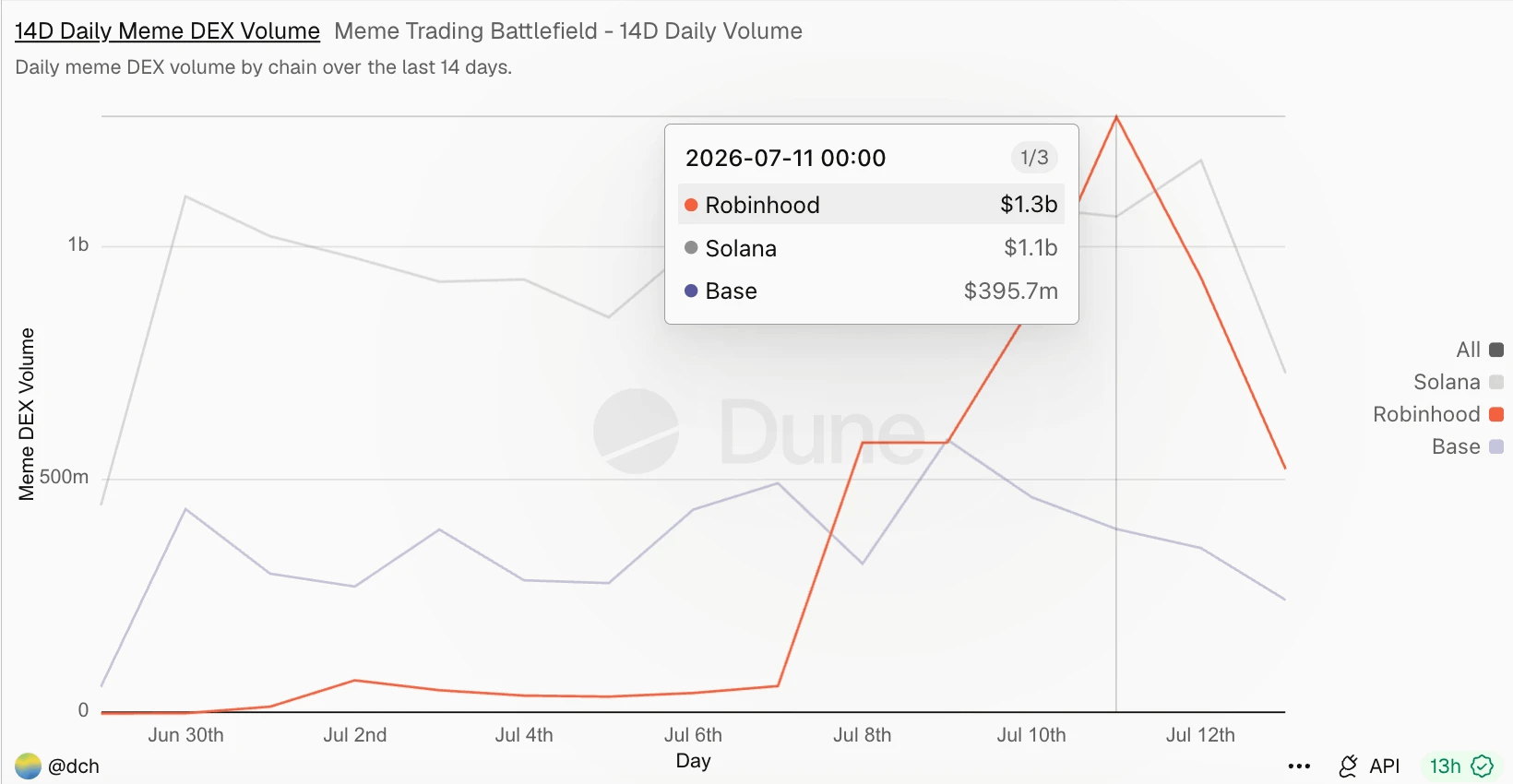
On July 11, Robinhood Chain’s DEX trading volume related to Meme reached about $1.3 billion, exceeding Solana—which had long held the position of the leading Meme chain—in a short time, drawing market attention.
🐱 NOXA: An important driver of the early Robinhood Chain Meme ecosystem
In the early Robinhood Chain ecosystem, NOXA became one of the most representative Meme Launchpads.
Unlike the traditional Bonding Curve issuance model, NOXA directly moves into Uniswap V3 liquidity pools.
After Token creation, it can immediately enter real market trading without waiting for the “graduation” phase, and it also reduces the process of migrating from internal curves to DEX.
⚡ The biggest advantage of this model is speed.
In the Meme market, launch timing, liquidity establishment, and community hype often determine a project’s early performance.
Leveraging its first-mover advantage, NOXA quickly attracted a large number of users and launched representative Meme projects such as CASHCAT.
CASHCAT reached a relatively high market cap within a short period of time, becoming one of the early successful examples in the Robinhood Chain Meme ecosystem.
Meanwhile, NOXA also generated substantial revenue through trading fees, proving the commercial potential of Meme Launchpads in the new ecosystem.
Challenges after Meme eruptions: ecosystem pressure caused by low barriers
Behind the rapid growth, new problems have also emerged.
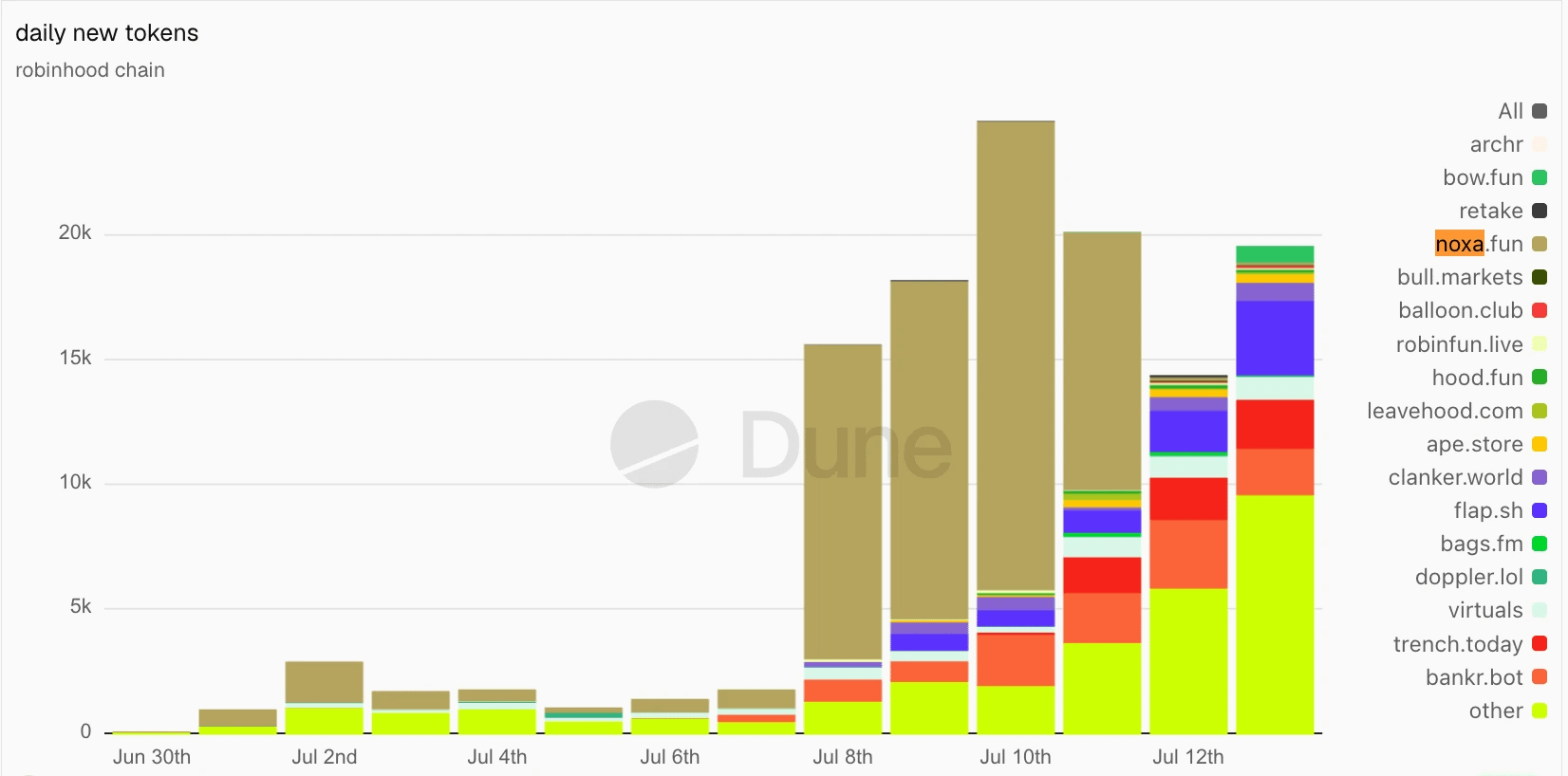
As large numbers of users enter the market, Robinhood Chain has encountered problems such as: a surge of homogeneous Tokens, increased copycat projects, mass token creation by bots, and the diversion of market attention.
On July 11, NOXA paused its new Token creation feature in hopes of improving the quality of the ecosystem. A Meme Launchpad is essentially a double-edged sword:
✅ Lowering the token-issuance barrier so more users can participate in Web3;
⚠️ But it can also easily lead to a rapid emergence of many projects lacking long-term value.
For NOXA’s next adjustments, the focus will shift toward features such as historical Token management, issuance record lookup, and creator earnings—sparking community discussion about the platform’s future development.
🔥 Launchpad competition begins, with platforms like Flap joining the market
With NOXA pausing issuance, competition among Meme Launchpads on Robinhood Chain has entered a new stage.
At present, multiple issuance platforms have emerged in the ecosystem, including: Flap, Bags, Clanker, Doppler, Trench, and other projects.
Among them, Flap became one of the platforms attracting the most attention from the market.
In the future, competition among Meme Launchpads won’t simply be about who can issue more tokens; it will revolve around: liquidity support, security mechanisms, trading experience, and community operations capabilities.
A mature platform doesn’t just need to provide token-issuing tools; it also needs to help projects complete early liquidity building and ecosystem growth.
🦄 Uniswap CCA: a new Token issuance model
Beyond traditional Launchpads, Uniswap has also begun exploring more fair Token issuance methods.
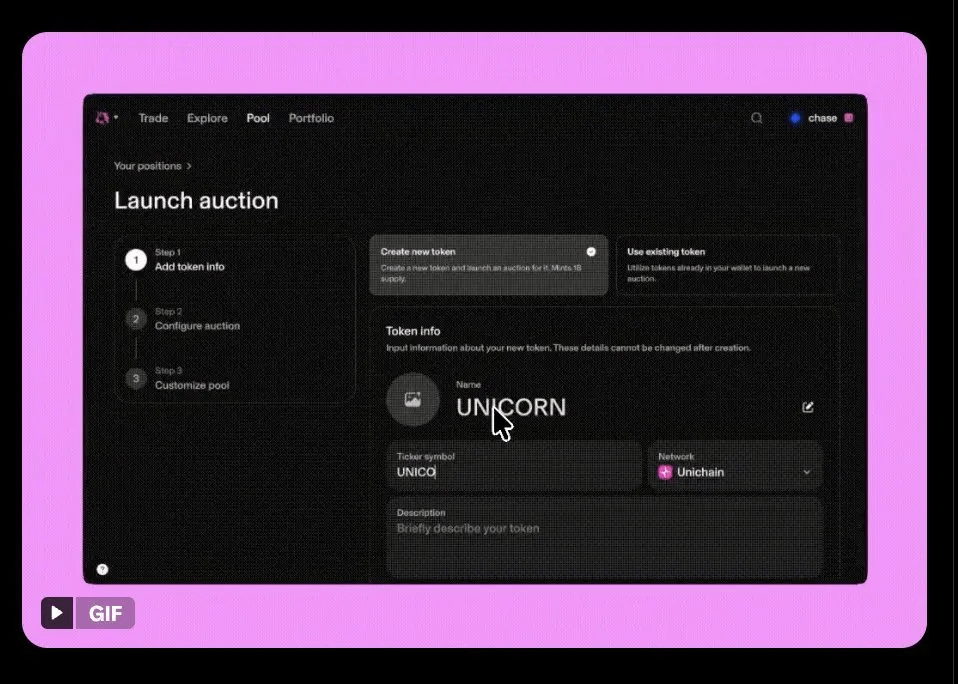
The CCA (Continuous Clearing Auctions) mechanism has been introduced to Robinhood Chain, providing Meme projects with a new issuance route.
Compared with traditional opening models, CCA uses a continuous auction mechanism that lets orders gradually complete settlement based on market demand.
It wants to reduce:
🤖 Bots front-running
📉 Violent volatility at opening
🐳 Large holders quickly take low-priced lots
This model improves issuance fairness, but whether it truly fits the Meme market still needs to be verified over time.
After all, Meme’s core driving force comes from the speed of community spread and market sentiment. While continuous auctions are more fair, they may also reduce the pace of early breakout.
🌍 Meme is the entry point; RWA is the long-term direction
From the current development path, Robinhood Chain is going through stages that many new chains typically experience:
Attracting users and capital quickly through highly active use cases, then gradually improving infrastructure and the application ecosystem.
Meme helped Robinhood Chain gain its first batch of users, trading volume, and market attention.
But long-term value still depends on:
🏦 RWA assets on-chain
💰 Development of DeFi infrastructure
🔗 Connecting traditional finance and Web3
In the future, Robinhood Chain may form a development path like this:
1️⃣ Activating on-chain trading demand through Memes
2️⃣ Refining the financial ecosystem via DeFi
3️⃣ Ultimately bringing RWA and traditional assets onto the chain
Meme may only be the first wave for Robinhood Chain, but it has already proven that this chain is forming its own economic cycle.
In the future, the market will truly care about:
📈 Can Meme hype be sustained?
👥 Will on-chain users and capital scale grow?
🏦 Can RWA applications become a long-term growth driver?
For Robinhood Chain, Meme is the doorway to opening up the ecosystem; the real challenge is how to convert short-term trading hype into long-term ecosystem value.