
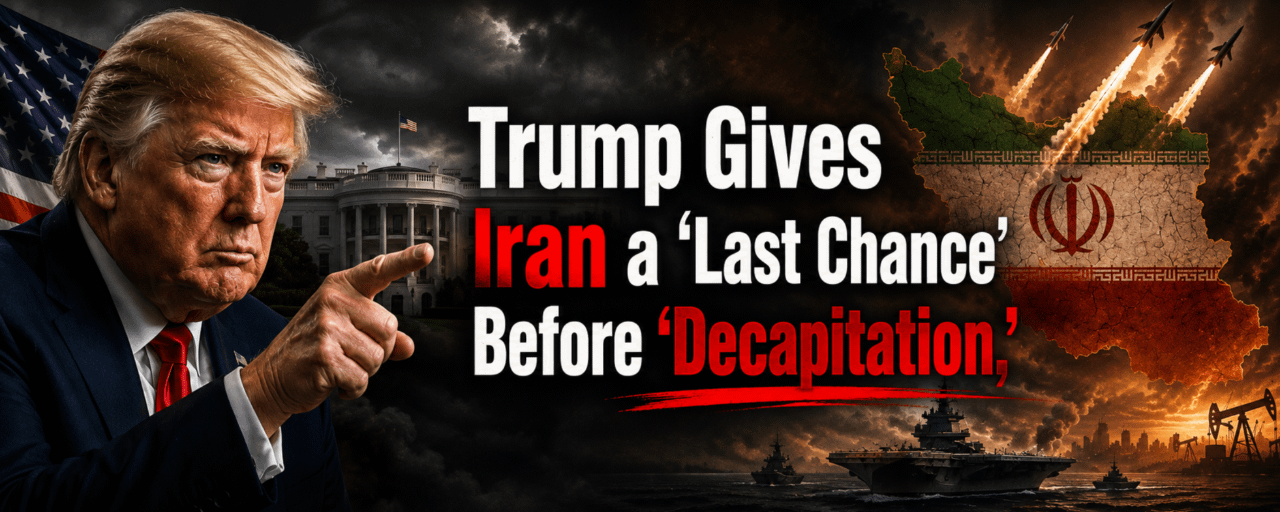
Brent crude clawed back a piece of Monday's rout in early Asian trade Tuesday, rising 1.3% to $84.89 a barrel. West Texas Intermediate added 1% to $81.11.
Both benchmarks had been hammered a day earlier — Brent shedding as much as 4.7% to close Monday at $83.77 a barrel, a three-week low. West Texas Intermediate futures settled down 5.11% at $80.34 per barrel, its weakest level in nearly a week— as traders raced to price in the possibility that President Donald Trump's threatened strikes on Iran might actually stay called off this time. They might not. That's the trouble!
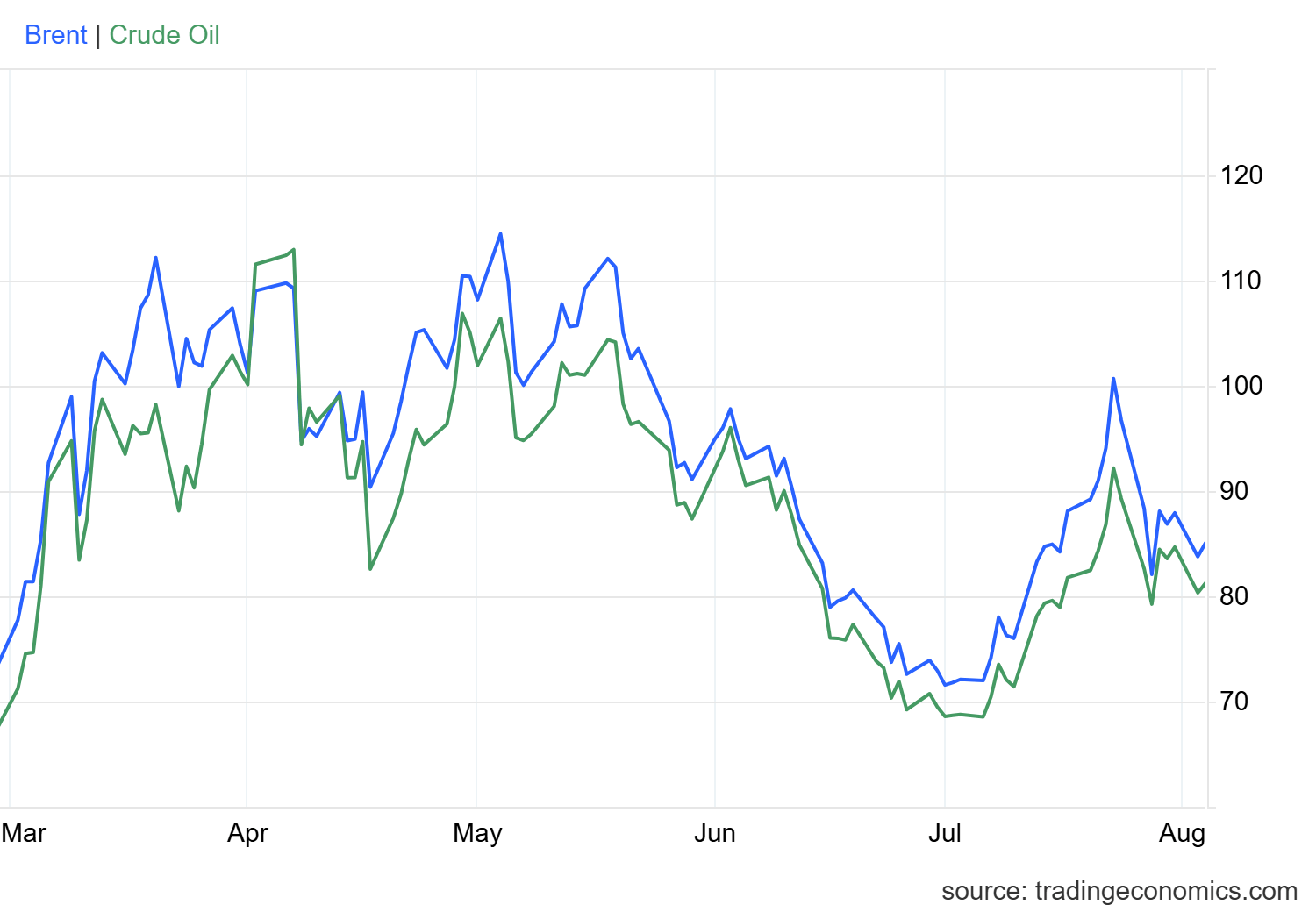
Trump told reporters in the Oval Office Monday that Iran was getting one more shot to sign a deal before what he called "decapitation." He had scrapped a strike over the weekend that he described as among the largest planned since World War II, saying Gulf allies had asked him to give diplomacy another run.
"I want to give them every last chance before decapitation," he said, adding that talks would move fast one way or another. "It's not very complex."
Hours earlier, Trump had accused Tehran of playing both sides. Iran's government, he wrote on Truth Social, was asking for meetings and then publicly denying any were happening — talking only, he said, to "Oman." The post capped days of dueling narratives, with the White House insisting negotiations were live and Iranian officials insisting they weren't.
Trump also used the moment to restate two red lines. The U.S. Navy, he said, already controls the Strait of Hormuz through what he called a blockade, and no vessel moves through it without Washington's say. Iran, he added, will never be allowed a nuclear weapon.
None of that squared with what Tehran was saying publicly. Foreign Ministry spokesman Esmaeil Baqaei told reporters at a Monday briefing that no negotiations with the United States were underway or scheduled — Iran's only active talks, he said, were with Oman, aimed at securing a temporary route for ships through the strait. Araghchi had described that Oman channel as nearing its final stages just a day earlier.
Trump, for his part, said he expects the strait to reopen as soon as today and ruled out any transit charges for vessels using it — a shift from earlier threats to impose a fee. Once shipping resumes, he said, the administration's attention turns to "phase two": Iran's denuclearization, a process he acknowledged would take longer.
Two Wars, One Flashpoint
Adding a second front to an already tangled picture, TS Lombard's Christopher Granville has pointed to Ukraine's July 25 strike on an Iranian vessel in the Caspian Sea as a genuinely significant development — one that Kyiv has justified by citing intelligence it says shows Russia helping Iran target U.S. and Gulf sites. The effect, in Granville's reading, is to fuse two separate conflicts into one, a merger Kyiv appears to calculate strengthens its hand with Washington.
Bloomberg Opinion's John Authers has made a related point: the pattern of Trump threatening escalation and then standing down, only for talks to collapse anyway, has repeated often enough that the market's sharp relief moves now look harder to justify given how the escalation risk keeps climbing rather than fading.
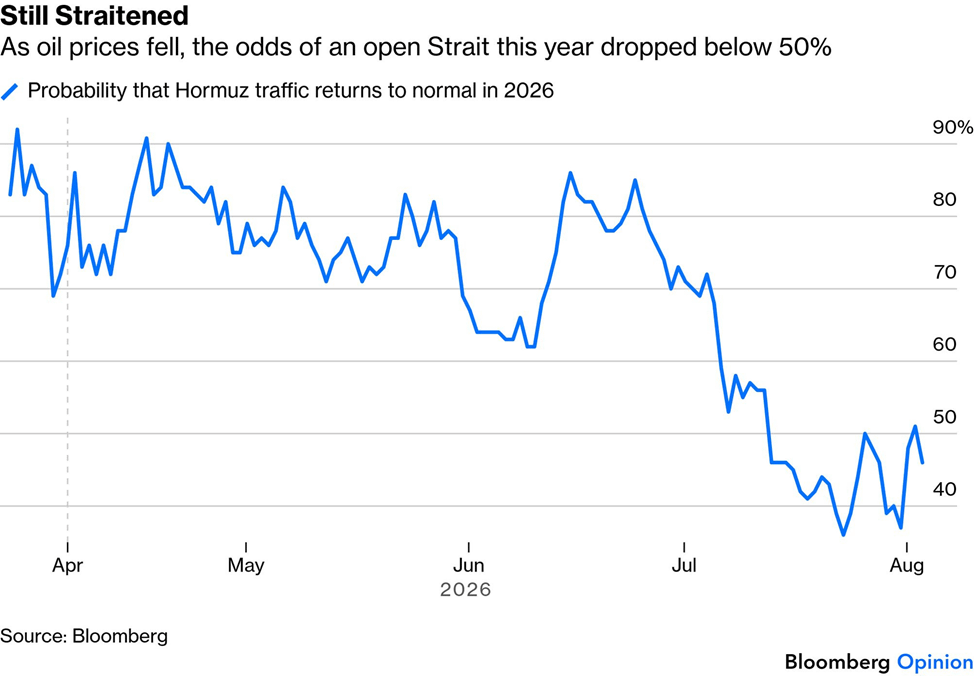
That is why prediction markets haven't warmed to the idea that any of this resolves cleanly. Kalshi contracts tracking a return to normal Hormuz shipping traffic by year-end have spent recent weeks priced well under even odds, and Monday's rally in stocks and slide in oil did little to shift that skepticism — a sign traders are treating the diplomatic breakthrough as provisional at best.
This means that options traders are still pricing greater risk of a supply-driven spike than of a clean decline in Brent — evidence, in other words, that the conflict isn't being treated as resolved just because prices dipped.
"Investors are keeping their enthusiasm in check as 'we've been here before,'" Vital Knowledge founder Adam Crisafulli wrote, adding that the conflict likely has further to run before any real resolution, if one comes at all.
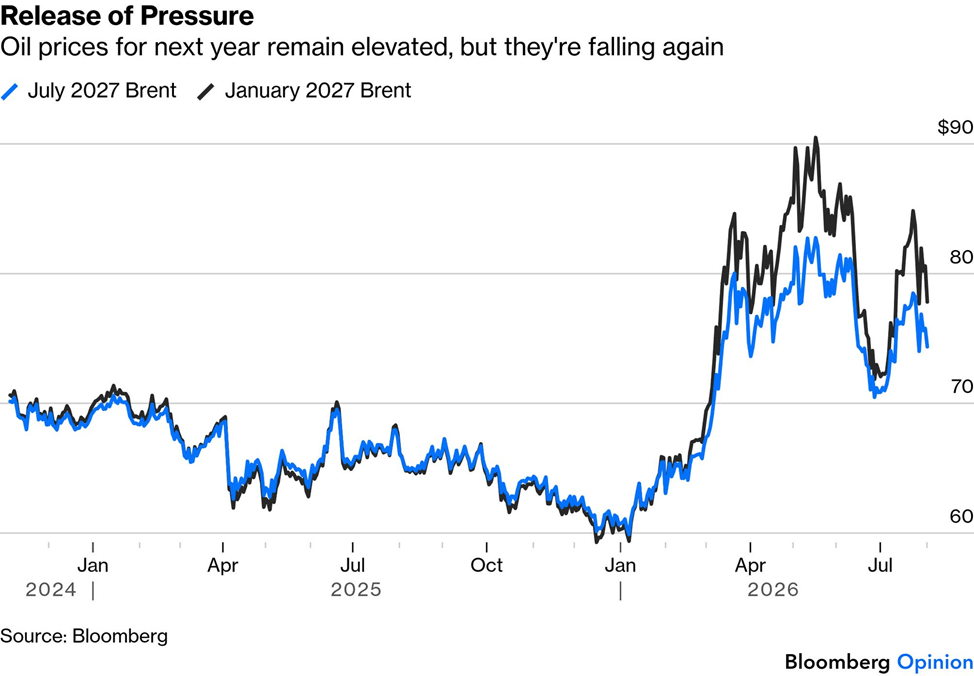
Even so, Authers has argued the prevailing mood in the oil market treats the situation as containable rather than catastrophic — futures still point to Brent trading at elevated levels six and twelve months out, but not dramatically above where the market expected prices to sit a year ago. Whether that confidence survives the next round of "last chances" is, as ever, the open question.
Washington, meanwhile, is leaning on the Strategic Petroleum Reserve again to keep a lid on prices — a stockpile still nursing the damage from the record drawdown that followed Russia's 2022 invasion of Ukraine, and now sitting near its lowest level in more than four decades.
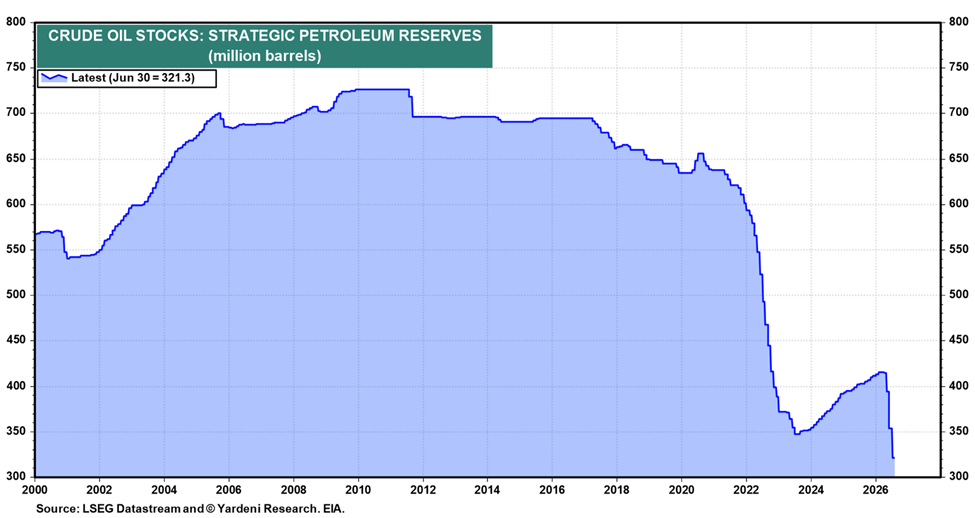
None of that is showing up as complacency in positioning. Options traders are still paying up for the chance of higher prices rather than lower ones. Prediction markets aren't pricing a clean resolution by year-end. And the analysts quoted across Monday and Tuesday's market wraps, from Twidale's conditional optimism to Baradez's caution on yields, read less like people calling an ending and more like people bracing for whatever the next "last chance" turns out to mean.