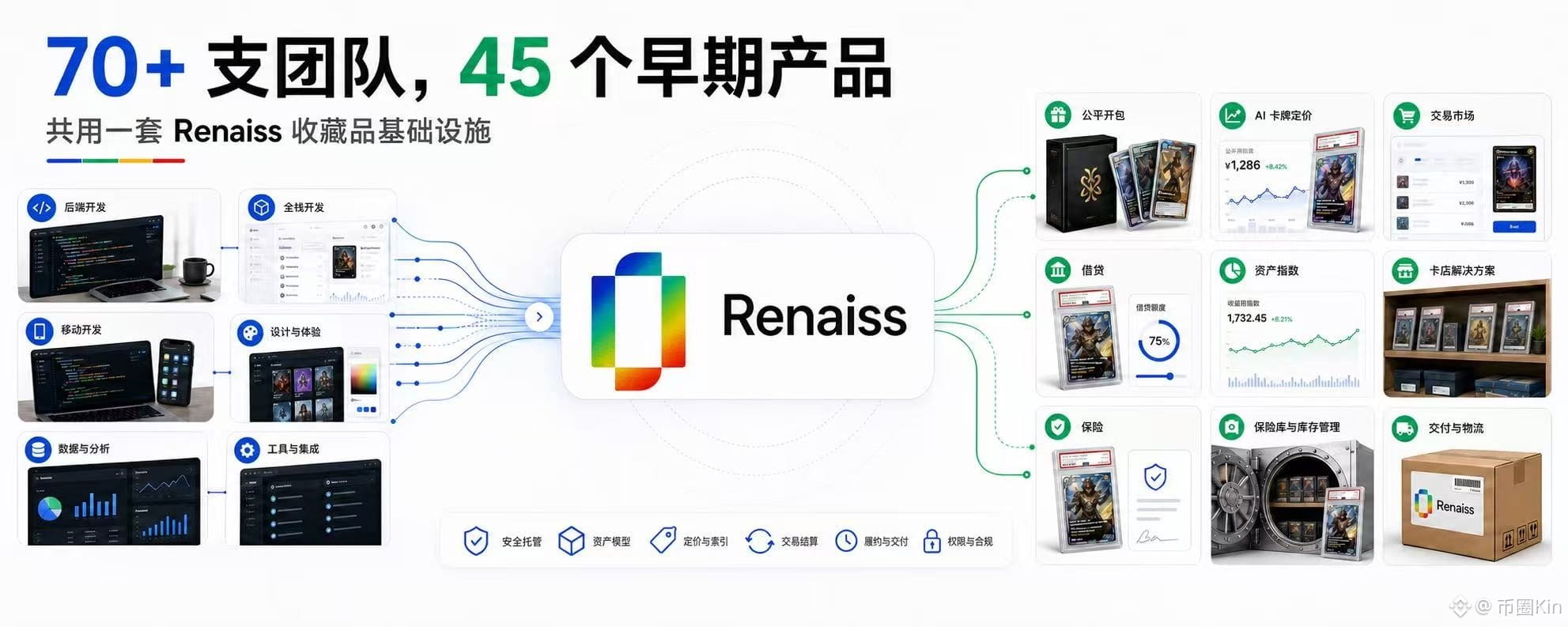
The first Renaiss Open Hackathon attracted more than 70 teams, and in the end, 45 early-stage products were developed based on Renaiss.
One team wanted to build a physical collectible project, and the front-end page was only part of it. There’s also a need to handle card verification, custody, price records, ownership transfers, and physical settlement. Each team had to build everything from scratch, which required a lot of time and cost; moreover, the resulting products were difficult to interoperate.
@Renaiss Collectibles separated these steps into a reusable set of infrastructure.
When users trade collectibles, they can list and transfer via Renaiss.xyz; card prices are organized by the Renaiss Index to provide references for trading, buybacks, and subsequent financial scenarios; after users apply to withdraw physical cards, Renaiss Layer handles connecting on-chain records with off-chain settlement; and vaults and card shops integrate through Renaiss OS to provide custody, verification, and inventory management.
Development teams can call these capabilities through the Renaiss CLI, focusing their main effort on product rules and user experience.
For example, if a team wants to build a TCG opening/booster product, they don’t need to find vaults again, create card dossiers, or handle shipping. If they want to build a collectibles trading tool, they can also directly connect to existing pricing and custody data. Once third-party SDKs and a permissionless VRF protocol are opened, products such as fair pack openings, AI-based card valuation, card lending, and inventory management can continue to be built on top.
These 45 early products use the same pricing, custody, and settlement system, while each has its own gameplay and user base.
One product brings new card inventory, and other products can gain more tradable assets as well; as new users enter the market, demand for trading and buybacks increases; and the more card shops and vaults that connect, the wider the coverage of physical collectibles will become.
In the early community discussions, people mostly talked about which cards were opened and how much their prices rose. Now external teams have started using Renaiss’s tools to build products, and the discussion is gradually shifting toward pricing, custody, settlement, and third-party integrations.
Next, we need to keep observing how many of these 45 products can go live officially, how many can retain users, and whether they can bring new collections and real trades. As long as these data continue to grow, Renaiss’s collectibles infrastructure will see more real-world usage.