I went into Babylon expecting to learn another Bitcoin staking model. Instead, it challenged an assumption I'd held for years.
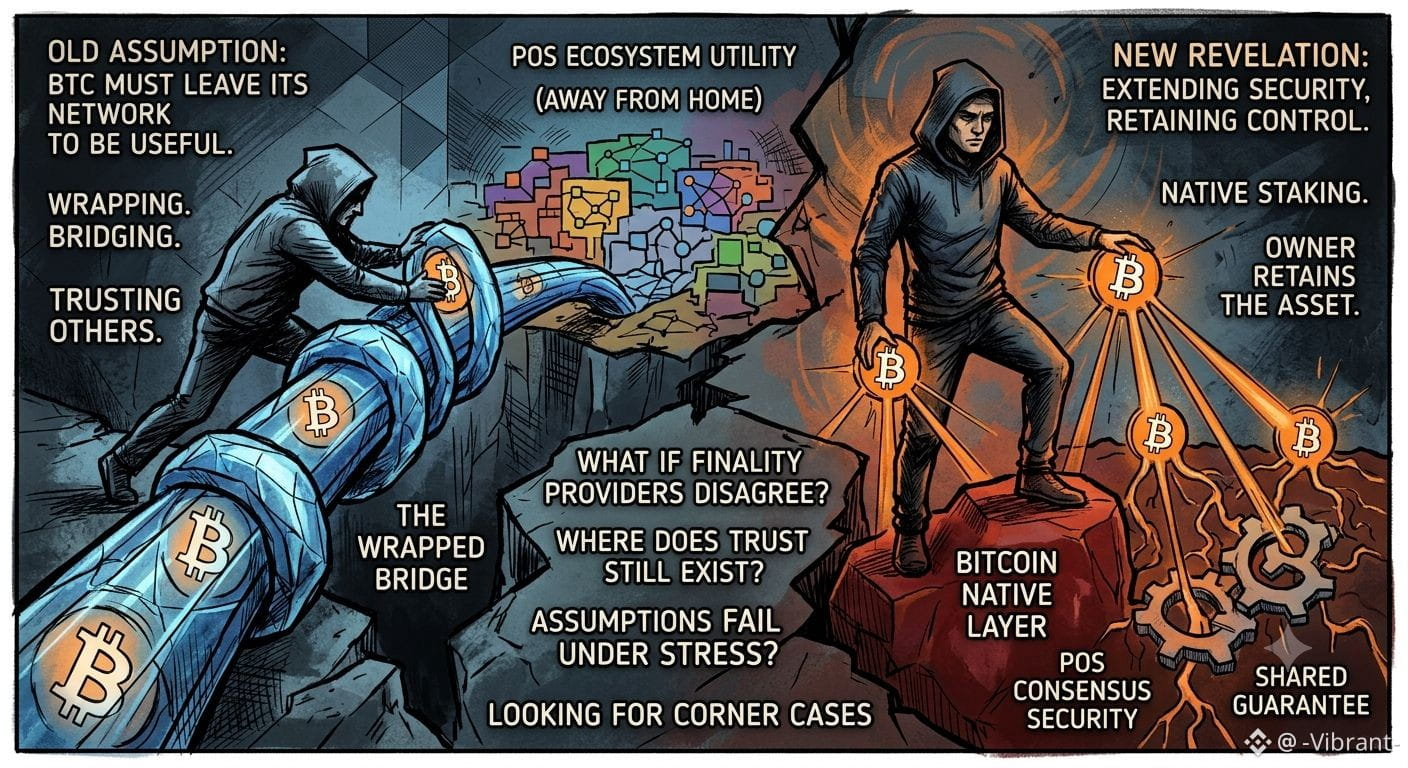
I'd always thought of Bitcoin as something that needed to leave its own network before it could become useful elsewhere. Wrapping it, bridging it, or handing it over to another system felt like the only way to unlock utility.
Babylon made me question that idea.
The part that stood out wasn't the concept of staking itself. It was the possibility of Bitcoin contributing to the security of PoS networks while the owner still retains control of the asset. That changes the discussion from "moving Bitcoin" to "extending Bitcoin's security."
At first, I assumed "BTC staking" here involved the same trade offs we've seen in other ecosystems. The more I read, the less convinced I became that it's an accurate comparison. It feels like the protocol is solving a different problem with a different set of assumptions.
Now I'm no longer trying to understand the headline. I'm looking for the corner cases.
What happens if finality providers disagree? Where does trust still exist? Which assumptions could fail under stress?
Those are the questions that make this protocol worth studying, and they're where I'm spending my time next.
#baby $BABY @BabylonLabs_io
I'd always thought of Bitcoin as something that needed to leave its own network before it could become useful elsewhere. Wrapping it, bridging it, or handing it over to another system felt like the only way to unlock utility.
Babylon made me question that idea.
The part that stood out wasn't the concept of staking itself. It was the possibility of Bitcoin contributing to the security of PoS networks while the owner still retains control of the asset. That changes the discussion from "moving Bitcoin" to "extending Bitcoin's security."
At first, I assumed "BTC staking" here involved the same trade offs we've seen in other ecosystems. The more I read, the less convinced I became that it's an accurate comparison. It feels like the protocol is solving a different problem with a different set of assumptions.
Now I'm no longer trying to understand the headline. I'm looking for the corner cases.
What happens if finality providers disagree? Where does trust still exist? Which assumptions could fail under stress?
Those are the questions that make this protocol worth studying, and they're where I'm spending my time next.
#baby $BABY @BabylonLabs_io