
In the crypto market, volatility itself moves quickly. For short-term traders, the hardest part is often not that there’s no opportunity—but that the opportunity moves too fast.
You spot a chance, and the price has already surged. By the time you confirm the trend, it’s easy to end up chasing higher.
Watching the charts for a few hours a day, what gets depleted in the end is often more than just capital—it’s your attention and emotions.
So I’ve always felt that the real value of AI trading isn’t helping you predict every rise and fall. It’s about handing repetitive work to the system, so your trading logic stays stable.
@0x_aix
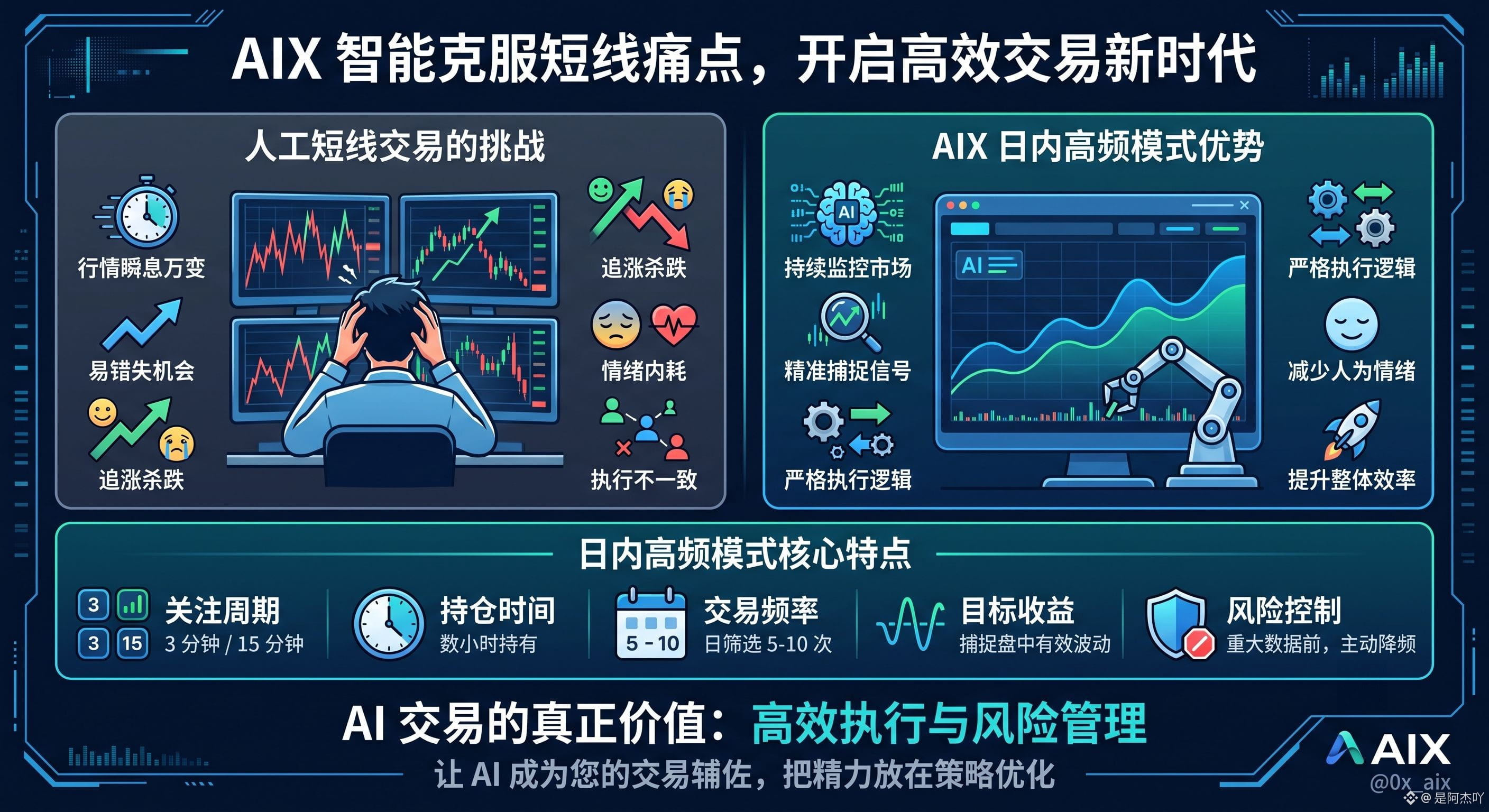
's intraday high-frequency mode is designed specifically for this short-term scenario. By continuously analyzing market signals, it looks for opportunities on 3-minute and 15-minute cycles that are better suited for intraday trading.
It doesn’t intentionally chase long-term trend movements; instead, it focuses on effective intraday volatility. Typically, positions last for a few hours. It adjusts its pace according to market changes, and each day it filters for about 5–10 trading opportunities.
Based on real trading experience, the biggest challenge with short-term trading is often not that the strategy isn’t varied enough—but that execution is hard to keep consistent over the long run.
When the market is rising, it’s easy to chase in. When it’s falling, it’s easy to急着 cut losses in panic. After several consecutive mistakes, you start doubting your judgment. A lot of the time, the trading outcome isn’t losing because your analysis is wrong—it’s losing because your execution slips.
That’s exactly where AI shines.
It can continuously monitor the market, filter signals and execute according to predetermined logic, and reduce the impact of human emotions on trading. Of course, high-frequency trading doesn’t mean mindless entries. Around major data releases, abnormal volatility still requires you to proactively reduce frequency and control risk.
One point I personally value a lot is that the way we trade may change in the future. In the past, it was about how long you watched the screen and how fast you reacted. Now, it will be more about who can use tools more efficiently.
For short-term players, AI won’t replace trading judgment—but it will become an efficiency-enhancing support system. Freeing up your time from repeatedly staring at charts, and focusing your energy on strategy optimization and risk management—this may be the most practical value of AI trading.
Personal experience only; not investment advice. DYOR.
You spot a chance, and the price has already surged. By the time you confirm the trend, it’s easy to end up chasing higher.
Watching the charts for a few hours a day, what gets depleted in the end is often more than just capital—it’s your attention and emotions.
So I’ve always felt that the real value of AI trading isn’t helping you predict every rise and fall. It’s about handing repetitive work to the system, so your trading logic stays stable.
@0x_aix
's intraday high-frequency mode is designed specifically for this short-term scenario. By continuously analyzing market signals, it looks for opportunities on 3-minute and 15-minute cycles that are better suited for intraday trading.
It doesn’t intentionally chase long-term trend movements; instead, it focuses on effective intraday volatility. Typically, positions last for a few hours. It adjusts its pace according to market changes, and each day it filters for about 5–10 trading opportunities.
Based on real trading experience, the biggest challenge with short-term trading is often not that the strategy isn’t varied enough—but that execution is hard to keep consistent over the long run.
When the market is rising, it’s easy to chase in. When it’s falling, it’s easy to急着 cut losses in panic. After several consecutive mistakes, you start doubting your judgment. A lot of the time, the trading outcome isn’t losing because your analysis is wrong—it’s losing because your execution slips.
That’s exactly where AI shines.
It can continuously monitor the market, filter signals and execute according to predetermined logic, and reduce the impact of human emotions on trading. Of course, high-frequency trading doesn’t mean mindless entries. Around major data releases, abnormal volatility still requires you to proactively reduce frequency and control risk.
One point I personally value a lot is that the way we trade may change in the future. In the past, it was about how long you watched the screen and how fast you reacted. Now, it will be more about who can use tools more efficiently.
For short-term players, AI won’t replace trading judgment—but it will become an efficiency-enhancing support system. Freeing up your time from repeatedly staring at charts, and focusing your energy on strategy optimization and risk management—this may be the most practical value of AI trading.
Personal experience only; not investment advice. DYOR.