

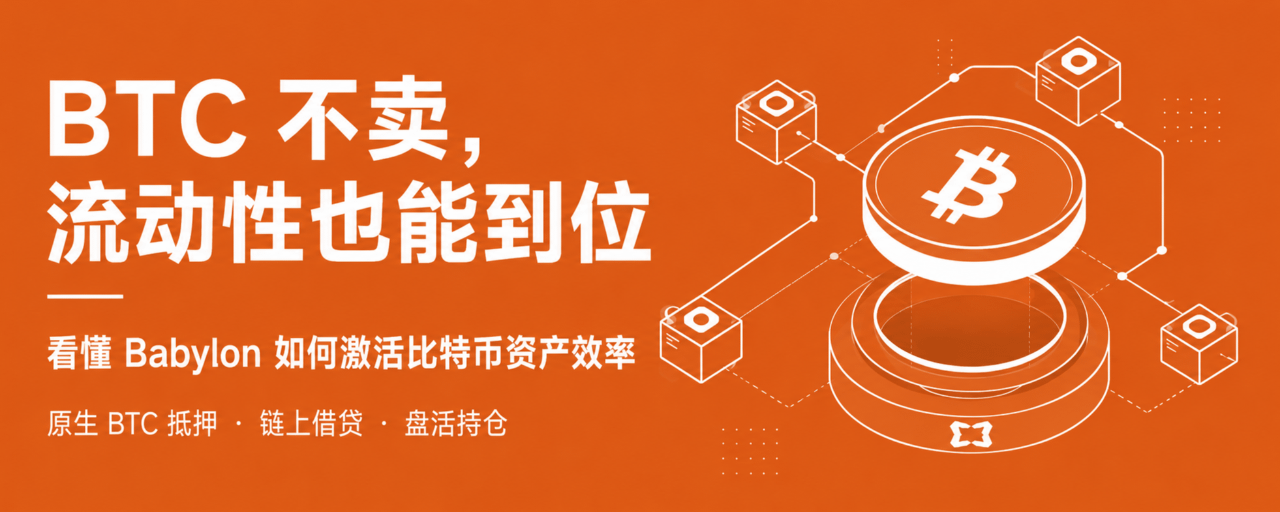


@babylonlabs_io Exploring a direction that is important for BTC holders: how to truly bring native Bitcoin into the on-chain financial system without wrapping it, without bridging, and without over-relying on intermediaries.
Many people who hold BTC have a simple rationale: they believe in its long-term value, so they don’t want to sell it easily. But when market conditions create a need for funds, on-chain opportunities, or everyday liquidity needs, BTC holders often face a choice—either sell their BTC, or convert it into a wrapped asset and then enter DeFi.
The issue lies here as well.
Traditional ways to participate in BTC DeFi often mean that users need to convert native BTC into some wrapped version, or migrate the assets to another network via a cross-chain bridge. These approaches indeed expand BTC’s usability, but they also add extra steps and potential risks: the issuance and redemption mechanisms of wrapped assets, the security of cross-chain bridges, how assets are custodied, and whether intermediaries can be trusted.
Trustless Bitcoin Vaults (TBV) aims to solve exactly this problem—enabling users to use native BTC as collateral and carry this collateral capability across different chains and different applications, rather than requiring users to first give up the native form of their BTC.
This means BTC is no longer just a passive holding asset—it can also serve as collateral infrastructure for on-chain financial activities.
At present, Babylon is opening up the native BTC collateralized borrowing experience on its Public Testnet and combining it with the Aave v4 lending scenario. Users can try using native BTC as collateral and borrowing supported assets on Ethereum, such as USDC or USDT.
For long-term BTC holders, the significance of this model is not just “adding another lending entry point,” but providing a new approach to capital management: without directly selling BTC, users can obtain usable on-chain liquidity.
I think TBV has several key highlights:
1. No need to turn BTC into wrapped assets
Native BTC being directly eligible to be used as collateral is the most noteworthy aspect of the entire model. Users do not need to first convert their BTC into mapped assets on other chains, and it also reduces reliance on wrapping mechanisms and additional asset issuers.
For users who emphasize native BTC attributes, this is especially important.
2. Self-custody still remains the focus
In on-chain asset management, the question of “who controls the keys” is always critical. What TBV emphasizes is maintaining the self-custody logic of native BTC as much as possible in lending scenarios, rather than having users hand their assets over entirely to centralized institutions.
Your keys still correspond to your Bitcoin.
3. Get liquidity while holding BTC
If users sell BTC only to obtain stablecoins or short-term liquidity, they may miss opportunities for subsequent price movements. Native BTC collateralized borrowing offers another option: continue holding BTC while borrowing supported on-chain assets based on your needs.
Of course, borrowing and lending always comes with risks, including collateralization ratios, liquidation thresholds, interest rate changes, and market volatility. The testnet stage is better suited for first getting familiar with the full process and understanding the product mechanics, rather than ignoring these basic risks.
4. Reduce reliance on centralized intermediaries
TBV’s “Trustless” is not just a slogan—it reflects a desire to reduce users’ reliance on centralized custodians, wrapping entities, and cross-chain intermediaries when using BTC’s financial capabilities.
If native BTC can become collateral more directly for multi-chain applications, then future use cases would not be limited to lending; they could also extend to stablecoins, credit cards, derivatives, insurance, and more financial products.
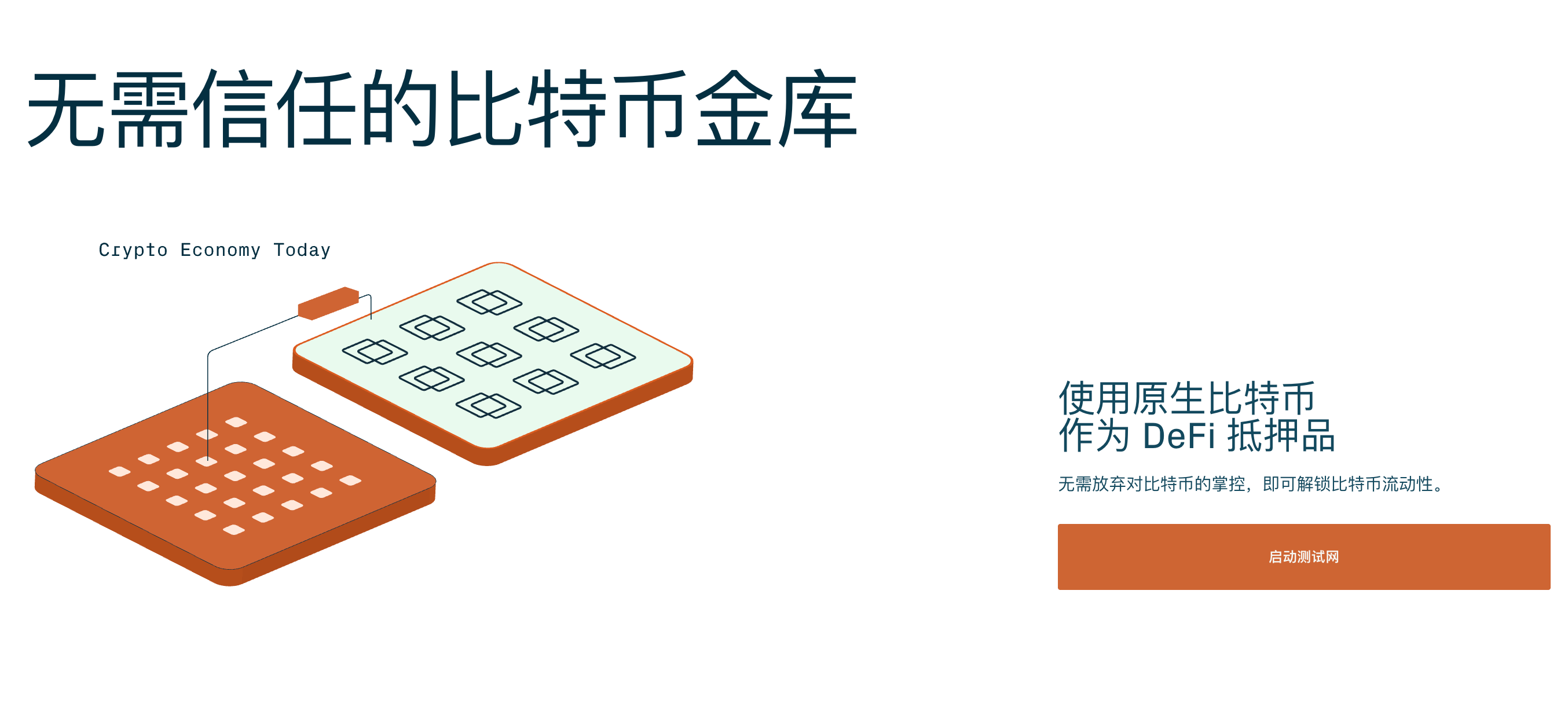
Why start borrowing and lending with Aave v4?
Borrowing and lending is one of the DeFi scenarios that is easiest to understand and most clearly demonstrates the value of collateral.
BTC’s size, consensus, and liquidity have always been at the core of the crypto market, but in the past, BTC’s efficiency in DeFi hasn’t always been ideal. By bringing the ability to collateralize native BTC into the Aave v4 lending scenario, Babylon is essentially trying to connect BTC’s value-preservation characteristics with on-chain liquidity needs.
For users, the experience flow is also more straightforward: collateralize native BTC, understand the collateral status and borrowing limits, and borrow supported assets on the Ethereum side. For the broader industry, this is a way of testing whether native BTC can enter wider on-chain economic activity with fewer trust assumptions.
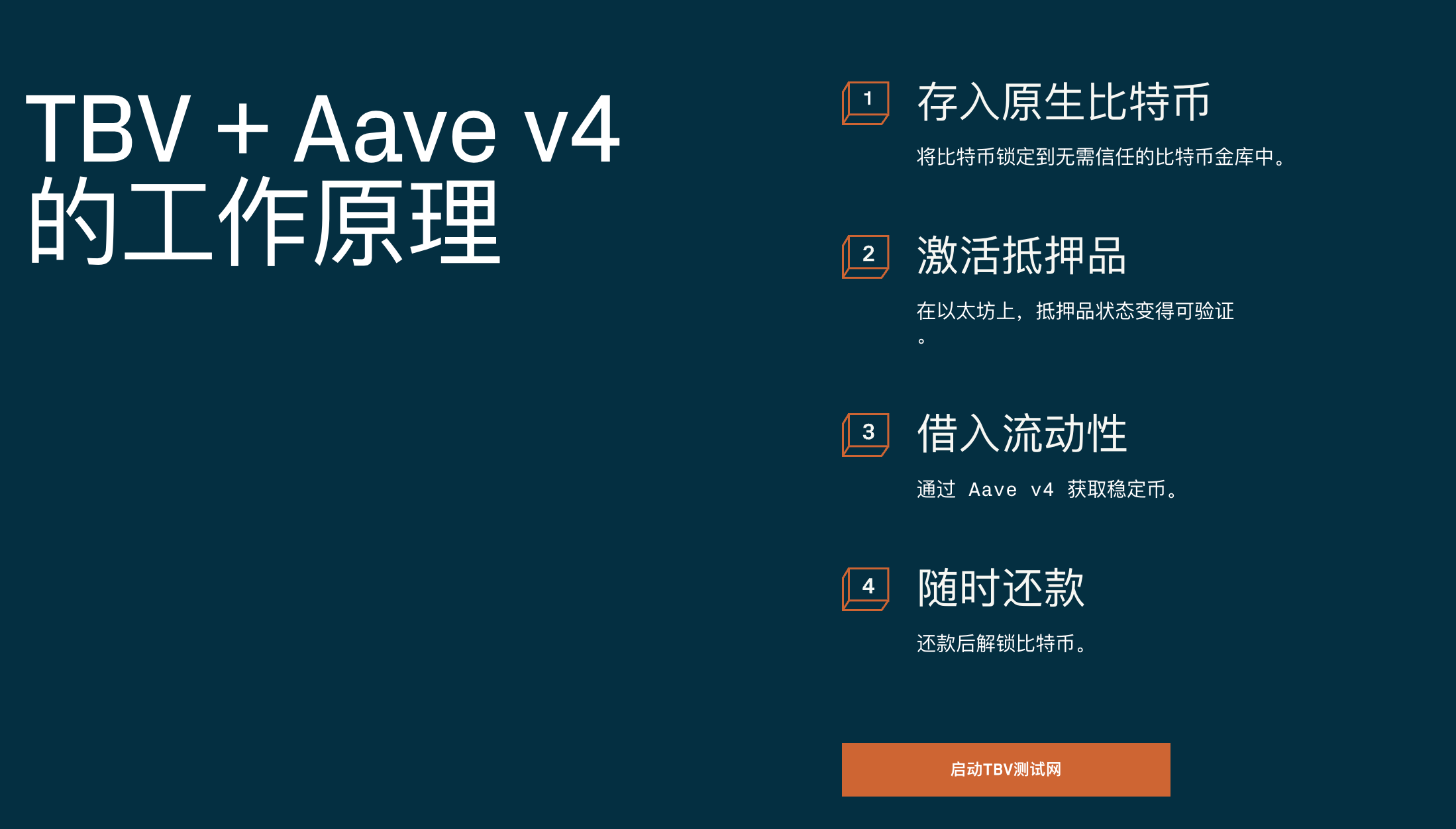
What is worth experiencing on the testnet?
This Public Testnet is not just about showcasing an idea—it’s more suitable for users to personally go through the full process: claiming test assets, providing collateral, trying to borrow, checking on-chain status, and feeding real experience back to the team.
Especially consider the following questions:
Is the collateral and borrowing flow easy to understand?
Are the wallet interaction and signing steps clear?
Are the collateralization ratio, borrowing limits, and risk warnings intuitive enough?
Is the overall experience from BTC collateralization to Ethereum borrowing smooth?
During use, are there pages, copy, or steps that need optimization?
Whether a product is truly usable often depends not only on the underlying technology, but also on whether users can understand it and complete the process smoothly the first time they interact with it. Testnet feedback is precisely an important step in helping the product continually improve.
BTC’s next phase may be more than just being held, transferred, or used after being wrapped. As native collateral infrastructure gradually matures, BTC has the opportunity to become an important foundational asset across broader on-chain financial scenarios without changing its native attributes.
If you’re interested in the need of “holding BTC but not wanting to sell, while also seeking on-chain liquidity,” you’re welcome to experience Babylon’s Public Testnet yourself and submit feedback. How native Bitcoin enters DeFi may just start from here.
