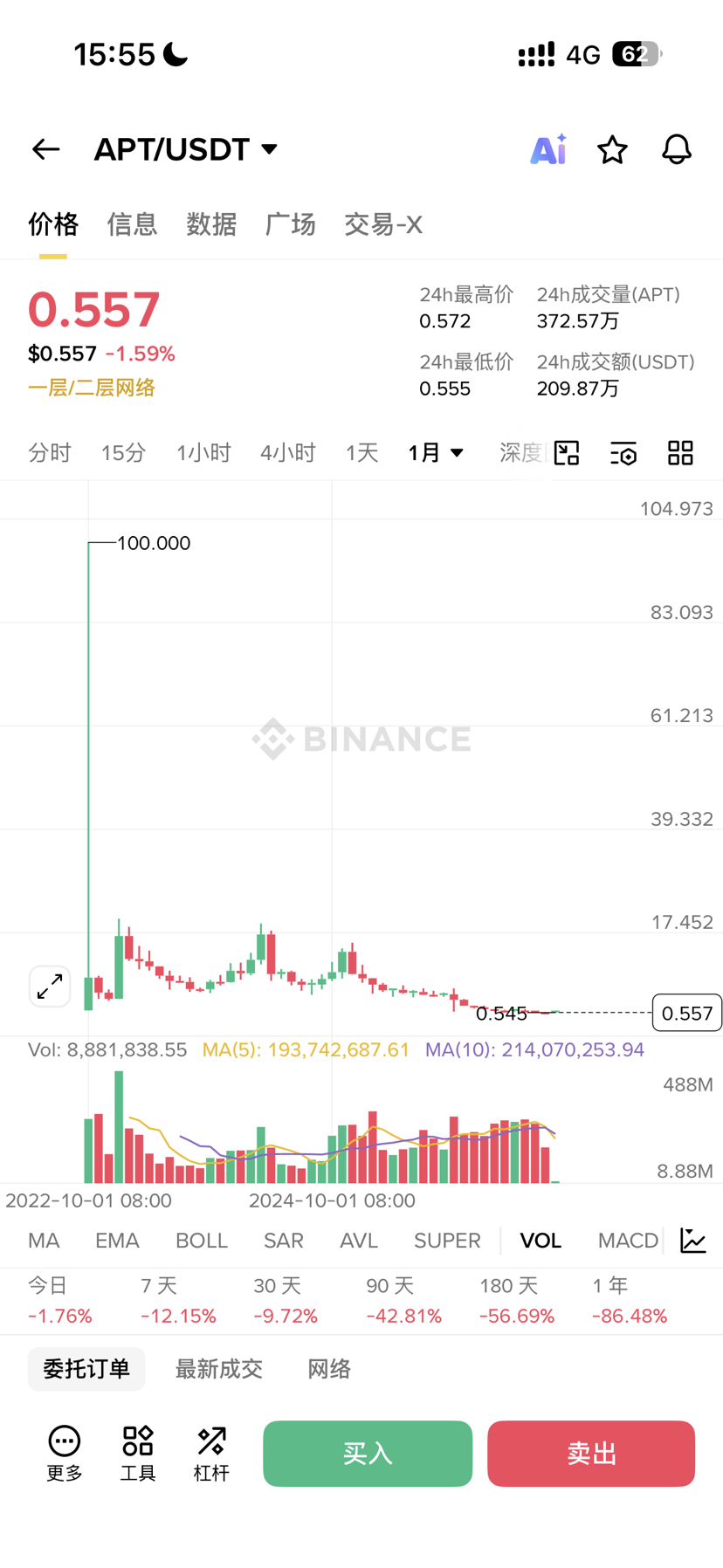
$APT is another typical high-performance L1 with “great technology in appearance, inflated valuation, and slow implementation.” In the early days, valuation was driven by VC backing and the hype around the Move language. Now, the price has already pulled back by about 97% from its all-time high, yet it still struggles with the dual predicament of looming unlock pressure and homogeneous competition.
Early allocations are highly concentrated, and the four-year vesting period for investors and core contributors will not basically end until October 2026. The ongoing supply release prior to that has created a large amount of sell pressure. Although tokenomics reforms were introduced at the beginning of 2026 (a hard cap of $2.1 billion, reduced staking rewards, higher gas fees, and all fees burned), these measures are essentially “after-the-fact repairs.” Whether they can truly reverse the supply-demand imbalance still needs time to confirm.
The messaging of “high TPS, low latency, parallel execution” is loud, but real user retention and sustainable transaction demand are not particularly strong. Network activity shows noticeable cooling during certain periods, and DeFi TVL and daily active user data are insufficient to support the high valuation story at the time. Many projects remain at the stage of being listed or relying on short-term incentives, and genuinely network-effect-driven “killer apps” are still scarce.
Directly and aggressively competes with projects on the same track, such as Sui and Solana. Sui performs better in terms of developer activity and some transaction-related metrics; Solana has a more mature ecosystem and user base. Aptos’s differentiated advantages (the Move language and parallel execution) have not translated into a clearly defensible moat, making it easy to fall into the awkward situation of “technology is similar, but the ecosystem is weaker.”
In the early stage, node and validator distribution was relatively concentrated, and the team and foundation’s influence was significant. There is a gap between the decentralized narrative and actual control power, and long-term governance risks cannot be ignored.
The story of a “new generation of high-performance public chain” has been told for too long. In today’s market, which focuses more on RWA, real revenue, and AI deployment, the appeal of a pure L1 performance narrative has clearly declined. Capital is more willing to flow into tracks with clear cash flow or strong demand, rather than continuing to pay for “possibly soon” adoption.