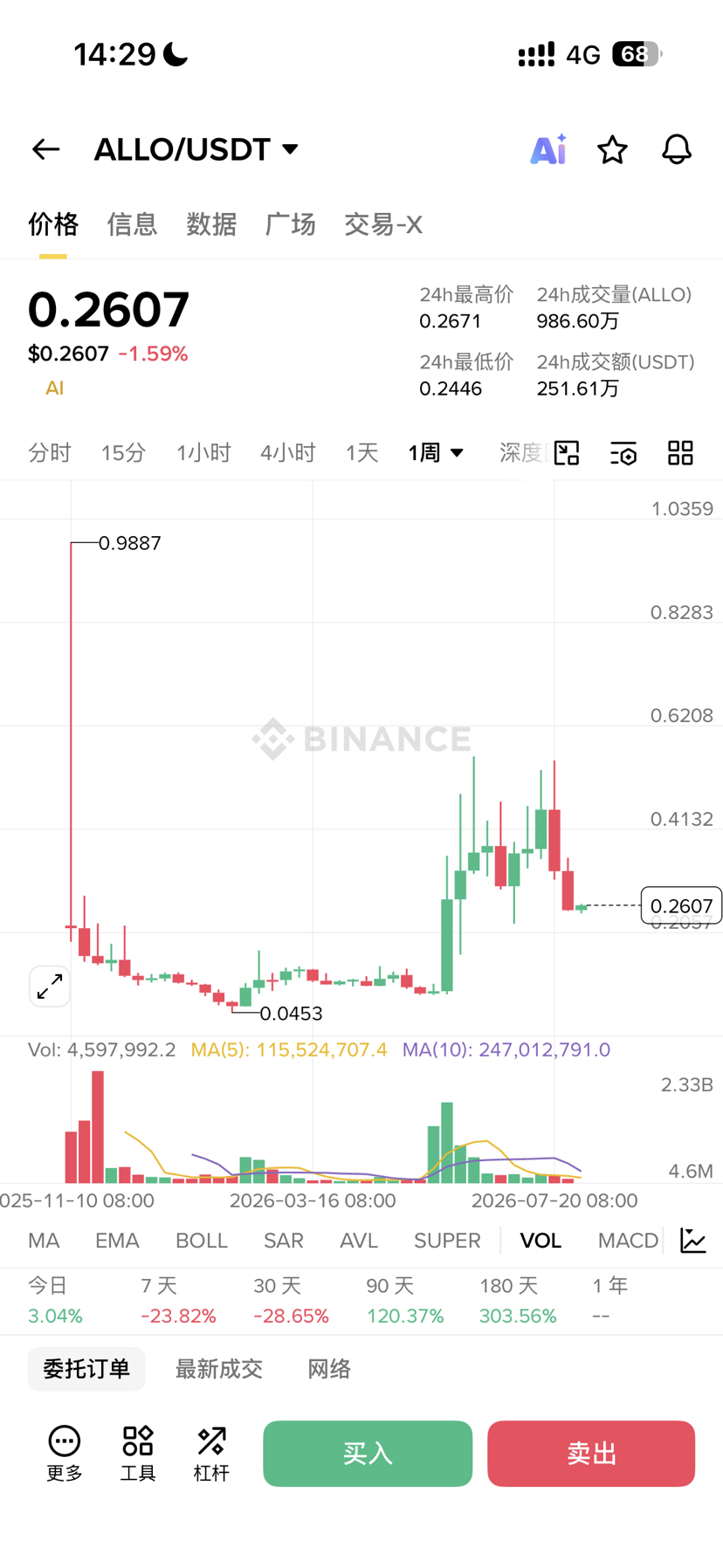
$ALLO is yet another AI token with high narrative, low execution, and high unlock pressure. The story is about “decentralized collective intelligence,” but so far the price has been supported more by themes and funding-driven speculation.
Current circulating supply is only about 20%, and FDV is 3–4 times the market cap. Backers (around 31%) and Core Contributors (about 17.5%) hold large amounts of tokens, with a 1-year cliff followed by linear vesting. Around November 2026, there will be large-scale unlocks, creating a clear risk of selling pressure. In essence, token holders are acting as early institutions’ exit liquidity.
“Decentralized AI”“Multi-model collaboration”“Self-improving networks” — these concepts have been talked to death. Projects like Bittensor, Fetch.ai, and Render have long established first-mover advantages, and Allora is unlikely to prove its differentiated value within a short time. The market’s patience for pure AI infrastructure tokens is rapidly running out.
The token’s main uses are paying for inference, staking, and governance. But currently there isn’t much clearly scaled paid inference demand. Ecosystem applications mostly remain at the demo stage or as short-term hot topics. Without sustained, real revenue support, the token’s ability to capture value is weak.
The price is extremely sensitive to rotation in the AI sector. When it’s up, it’s amplified by narratives and trading volume; when it’s down, it lacks fundamental support. A typical feature of this kind of themed coin is: “buy on good news and drift lower when there’s no news.”
The decentralized AI coordination layer itself is technically difficult. There’s still doubt about whether model quality, latency, and incentive mechanisms can operate effectively over the long term. If it can’t quickly attract high-quality model contributors and real paying users, it’s likely to become yet another marginalized AI project.