


Key takeaways
In 2025, of the $6.69 billion in potential losses from fraud and scams that Binance prevented—including those due to account hijacking and bank transfer fraud—$3.9 billion involved attempted scams.
In addition to recovering over $12.8 million in stolen assets, we have neutralized sophisticated scams while enabling users to protect their funds through cutting-edge technologies, empathetic support, and user education.
Security is a shared mission: by combining continuous innovation and community vigilance, Binance helps build trust, resilience, and safer participation in cryptocurrency for everyone.
In 2025, as the cryptocurrency industry accelerated toward mass adoption, security threats and risks have also evolved. Driven by the effectiveness of AI and increasingly sophisticated exploitation techniques, these threats render static or reactive defenses insufficient. For Binance, as the leading platform in the sector, the challenge is no longer simply preventing crime with traditional approaches, but responding with security capabilities that evolve just as quickly as the threats. To meet the demands of a fast-paced environment, we have designed a continuously evolving risk management framework powered by AI, advanced analytics, and operational intelligence. By building on this foundation, we aim to enable our users to participate in the future of finance with confidence and peace of mind.
There is no magic solution against scams. Rather than relying on a single security mechanism, we have established a comprehensive protection ecosystem—covering proactive detection, rapid intervention such as blocking suspicious activities, and continuous user education. Although many systems operate behind the scenes, our strategy rests on two pillars: strengthening our operational foundations and integrating next-generation technologies. Here’s how we responded to these priorities in 2025.
Binance’s Anti-Fraud and Recovery Results in 2025
In 2025, we recovered over $12.8 million for our users—a nearly 41% increase compared to the previous year. Our enhanced detection systems prevented over $3.9 billion in potential scam-related losses. This figure represents cases where our Risk team identified high-risk activities and either stopped suspicious transactions or issued alerts to users. Throughout the year, we blacklisted over 36,000 malicious addresses and sent more than 9,600 daily pop-up alerts to inform users in real time. Each month, we successfully recovered funds for over 4,000 users—more than 48,000 recoveries in total in 2025.
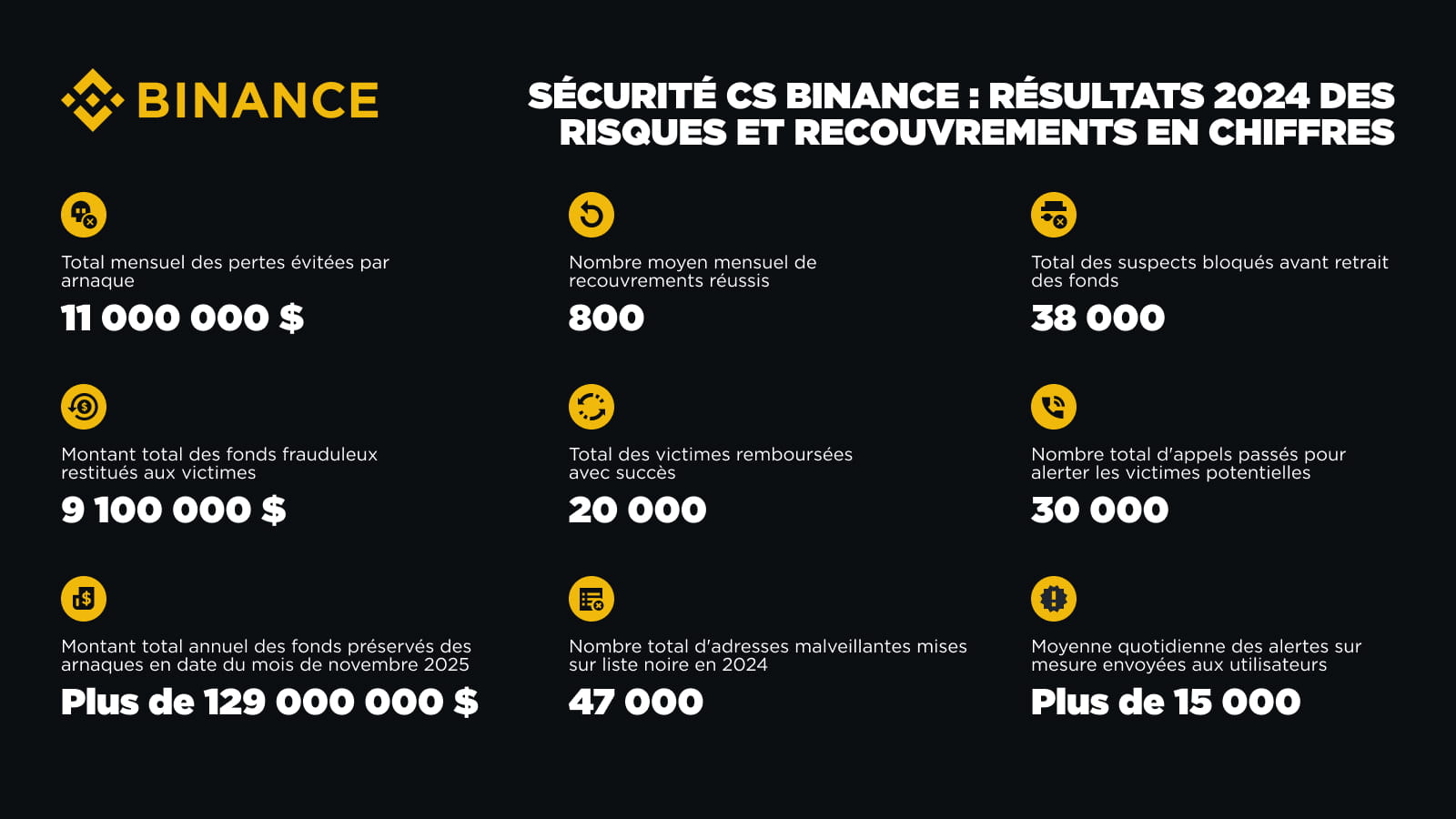
In 2025, the 'shared secret phrase' scam exploded, with fraudsters impersonating Binance agents to pressure users into transferring funds to wallets they controlled, using a fake secret phrase to build trust. At its peak in January, over 600 cases were reported in a single month, but subsequent risk mitigation measures and user education efforts brought this number down to fewer than 170 cases per month by November.
Believing that empathetic communication is more effective at cutting through panic and stopping scams than written messages, we allocated more resources to human support for at-risk users. This led to a 20% increase in integrated voice calls within the app over one year, with over 36,000 calls made to potential victims in 2025.
Additionally, we strengthened protection for vulnerable groups, particularly elderly users, by sending over 110,000 high-risk, personalized alerts in 2025 to help them detect scams before funds left their accounts.
The four pillars of the anti-fraud initiative
Last year, we launched our anti-fraud refund initiative, grounded in four pillars to structure our user protection measures. However, since scam tactics constantly evolve, our strategies must adapt as well.
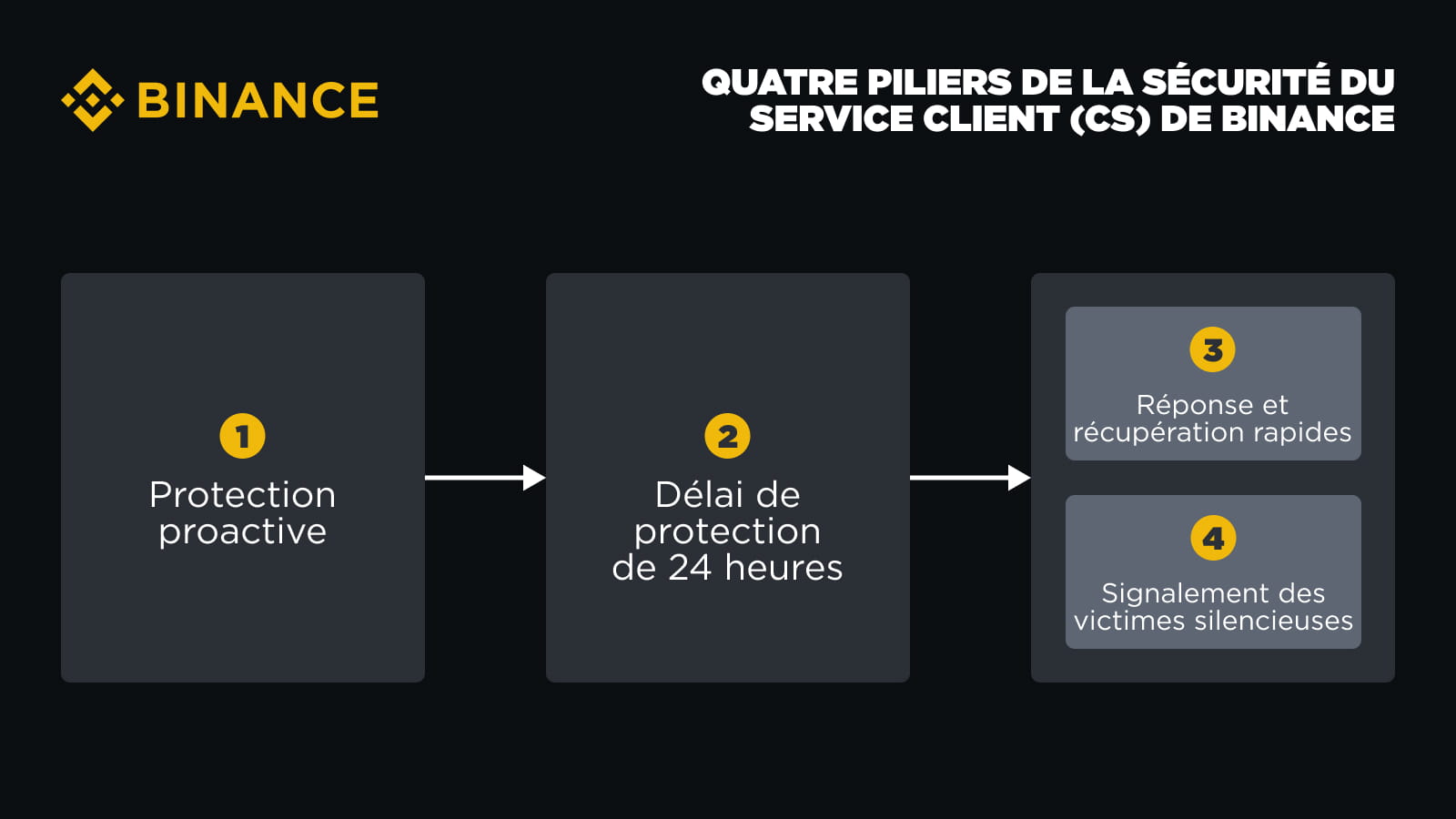
Here is an overview of the major advancements and initiatives achieved around these four pillars in 2025.
Proactive protection
The best way to fight scams is to prevent loss before it happens. In 2025, we strengthened our global intelligence network and expanded our threat-tracking capabilities to identify and blacklist malicious addresses.
Beyond background defenses, we focused on real-time user protection by offering personalized risk interventions for the most vulnerable groups, and delivering timely alerts at the moment of transfer to help users recognize danger at the critical moment.
24/7 Safety Net
Even with safeguards in place, some users may still make risky transfers. For their protection, we maintain a 'safety net' 24/7 that allows us to freeze funds sent to reported accounts—creating a valuable window for investigation and recovery. In 2025, we enhanced our human support for high-risk cases. Supported by our anti-fraud controls, our teams were able to identify, alert, and discourage vulnerable users from sending money to fraudsters.
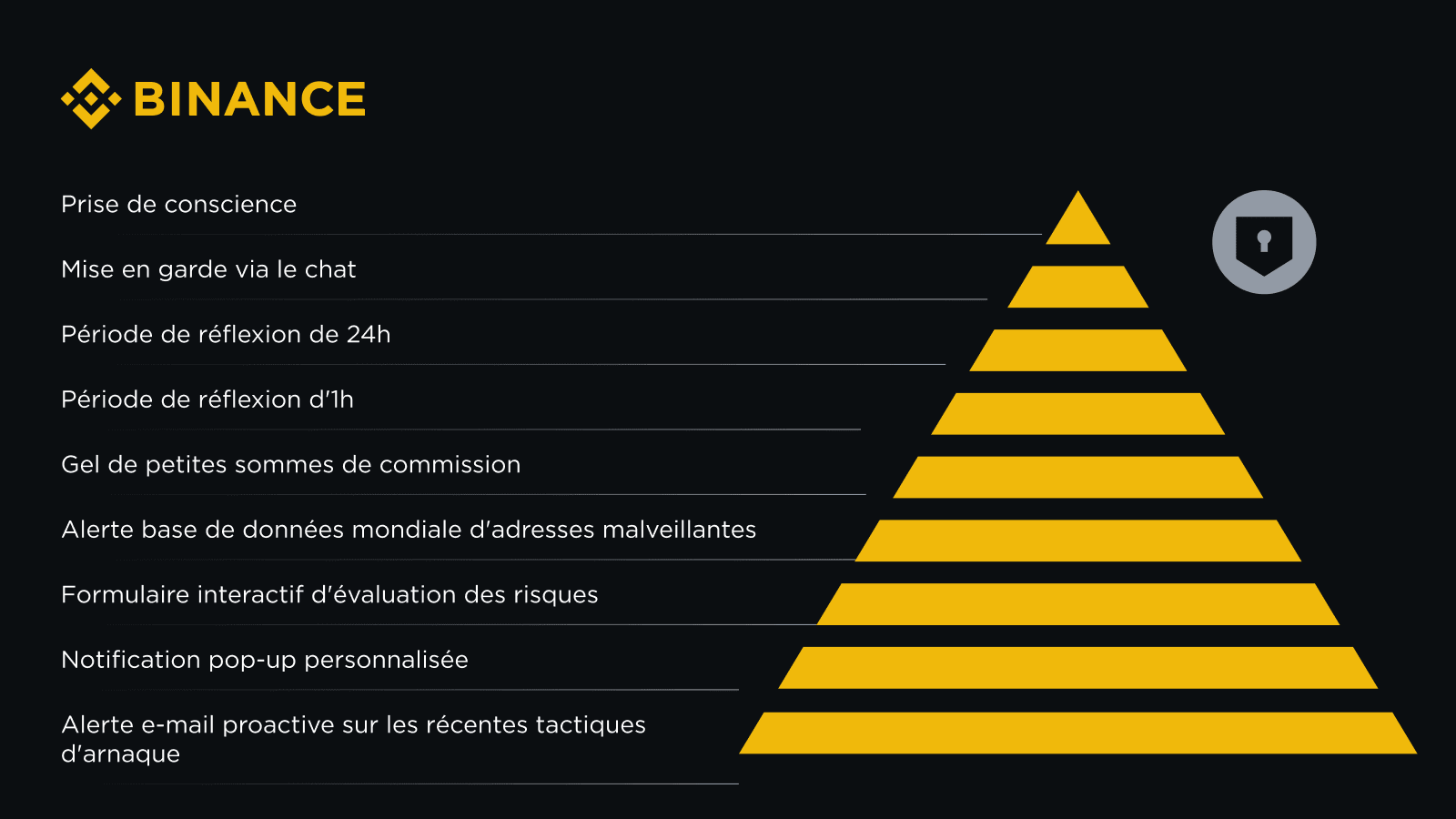
The 9 levels of Binance’s anti-fraud control measures
Fast recovery
Our fast recovery system combines a simplified user declaration process with AI-powered instant analysis, enabling us to freeze suspicious accounts in seconds. While we conduct thorough manual verification and proactively monitor fund flows, the primary responsibility for tracing and recovering funds often lies with authorities. Moreover, fraudsters typically move stolen funds immediately across the blockchain, complicating full recovery. Nevertheless, we continue to support verified victims around the clock, facilitating refunds as soon as funds remain accessible to us.
Support for silent victims
Many scam victims remain silent out of shame or because they believe recovery is impossible. We address this gap with proactive assistance that identifies users who unknowingly sent funds to frozen fraudulent accounts. By guiding these potential victims through the recovery process, we ensure everyone is treated fairly and compassionately. Our goal is to transform silent suffering into real support and recovery.
In 2025, users facing fraud found vital support through Binance’s recovery initiatives. From rapid freezing of fraudulent wallets to guidance on reporting, these interventions turned potential losses into relief. Discover their stories to see how our strategies helped real users: a miner victimized by a fake online store; a verified user who lost funds after their trusted seller account was hacked; a beginner trader trapped by a fake 'trading mentor'.
First step toward recovery: tracing stolen funds
To have any chance of recovering funds, tracing is essential. Stolen assets often pass through external blockchain addresses or other centralized exchange platforms before returning to Binance accounts.
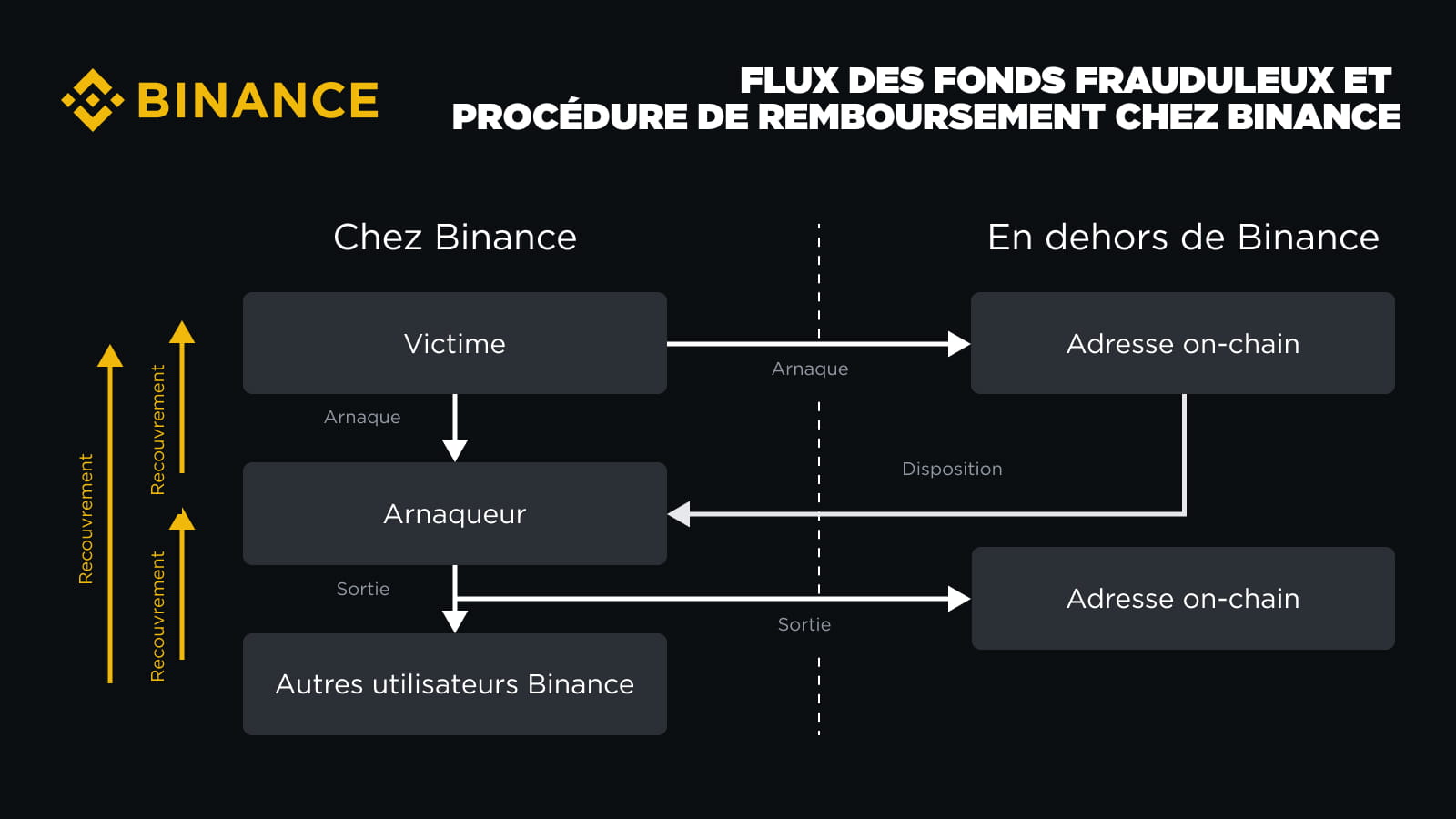
Our method relies on analyzing transaction history to link the victim’s initial transfer to the subsequent path of the funds. This visibility allows us to freeze the suspicious account, track the flow, and as soon as possible, facilitate the victim’s refund from the fraudster.
Smart defenses: The role of AI and machine learning
The integration of machine learning and artificial intelligence by Binance represents a fundamental shift in the fight against fraud. Attackers use AI to intensify and accelerate scams, making manual rules obsolete. In response, our anti-fraud strategists have adopted a native AI approach, using advanced models to power a faster, smarter, and continuously evolving risk framework, as demonstrated by the examples below.
Risk Strategy Factory: Our custom-built AI assistant reduces the time between detecting a new threat and deploying protections. It automatically identifies effective patterns and generates rules and tests from new cases related to a threat, thus reducing response time.
Detection of false payment proof (POP): Some fraudsters try to deceive sellers by sending fake images of payment proof to falsely claim a transfer has occurred. To counter this, Binance has implemented a computer vision-based processing pipeline focused on detecting fraudulent POP images, enabling rapid blocking of suspicious transactions and protecting users before any funds are transferred.
Multimodal AI for scam reporting processing: To further enhance detection, Binance has deployed a multimodal AI model combining multiple data types, including transaction behavioral logs and user reports. By aggregating structured and unstructured data, the model identifies patterns otherwise invisible. This approach significantly reduces reporting processing time, delivering faster responses, fewer losses, and an improved experience across the platform.
Security, a partnership
Above all, security is a partnership. While our AI and investigators work behind the scenes, you retain control of your assets. Protect yourself by adopting these key habits:
1. Treat alerts as stop signals, not mere suggestions: When a Binance risk alert appears during a withdrawal, it is a warning issued by our risk engine detecting a likely threat. Do not click blindly. Take time to read the details and reconsider the transaction. This brief pause can make the difference between safety and the risk of fraud.
2. Break the silence: Report any suspicious activity. Every report helps train the AI and strengthens protection for millions of users. If you suspect a scam, act immediately. Report it quickly and easily via the self-reporting page. Otherwise, follow the steps outlined here.
3. Protect your account with Binance Verify and the anti-phishing code: Your vigilance remains the first line of defense. Binance offers tools to verify communications and spot impostors:
Binance Verify: Instantly check whether a domain, email address, phone number, or Telegram ID is officially affiliated with Binance.
Anti-phishing code: Set up a unique code that will appear in every authentic Binance email and SMS to prevent message spoofing.
Conclusion
In 2025, most losses caused by scams stemmed from speed, pressure, and misinformation during fund transfers. We respond to this reality with multi-layered, real-time operational defenses: earlier detection, better-targeted alerts, accelerated freeze and recovery procedures, and support helping users slow down before an error becomes irreversible. As cryptocurrency gains wider adoption, security must evolve with it—requiring systems that reduce risks without inconveniencing legitimate users. We will continue strengthening controls and training for safer participation, and urge our users to take alerts seriously, verify channels, and report suspicious activity quickly to improve protection for all.