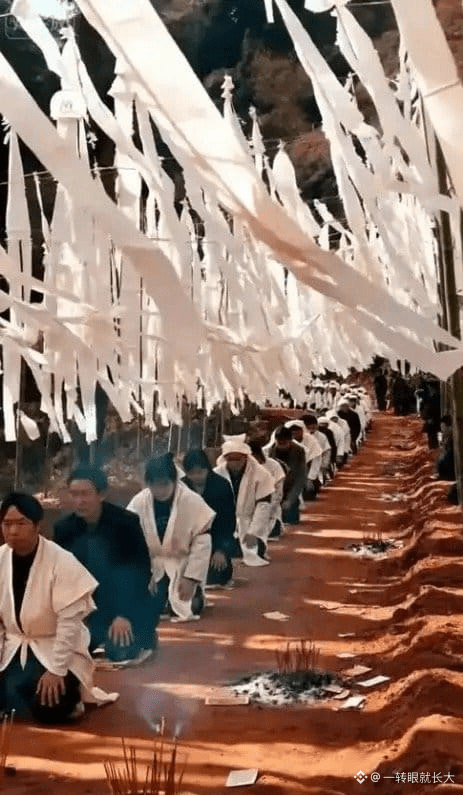
A new burial system will be implemented on March 30, 2026, with the general idea being: everything simplified. Urban residents can choose cremation, while mountainous area residents may opt for earth burial, but must use public cemeteries. Those who choose tree burial or flower burial will receive government subsidies. In the future, basic services such as cremation and transportation will either be free or have a nationally uniform price, with all fees clearly displayed, so no one can exploit loopholes.
In the past, why were people afraid of death? It wasn’t just about leaving this world, but also about fearing that after death, they would burden their children—afraid that a single funeral could drain half a lifetime’s savings, or even leave the family in debt.
Now, by making prices transparent, the state is giving ordinary people a sense of security. Everyone knows that even in the final journey, the state has their back and won’t let money crush them.
Allowing urban residents to cremate and mountainous area residents to bury in the ground is a very practical arrangement—no one-size-fits-all approach, respecting local customs and traditions. This is truly grounded in reality, making it easier for the public to accept.
In the past, some places pushed cremation in a crude and heavy-handed way, even leading to absurd incidents like '抢棺材' (rushing to seize coffins), causing widespread public resentment. This time, explicitly allowing earth burial in mountainous areas shows that lessons have been learned, emphasizing a people-centered approach.
However, there is a key condition: burial must take place in public cemeteries. This is crucial. In the past, rural areas suffered from chaotic and unregulated burials, wasting farmland and turning mountains into graveyards, which looked eerie. Now, farmland can be used as usual.
Offering subsidies for tree burial and flower burial is a brilliant move—environmentally friendly, land-saving, and leaving green spaces for future generations. It’s using real money to guide people toward changing outdated customs, far more effective than just hanging banners and shouting slogans.
This shows the state sees clearly: ordinary people aren’t unreasonable—they care about money and land. Now with subsidies, people save on burial costs and receive rewards. Anyone can calculate the benefits, so naturally, they’re willing to cooperate.
It’s also easing the burden on our land. With so many people, if everyone took up a large plot as a grave, what would future generations plant or eat? The state must think long-term, not just short-term.
This is different from past earth burial reforms, which were forced through. Now it’s a guiding approach—giving people dignity and practical benefits. People no longer see civilized burial as dishonoring ancestors, but as doing good deeds.
Making burial services transparent also cuts off the gray market. In the past, some services in funeral homes had prices like riddles—only revealed at the final bill, often shockingly high. Now, no one can exploit information gaps.
For those in the funeral industry who once profited heavily, this is like a bolt from the blue. They used to monopolize the market through information asymmetry. Now, with the state taking over basic services, their golden days are over.
People often say 'you can't afford to die.' This new regulation aims to completely break that cycle, freeing the end of life from the taint of money and restoring respect and mourning for the deceased.
It’s also a sign of social progress. Only when people’s affairs after death are properly managed can they live with peace of mind, without constantly worrying about burdening their families after they’re gone.
The old habit of excessive competition and lavish funerals should finally be curbed. Some wealthy people used funerals as a stage to show off—luxury cars, grand displays—turning mourning into a platform for flaunting wealth.
Now, the state advocates simplicity. This is actually relieving society of unnecessary burdens, encouraging people to spend money on improving life while they’re alive, rather than on posthumous extravagance. That’s the true way to live.
Of course, when this policy is introduced, some people may not adapt immediately. After all, customs passed down for thousands of years aren’t easy to change—especially for the elderly, who may still believe that not burning paper or holding a big funeral equals disrespect.
We need to guide them gradually. True filial piety lies in caring for elders while they’re alive, not in a flashy funeral after death. Taking good care of parents is a hundred times better than loud music and grand ceremonies.
The state sets these rules not to make life harder for anyone, but for the benefit of all. Land resources are limited—we must leave room for future generations. We can’t bury up all the good land.
The implementation date is 2026, with a buffer period in between—giving local governments time to build public cemeteries and improve facilities. Otherwise, if policies are introduced but infrastructure isn’t ready, chaos could erupt again.
This is also part of building ecological civilization. Tree burial and flower burial are wonderful—returning to nature, dust to dust, earth to earth. In the future, visiting graves will be like strolling in a park—much more pleasant than lingering in dark, eerie graveyards.
In short, this new burial system is serious and genuine, made with the people’s well-being in mind. It closes off the financial gains from death while paving the way for a better life for the living—a real act of benevolent governance.
We must recognize this major trend, follow national policies, and not be bound by outdated thinking and old customs. After all, life moves forward, and so does civilization. When funeral arrangements become civilized, the living can live with greater dignity.
In the past, why were people afraid of death? It wasn’t just about leaving this world, but also about fearing that after death, they would burden their children—afraid that a single funeral could drain half a lifetime’s savings, or even leave the family in debt.
Now, by making prices transparent, the state is giving ordinary people a sense of security. Everyone knows that even in the final journey, the state has their back and won’t let money crush them.
Allowing urban residents to cremate and mountainous area residents to bury in the ground is a very practical arrangement—no one-size-fits-all approach, respecting local customs and traditions. This is truly grounded in reality, making it easier for the public to accept.
In the past, some places pushed cremation in a crude and heavy-handed way, even leading to absurd incidents like '抢棺材' (rushing to seize coffins), causing widespread public resentment. This time, explicitly allowing earth burial in mountainous areas shows that lessons have been learned, emphasizing a people-centered approach.
However, there is a key condition: burial must take place in public cemeteries. This is crucial. In the past, rural areas suffered from chaotic and unregulated burials, wasting farmland and turning mountains into graveyards, which looked eerie. Now, farmland can be used as usual.
Offering subsidies for tree burial and flower burial is a brilliant move—environmentally friendly, land-saving, and leaving green spaces for future generations. It’s using real money to guide people toward changing outdated customs, far more effective than just hanging banners and shouting slogans.
This shows the state sees clearly: ordinary people aren’t unreasonable—they care about money and land. Now with subsidies, people save on burial costs and receive rewards. Anyone can calculate the benefits, so naturally, they’re willing to cooperate.
It’s also easing the burden on our land. With so many people, if everyone took up a large plot as a grave, what would future generations plant or eat? The state must think long-term, not just short-term.
This is different from past earth burial reforms, which were forced through. Now it’s a guiding approach—giving people dignity and practical benefits. People no longer see civilized burial as dishonoring ancestors, but as doing good deeds.
Making burial services transparent also cuts off the gray market. In the past, some services in funeral homes had prices like riddles—only revealed at the final bill, often shockingly high. Now, no one can exploit information gaps.
For those in the funeral industry who once profited heavily, this is like a bolt from the blue. They used to monopolize the market through information asymmetry. Now, with the state taking over basic services, their golden days are over.
People often say 'you can't afford to die.' This new regulation aims to completely break that cycle, freeing the end of life from the taint of money and restoring respect and mourning for the deceased.
It’s also a sign of social progress. Only when people’s affairs after death are properly managed can they live with peace of mind, without constantly worrying about burdening their families after they’re gone.
The old habit of excessive competition and lavish funerals should finally be curbed. Some wealthy people used funerals as a stage to show off—luxury cars, grand displays—turning mourning into a platform for flaunting wealth.
Now, the state advocates simplicity. This is actually relieving society of unnecessary burdens, encouraging people to spend money on improving life while they’re alive, rather than on posthumous extravagance. That’s the true way to live.
Of course, when this policy is introduced, some people may not adapt immediately. After all, customs passed down for thousands of years aren’t easy to change—especially for the elderly, who may still believe that not burning paper or holding a big funeral equals disrespect.
We need to guide them gradually. True filial piety lies in caring for elders while they’re alive, not in a flashy funeral after death. Taking good care of parents is a hundred times better than loud music and grand ceremonies.
The state sets these rules not to make life harder for anyone, but for the benefit of all. Land resources are limited—we must leave room for future generations. We can’t bury up all the good land.
The implementation date is 2026, with a buffer period in between—giving local governments time to build public cemeteries and improve facilities. Otherwise, if policies are introduced but infrastructure isn’t ready, chaos could erupt again.
This is also part of building ecological civilization. Tree burial and flower burial are wonderful—returning to nature, dust to dust, earth to earth. In the future, visiting graves will be like strolling in a park—much more pleasant than lingering in dark, eerie graveyards.
In short, this new burial system is serious and genuine, made with the people’s well-being in mind. It closes off the financial gains from death while paving the way for a better life for the living—a real act of benevolent governance.
We must recognize this major trend, follow national policies, and not be bound by outdated thinking and old customs. After all, life moves forward, and so does civilization. When funeral arrangements become civilized, the living can live with greater dignity.