

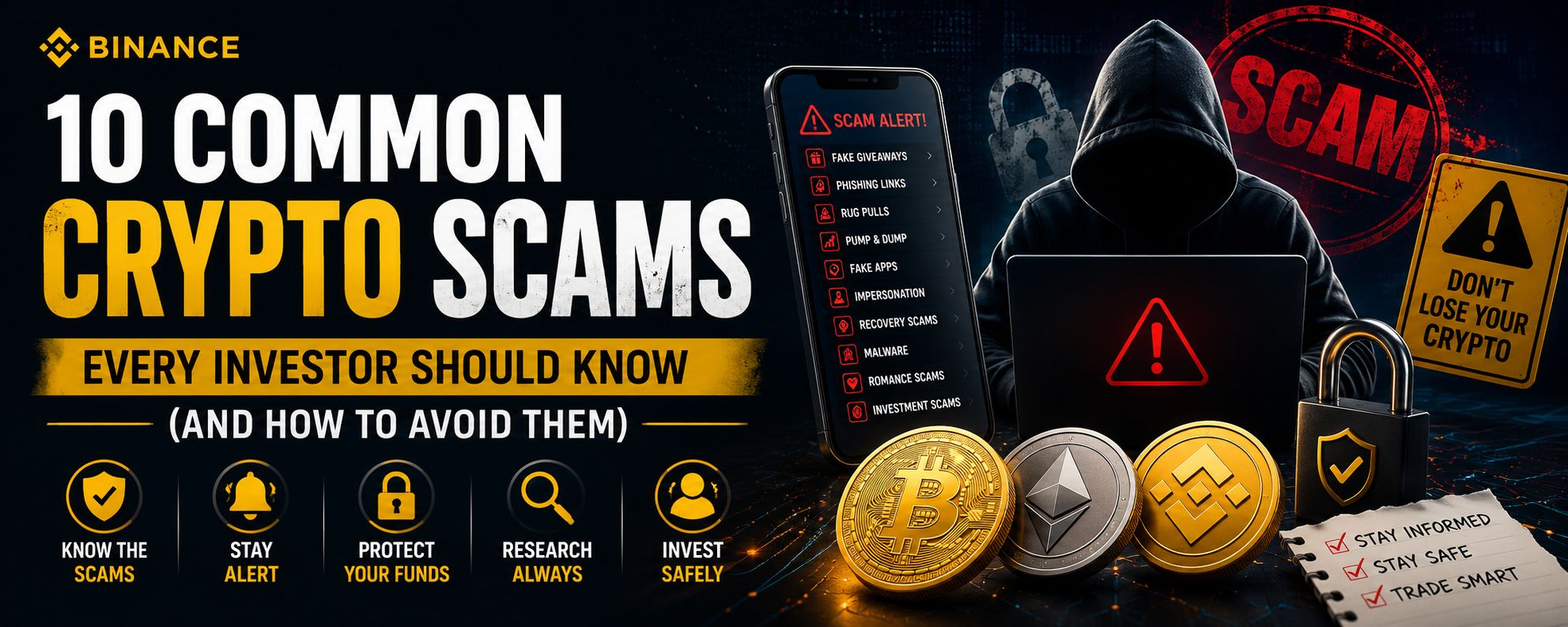

INTRODUCTION
Cryptocurrency has transformed the way people invest, save, and transfer money. However, as the crypto industry grows, so do the number of scams targeting new and experienced users alike. Learning how these scams work is the first step toward protecting your digital assets. This guide explains ten of the most common crypto scams and provides practical tips to help you stay safe.
1. PHISHING SCAMS
Phishing is one of the most common forms of fraud in the crypto world. Scammers create fake websites, emails, or messages that look like they come from trusted exchanges or wallet providers. Their goal is to trick users into revealing passwords, recovery phrases, or verification codes.
HOW TO STAY SAFE:
. Always check the website address carefully.
.Never share your recovery phrase with anyone.
.Enable two-factor authentication (2FA).
2. FAKE GIVEAWAYS
Scammers often pretend to be well-known companies or public figures, promising to double any cryptocurrency you send them. Once the funds are sent, they disappear.
HOW TO STAY SAFE:
Remember that legitimate companies do not ask users to send crypto to receive more in return.
Verify announcements through official channels.
3. INVESTMENT SCAMS
Some fraudsters promise guaranteed profits or extremely high returns with little or no risk. These schemes often collapse once new investors stop joining.
HOW TO STAY SAFE:
. Be cautious of promises that sound too good to be true.
.Research projects thoroughly before investing.
4. RUG PULLS
A rug pull occurs when the creators of a crypto project suddenly abandon it after collecting investors' money, leaving the token nearly worthless.
HOW TO STAY SAFE:
. Research the development team.
.Review the project's roadmap and community activity.
.Avoid investing solely because of social media hype.
5. PUMP-AND-DUMP SCHEMES
Groups artificially inflate the price of a coin by encouraging people to buy it. Once the price rises, the organizers sell their holdings, causing the price to crash.
HOW TO STAY SAFE:
. Do not invest based on fear of missing out (FOMO).
.Make decisions based on research rather than online excitement.
6. FAKE CRYPTO APPS
Scammers publish fake wallet or exchange apps that steal login credentials or funds.
HOW TO STAY SAFE:
. Download apps only from official stores.
.Confirm the publisher before installing.
7. IMPERSONATION SCAMS
Fraudsters may pretend to be customer support agents, influencers, or experienced traders to gain your trust.
How TO STAY SAFE:
. Official support will never ask for your password or recovery phrase.
.Verify identities through official websites.
8. MALWARE AND FAKE SOFTWARE
Malicious software can secretly record your passwords or replace wallet addresses during transactions.
HOW TO STAY SAFE:
. Keep your device updated.
.Use trusted antivirus software.
.Download software only from official sources.
9. ROMANCE AND FRIENDSHIP SCAMS
Scammers sometimes build online relationships over weeks or months before encouraging victims to invest in fake crypto platforms.
HOW TO STAY SAFE:
. Be cautious when someone you've met online starts discussing investments.
.Never send money because of emotional pressure.
10. RECOVERY SCAMS
After someone loses money to a scam, another scammer may claim they can recover the lost funds for an upfront fee.
HOW TO STAY SAFE:
. Be skeptical of anyone promising guaranteed fund recovery.
.Report scams to the relevant platform instead of paying recovery fees.
GENERAL SAFETY TIPS
. Use strong, unique passwords.
.Enable two-factor authentication.
.Keep your recovery phrase offline and private.
.Research every project before investing.
.Avoid making decisions based on hype or urgency.
.Double-check wallet addresses before sending cryptocurrency.
CONCLUSION
The cryptocurrency industry offers exciting opportunities, but staying informed is essential. Most scams rely on fear, greed, or urgency rather than technical tricks. By remaining cautious, verifying information, and following basic security practices, you can greatly reduce your risk and enjoy a safer crypto experience.
DISCLAIMER: This article is for educational purposes only and should not be considered financial or investment advice. Always conduct your own research before making any investment decisions.