
The incident involving the Xpeng X9 stalling due to high temperatures has finally come to an outcome.
Recently, Zhaoqing Xpeng New Energy Investment Co., Ltd., a subsidiary of the Xpeng Group, filed a recall plan with the State Administration for Market Regulation. Effective August 28, 2026, the recall will cover Xpeng X9 vehicles produced between August 8, 2023, and August 11, 2025, totaling 33,473 units.
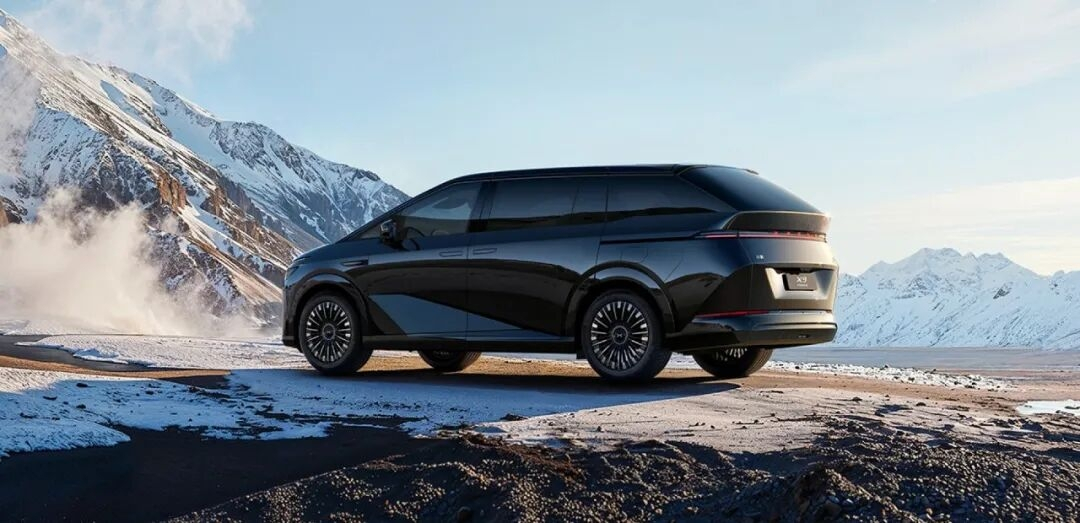
Xpeng X9, image source: Xpeng Motors official website
The recall notice states that for some vehicles within the scope of this recall, due to fluctuations in the manufacturing process, the front air spring’s air-tightness may decrease. After prolonged use in environments such as high temperature and high humidity, the front air spring may slowly leak air, which in turn can trigger the malfunction indicator light and a text warning. In extreme cases, it may affect vehicle handling, creating a safety risk.
The wording is very rigorous, but the suspension issue on the Xiaopeng X9 is really not news anymore. Public reports show that as early as the summer of 2025, the Xiaopeng X9 suffered an air-suspension breakdown. A year later, the hidden risk eventually escalated into a large-scale recall of 33,473 vehicles.
After all, the X9 is not an ordinary product. It is currently the only model from the Xiaopeng Group across its lineup with a starting price above 300,000 yuan, serving as a flagship showcase for the brand. This incident undoubtedly delivered a sharp wake-up call to Xiaopeng Motors.
Digging into the direct reasons behind the frequent failures still comes down to issues on the technical and quality-control fronts.
When asked by China News Service, automotive industry experts said that air suspension systems have extremely high requirements for the heat resistance of rubber sealing components—especially for new energy vehicles, where battery system thermal management further raises the working temperature of the chassis. In traditional gasoline vehicles, air suspension failures usually occur after about 50,000 kilometers of driving, but the Xiaopeng X9 showed such problems within 5,000 kilometers, indicating a loophole in the supply-chain quality-control process.
This is not the first recall by Xiaopeng in recent years. In 2021, the G3 was recalled for a safety risk related to its inverter, affecting 13,399 vehicles; in 2025, the P7+ was recalled for a steering safety risk, affecting 47,490 vehicles. Add this X9 recall—3 recalls in 5 years, with a total close to 100,000 vehicles.
Looking at Xiaopeng Group’s financial report data from last year, the numbers are indeed impressive: deliveries doubled, and it achieved quarterly profitability for the first time. But selling more than 420,000 vehicles in a single year at such a large volume within a short period also requires technology validation, quality validation, supply-chain management... if any link fails, it will lead to serious problems.
Moreover, while building cars, the Xiaopeng Group is also pouring money into robots and flying vehicles. At the performance meeting held in March, Xiaopeng Group’s Chairman and CEO He Xiaopeng said that in 2025, the company’s AI-related R&D investment was 4.5 billion yuan, and in 2026, the company expects its AI-related physical R&D investment to increase to 7 billion yuan.
It’s not that these directions shouldn’t be pursued, but while companies burn through huge sums of money, as consumers we can’t help asking: have the automakers’ basic capabilities really been up to standard? After all, cars are durable consumer goods—whether the chassis is stable, whether steering feels responsive, whether the battery is safe... these foundational issues are what users face every day.
Of course, recalls are not uncommon in the auto industry. Almost all globally well-known car brands have gone through large-scale recalls during their development histories. In recent years, whether traditional giants or new automakers, recall events have been all too frequent. For example, in August 2024, Tesla initiated a large-scale recall of more than 1.68 million vehicles in China due to safety risks; in September 2024, due to a fire risk, BYD recalled more than 90,000 electric vehicles. Compared with hiding problems, proactively recalling products is a responsible move.
But looking back, this “collapse” Xiaopeng encountered while running at highway speed is, at its core, the cost a company pays during its growth phase—and it also serves as a lesson for other automakers.
How to balance speed and quality has become a common challenge facing automakers. Data show that from January to May 2026, as many as 550 new domestic models were launched, averaging at least 3 new models per day. Companies are aggressively competing on price and speed, which has led many automakers to create “premature babies” and also planted potential safety hazards.
Cost reduction and efficiency gains are an inevitable choice for companies to survive in fierce competition. But as a company pursues scale expansion, what can be done fast, what must be done slow, what can be saved, and what absolutely cannot—these are issues that industry players need to rethink.
Edited by Wang Yimeng
Edited by Wang Shanshan
Aslam, beaten to death
A modern-day “bringing Luoyang paper to fame”: a special report by Wang Hong of Guangxi Daily (Wang’s hypothesis) became a hit. A single issue of the newspaper was reportedly bid up to over 60 yuan, prompting the newspaper office to urgently print extra copies.
“Jinmailang bag half” and other “scheming” trademarks were declared invalid by the Trademark Office