Waiting for the Fed’s rate decision—let the data speak

Post

--

老渔夫
·
--
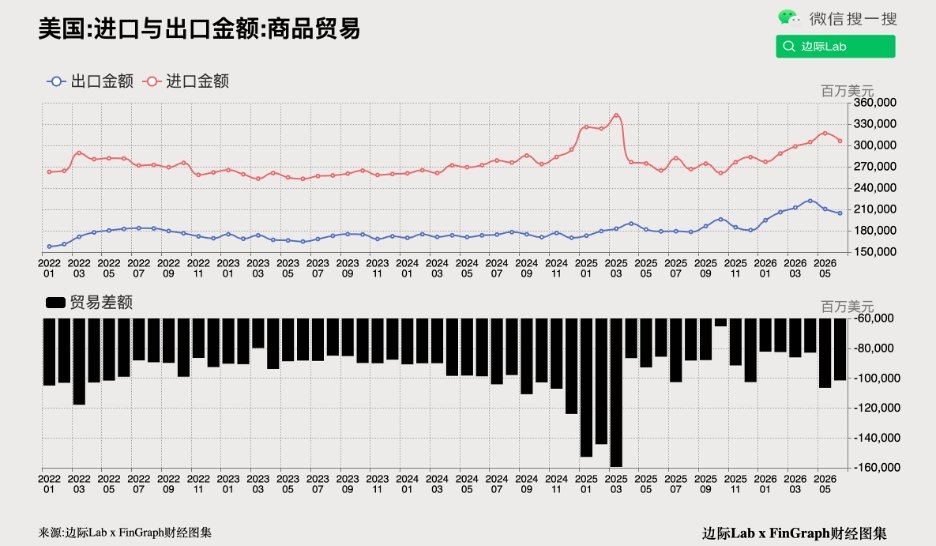
June U.S. trade data is out: goods exports fell 1.8% to $204.7 billion, while imports dropped even more—down 2.6% to $306.2 billion. Shipments of industrial goods, food, and capital goods all contracted, and on the import side purchases of both consumer goods and capital goods also declined across the board.
The result is that the trade deficit narrowed from $105.9 billion in May (a 14-month high) to $101.5 billion.
This pattern of contraction on both sides does not indicate trade improvement—it reflects demand cooling off on both ends at the same time. Weak exports point to soft external demand, while the sharp drop in imports suggests domestic demand is also stepping on the brakes. This is a typical signal of an economic slowdown—not structural optimization, but a cooling of overall volumes.
Historically, synchronized declines in imports and exports like this often appear on the eve of a recession or during a period of deep adjustment. Even though the trade deficit figure looks better, what’s behind it is a break in the global demand chain. It’s a pressure signal for commodities, industrial metals, and shipping freight rates.
Watch subsequent employment data and changes in business inventories. If this trend continues, the Federal Reserve may be forced to reassess its policy stance in the second half of the year.