


Key point
Binance offers multiple ways to access markets tied to stocks—including access to pre-IPO prices and listing prices via perpetual futures contracts, directly listed stocks in the U.S., and bStocks (tokenized securities on-chain).
Initial data shows that these products are often used in combination with each other. 58.5% of bStocks users also trade perpetual futures contracts or directly trade stocks during the same period.
Outside the normal US market trading hours, bStocks account for the majority of trading volume tied to stocks (including bStocks and directly traded stocks) on Binance, rising from 48% in the main session to 58% after the closing bell.
In recent months, Binance has expanded its core products to build a comprehensive ecosystem of TradFi-linked products (traditional finance). This ecosystem includes TradFi perpetual futures (allowing access to pre-IPO pricing), access to listed stocks in the United States and bStocks – tokenized securities on-chain.
But in practice, how are these products being used? There are two key takeaways: Users are freely moving between all three formats, and the on-chain layer is growing much faster than observers expected. It’s not only demand that is increasing—among 4 out of 10 bStocks users, this token type is their first touchpoint with Binance’s TradFi products. In other words, on-chain is becoming the main way to get in.
bStocks are becoming the main gateway
About 41.5% of bStocks users begin their TradFi journey on Binance through our tokenized securities product. Instead of only serving as an add-on for existing stock traders, we’re seeing bStocks have the potential to become a gateway into the stock market for an entirely new generation—people who start their financial journey in the crypto world.
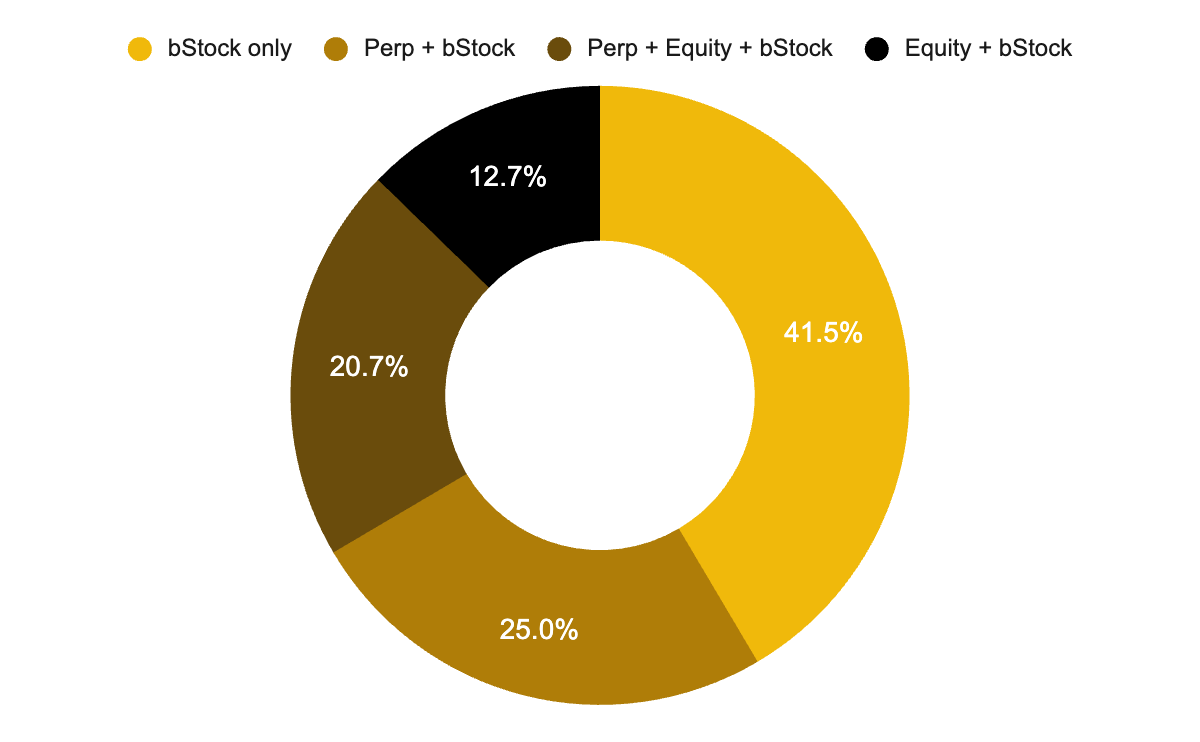
Figure 1: 41.5% of bStocks users enter through bStocks only—never previously using perpetual contracts (perps) or directly traded stocks on Binance. Source: Binance Research, as of July 8, 2026
The market these users are stepping into is still young and growing very fast. In less than a month, we increased the number of bStocks listings from 5 to 36, while the product’s market capitalization surpassed the threshold of about $300 million during the same period. Users want access to tokenized securities, and at Binance, we have continuously met that demand by expanding the list of available assets.
When Wall Street sleeps, Binance takes the “night shift”
Part of the reason bStocks has grown so rapidly is the ability to trade 24/7. Traditional U.S. stock markets operate on a 24/5 schedule, Monday through Friday. Outside those hours, any reaction to news, earnings reports, and macro events is “frozen” until the market reopens.
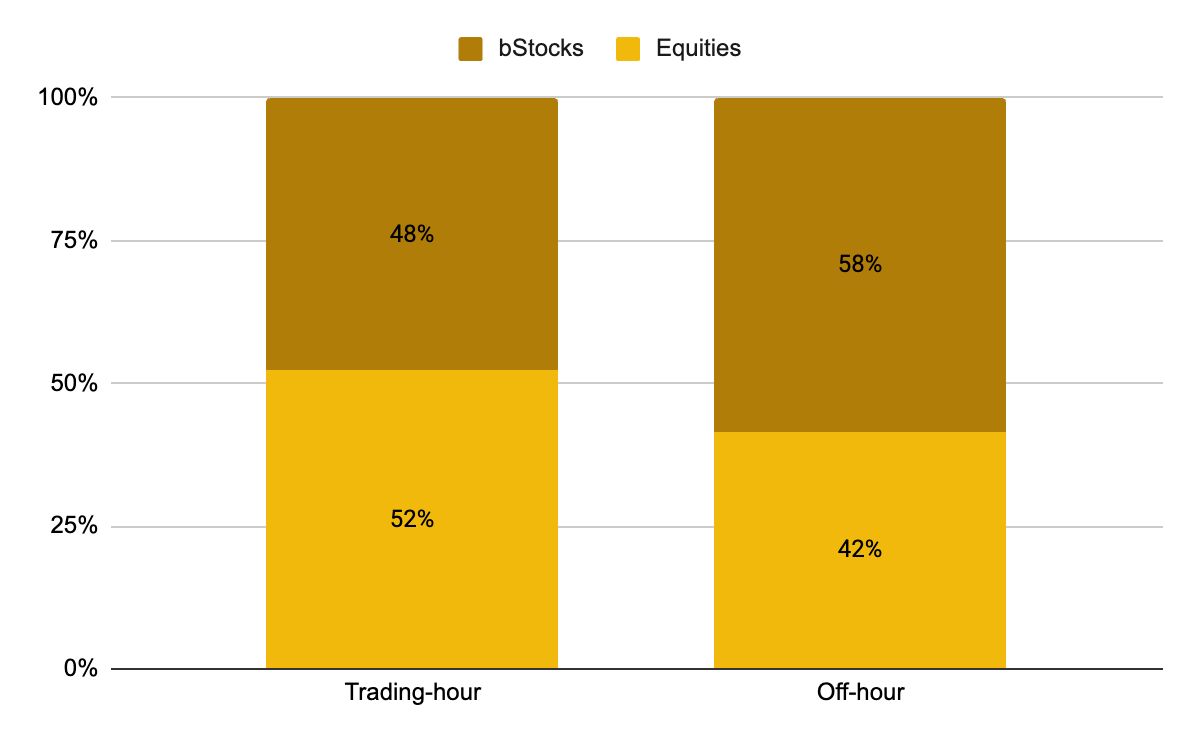
Figure 2: bStocks trading volume during official and off-hours trading sessions. Source: Binance Research, as of July 8, 2026
Trading stocks on Binance also provides extended trading windows during the week, and users are trending toward prioritizing bStocks in these windows. In the official trading session, the ratio between bStocks and directly traded stocks is nearly even, with bStocks accounting for 48% of stock-linked volume. However, after the main session closes, bStocks becomes the majority choice with 58%. A “never-sleeps” market combined with the flexibility of digital assets is a compelling value proposition for both crypto-native traders and TradFi traders.
The utility of bStocks doesn’t stop at 24/7 trading
24/7 access is only one advantage. What really keeps users is what the bStocks market can do compared with traditional assets.
Each bStock is backed 1:1 by a stock held in a managed custodian account, which can be publicly verified through Binance’s Proof of Collateral (Proof of Collateral) page. Dividends are automatically reinvested via a token supply-changing mechanism called Multiplier (rebasing).
Beyond trading and holding, bStocks can also be used in a variety of on-chain applications. For example, users can supply bStocks into liquidity pools, use them as collateral, or deploy them in DeFi strategies to optimize yield. Liquidity pools (LPs) on PancakeSwap currently show APY from approximately 32% to 228%, while internal credit pools reach from 5% to 10%.
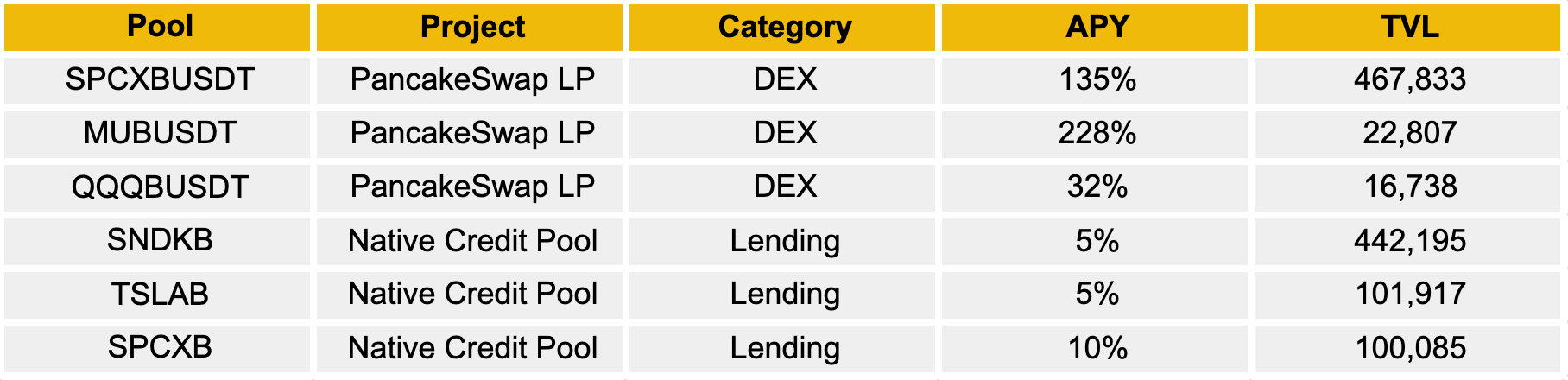
Figure 3: bStocks’ DeFi yield opportunities. Source: Binance Research, as of July 8, 2026
Another important utility is that unlike most platforms offering tokenized securities, Binance users can freely convert instantly between bStocks and the underlying stock on a 1:1 basis with a conversion fee of 0.
This frictionless loop helps keep the token price tightly anchored to the underlying price. And because TradFi markets don’t operate 24/7 and aren’t run on-chain, temporary price discrepancies between bStocks and the underlying stock may arise—creating arbitrage opportunities in the primary market for all users.
In the period from June 11 to July 8, 2026, a sample group of users generated $216 million in revenue from rapid consecutive trades between bStocks and their corresponding underlying stocks. A small group of professional traders accounted for most of this volume, but the overwhelming share of participants were retail users—many of whom appeared only once to capture brief price gaps before leaving.
Binance users are moving between product categories
However, bStocks do not operate in isolation (silos), and neither do any products on Binance. Placing perpetual contracts, tokenized stocks, and tokenized securities under the same “roof” allows users to diversify and build an integrated portfolio instead of having to manage positions scattered across different applications.
Data shows this trend is already in place: 58.5% of bStocks users also trade perpetual contracts or stocks (of which 25% trade both perps and bStocks, 20.7% trade all three types, and 12.7% trade both stocks and bStocks).
Take the recent SPCX listing round as an example. 8.6% of users traded perps before the IPO of this ticker, then switched to trading bStocks, versus only 0.6% switching to directly trading stocks. This creates a 14x advantage for tokenization as an on-ramp.
The most plausible explanation for this large difference is familiarity. A token that trades on-chain and sits in the same wallet feels natural to a user who is already accustomed to trading perps before the IPO. Meanwhile, direct stocks—with separate infrastructure and now separate trading—are a more unfamiliar choice.
Conclusion
Binance has built an ecosystem of TradFi-linked products at an astonishing growth rate. The number of bStocks listings and on-chain market capitalization have surged since launch, while trading activity is increasingly shifting from traditional exchanges to bStocks during US market off-hours.
What’s even clearer is the degree of connectivity between the pieces. Binance users are moving from perpetual futures to direct stocks and then to bStocks – a fully closed loop that works seamlessly in both directions. This is only the early stage, but the signals point to a real shift in how users trade traditional markets on Binance at the forefront of this trend.
Read more
How Binance serves your full financial journey: A super app instead of a dozen apps
Why traditional markets are starting to trade like crypto, according to ThreadGuy
Getting access to stocks with crypto: Three bStocks user stories
Disclaimer: Nest Trading Limited acts as your introducer broker and forwards your orders for securities to its clearing broker-dealer counterpart, Alpaca Securities LLC, for execution, clearing, settlement and custody. Binance does not handle or store your securities. Securities are subject to market risk and high liquidity as well as price volatility (especially outside traditional market hours). The value of your investment may decrease or increase and you may not receive back the amount of money you invested. You are solely responsible for your investment decisions and Binance is not responsible for any losses you may incur. Past performance is not a reliable indicator of future performance. Before trading, you should independently assess the suitability of the trade based on your own objectives and circumstances, including potential risks and benefits. Where appropriate, seek advice from your own advisor. This information is not to be understood as financial or investment advice. Binance may receive payment for order flow when it forwards your orders. To learn how to protect yourself, visit responsible trading. For more information, see Terms of Use, Terms of Product for Trading Securities and Risk Warning.
Disclaimer: Tokenized bStocks securities are classified as Certificates representing certain Financial Instruments (paragraph 92, Appendix 1 of the FSMR). bStocks are not stocks or shares, and bStocks do not allow holders to directly own a share or stock in the underlying listed company. bStocks do not represent any affiliation with the issuer of the underlying assets. bStocks are offered through the prospectus approved by ADGM and are not offered in any other jurisdiction. No public offering is made outside ADGM. Tokenized securities are only made available to eligible users in permitted jurisdictions and only on a secondary market basis. You are solely responsible for ensuring that access to and trading of tokenized securities is lawful in your jurisdiction before proceeding. Accessing this product from a jurisdiction where the product is prohibited or restricted does not create any responsibility or obligation for Binance. We may restrict, suspend, refuse, cancel or reverse your access to or trading if we determine, in our sole discretion, that your access to or trading may violate applicable law, product restrictions, eligibility criteria, requirements regarding sanctions or relevant offering documents. Tokenized securities may be held and transferred on-chain outside the CSD environment. Transferring tokenized securities back to the CSD environment must comply with the applicable conditions, and you may not be able to trade, withdraw/exchange, or otherwise process tokenized securities in the CSD environment if those conditions are not met.
No information displayed regarding tokenized securities should be considered an offer, solicitation, promotion, recommendation, or an invitation to buy or sell securities in any jurisdiction. Tokenized securities are not offered, sold, distributed, provided, or made available in the United States or for or on behalf of the account or benefit of a U.S. person. Tokenized securities have not been and will not be registered under the U.S. Securities Act of 1933 or any applicable state securities laws in the United States, and no public offering of bStocks will be made in the United States or in any other jurisdiction (except ADGM). By accessing this product, you represent and warrant that you are not a U.S. person, are not located in the United States, are not acting for the account or benefit of any U.S. person, and will not access, buy, sell, transfer, withdraw/exchange, or otherwise execute transactions in tokenized securities from within the United States.
For more information, see Terms of Use, Exchange Rules, Exchange Process, Relevant prospectus (if applicable to you and subject to the understanding that the offer is made only in ADGM, with no public offering made elsewhere, and that viewing the prospectus does not constitute an invitation or solicitation outside ADGM), Terms of Tokenization and Redemption/Exchange of bStocks, Order Execution Approval Notice and Risk Warning.
The price of digital assets can be volatile. The value of your investment may decrease or increase and you may not receive back the amount of money you invested. You are solely responsible for your investment decisions and Binance is not responsible for any losses you may incur. TradFi Perps carry a high market risk and price volatility (especially outside traditional market hours). You may be required, on short notice, to deposit additional margin or pay interest. If the required margin deposits or interest payments are not made within the specified time period, your collateral may be liquidated. In addition, you remain responsible for any deficits that arise in your account and the interest accrued on your account. All of your margin balance may be liquidated in the event of adverse price movements. Past performance is not a reliable indicator of future performance. TradFi Perps do not represent an interest in the related underlying assets. Before trading, you should independently assess the suitability of the trade based on your own objectives and circumstances, including potential risks and benefits. Where appropriate, seek advice from your own advisor. This information is not to be understood as financial or investment advice.
This content is provided to you on an “as is” basis solely for general information and educational purposes, with no statements or guarantees of any kind. This content is not to be understood as financial advice and is not intended to recommend buying any specific product or service. The price of digital assets can be volatile. The value of your investment may decrease or increase and you may not receive back the amount of money you invested. You are solely responsible for your investment decisions and Binance is not responsible for any losses you may incur. Not financial advice.
Please note: There may be differences between the original English content and any translated versions (these versions may be generated by AI). Please refer to the original English version for the most accurate information in case of any discrepancies.