


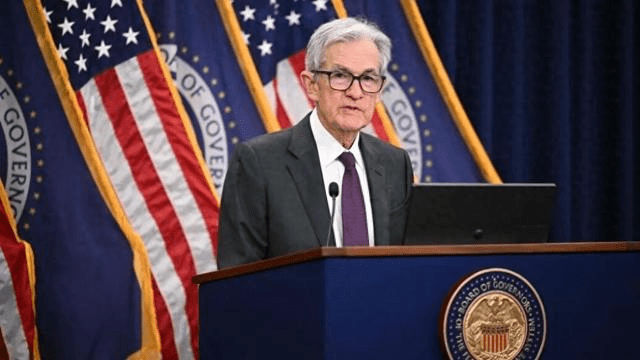
Wow! This is really a big deal — Powell is under investigation
Oh my, when this news broke, I was completely stunned. Guess what? (The New York Times) revealed that Federal Reserve Chair Powell is actually under criminal investigation! Yes, that's the same guy who controls the U.S. printing press and whose words can make global stock markets tremble.
The reason for the investigation, reportedly, is related to renovations at the Federal Reserve's Washington headquarters. Sounds not like a major incident, right?
You know, Powell has always been the "pillar of stability" in the global financial world. Even a sneeze from him can make trillions of dollars in assets around the world catch a cold. Now suddenly this happens — of course, the market can't help but panic.
What will the market look like? Let’s have a good discussion.
First reaction: there will definitely be a shake-up.
To be frank, the credibility of the Federal Reserve is the 'foundation' of the global financial system. Although it seems like just a cosmetic issue on the surface, if you think about it, the potential chain reactions behind it can be quite frightening.
As for the stock market, I estimate that U.S. stocks will definitely drop in the short term. Especially those financial stocks, as soon as investors see words like 'regulation' and 'uncertainty,' their legs go weak, and money will certainly run to safer places.
As for the bond market, U.S. Treasury yields might start to fluctuate. If everyone thinks this will affect the independence of the Federal Reserve, then the entire interest rate system will need to be recalculated.
The foreign exchange market will also not fare well. The dollar index is likely to be under pressure—think about it, who would want to put their money in a country where the head of the central bank is in trouble? Especially now that the global situation is already chaotic.
The most critical question: what to do about monetary policy?
To be honest, what worries me most is not the short-term volatility, but the impact this matter has on the Federal Reserve's decision-making. Think about it:
First, if the investigation escalates, can Powell still do his job well? This uncertainty is enough for the market to have a field day.
Second, will the independence of the Federal Reserve be questioned? This is key for the Fed to effectively control currency! Regardless of the final outcome, this question may leave a shadow in the public's mind.
Third, during the investigation, Powell must speak very cautiously. Communication between the Federal Reserve and the market is like a romantic relationship, requiring constant interaction; now, however, this communication may be discounted.
The timing is too sensitive; this is not a coincidence.
The economy is walking a tightrope.
You say this matter happens to occur at this critical moment, isn't it a bit too coincidental? The current situation of the U.S. economy can be said to be precarious:
Inflation has not completely come down; there is still some distance from the Federal Reserve's 2% target.
The market is in fierce debate over when to cut interest rates.
The Federal Reserve still needs to find a way to achieve a soft landing for the economy—controlling inflation while avoiding economic recession.
In these critical moments, any factor that may affect the Federal Reserve's decision-making will be magnified by the market.
The political environment is more complex.
From a political perspective, this timing is also too delicate:
The U.S. election is approaching, and monetary policy has always been a bargaining chip in political games.
Congress's supervision of the Federal Reserve is getting stricter.
The public's call for oversight of the elite class is growing stronger.
These forces are mixed together, and I am really curious about how things will develop.
There have been similar events in history.
In fact, this is not the first time the leadership of the Federal Reserve has encountered trouble. Let's take a look at history:
In 1951, the Federal Reserve had a conflict with the Treasury, and ultimately established its independent status—but it also exposed the inevitable conflicts between the central bank and the government.
In 1979, Volcker raised interest rates harshly to combat inflation, facing severe criticism at the time, but ultimately won the market's trust.
After the 2008 financial crisis, Bernanke implemented quantitative easing, which was also controversial, and Congress closely monitored the Federal Reserve's balance sheet.
These experiences tell us that the independence and credibility of the Federal Reserve are not just given; they need to be proven and maintained through repeated practice.
What should we investors do?
Alright, after saying so much, you must be wondering: what should I do with my money? My advice is to be both cautious and flexible.
Short-term strategy: stabilize first
Keep some cash on hand. In times like this, liquidity is a sense of security. Money in hand means peace of mind.
Pay attention to the Volatility Index (VIX). If the VIX rises sharply, consider using options or similar tools to insure your investment portfolio.
Allocate some safe-haven assets. Gold, Swiss francs, and yen—these 'hard currencies in chaos' may become more sought after.
Don't put all your eggs in one basket. Appropriately reduce the proportion of dollar assets and see if there are opportunities in Europe and Asia.
Mid-term observation: focus on these key points
Key indicators to watch:
Public statements from Federal Reserve officials—do they say much? What have they said?
Has the market's expectation for the federal funds rate changed?
Can the dollar index hold the support level of 102-103?
Will the 10-year U.S. Treasury yield break above 4.5%?
Several possible scenarios:
Scenario One: A false alarm
If the investigation yields results quickly and proves to be just a procedural matter, the market might shake a bit and then recover. The Federal Reserve will continue to do what it needs to do.
Scenario Two: A long tug of war
If the investigation drags on for a long time or uncovers more issues, the market will likely remain anxious for a long time. The attractiveness of dollar assets will continue to decline.
Scenario Three: Changing the Leader
If it really leads to a change in leadership, the market will take time to figure out the temperament and thoughts of the new leader, and there will definitely be volatility during this period.
What do the big shots on Wall Street think?
Interestingly, Wall Street's views on this matter are not unified:
Hawks say this might make the Federal Reserve 'soft'—after all, during sensitive times, no one wants to stir up trouble, and policy may lean toward being more accommodative.
Doves worry that if Powell's authority is undermined, the Federal Reserve may fall into chaos internally, ultimately impacting policy effectiveness.
Centrists advise everyone to stay calm, believing that unless the investigation involves significant violations of monetary policy, the actual impact will be limited.
In the coming weeks, keep a close watch on these.
In the days to come, I will closely watch these few things:
How will the next FOMC meeting be held?
Powell's congressional hearings and public speeches
Investigate whether there are any new developments
How other Federal Reserve governors will express their views
Potential impacts in the long run
To be honest, from a long-term perspective, this matter may not all be bad:
It may promote institutional reform. The Federal Reserve may use this opportunity to strengthen internal governance and transparency, which is good for long-term development.
Communication strategies may upgrade. To maintain credibility, the Federal Reserve may place more emphasis on interacting with the market and increasing transparency.
Revisiting the topic of central bank independence. This may trigger a global discussion on the boundaries of central bank independence.
Crisis or opportunity?
Honestly, the investigation of the Federal Reserve chair is indeed explosive. But do you know? After so many years in the market, I've seen too many storms. Truly powerful institutions and systems often become stronger in times of crisis.
For us investors, what is most important now? To remain rational and patient. Don't let short-term fluctuations disturb your peace of mind; see through the essence of things and the long-term trends.
In this foggy situation, those who can maintain a clear mind and grasp the core logic often turn crises into opportunities.
The market is smart; it will ultimately provide the most reasonable answer. What we need to do is find the real signal amidst the noise and grasp the trend in the volatility. Regardless of how this matter develops, the Federal Reserve, as the 'ballast' of the global finance, will be tested for its resilience and adaptability. And this process itself may be a necessary path for market maturity.
Remember, investment is never a one-off thing. Stay calm, do your homework, and then—when it's time to act, just act!
Friendly reminder: what we are discussing today is purely market analysis and personal opinion, not investment advice! Investment carries risks, and you should be cautious when entering the market. Before making any decisions, be sure to do your research or consult a professional advisor. Don't blame me for not reminding you!