The Yellow Russian filial son wants to save his Russian father.

Post

谷海木兰A
·
--
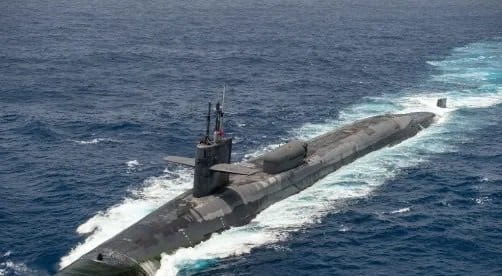
U.S. special forces directly seized a Russian oil tanker right in front of a Russian nuclear submarine! The facts show that the Russian Navy is no longer capable. Besides China's navy, no one else can save hundreds of Russia's oil tankers.
The Russian Navy is a peculiar force: its nuclear submarines are primarily designed to launch nuclear missiles and conduct nuclear strikes against the West. They are utterly useless when it comes to escorting oil tankers.
This has led to an extremely awkward situation: deep underwater, they are terrifying doomsday weapons, but once they surface to protect merchant ships, the Russian Navy appears helpless.
The U.S. special forces dared to act directly because they precisely identified the fatal weakness of the Russian Navy—its 'top-heavy' structure.
For Russian nuclear submarines, surfacing to intercept an American destroyer or a heavily armed special operations craft would be tantamount to suicide.
Submarines are designed for stealth, not for open-sea confrontations.
Once they rise to the surface, they lose their greatest protection and become the easiest targets for U.S. anti-submarine warfare.
Thus, even when Americans act in their own 'backyard,' Russia's underwater forces can only watch coldly—perhaps diving deeper to ensure their own survival.
This is the inevitable consequence of asymmetric warfare.
In recent conflicts, the Russian Navy's surface fleet has revealed serious aging problems.
Lacking large air-defense destroyers and advanced frigates, they cannot provide effective long-range escort for their massive oil tanker convoys.
The U.S. Navy has seized on this weakness, daring to frequently intervene in relevant waters, cutting off Russia’s maritime routes for foreign exchange earnings or energy transport.
The seized tanker in this incident was like a juicy piece of meat, with not a single capable frigate in sight.
Such a scene would have been unthinkable a decade ago—no one could have imagined the mighty Russian Navy would fall to such a state.
The legacy of the former Soviet Red Navy now only lingers in rust-covered cruisers and silent nuclear submarines.
Today, whoever controls strong long-range projection capabilities and air superiority holds the power to set the rules in global commons.
Thanks to its worldwide network of bases and aircraft carrier strike groups, the U.S. Navy holds absolute initiative.
They can stop whom they want, seize whom they want—without needing to consult anyone.
Russia’s hundreds of oil tankers now resemble startled birds, venturing out to sea is like gambling with their lives without proper protection.
This loss of control over maritime lifelines is devastating for Russia’s economy, which heavily depends on energy exports.
Besides China’s navy, there is currently no other naval force in the world capable of providing substantial protection to Russia at sea.
China’s navy, with its newly commissioned 'Chinese Aegis' destroyers and carrier strike groups, has achieved world-class capabilities in area denial and long-range escort operations.
Only when China’s carrier group appears in the region, and when the radar of the 055 large destroyer is turned on, will the U.S. truly hesitate.
The Russians must now clearly realize: relying on nuclear submarines to rescue the situation is unrealistic.
What they urgently need are modern surface warships capable of escorting in rough seas, and a comprehensive defense system able to counter U.S. special operations forces.
But such capabilities require massive funding and technological accumulation. Given Russia’s current industrial capacity and economic condition, closing this gap in the short term is virtually impossible.
This incident once again teaches a lesson to all nations around the world.
Without a strong blue-water navy, a nation’s economic lifelines remain in others’ hands.
Relying solely on nuclear warheads is ineffective in everyday economic competition and gray-zone conflicts.
The current strategic positioning of the Russian Navy appears distorted—over-reliant on nuclear deterrence while neglecting conventional naval development.
This strategic miscalculation has left them consistently at a disadvantage in peacetime power struggles.
Watching their oil tankers seized right before their eyes without being able to retaliate—this helplessness must be more painful than defeat.
For the foreseeable future, Russia’s maritime transport will likely depend on protection from other major powers, or be forced to accept harsh rules imposed by the United States.
The once formidable maritime power that could challenge the U.S. now can only maintain its dignity through nuclear submarines lurking in the deep sea.
This dramatic decline is not only heartbreaking, but also reveals the true logic of modern naval warfare.
Only a navy like China’s—comprehensively developed and balanced—can truly serve as the foundation for regional peace and secure maritime trade routes.
This also indirectly explains why the U.S. is so anxious about China’s shipbuilding speed.
Because they know that once China’s navy fully ventures into the deep blue, their era of unchecked dominance at sea will finally come to an end.