
I am the pattern brother. In December, due to counter-trend trading, the profits of the first three months were all wiped out again.
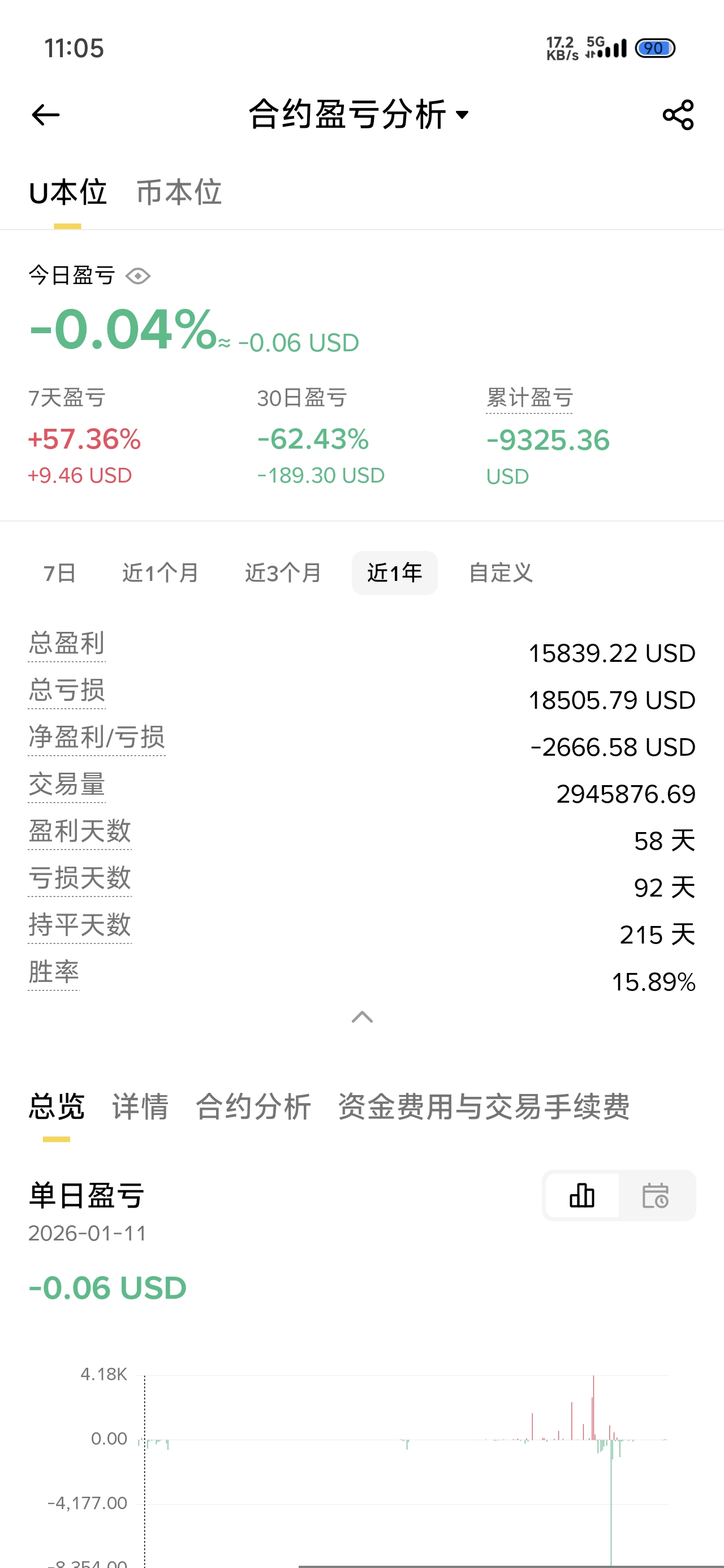
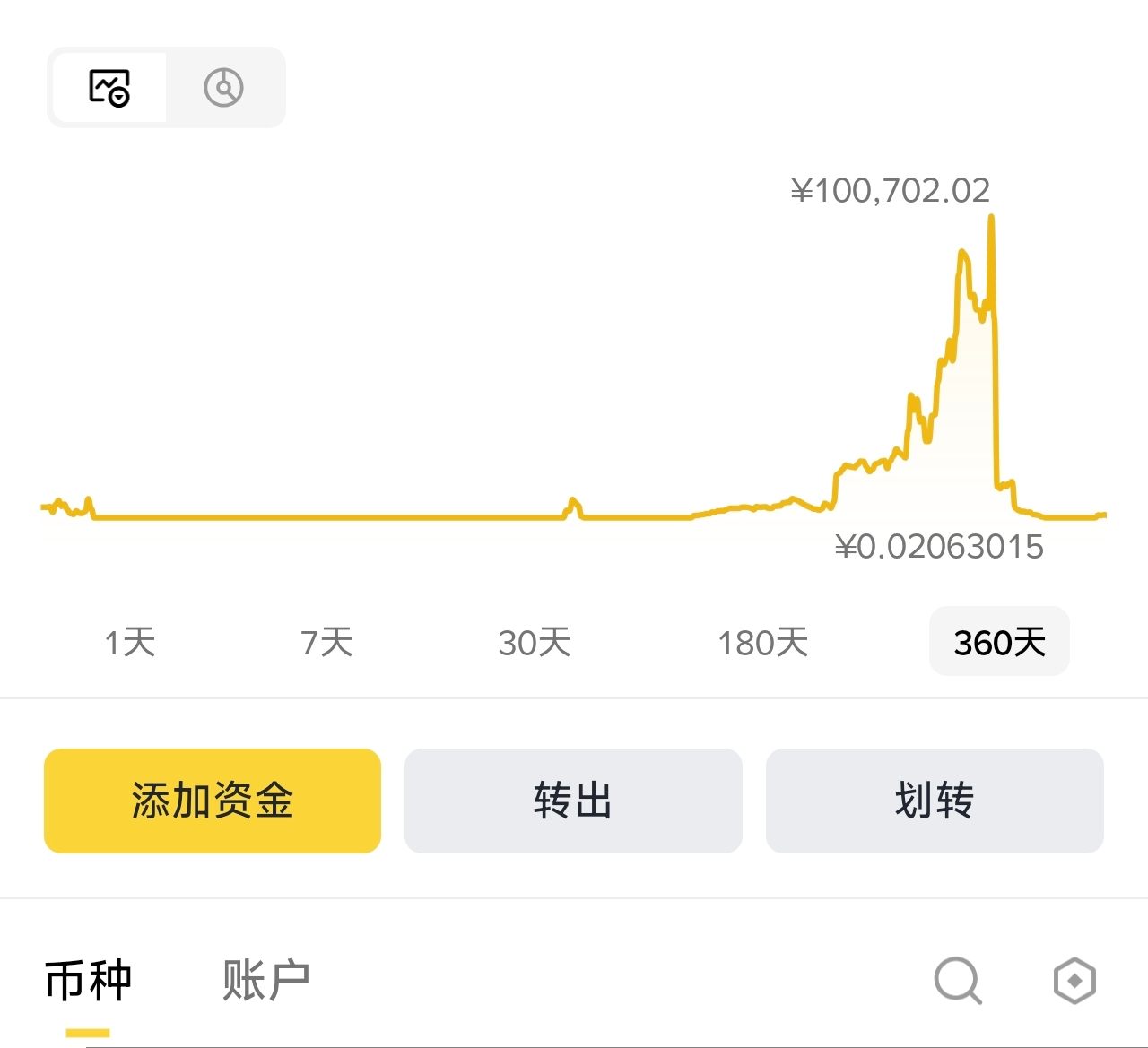
The reason for success is accurately identifying the downward trend at a high position and rolling over the funds quickly to double them. After a sharp decline, I cleared my positions and waited for the rise to continue shorting. In fact, during a sharp decline, one can also make a low-multiple rebound, and then it's just about patiently waiting for the trend to bring profits. After each wave of explosive gains, there is always a pullback. Of course, when trading rebounds, one cannot wait too long, as it can easily lead to profit retracement. Many times, the price does not reach the desired level, even though the overall direction is correct. It either exceeds the expected level or barely reaches it, so it's still possible to split positions for operations.
The reason for failure is that it did not reach the expected bottom point, but in my mind, I was greedy, anchoring to a price that was not reached. Adding to the position against the trend without clearing the major positions, combined with incorrect timing, led to me staring at the 4-hour chart, gradually losing the capital to the point of almost nothing left. Coupled with moving stop losses, the fees added to minor losses. Originally, there was an upward trend line, but I didn’t make a position at the trend line level. When approaching the bottom during rebounds entering a volatile market, it’s no longer suitable to add to the position on rebounds in a declining trend. Moreover, my perspective was too broad; I always wanted to take more. In reality, when it bottomed out, I didn’t clear most of the positions and continued to use the previous method of adding to the short position on rebounds. As a result, when the sharp decline occurred on December 1st, I did not take profits. During the sharp rise, I added to the position multiple times with small stop losses, going from tens of thousands to hundreds of thousands, then slowly down to ten thousand, then fantasizing about a short-term cycle dropping to the target point. Indeed, it did drop, but the timing was off. The rebound was strong, going from a loss to over ten thousand, then down to only five thousand. Eventually, when the rebound ended, I didn’t dare to go short again, and I was thinking of bottom fishing in between. I did indeed catch the bottom, but with high leverage, making a few hundred bucks turned into over a thousand, only to be quickly reversed. Then, at the last moment, I still fantasized about a wave of pullback to short, but in fact, there was none. The trend gave no opportunity, and I had no capital left.
From three thousand capital to one hundred thousand in three months, and from one hundred thousand to zero in half a month. From a calm and stable mindset, each day filled with boredom not knowing what to do, to tension and anxiety, staring at the market for a long time, psychologically tortured and guessing wildly, at this moment I have already lost. Every time I see others posting about being anxious and staying up late to watch the market, I also comment that the leverage is too heavy and it’s pure gambling. Sooner or later, if one doesn’t lose everything, they’ll be able to sleep well. I have once again fallen to my own shortcomings. The market is certain yet uncertain; resisting the trend can easily lead to a blowup, and small trends can also easily blow up. Small leverage in a large cycle is somewhat better, but of course, luck is also needed in between.
Success is because of seeing the high-level stagnation forming a bearish trend, opening a short position at the top. The first wave fell without taking profits, experiencing a roller coaster in between, then waiting for the second wave to roll over for profits, continuing to short after the rise, and adding to the short position. In between, there was basically no movement, and when approaching the bottom, profits were not taken again. The rebound entered a volatile market, and instead increasing the short position led to a loss. In between, during the first wave of sharp decline, adding to the short position during the rebound is easy to lead to losses. Orders should be placed above the rising trend line during rebounds, adding to the position when experiencing accelerated declines. When making significant profits, one should reduce the position, typically expecting a rebound. When close to the bottom, one should also reduce the position, and cannot use the method of adding to the short position on rebounds anymore.
When the market is fluctuating and declining, remember to take profits on high shorts. During a sharp decline, it’s even more important to take profits. Only in a situation of accelerated one-sided moves is it suitable to add to the position with floating profits. When approaching the bottom of the volatile range, one should not add to the position against the trend with floating profits. However, we do not know if the market will continue to decline in a volatile manner, accelerate in a one-sided manner, or if it has reached the so-called bottom. In a typical wave of the market, when there’s sideways consolidation, adding to the position with floating profits can lead to losses, and adding to the position with floating losses can also be fatal; it’s either a roller coaster ride. During a one-sided move, if you resist the trend, you’re likely to incur losses. If there’s a sudden pullback in a one-sided market, adding to the position with floating profits can also lead to losses. During a sideways one-sided market, if you add to the position with floating profits, the leverage is high and it can also lead to losses. If you engage in high selling and low buying, sudden changes can easily lead to missed opportunities.
What we can do is to see the big trend clearly; short-term movements are very hard to predict. Following the big trend to make big profits requires reducing positions and moving stop losses, and maintaining good stop losses. In a volatile market, it’s easy to do both long and short positions, but when encountering a one-sided trend, remember to maintain good stop losses and do not resist the trend. Following the trend also requires good stop losses, but do not get stuck at previous low stop losses; liquidity is present, and it will likely hit your stop loss orders. Because sometimes you cannot determine whether the volatility has ended or whether it is entering a one-sided trend at that moment. Only after it has emerged can the trend be seen clearly. I also advise everyone to look less at small time frames, such as one minute or a few minutes, as it is basically very hard to control short-term trades. In a volatile market, you can repeatedly get your stop loss cut, and if you encounter a one-sided market, if you add to the position with floating losses, you can lose everything. What we can only do is follow the trend and cut off losses. That's all for now. Starting again in January, this is also my first long review. Each success or failure is summarized for reasons and improved upon. I hope everyone continues to progress! Let’s encourage each other!
Salute!