🇻🇪🇺🇸
What's next for Venezuela and Maduro?
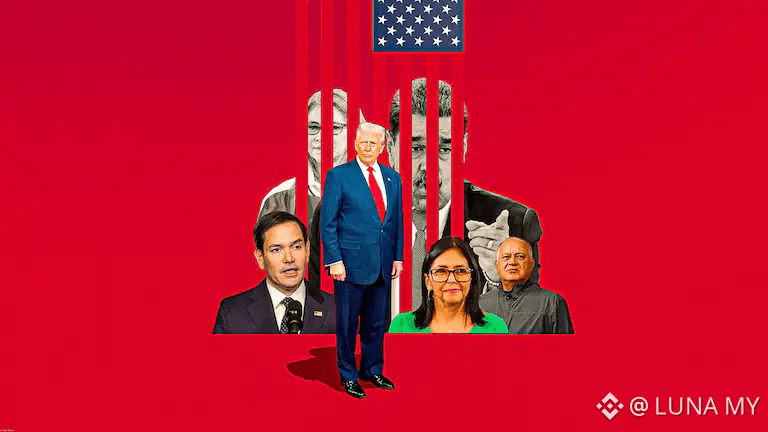
One week after U.S. special forces captured the Venezuelan president in Caracas, doubts about the country's immediate future have only increased. In fact, Donald Trump acknowledged that U.S. surveillance and control over Venezuela could last for years. Nicolás Maduro is scheduled to appear on March 17, while his regime has begun to reconfigure.
Who is governing Venezuela?
Although the capture of Nicolás Maduro led some to believe it would bring down the Chavista regime, Vice President Delcy Rodríguez assumed interim leadership. That is, the same executive leadership under Maduro has largely remained intact, though it was unclear what roles two key government figures would play: Interior Minister Diosdado Cabello and Defense Chief Vladimir Padrino López, both accused by Washington of drug trafficking.
Nevertheless, Donald Trump stated that his country will maintain surveillance and control over the Venezuelan government. At the same time, the U.S. president ruled out the possibility of opposition leader María Corina Machado taking over the executive, saying she "does not have the support or respect" of the country.
According to Hatem Dasuky, former counselor minister of Colombia's embassy in Chile, "there has been an ongoing internal power struggle for years between Delcy Rodríguez's family and Diosdado Cabello, rooted in a prolonged fight for internal control of Chavismo and the state." "Cabello has controlled the security apparatus since the time of Hugo Chávez," and "Rodríguez knows the entire regime from within." For this reason, according to Dasuky, the United States needs the interim president for the transition, "but that won't happen until she cleans house and eliminates all the remnants of Diosdado Cabello and Padrino López."
What's next for Venezuela and Maduro?
One week after U.S. special forces captured the Venezuelan president in Caracas, doubts about the country's immediate future have only increased. In fact, Donald Trump acknowledged that U.S. surveillance and control over Venezuela could last for years. Nicolás Maduro is scheduled to appear on March 17, while his regime has begun to reconfigure.
Who is governing Venezuela?
Although the capture of Nicolás Maduro led some to believe it would bring down the Chavista regime, Vice President Delcy Rodríguez assumed interim leadership. That is, the same executive leadership under Maduro has largely remained intact, though it was unclear what roles two key government figures would play: Interior Minister Diosdado Cabello and Defense Chief Vladimir Padrino López, both accused by Washington of drug trafficking.
Nevertheless, Donald Trump stated that his country will maintain surveillance and control over the Venezuelan government. At the same time, the U.S. president ruled out the possibility of opposition leader María Corina Machado taking over the executive, saying she "does not have the support or respect" of the country.
According to Hatem Dasuky, former counselor minister of Colombia's embassy in Chile, "there has been an ongoing internal power struggle for years between Delcy Rodríguez's family and Diosdado Cabello, rooted in a prolonged fight for internal control of Chavismo and the state." "Cabello has controlled the security apparatus since the time of Hugo Chávez," and "Rodríguez knows the entire regime from within." For this reason, according to Dasuky, the United States needs the interim president for the transition, "but that won't happen until she cleans house and eliminates all the remnants of Diosdado Cabello and Padrino López."