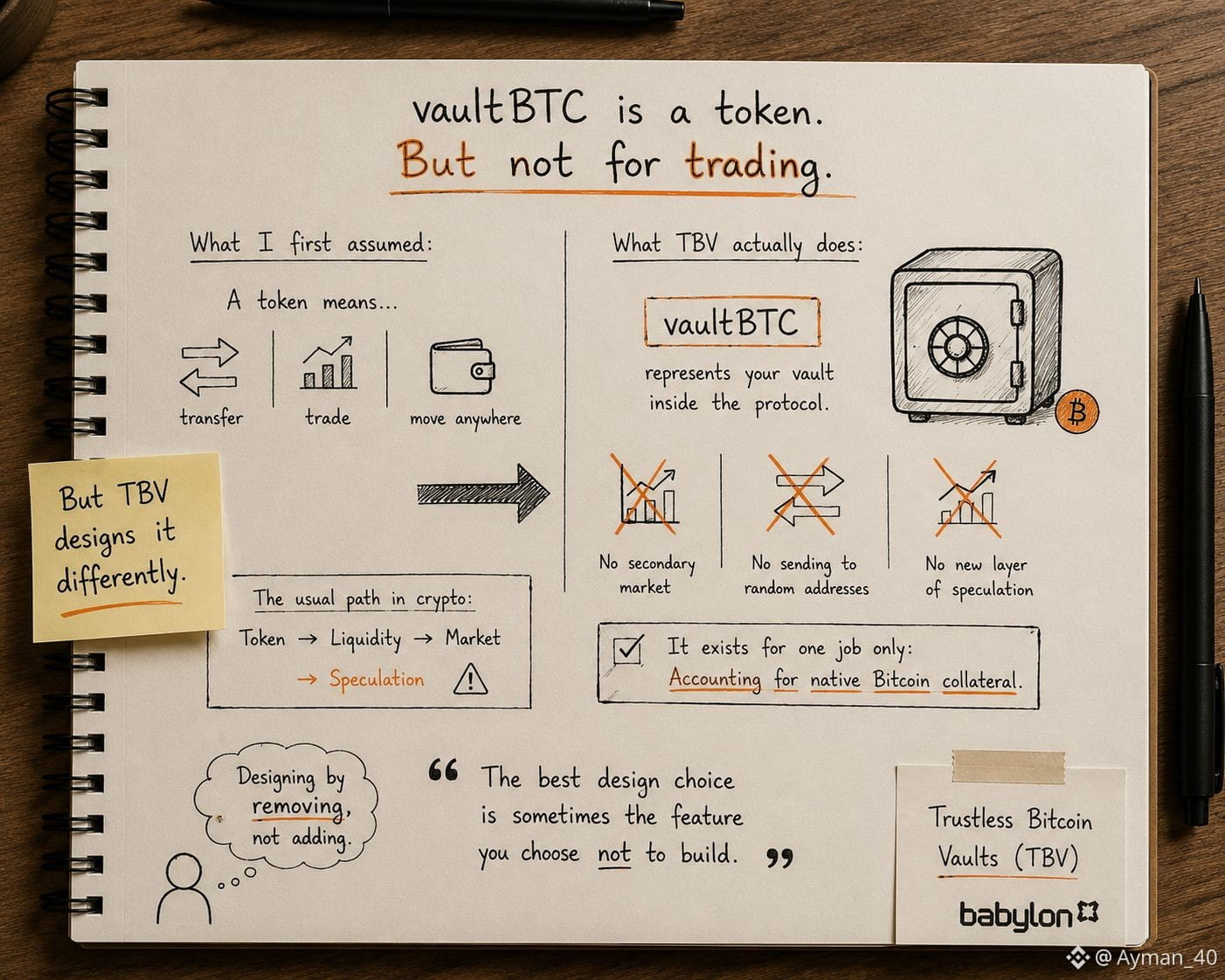
One detail completely changed the way I looked at vaultBTC.
The first time I saw it described as a token, I immediately assumed it worked like every other token in crypto. Something you could transfer, trade, or move between wallets.
The more I read about Trustless Bitcoin Vaults (TBV), the more I realized that assumption was exactly what the design is trying to avoid.
vaultBTC isn't meant to become another asset with its own market. It's intentionally restricted so it simply represents your vault inside the protocol. No secondary market. No sending it to random addresses. No new layer of speculation built on top of the collateral itself.
That surprised me because most protocols try to make every new token more useful by making it more transferable.
TBV goes in the opposite direction. It limits what vaultBTC can do so it stays focused on one job only: accounting for native Bitcoin collateral inside the system.
I came away thinking that sometimes the most interesting protocol design isn't about adding new features. It's about deliberately refusing to add the ones that would distract from the original purpose.
@BabylonLabs_io $BABY #baby